Republicans Always Think Their Ideas Are New

Marco RubioSteve Benen wrote an interesting article this morning, Marco Rubio’s Awkward Fight for the Future. He noted that Rubio has been going around talking about how Hillary Clinton’s policies are “20th century relics” in a 21st century world. Benen thinks that this is a reasonable pitch, but noted that it doesn’t really fly coming from a guy who “opposes marriage equality” and “doesn’t believe in climate science,” and who defends “an ineffective trade embargo that was created in 1960 and failed to produce any meaningful results over the course of 54 years.” Benen leaves the list at that, but we could go on and on. In particular, Rubio believes in supply side economics which is not only “so 1980s,” but which has been absolutely refuted.

But we should not be surprised that Rubio is taking this approach. And it is hardly a unique approach. The most defining element of conservatism since at least 1980 — but to a large extent much further back — is that proponents of it see themselves as “edgy.” If you ask them, they are the ones who are revolutionizing politics; the liberals are just falling back on the same old ideas. It’s funny because they have things exactly reversed. Liberals have been a wellspring of new ideas over the last forty years. Conservatives, on the other hand, have been involved in a long argument to push policy back to 1890 — or even 1860, if you know what I mean.

Paul Krugman has written a lot about how conservative economists simply stopped paying attention to what Keynesians economists were doing from the 1970s onward. As a result, they make claims that are not only wrong — they are anachronistic. The same thing seems to have gone on in politics. I’m amazed to hear what conservatives claim liberal policies to be. You would think that Bill Clinton had never been president. Now I’m not a fan of neoliberal policies at all. But the fact remains that the Democratic Party is dedicated to those kinds of policies. And they get no credit for it from the conservatives. In fact, as I’ve argued elsewhere, all the neoliberal policies do is push the conservatives further to the right.

In Marco Rubio’s mind, the Cuban embargo is a 21st century idea. The denial of marriage rights to same sex couples is a 21st century idea. The denial of climate change and even evolution is a 21st century idea. The reason is that anything that liberals believe in must be old thinking. Because liberals are the stodgy ones and conservatives are the “revolutionaries.” (That’s largely true. Republicans act like a revolutionary party and that is an extremely dangerous thing.)

What’s most important here is that Rubio is not unusual in the least. Mitt Romney fancies himself the bringer of light. It has been a long time since conservatives were standing athwart history, yelling, “Stop!” They claim to be rallying the troops yelling, “Follow me to the future!” What they are actually doing is calling for the future to be the past. It may not be wrong to say that Clinton represents 20th century ideas. But that’s a hell of a lot better than the 19th century ideas that Rubio and the rest of the Republican Party represent.

PolSci Prof Has No Insights into Religion in Politics

Tony GillOver at The Oregonian, Melissa Binder interviewed University of Washington political science professor (specializing in religion) Tony Gill on an issue that I’m quite interested in, Why Is Congress Overwhelmingly Christian With Only One Religious “None”? Interestingly, Gill doesn’t answer the question. In fact, we mostly get a lot of apologetics from him.

His answer is that since Congress is a small sample size, we wouldn’t expect it to correlate very well with the whole 316 million people in the United States. That’s shockingly ignorant. With a sample size of 535, we should have reasonably large errors — but not an almost total lack of correlation. For example, 1.6% of Americans state explicitly that they are atheist or agnostic. When we include people who just aren’t religious, the number can go up as high as 10%. Yet there is only one member of Congress who claims no religious affiliation. That’s less than 0.2%. That isn’t “small sample size” error; that’s “heavily skewed sample” error.

Similarly, when discussing why Americans are so negative toward atheists, Gill had really no insight other than to claim that people don’t trust the political system so they want to make sure that there is a God their politicians are afraid of, “An atheist doesn’t have those checks and balances on them — a supernatural individual checking them when we can’t see them.” It’s amazing that this guy is a professor at Washington — a university I hold in high esteem. This, after all, is no kind of analysis. If you strip away all nice words, his argument is, “People are bigots, and I agree with them.”

I think there is an obvious answer to the main question — one that ought to be the first thing that a political scientist would mention: incentives. Most people are religious. I’m not. I’m an atheist. As a result, I really don’t care the religion of people I vote for. I just care about their policies. Now, I understand that there are anti-theists who do care, but this is a tiny minority. So if a woman who isn’t really religious decides to go into politics, she will grab onto a religion — for purely political reasons if for nothing else. Gill does eventually touch on this, but only in passing — and while answering an entirely different question.

The problem with the general attitude of religious people toward atheists is that they simply don’t know atheists. So their attitudes toward atheists really are a form of bigotry. It’s the same reason that we didn’t elect an African American president before 2008. People we don’t know scare us. I suspect that The Cosby Show was as important to the election of Barack Obama as his Harvard education. I suspect that atheists need to do what the LGBT community did and be more public about who they are. Maybe in fifty years, atheists will have a 50% approval rating.

There was one part of the interview that was of interest. There is a strong tendency in the atheist community to think that atheism is really taking off. Gill rightly poured cold water on that. As the numbers I quoted above indicate, this just isn’t true. The number of explicit atheists is about the same today as it was when I was born. The trend that I’ve seen in my life is that a lot more people take their religions ridiculously seriously. The one bit of good news for the country is that there is a growing number of people who just don’t care about religion. But Gill tosses this idea aside as just part of the “life cycle” — claiming that people come to church later. But again, he shows his mathematical ignorance: that would always have been true. His “life cycle” argument doesn’t explain the trend.

So I really don’t appreciate Professor Gill’s apologetics. And it is amazing that a political scientist at a major American research university could be so ignorant of mathematics and statistics. I have no idea why The Oregonian chose to run the interview.

Full Employment Won’t Reverse Income Inequality

Mark ThomaThe standard take on employment and wages is that if employment goes up, so will wages. I countered a commenter just yesterday on that exact point. This is very simple supply and demand stuff. If employment goes up, workers will become more scarce. When a resource is more scarce, its cost goes up. And this is why I generally have a problem with the way the Federal Reserve operates: any time that the unemployment rate gets low enough to really cause some increase in wages, the institution puts the breaks on the economy. But in general, I believe that a low unemployment rate will lead to increasing wages.

And why do I believe that? There is a notable exception regarding the Fed always tightening the money supply just when employment really starts to take off: Alan Greenspan in the 1990s. But that was because he was a heterodox economist. He got unemployment low, and he kept it low. The results: wages did increase — if only modestly. The interesting thing is that he manage to bring unemployment all the way down to 4% for a whole year without causing inflation, yet today the conventional wisdom is that we must worry about inflation because unemployment is about to get as low as 5.5%. It’s unbelievable. But the fact remains that if only we could get unemployment low enough, wages ought to start rising.

Unfortunately, this may not be the case — or at least the effect may be so small that it doesn’t matter (wages for most people rose little in the 1990s). Full employment may be a necessary condition, but it is not at all a sufficient one. Mark Thoma discussed this today at The Fiscal Times, Full Employment Alone Won’t Solve Problem of Stagnating Wages. He noted, “The idea that market forces alone will increase wages sufficiently to offset increasing inequality is not supported by the evidence from these years [1979 – 2015].” Put simply, there is a whole lot more going on here than “market forces.”

In fact, there is really only one market force (Singular!) that is in effect. If markets were completely rational and completely flexible, wages would go down during a recession. In fact, this is a big part of what passes for conservative economic policy, “If only workers would take a 25% wage cut, the economy would be back to full employment right away!” It isn’t that simple, regardless; but you really have to wonder how many recessions it would take to return to the antebellum south. But because it is very hard to reduce wages, the theory goes, wages stagnate for a while until the the real free market value of labor is back up to where wages currently are.

I’ve always wonder about this theory. My main question is why such widespread reductions in wages wouldn’t throw the economy into deflation. Since the cost of labor would be cheaper, stuff would be cheaper. But then there would be less demand for the stuff because people wouldn’t have as much disposable income. So you end up with less demand but at cheaper prices. This in turn would cause another round of wage lowering. It sounds like a deflationary trap to me. Regardless, it is ridiculous to suggest that you can disassociate economics from sociology — wages simply don’t go down in a recession.

A bigger issue, I think, is the lack of union power. And along with that is the decline of the minimum wage so far that it is effectively useless. This is why I’ve become an advocate of a Basic Income Guarantee (BIG) where everyone is paid a living wage whether they work or not. That would do the same thing as the minimum wage did in 1968 when it was, adjusted for inflation and productivity, almost $22 per hour. That kind of minimum wage (or even BIG) today would not destroy our economy (as conservatives always claim); rather, it would building a strong middle class. After all, the economy was doing great in 1968.

But the power elite don’t even want such issues discussed, much less acted upon. Because this has nothing to do with the economy as a whole, and everything to do with who shares in the spoils of the economy. As Thoma noted “owners and managers of large firms are paid much more than their counterparts in other countries, an indication that something beyond market forces is at play.” The same thing can be said for doctors — a major reason why our medical care costs so much. But Thoma’s conclusion is extremely important:

So long as we continue to believe that market forces and the attainment of full employment will solve the problem of stagnating wages and rising inequality, so long as we fail to recognize that workers need a level playing field when bargaining over wages, inequality will continue to be a problem.

But I don’t think this is an accident. The society that we live in is the one that the power elites want. They’ve spent at least the last fifty years making a society in which issues like this are considered outside the Overton Window. But we liberals need to remember this stuff — and talk about it loudly. The market will not save us. The conservatives are crazy, evil, or both. The neoliberals are just wrong. The “free” market economy does not distribute resources justly and efficiently.

Republican Disingenuous Changes at CBO

Paul KrugmanI got the news this morning from Paul Krugman, Selective Voodoo. As expected, the Republican Congress has changed the Congressional Budget Office (CBO) rules so that they use “dynamic scoring” to take into account the stimulative effects of tax cuts. That in itself is not that bad — in fact, I think it is marginally good. The truth is that tax cuts are stimulative. The stimulus is made at least a little bad by the fact that the taxes that the Republicans want to cut are generally rich people’s taxes. And those are the least stimulative — given that their taxes are already quite low. And in our current situation where the rich don’t have many good places to invest their money, it’s a joke.

The much bigger problem is that the stimulative effects of government spending will not be scored dynamically. This doesn’t make any sense. Government spending — from food stamps to road repair to weapons manufacture — has stimulative effects. There is no question of this. But that’s the thing with this move: it is not meant to make the CBO more accurate in its estimate (and it could use it). It is meant to make the policies that the Republicans prefer sound less expensive than they otherwise would. Meanwhile, a bridge repair will have no stimulative effect — regardless of the fact that people must be paid to build the bridge and those people will spend that money and so on.

But I wonder that the Republicans did it. This must be a move to make the freaks happy. It strikes me as a lot like the filibuster. I’m sure that the Republicans will get rid of the filibuster the moment they have control of the Congress with a Republican in the White House. I would have thought that they would have waited about the dynamic scoring as well. The way it is now, the Democrats will simply change the rules to apply to government spending when they get back in control. And that would be far better than either the current situation or the old situation.

The main concern that liberals have about this (although Krugman didn’t mention it), is that the CBO will become just another partisan organisation. I discussed this last week, Maybe It Is Best the CBO Is Now Partisan. The truth is that the CBO was always partisan — in the conservatives’ favor. Now it is more so. But I think that in the long run, this will make the CBO more accurate and less partisan. Also, I don’t like the idea of supposedly non-partisan groups anyway. The Republicans just define them as “liberal” and ignore them.

What bugs me is that the Republicans are being so disingenuous about this. But that is hardly surprising. Conservatives in general are fact resistant. But when it comes to conservative politician (or influential non-politicians) are just impossible.

The Bloody Shirt Myth

Jonathan ChaitI recently read Stephen Budiansky’s The Bloody Shirt, a history of Reconstruction-era violence. Now, if you remember your high-school history, you know what the “bloody shirt” means. It describes how post–Civil War Republican politicians whipped up their supporters by associating the Democratic Party with bygone misdeeds. The phrase itself lives on in the political lexicon as an epithet for any demagogue who whips up old hatreds.

I had always believed the bloody shirt was the garment of a slain Union soldier, held aloft years later. In fact, Budiansky points out, the phrase was used to describe contemporaneous post–Civil War violence. In 1871, Klansmen in Mississippi accosted Allen Huggins, a northerner who had helped educate freed slaves, thrashed him within an inch of his life, and threatened to kill him unless he left the state. The bloody shirt was Huggins’s, allegedly waved by Republican Benjamin Butler on the House floor just a few weeks later. It was not the relic of an ancient feud but evidence of an ongoing epidemic of rampant violence. That the bloody shirt came to stand for unfair denunciations of violence rather than the violence itself was a triumph of southern propaganda.

What’s more, Budiansky reports, there is no evidence that Butler ever waved the bloody shirt at all. That vivid detail was a figment of white supremacists’ imagined victimization.

—Jonathan Chait
Obama and the Unfairness of History

Horatio Alger

Horatio AlgerAs noted, I’m out and birthday posts are the hardest thing to do under these circumstances. So I’m presenting an edited and expanded version of part of last year’s birthday post. It is not, as you will see, a guy I like very much.

On this day in 1832, Horatio Alger was born. He was a very popular writer in the 19th century. He wrote what is charitably called “crap.” Typical kind of story: poor boy goes to rich man’s house in search of employment; rich man has a dog that immediately takes to the poor boy; rich man hires poor boy because of the dog likes him. It is up, up, and away for the poor boy after that! He will probably end up marrying the rich man’s daughter who is beautiful, intelligent, and sweet. It’s exactly the kind of stories that the people wanted to believe during the Gilded Age and exactly the kind of stories the rich wanted the poor to be reading. Today, “Horatio Alger” is a synonym for any kind of unbelievable rags to riches story. In general, we don’t see such stories in their pure form because we are a much more cynical people. (For good reason!) There have been times when there were jobs for the asking. There were times when what most of the Republican Party now believes was true: if you aren’t working, you aren’t trying hard enough. Sorry folks, that’s now no more true than the statement, “Horatio Alger was a great writer!”

There is also the minor issue that Alger was a pedophile. While a young man, he was a pastor for the First Unitarian Church in Massachusetts. He was forced to resign and left town. His crime was “unnatural familiarity with boys.” Apparently, in those days (or in liberal churches), people actually did something about that kind of thing. But he didn’t seem to have any of that trouble in the future. He probably found an acceptable outlet for his homosexuality, but we don’t know that much about it.

Happy birthday Horatio Alger!

Thoughts on Romney as I Move

Mitt filmMy business partner Will and I have finally decided to get an actual public business address. As a result, we have been working most of this day and will probably work much of tomorrow as well. That is why posting here will be on the light side for the next 24 hours. But I will give it the good college try.

The main news I’ve heard today that, Mitt Romney Is Getting Ready to Be the GOP Establishment’s Conservative for 2016. How exciting Republicans must be nationwide! There is nothing like a guy who lost the last election by four percentage point during an election where the political fundamentals weren’t that bad for him. He’s the guy you want to hitch your wagon to!

I have great questions as to whether Romney can really get the nomination. Maybe the party has gotten a little loopy from watching the documentary Mitt. A lot of people have commented that they had no idea that Romney was so charming until they saw the film. So the idea may be buzzing around that this time the public will see the real Mitt Romney. Is the Republican Party ready to fall in love again?

The problem is that the American people didn’t vote for Romney in the 2012 general election. And the reason they didn’t has very little to do with the fact that they didn’t want to have a beer with him (while he drank soda pop because he’s such a fun loving guy). It had everything to do with the fact that the economy was doing okay and Romney ran on the fact that Obama was totally mismanaging the economy — which everyone knew was a total lie.

Let’s remember: Romney’s great idea was to allow more “free market” policies that led to the crisis of 2008. And he wanted to give huge tax cuts to his fellow insanely rich friends. And I fully expect him to run exactly the same campaign in 2016. It will be more “Plutocracy will save us!” As I wrote this morning, the Republicans don’t have any new ideas — at least any that their ideology will allow them to take serious. So it’s gonna be tax cuts for the rich and savaging environmental and workplace regulations.

So I do hope that Romney gets the nomination. He isn’t even a particularly strong Republican candidate. But as always: if the economy tanks, even Mitt Romney could become president. But overall? Mitt Romney running for president is a joke. If I were a Republican, I would be shaking my head in shame.

Republicans Want to Increase Income Inequality

Raise the Minimum Wage?

Balz and Rucker over at The Washington Post argued that, Both Parties Agree: Economic Mobility Will Be a Defining Theme of 2016 Campaign. Their evidence? Basically just that some Republicans are talking about wage stagnation. And here’s the killer quote, “And Mitt Romney, the 2012 GOP nominee who was portrayed by Democrats as insensitive to and out of touch with the lives of middle- and working-class Americans, has told friends he considers poverty a topic du jour as he weighs another run in 2016.” That’s right: for insights, they turn to Mitt Romney, friend of the working man.

Ed Kilgore was not impressed, Are We All “Populists” Now? He argued primarily that there are all kinds of “populism” on the right that are totally consistent with “worship of corporate job-creators.” (He should have put “job-creators” in scare quotes.) But he also mentioned what I think is the main issue here: Republicans “tend to adapt the same old agenda to the newly defined problem.” I would only disagree with this in that he says “tend.” This is all Republicans ever do about any issue whatsoever.

Look at Obamacare. I have written about this a lot, but most specifically in, Republicans New Healthcare Distraction. The Republicans never have any new healthcare ideas. It’s the same old thing. They want, for example, tort “reform.” But countless studies have shown that this will not bring healthcare costs down. Republicans want it because they have always wanted it for different reasons: it is a way of giving more power to the rich at the expense of the poor. It’s as simple as that. As I wrote a year and a half ago, “Basically, the Republican Study Committee’s answer to the healthcare crisis in this country is the same as it always is: the magic of the marketplace will fix everything.”

The same thing is true when it comes to economy. And this too is an issue that I’ve harped on for a long time. Every time Democrats and Republicans talk about income inequality, the nitwit “centrist” pundits start talking about how finally the two parties are going to work together. But the two parties mean entirely different things. The Democrats talk about increasing the minimum wage and Republicans not only don’t want to do that, many of them want to get rid of the minimum wage all together. But the Republicans even disagree with the Democrats’ lame neoliberal ideas like “job training.” When Republicans talk about “income inequality,” what they mean is that the “job creators” are being oppressed. Their argument is that if the rich are made more rich and we remove any business regulation that allows them to get even more rich, then they will bless us all by hiring some people. Business doesn’t work this way. Regardless, the Republican answer to the income inequality they claim to care about is to increase income inequality.

This is why it is insane to think that there is going to be any real discussion of income inequality in the 2016 election. The Democrats will doubtless be talking about it to some extent — I’m not expecting a lot, but there will be discussion of it — especially the minimum wage. But the Republicans will be talking about what they always talk about: cutting taxes on the “job creators” and ending regulation on the “job creators.” They may say that it is the all about cutting income inequality, but their policies will be the same as ever. And those policies will lead to things getting worse, not better.

A Less Positive View of Paul Volcker’s Recession

Dean BakerNote when the inflation rate began its long sharp decline. That’s right, it was in June of 1981, roughly six months before Volcker’s high interest rates threw the economy into a recession. This means that inflation was already falling rapidly when Volcker decided to make the tough call of throwing millions of ordinary workers out of their jobs.

The most obvious explanation for the drop in inflation is the drop in world oil prices. These had gone from less than $10 a barrel to 1978 to a peak over $40 a barrel in 1979, as Iran’s oil was pulled off world markets due to the Iranian revolution. In response to the surge in oil prices, new sources of oil came on line all over the world and people began to consume less, both in response to higher prices and government conservation measures (e.g. fuel mileage standards).

The drop in oil prices would have lowered inflation regardless of what Volcker did, although the recession undoubtedly did push down inflation further and faster than would have otherwise been the case. This was at the cost of a sharp drop in wages for most of the workforce and also the permanent loss of employment for many. Even a decade after the Volcker recession, employment among prime age men (ages 25-54) was still a full percentage point below the pre-recession level.

—Dean Baker
Robert Samuelson Wants to Give Reagan Credit

Frances Brooke

Frances BrookeOn this day in 1724, the great writer Frances Brooke was born. She was a successful English novelist, although she wrote a few plays as well. Her husband was a military chaplain, stationed for a time in Canada. As a result of this, Brooke ended up writing the first novel written in that country, The History of Emily Montague. And it is this novel that I want to discuss.

The History of Emily Montague was an epistolary novel. I haven’t read it. To be honest, I’m not that fond of the genre. But according to Wikipedia, the novel was used as an example of the the hyperbolic use of the word “literally” in the original Oxford English Dictionary. The sentence was, “He is a fortunate man to be introduced to such a party of fine women at his arrival; it is literally to feed among the lilies.” And this gives me an excuse to attack grammar snobs.

Many people go crazy when others use the word “literally” to mean “figuratively.” So after hearing the sentence above, the grammar snob will say, “It isn’t literally like feeding among the lilies — it’s figuratively!” But grammar is descriptive, not definitional. The time to have the fight about this was at least 250 years ago. Clearly, Brooke knew what she was doing. When she used “literally” as “figuratively” in the novel — two times — she italicized the words after it. She seems to have meant to be commenting on how the language was used by certain people of that time. It was clearly quite common even then.

So grammar snobs, get over yourselves! If Frances Brooke could make gentle fun of this grammatical silliness 250 years ago, you can at least do the same today. You aren’t impressing anyone with your knowledge. You’re just saying, “When I was in fifth grade, my teacher told me this!” And you don’t want to look that pathetic.

Happy birthday Frances Brooke!

Again: Republicans Win in 2016 If Economy Sucks

Mitt Romney - NopeDavid Atkins is a keen observer of politics — especially on issues related to global warming. He’s always worth reading. But yesterday at Political Animal, he wrote, Don’t Count Out Mitt Romney. His argument is that Romney could, in fact, be the Republican’s presidential nominee in 2016. I suppose that’s true. But he ended the article with a warning about that possibility, “Progressives would do well to take it more seriously.” Really?!
Let’s start with what progressives would do to take the possibility more seriously. Would we nominate someone different? Would we investigate Romney in more depth than the Obama administration did for the 2012 election? Would we stockpile food and water? Really, it’s just an absurd thought. If the Republicans run Romney again, there is nothing we can do now to prepare for it.

But the truth is that if the Democrats had to run against Romney again, it would make our job easier, not harder. But Atkins seems to think it is otherwise. He wrote, “There are a number of voters out there with buyer’s remorse over their 2012 vote, and Mitt could run on the ‘none of this would have happened if you had voted for me’ platform.” What is the “this” that wouldn’t have happened? Did Atkins not see Friday’s job report? The best prediction for the first nine months of 2016 is that the economy will be doing quite well. So I don’t think Romney is going to have much luck with the “buyer’s remorse” vote.

But let’s suppose the economy is bad. Let’s suppose that 2016 is a repeat of 2008 and there is a total breakdown of the economy. What then? Will Romney be able to win the presidency in that case? Yes! And so would Ted Cruz or even Louie Gohmert, should the Republicans choose to nominate either of these men. Atkins is committing an error that is far beneath him, but which is sadly typical of people who write about politics. He seems to think that Clinton is pretty much unbeatable but that other candidates are more vulnerable. This just isn’t what the political science tells us.

In this regard, I would be thrilled if the Republicans nominated Mitt Romney. As Republicans go, he’s one of the more reasonable ones. He would listen to Greg Mankiw on economic policy, and we would end up with far more Keynesian stimulus than we’ve ever gotten under Obama. (Greg Mankiw, of course, is always against Keynesian economics when a Democrat is in the White House.) Yes, overall, Romney would be terrible. But worse than Rand Paul or Ted Cruz? I don’t think so.

Given that we are really dependent upon the vagaries of the economy, I don’t see any reason why I should take Mitt Romney 2016 more seriously. Mitt Romney continues to be a joke. And if the Republicans nominate him, well, they nominate him. Let’s hope that the economy continues to do well so we can watch him go down in flames again and talk about how he lost because the Democrats gave poor people things, even while his entire campaign was about promising things to the rich and the old.

What I really want is for my fellow liberals to stop thinking the presidential elections depend so much on candidates. In addition to this simply being wrong, it has bad effects. It means that the Democratic Party continues to push moderate to conservative candidates like Bill Clinton and Barack Obama in years where literally any Democrat would win. If we would get past the idea of “electability,” we could get some actual liberals in the White House. What an idea!


See also: Romney in ’16? Republicans Have No Good Ideas.

Questions Don Lemon Has to Ask

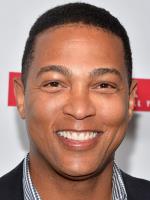
Don LemonEach issue of The Progessive magazine has a page titled, “No Comment.” They are quotes — progressive but mostly anti-progressive — that speak for themselves. They require no comment. In fact, that’s what my quotations category is all about. But in the vast majority of those cases, I do agree. What’s more, because I have to give them all a title, I usually do get to comment on them. The truth is that I like the idea of “no comment” quotes but there is very little that I have nothing to add to.

When I saw that Don Lemon of CNN asked human rights lawyer Arsalan Iftikhar, who happens to be a Muslim, “Do you support ISIS?” I was initially dumbstruck. I just had to share it. It does speak for itself. I think we all know that Don Lemon is an idiot. After all, he’s a guy who asked one of Bill Cosby’s rape accusers why she didn’t just bite his penis — but in a family friendly way. And if that didn’t get him fired, really, what would? Maybe he’ll get a chance by asking a family member of one of the victims of the Charlie Hebdo massacre why he (there was only one female victim) wasn’t packing heat.

I know if Lemon did that, he would preface it with, “I have to ask…” That’s how he prefaced his rape deterrence question to Joan Tarshis. And that’s how he prefaced his question to Iftikhar. It’s a weird kind of interviewing tick that Lemon has. And it clearly demonstrates that he understands that he is asking offensive questions. I don’t suspect that he would ever say to the president, “I have to ask: what’s in that new college tuition proposal?” No, it’s always something inappropriate. He ought to interview John McCain, “I have to ask: were you ever anally raped when you were a POW?”

And that gets to the heart of the matter. The truth is that Don Lemon does not have to ask these questions. I think we all understand why a woman who’s been drugged and is feeling intimidated would not bite her rapist’s penis. And we know that Arsalan Iftikhar is not a supporter of ISIS. He is a better man and I am. I would have tracked down Lemon and punched him. Iftikhar responded with a shocked, “Wait, did you just ask if I support ISIS?!” It was an amazing thing.

Remember, this is CNN — not Fox News. You would think that the network would learned that this is just as offensive and racist as asking an African American man if he supports police killer Ismaaiyl Abdullah Brinsley. I discussed this issue last month, The Bigoted “Muslims Condemn” Ritual. The issue (which Bill Maher still doesn’t get) is that it is bigoted to treat some individual as just a representative of some group you’ve made up. Don Lemon should know better. But at very least, CNN should know better and get memos out to all its “talent.”

But I understand. From Don Lemon’s position, the question is a good thing. He knew it is an offensive question. But he also knew that Iftikhar does not support ISIS. So he was trying to have a little Kumbaya moment where the two of them shared the solidarity of being against the widely despised terrorist group. It was Lemon’s way of showing all of America that Muslims are not all out to kill us. But what he instead did was cast more suspicion on Muslims.

But I just have to ask this of Don Lemon, “Did you start out this stupid, or is this something you learned in broadcast journalism school?”