Sanitized News Coverage Provides Distance

[As anyone who reads this blog knows, the people who comment around here and very smart and knowledgeable. And opinionated. One of these people is Mike Blottin. And I am proud to offer the following as the first article here by an outside writer. Mike makes an interesting argument about how the (understandably) sanitized news coverage of horrific events—be they mass shootings or drone strikes—allow us to be more accepting of them. I’m not sure what can be done about this issue. But it is food for thought. -FM]

Sanitized News CoverageSo I imagine folks living in the United States know all about the shooting that left 27 dead a week ago last Friday at Sandy Hook Elementary, in Newtown CT. For those of your who don’t, read this article from that day. [But really? -FM]

It’s fairly safe to assume that, given the details and number of dead, especially children, the elementary school must have been a pretty gory scene. Something I’ve heard time and time again in the news is that emergency response and public safety personal instructed survivors to close their eyes, while leading them out through the carnage. Again, the assumption is that they did so because it was such a gory scene.

I can understand why they’d tell a young child to do this. Seeing dead bodies, bleeding out, especially of kids their own age who they each might have known personally if not intimately, would almost certainly be traumatic. Likewise, I can understand why they told adult survivors to do so, especially considering that some must have had quasi-parental relationship to a number of the children. But I have a question.

Our culture seems to, if not glorify, normalize violence. Not just physical violence, but emotional and psychological as well. Do you think it would have been better to not have closed the rest of our eyes—the eyes of all of us on the outside? With our eyes closed we block out much of the horror of the event, in addition to those little yet poignant details that impart the most striking impressions. Such details could serve as a powerful motivational force, driving all of us to do whatever it takes to forestall such events from happening again—to make the conditions leading up to them less and less potent.

Those who lived through the Sandy Hook tragedy saw enough of the horrors. But the rest of us? I wonder if it is right to spare ourselves from the full impact of such cataclysms. We’re shocked and saddened by the statistics (26 killed, 20 children), but that’s as far as it goes. And as a result, we don’t actually do anything remotely significant about it.

This is something like willful ignorance: ignoring the preconditions leading up to such a massacre. Instead, we rationalize them. The shooter was crazy; the exception not the rule; a bad apple… And in doing such we end up de facto contributing to them, in one way or another.

Before we begin to meaningfully deal with these events, as individuals and a society, perhaps we must first take our blinders off. We need to get past our own misunderstanding, fears, and hatred—the tunnel vision, that stops us from seeing the world as it really is. And given that, who would argue that what happened at Sandy Creek had to happen? That it is the price we pay for freedom or some other abstract concept?

The Danger of Conservative Frames

Social Security: The Phony CrisisThere are, of course, problems with this “truth by focus group” approach. For instance, polling data show that a majority of Americans do not know that electrons are smaller than atoms. The diffusion of knowledge would be greatly impeded if science teachers were expected to adjust their ideas accordingly. Moreover, recent history suggests that such an approach can be politically self-defeating. Conservatives hammered for years on the idea that welfare perpetuated and even caused poverty, in spite of the overwhelming empirical evidence to the contrary. Those who wanted to preserve the Aid to Families with Dependent Children program (AFDC) as a federal entitlement grew tired of challenging these misconceptions and came to accept the argument that the welfare system needed “reform.” Their idea of reform, of course, was different from that of their conservative opponents: they wanted child care, health care, job training, and, most important, access to employment that paid enough to lift a family formerly receiving welfare out of poverty. But accepting the basic premise of welfare’s opponents—that welfare was a cause, rather than a result, of poverty—proved to be more costly than they had anticipated. Within a couple of years President Clinton had signed a bill abolishing what had been, at least since the 1960s, a major federal entitlement for poor children.

—Dean Baker & Mark Weisbrot
Social Security: the Phony Crisis

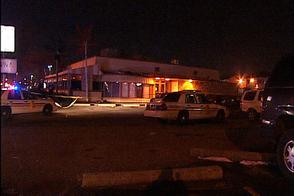
Christmas Eve Party Shooting

the BreezeBack in the early 1990s, Tom Tomorrow published a cartoon with a series of people in different situations, all with guns in hand. He was making fun of the saying, “An armed society is a polite society.” In each panel, this was indeed the case. The last panel was a man standing over a dead man on the ground, “I said after you!” It was a great cartoon because it gets to the heart of this myth. An armed society is a polite society until it isn’t.

WCMH-TV in Columbus, OH just reported on a case which shows the lie to this kind of gun apologetics. People were celebrating Christmas Eve at a nightclub in Columbus, the Breeze. Someone sprayed a group of people with champagne. It doesn’t say whether it was intentional, but I don’t doubt it. People are like that. Big deal. Well, one of the people in the group thought it was a big deal. He or she pulled out a gun and started shooting. One man was shot twice in the chest and a man and a women were injured by flying debris. They are all now in the hospital in stable condition.

It looks like the shooter is not in custody. The police aren’t saying. But they are saying that they don’t have the gun. I would think if they have one they have the other. But that isn’t really the point. The shooter isn’t likely any great menace to society. Instead, he or she is just some drunk who shouldn’t have a gun.

I’m sure there are situations where it is best that everyone have a gun. A war, for example. But in general, I just don’t see that having more guns is going to make a situation safer. Even in a situation where there is a shooter, having a gun has various disadvantages. It makes it more likely that you will become a target. And it might make you attack when you should just run. But the main thing is that in the overwhelming number of cases, there is no shooter. And having a gun is most likely to turn you into a perpetrator rather than a hero.

Happy Holidays vs. Merry Christmas

Christian ToleranceFor years I’ve thought that there was something very obvious under the complaints of (mostly conservative) Christians when people say “happy holidays” rather than “merry Christmas.” But I never took the time to work it out. Well, I spent some time this morning. And it turns out to be about as awful as I had suspected.

The substitution of “happy holidays” implicitly relegates Christmas to the level of all other seasonal holidays. Christians want to be told that Christmas is more than just their holiday—an expression of their religious belief. They want to be told that Christmas is true—an expression of what God really is and not just their opinion.

A moment’s thought on this issue will show that this is true. But notice how the deconstruction lays bare the absurdity of the request. It is not enough to include Christmas in a greeting, the greeting must single out Christmas because, you know, unlike those other religions, it’s true! Now, I’m as deluded as the next man, but I don’t require that others pander to my delusions.

Another aspect of this is the use of majority status to silence the minority. The argument goes something like this, “Most people in the United States are Christians, so why not just say ‘merry Christmas’?” This would be a strong argument if anyone were avoiding a discussion of the holiday. But “happy holidays” does not exclude Christmas, while “merry Christmas” does exclude others. The truth is that minority groups are, for a number of good reasons, insecure. So if anyone is unhappy it ought to be the Muslims, Buddhists, atheists, and so on. With almost 80% of Americans being Christians, what do they have to worry about?

The whole issue is made worse because the very Christians who hate “happy holidays” want to “put the Christ back in Christmas!” This creates a problem for those of us who think that Christmas is a secular holiday having nothing to do with religion. We have no problem with “merry Christmas” because it is just that federal holiday when you are expected to give everyone gifts and cook a lot of food. But if somehow people manage to turn Christmas into a religious holiday, then we will have a problem with “merry Christmas.”

Regardless, I don’t think it matters. Either Christmas is a religious holiday, in which case most people won’t pay it much attention—certainly not clerks at Safeway. Or it is a secular holiday, in which case who cares what we call it? Regardless, it is special pleading for Christians to ask us to think any more of their religion than anyone else’s.

Afterword

As a practical matter, I no longer use “happy holidays” or “merry Christmas.” I don’t use “merry Christmas” because I think it is exclusive and I don’t want to exclude anyone. And now I don’t use “happy holiday” because I don’t want to piss off some angry Christian looking for a fight on the eve of the celebration of his savior. So now I just say, “Have a good day off!” And isn’t that what we all really want: a good day off?

Mercy and Justice in The Bicycle Thieves

The Bicycle ThievesLast night I watched The Bicycle Thieves again. It is a remarkable little film. Its storytelling is so crisp that it is impossible not to be carried away with it. Of course, it must be; there isn’t much of a story. The hero, Antonio, is just about at rock bottom when he gets a job. To have the job, he must have a bicycle. On the first day of work, his bike is stolen. He spends the rest of the movie looking for the bike. Finally, he tries to steal a bike and gets caught.

Thematically, the film is about empathy, mercy, and the context of our actions. We see the story of two bicycle thieves. First, there is the man who steals Antonio’s bike. He is a villain because we see him from the outside. Second, there is Antonio whose desperate act we understand because we’ve seen what leads up to it. Just as we, in our own lives, manage to justify our transgressions, so we can easily justify his. After all, it isn’t just a bicycle, it is his very life.

The other thief is portrayed as more a professional. He certainly does a better job of stealing the bike. He grabs it on a steep hill and rides down so he is impossible to catch. Antonio, on the other hand, rides up a hill and is easily caught. But it is clear that the original thief is poor. He certainly didn’t steal the bike for the malicious thrill of it. We understand why Antonio eventually steals a bike, but it is clear that there is a string of injustices that have led to Antonio’s crime. It is not the case that the injustice started with the theft of Antonio’s bicycle.

There is no justice in the world. We try, of course. We certainly get the illusion of justice. If Antonio had the other thief arrested, what justice is that? He would not get the bike back—it has surely been sold. Instead another poor soul who is likely no less deserving of sympathy would go to jail. How does that make the universe any more right? But there can be mercy.

One of the key moments in the film comes when the crowd is taking Antonio to the police. His son, Bruno, is following along crying. The man whose bike Antonio stole decides not to press charges. He is clearly touched by the desperation of the father and the sadness of the child. This gets to the core of why I so love this film. None of the characters in it are particularly good or noble. But they are at their best when they empathize with each other.

The film ends with Bruno giving his father his hat that had fallen on the ground after being caught by the crowd. Then, Bruno takes his father’s hand. They are both despondent—sadder than they’ve been the whole movie. We see them walk away from the camera, and soon they are subsumed in the crowd. Their personal tragedy is just one of many. Life goes on. Justice is denied. And we feast on the crumbs of each other’s mercy.