2000 Articles

I started Frankly Curious back on 10 November 2009. It was intended to be a blog about nothing in particular. I thought that I was such an interesting guy that people would just find whatever I had to say on a subject fascinating. But over time, I found that my interests could largely be found in four areas: music, film, religion, and especially politics. From the start, I tried to limit my writing about politics. This was mostly because it came so naturally to me. Whenever I wrote about politics, I thought I was slumming. Over time I gave into my politics obsession because people generally liked what I was writing and then other sites started linking to my political articles. No one was linking to my many articles on Don Quixote.

This represents the 2000th article on this blog. (There are more on the site generally. Curiously Clever currently has 113 articles.) And it is interesting to watch how the blog was changed over time. In the first year, I posted 151 articles. And many of these were very short—what I would later use footnotes for.[1] That is fewer articles than I now normally post in one month.

There have been other changes. The average length of articles has gotten longer. I used to write articles in the 400-600 word range and now it is more like 500-700. And that is indicative of the whole process. As good a writer as you may start out as, you end as a much better writer. When I look back at the work I did in the first year, I am underwhelmed. It isn’t that the work is bad, but generally things that I was very proud of at the time seem no better than my current Nighttime Cold & Flu addled ravings.

I think when a person starts a blog, they figure they have something to say. If they stick with it, they will find that there is a feedback loop. The more they write, the more there is to write about. And this is the key: the writing becomes more interesting. My great concern is that I’ve played this out: that I’ve taken the format as far as I can. And I think about this a lot. I can continue doing what I’m doing and get marginally better at it. Or I can change it, add to it. At this point, I don’t know what that might be, except that I would like to do more video.

But for now, this is my 2000th article. Stay tuned!


[1] Like this. In the old days, it would have been a link to another page.

Homosexuality Not Factor in Economics

Bruce BartlettLast night on the Economix Blog, Bruce Bartlett returned to Niall Ferguson’s gay Keynes moment. I wrote about this over the weekend. Basically, Ferguson said that Keynes’ economics didn’t take the long term into account (not true) because he was gay (largely true) and didn’t have kids (true). Most of the criticism has been regarding Ferguson’s homophobia. But as I pointed out, the main issue is that he was dead wrong on the economics: he totally misunderstood Keynes’ most famous quote, “In the long run we are all dead.”

What is also stupid about the comment is that the only reason a man would care about future generations is if he had sperm in the game. I have no children, and yet I am terribly concerned about future generations. Part of this is personal. I have friends who have kids. I have friends who are kids. But beyond that, only a sociopath thinks of himself alone and his own well being. I assume that Ferguson is an atheist, because his wife, Ayaan Hirsi Ali, is a prominent member of the New Atheists. But his attitude is typical of conservative religious people who think without the threat of God’s wrath, there is no reason not to kill everyone you don’t like.

In Bartlett’s column, he makes a similar error. Ostensibly, his argument is that Keynes’ real mistake was that he mis-titled his book and thus gave the wrong impression about his work. But he spends most of his time on claims of Keynes’ homosexuality. It seems like he is trying to give Ferguson cover. It doesn’t much matter one way or the other. Clearly, no one particularly cares what Keynes did in his bedroom nor does anyone seriously think that it made him short sighted. But Bartlett does think his homosexuality had an effect on his work:

I think this made Keynes more willing to think “outside the box,” as we say today, and consider ideas that ran counter to the conventional wisdom.

I don’t think this is true. Everyone has experiences that allow them to see what it is like to be an outsider. If this kind of thing is going on, I’m sure it works the other way around. There are lots of people who never really accept their sexual orientation. Clearly doing so requires a mind that accepts that social conventions are often arbitrary and wrong. But it is incorrect to think that the process runs: “gay” leads to “outsider” leads to “thinking outside the box.” It just doesn’t work like that.

So let’s just all agree that being gay really has nothing to do with economic brilliance, either for good or ill.

Afterword

I don’t mean to be down on Bruce Bartlett. Although he has been a big player in a lot of really bad conservative policy over the years, he’s mostly been dead on the last few. He does look at data and act on it. He’s a good example of what I am surprised we don’t see more of: a conservative who stood still. Rather than be dragged to the right by his party, he has become one of its most effective critics.

Benghazi!

John FugelsangThis evening as my flu or whatever slowly fades away, I thought you could use a little cheering up. John Fugelsang and TV’s Frank Conniff created a little spoof on all the Benghazi hysteria in the right wing echo chamber. Oh, you don’t know what I’m talking about? You probably remember an attack on the American diplomatic mission in Benghazi where four of our countrymen were killed. But you probably thought that was long over.

This morning, Jonathan Bernstein noted, this is big news on the right. “Even though no one has ever made clear exactly what terrible secret was the subject of the supposed cover-up; even though a succession of ‘revelations’ have all turned out to be nonsense (here’s one from just last week). Doesn’t matter; discredited accusations are just forgotten and new ones are substituted.” He’s been arguing for some time that this whole thing is making Republican politicians lazy because they can just go on right wing radio shows and archly say, “Benghazi!” And all the listeners murmur to themselves, “Oh, yes. I’ve heard about that. Obama! Cover up! Worse than Watergate! Worse than Iran-Contra! Worse than WMDs!” Of course, that isn’t saying much, because they don’t think Watergate, Iran-Contra, or WMDs were bad at all.

Now you know enough to enjoy Fugelsang and Conniff:

Tyranny and the End of Gun Culture

James PorterEd Kilgore over at Political Animal has a great article, None Dare Call it Treason. It is about the new NRA president, James Porter, and his loose talk of tyranny and violent opposition to it. I know the kind of guy. There is an enormous subsection of the male population who have fantasies about taking up arms against the government. And it isn’t limited to conservatives (although it primarily is). I’ve talked to young slacker game addicts who have told me about their desires to make their simulated urban combat real. Of course, most of these people do not go out and join the army. They just live with their fantasies. In fact, I dare say that most of them are cowards. Regardless, I think that is usually what’s going on when some guy says something like, “Obama’s not a valid president, somebody ought to take him out!” (Not that Porter would go so far; he would just say that Obama is a “fake president.”)

Kilgore notes that these kinds of guys normally think of themselves as ultra-patriots. Yet they are “deliberately courting the impression that loyalty to their country is strictly contingent on the maintenance of laws and policies they favor, to be achieved if not by ballots then by bullets.” You know: treason. In fact, I think it is only because of conservative mythology that we as a society put up with this. We apparently have to take it as given that Timothy McVeigh is a patriot, right up to the point that he starts bombing government buildings. If it were reversed—if liberals went around talking armed insurrection—the FBI would be all over them. But we are supposed to assume that conservatives are patriotic, even though right now, conservatives are the only major group in our society that are rightly called revolutionary.

Part of this must be due to the fact that they see themselves fading away. Tom Hamburger wrote a very interesting article at the Washington Post this afternoon, NRA Celebrates Recent Gains on Guns; Faces Long-Term Challenges. It talks about how a lot of gun rights people are concerned that this recent “victory” may be a last hurrah for the NRA. In the 1970s, 50% of all households had guns. It is down to 34% now, and it is sinking. And being against the most benign gun restrictions does not make joining “gun culture” sound appealing to the rest of the nation.

A whole kind of conservatism is fading away: cultural conservatism. And let’s be clear: that is the bedrock of the Republican Party. Much of it is still locked up in the evangelical movement. But a large part of that is gun culture. It is no accident that “God and guns” are linked together. The truth is that most conservative men associate much more with the latter. And as fewer and fewer men care about guns, what will be left of the conservative movement? When someone like James Porter spouts off about tyranny, what he’s really saying is that his way of life is dying. And he’s right.

Posted in Uncategorized | 1 Reply

Should We Care About Immigration Reform?

Statue of LibertyImmigration reform! Why is it that I don’t care? Greg Sargent and the guys over at The Plum Line tell me that I should care. They seem to think that something will happen. (They also think that something is still going to happen on gun reform, so decide for yourself.) Today, Sargent reported on a new report from the Heritage Foundation that is meant to kill immigration reform. But he notes that the Republican establishment is pushing back on this. So maybe we will get actual immigration reform after all.
I have a couple of problems with this. First, the good thing in the bill is not very good. It offers a ridiculously arduous route to citizenship that will take at least 13 years to accomplish. And with all the details—background check, proof of residency before a certain date, paying of back taxes—it will just be impossible for a lot of people. And those who can do it, are likely looking at a lot longer a time than 13 years. But I’m okay with this; it’s not very good, but it is something.

The problem is all the conservative sweeteners that are being offered up for this long and winding road to citizenship. In particular, we are looking at a huge increase in the indentured servitude program known as the H1-B visa program. As I reported two weeks ago, there is no high tech worker shortage. This is just an effort by the government to bring down the wages of high tech workers.

Then there is the whole “secure the boarders” aspect of the law. This just seems like an effort to militarize the border. Plus there’s lots of room for conservatives to claim that the border is not (Ever!) secure so there can be no pathway to citizenship. I can well imagine seeing Republicans on Fox News saying, “As long as there is one person getting over the border, it is not secure!” (They’ll probably start complaining about sea traffic.)

But the fact is that the Gang of Eight bill is the most liberal it will ever be. Once it goes into the House, who knows what will become of it. I’ve already reported that they want to increase the path to citizenship to 15 years, because whatever is on offer, they must make it worse. By and end, it could be no better than my recent modest proposal.

So I’m not very excited about immigration reform. I suppose I would take the Gang of Eight bill if it were on offer. But it is a close call. And we might be best off waiting a couple of election cycles and seeing if we can get a much better bill.

The Magnificent Orson Welles

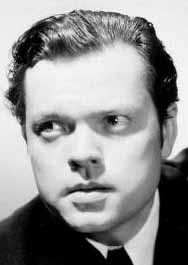
Orson WellesOn this day back in 1856, Sigmund Freud was born. I’m not a huge fan of the man, but there is no doubting his importance. And silent film legend Rudolph Valentino was born in 1895. He died at the age of 31 due to complications from appendicitis. In many ways, I think that’s not a bad age to die at. Leave them wanting more. I often think that would have been a good career move for me. Regardless, it worked well for Valentino, although I’m sure he would have preferred to live longer. His life was good.

The great Willie Mays is 82 today. Singer-songwriters Jimmie Dale Gilmore and Bob Seger are both 68. I doubt Seger still has “the fire down below”—if he ever did. Spineless war monger Tony Blair is 60. I still maintain that if Blair had not gone along with the Iraq War, Bush could not have done it. So I blame Blair almost as much as I do Bush. One half of They Might Be Giants, John Flansburgh is 53.[1] And George Clooney is 52.

Before getting to the day’s winner, there are a couple of important events today. The Hindenburg exploded over New Jersey on this day back in 1937. To this day, no one is certain what happened. I’ve always focused on the fact that it was filled with hydrogen, which is explosive around, you know, oxygen. Regardless of what went wrong, there would have been no explosion if it used helium. So why didn’t they use helium? The same reason that people usually die pointlessly: profits. Helium was much more expensive than hydrogen. People come and go, but profits are something a company always has! And speaking of which, three years later to the day, John Steinbeck was given the Pulitzer Prize for The Grapes of Wrath.

But the day belongs to the great film innovator Orson Welles, who was born on this day back 1915. You can’t have read me for long without knowing my fondness for Welles. But that doesn’t mean I’m one of these guys who thinks he was some sort of a god. The truth is that I pretty much go along with Simon Callow who says that Welles was primarily interested in experimenting on film. But that doesn’t mean that Welles was not also a great storyteller. But I will allow that we might have gotten more storytelling from him if he hadn’t been such a master of the art. Here is a little bit of my writing about him:

Falstaff “Railed Against Our Person”?

Rotten Tomatoes for Orson Welles

The Other Side of the Wind

The Magnificent Ambersons

Happy birthday Orson Welles!

Afterword

This is the only cover I ever remember They Might Be Giants doing. It is perfect for them:


[1] Interesting coincidence: In the film They Might Be Giants, Mr. Small thinks that he is Rudolph Velentino.

Republicans Don’t Care About Debt

Paul KrugmanI always look forward to Mondays and Fridays because Paul Krugman has a column on those days. Even after all these years of reading him, he still has much to offer about what is going on in the world. And this morning, he put together a number of pieces about why our economy is in the mess that it is in. This probably won’t come as a shock to readers of this blog, but it is still edifying.

He offered up a great way to think about government debt. If you look at the ten presidents who served from World War II up until Obama, only three left office with more debt than they entered with. Who were those three? Reagan, Bush Sr, and Bush Jr, of course! And what do they have in common? They are modern Republicans: people who don’t want to make the government a meaner, leaner fighting machine. They want to destroy it. Remember the Grover Norquist quote, “Our goal is to shrink government to the size where we can drown it in a bathtub”? That’s what they want.

Or at least, that’s what they claim to want. The truth is that they are just children. When they aren’t in power, they don’t want the government to do anything. When they are in power, they want the government to do all kinds of things (mostly for the rich) and they don’t want the government to pay for it. Krugman sums up this philosophy as it now stands:

The funny thing is that right now these same hard-line conservatives declare that we must not run deficits in times of economic crisis. Why? Because, they say, politicians won’t do the right thing and pay down the debt in good times. And who are these irresponsible politicians they’re talking about? Why, themselves.

Krugman doesn’t really get into this, but there is another issue. The conservatives use budget deficits as a cudgel. A balanced budget, of course, depends upon two things: spending and income. They are always for cutting income—while in power or not. But they are only for decreasing spending when they are not in power because of… the budget deficit! This all goes back to my last article: conservatives don’t believe in economics or any other science, except in as much as it justifies them doing what they were going to do anyway.

It’s all shameful. The question is whether the people will ever figure it out. I fear that by 2016, the people will think, “The Democrats have had their go; it’s time to let the Republicans try.” And I know what we will get: huge tax cuts and a ballooning deficit. And we’ll likely also have a vice-president to assure us that deficits don’t matter. At least until a Democrat is president again.

Conservative Apologia Economics

Glenn HubbardAdam Davidson wrote an article last Thursday that tries to find common ground between economists Larry Summers and Glenn Hubbard. For those of you who don’t know it, Summers is a Democrat who was Treasury Secretary under Bill Clinton. Hubbard is a Republican who was the Chairman of the Council of Economic Advisers under Bush Jr. Davidson was very unhappy to find that the two men didn’t share any common ground.

This morning, Jonathan Chait wrote about this article. He argued that the problem was that conservative economists, while wishing to make the world a better place, were also interested in reducing the size of government as an end in itself. Liberals may want a bigger government for practical reasons but they don’t want a bigger government because they think it is necessarily better to have one. Chait is right about this, but I think he is being far to easy on the likes of Glenn Hubbard.

My experience with economic conservatives is that they think that a smaller government will be better for everyone, but even if it isn’t, they still think it is best. Chait would have us believe that the good of everyone trumps (or is at least equal to) the philosophical commitment to small government. But he’s wrong. And it is very clear from this line in the Davidson article, “Hubbard told me that a favorite book in high school was Friedrich Hayek’s Road to Serfdom, a 1944 treatise against big government that remains a sacred text among conservatives, including Paul Ryan.”

There are several problems here. First, The Road to Serfdom is not really a economic book and Hayek is not really an economist. It is very much like the conservatives’ Communist Manifesto. The economics in it have been repudiated, but conservatives hang on to it because it tells them what they want to hear. That’s understandable for a true believer like Paul Ryan. But how is it that a very smart and erudite economist like Glenn Hubbard still holds on to it? The answer I fear is that at this point, Hubbard only does economics as a form of conservative apologia.

On the other side of this divide, we have Larry Summers. According to Davidson, he’s an economic liberal. But that just isn’t true. For example, he’s a big believer is a “strong dollar” policy, which is just a way to hurt workers and prop up the wealth of the rich. But even apart from that, if the conservative position is the Hayekian filled thought of Hubbard, then the liberal side should be the Marxist filled thought of Paul Sweezy. Summers really is in the middle. His position is the data-driven compromise—at least as he see it. Hubbard’s is the ideology-driven extremist position.

And this is why there is no common ground. In other words, Davidson is trading in more false equivalence. And this is one of the primary problems with our media system: it treats extremists on one side as though they were just as reasonable as moderates on the other. And then it asks the question, “Why can’t they just get along?” Yeah, I wonder.

Afterword

Here is a good example of who Glenn Hubbard has become (I don’t doubt he was a good scientist early on in his career). This is from Inside Job:

Crickett: My First BBQ!

Crickett, makers of toys that celebrate American traditions, introduces My First BBQ. It’s never too young to start your children on the path of patriotic family values! Don’t let the government take away your right to choose how to amuse your kids. Let your gut be your guide.

My First BBQ

Michael Palin

Michael PalinOn this day back in 1813, Soren Kierkegaard was born. Then, exactly 5 years later, Karl Marx was born. I have much to say about both of these men, but I’m just not up for it. And especially, I’m not up for choosing which of them deserves to win the day, so I decided to give it to neither of them. You know when a person is important: they never referred to themselves by a single name but now we do. Also: Tammy Wynette was born in 1942. I didn’t even know she was dead. Apparently, she had a lot of health problems.

But the day belongs to Michael Palin who is 70 years old today. Here is a little bit of “Tomkinson’s Schooldays” from the series he did with Terry Jones, Ripping Yarns. The opening has a wonderful introduction to the story with Palin playing a grand and serious actor who cannot remember his lines. It is very funny and very Palin:

Happy birthday Michael Palin!

Afterword

Now I’m going back to bed.

Sick and Laughing

Oliver ReedI swear I am getting worse. In addition, I think I’m taking too much cold medicine. The combination of the nighttime cold & flu and the cough medicine has made it so I can’t quite walk straight. Nonetheless, the cough goes on and the nose drips like the bathroom faucet. In order to get though this, I’m watching comedy. And generally, I’ve found them very funny. So in what follows, keep in mind what Jim Hogshire wrote about taking a cup of Robitussin. “At four o’clock in the morning I woke up suddenly and remembered that I had to go to Kinko’s copy shop and that I had to shave off about a week’s worth of stubble from my face. These ideas were very clear to me. That may seem normal, but the fact was that I had a reptilian brain. My whole way of thinking and perceiving had changed. I had full control over my motor functions, but I felt ungainly. I was detached from my body, as if I were on laughing gas.” He continued, “While I was shaving I ‘thought’ that for all I knew I was hacking my face to pieces. Since I didn’t see any blood or feel any pain I didn’t worry about it. Had I looked down and seen that I had grown another limb, I wouldn’t have been surprised at all; I would have just used it.” That’s about right.

Yesterday, I watched a stand-up special of Todd Glass. He is what I have come to think of as an “angry comedian.” He’s mad about the way life is. In general, these are not my favorite comics. But there is something so sweet about him that it is almost impossible not to love him. And he gets wonderfully sidetracked. Here he is going three stories deep without even trying:

Then I watched Galaxy Quest. This film has a special place in my heart. As you probably know, the film is a parody of Star Trek and its fan phenomenon. At one point, in the early days of the internet, if you searched for my name, it would take you to the Star Trek FAQ. Apparently, I had helped out the writers of it, but for the life of me, I can’t remember what I did. And yes, I have been to a Star Trek convention: twice. I would normally not have done such a thing, but my first wife was way into the show. Really. I’m not just saying that to avoid looking bad. And I can prove it: I have gone to comic book conventions all by myself. So there you go.

As a result of this, I think Galaxy Quest is hilarious. And even though I had seen it before, I laughed a great deal. Afterwards, I looked the movie up on Wikipedia. It included quotes from people who have been in the series. Now I’m mostly only interested in the original series. The later series are not as playful. So I was naturally pulled to a quote from William Shatner, “I thought it was very funny, and I thought the audience that they portrayed was totally real, but the actors that they were pretending to be were totally unrecognizable. Certainly I don’t know what Tim Allen was doing. He seemed to be the head of a group of actors, and for the life of me I was trying to understand who he was imitating.” You gotta love that guy!

Finally, I put on the 1973 version of The Three Musketeers. I had remembered liking the film when I was a kid. And I suspect that at the time, it was really funny. But I found all the pratfalls forced and rarely funny. In particular, Raquel Welch plays an accident prone wench, but because of the way it is directed, it just doesn’t work for me. It is all too much in long shot. I suspect that it would work a lot better on the big screen. Regardless, it is hard not to love Oliver Reed as Athos. What’s more, I learned that he was banned from the state of Georgia because of his drunken escapades. My hero!

Anyway, that’s my life. I feel marginally better, but my cough is worse than ever. Time for more medicine.

Niall Ferguson’s Gay Keynes Moment

Niall FergusonA funny thing happened on the way through the question and answer session of the Tenth Annual Altegris Conference in Carlsbad. Niall Ferguson claimed that John Maynard Keynes was all wrong about economics. But he said it in a most inappropriate way. Let me back up a bit, because I know most people have no context for this.

I’ve written quite a lot about Niall Ferguson. He’s a historian who has got a lot of attention over the years providing ignorant economic analysis that conservatives really want to hear. In particular, he claimed for years that hyperinflation was just around the corner. He eventually admitted that he was wrong. But since then, he’s become a standard conservative hack. In the run up to last year’s election, he wrote a highly publicized attack on Obama that that was riddled with falsehoods and was more generally just deceptive. We expect better from Harvard professors, but now that Ferguson is getting $50,000 a pop for speeches to the 1%, that is who he represents.

Needless to say, Ferguson believes that all we have to do is cut government spending to the bone and it will be Morning in America. I’m not going to go into all that is wrong with this; I’ve written enough about it elsewhere on this site. The main thing to understand is that Ferguson (like most conservatives) simply believes in cutting the government and so he disregards Keynes. He has no cogent arguments against Keynes.

So he took on one of Keynes’ most quotable lines, “Long run is a misleading guide to current affairs. In the long run we are all dead.” Keynes was attacking economists of the time whose only advice about the Depression was that, “In the long run it will be okay.” Tom Kostigen reported that Ferguson said that while we might not be alive, our children and grandchildren would be. This, of course, totally misses the point Keynes was making. But it got worse. He said that Keynes didn’t care about future generations. Because he didn’t have children. Because he was gay.

The only part of that which is true is that he didn’t have children. His wife did suffer a spontaneous abortion, however. Regardless, Ferguson is not an idiot. He quickly put out an unqualified apology. I don’t particularly care one way or another. On the one hand, I know what it is like to get excited and say something that I don’t mean. On the other, I know that Ferguson is an elitist and that is its own kind of bigotry.

What I think is important here is how a supposedly serious academic stoops to character assassination rather than argument. And that is typical of the conservative economic movement. I understand that we all have our list of thinkers who we trust. I am inclined to believe something that Paul Krugman says and inclined to be skeptical about something Ferguson says. But that doesn’t mean I stop thinking: sometimes I disagree with Krugman; sometimes I agree with Ferguson. Ferguson admitted defeat on the inflation argument he was having with Krugman. But that didn’t cause any rethinking of his economic model. And that was because he doesn’t have an economic model. Like most conservatives, he has certain ideas about how society should be run, and he shoehorns all economic information into that.

And that is the lesson of Ferguson’s “Gay Keynes” moment.

Update (6 May 2013 9:21)

According to various sources, Keynes was gay. So I was wrong about that, not that it matters. However, it is generally true that any homosexual behavior tends to cause someone to be labeled as strictly homosexual. Human sexuality is far more complex than that. As Woof says in Hair, “Well, I wouldn’t kick Mick Jagger out of my bed, but uh, I’m not a homosexual, no.”