Ads Don’t Matter in Presidential Elections

John SidesJohn Sides is a very smart political science professor at George Washington University. But sometimes, he’s kind of boring. Like today, when he was over at Wonk Blog and explained, Four Reasons It’s Hard to Campaign Your Way to the Presidency. I have to assume that he was trying to counter the idea that the well-run campaign is the one that finishes first. No one I read makes that argument. In anything, I personally go too far the other direction: the only thing that matters are the fundamentals. I’ll admit that there are people who who hold clearly incorrect opinions on how a president gets elected. But are we really going to spend all of our time trying to correct fools who will never learn anyway? Does Dr. Sides think the likes of Cokie Roberts reads Wonk Blog?

There is one argument that I have heard from time to time over the last six months. It goes like this: Obama won the election because he spent money early to define Romney as an out of touch plutocrat and Romney was never able to get past that label. Sides counters this by noting that Obama only really pushed that narrative for two weeks in July. I would go further: people already thought that Romney was an out of touch plutocrat. If the ads worked, it was only because they reminded people why they hated Romney. There is a tendency among political pundits to assume that the people are empty vessels just waiting to be filled up with politician talking points. It doesn’t take much time listening to Romney himself to decide that he is an out of touch plutocrat:

Sides’ four reasons are not that interesting. They all come down to the same basic thing: commercials are just not that useful in presidential campaigns. It is one thing for corporate money to flood into California and confuse the population about GMO labeling. In that case, there is either going to be labeling or there isn’t. With a presidential campaign, one of the guys is going to become president. And for most people, it isn’t going to matter all that much which—or at least, that’s what they think until they look back on two years with the Republican president. And that gets to Sides’ best observation: there are ads on both sides pushing against each other. It is hard to get much advantage in such a situation.

The only thing that happened in the 2012 presidential campaign that had a notable effect outside the economic fundamentals was the Obama get out the vote (GOTV) operation. Sides didn’t discuss this, because it wasn’t inside the context of his article. But it is part of the campaign. And I care about it, because it goes along with my guiding philosophy of elections: people almost always vote the same and the only difference is who decides to vote. The fact that Obama had an highly effective GOTV effort probably did earn him an few million extra votes. Was that enough to swing the election? No. But under the right circumstances, it could have been. What’s more, it is something that will continue to help liberals. Even if the Republicans get very good at GOTV, most of their backers already vote. They don’t have the potential to greatly improve their numbers.

As to Sides’ general argument: I agree. Advertising doesn’t mean that much in most elections. But pundits will continue to cover elections as though they do. It is fun to cover and it is fun to read (or watch).

Coup d’Etat and Economists

Dean BakerIf I found myself in charge of a new country after a coup d’etat, and was limited to a single economist to help me build the new country, I wouldn’t want some Nobel Prize winner—not even someone like Paul Krugman. The reason is that those who win such a prize are brilliant in certain ways, but that doesn’t necessarily mean much when it comes to practical economics. After all, one only needs a single great idea (and often not even that) to get a Nobel. As we’ve seen with any number of brilliant Chicago School economists: when it comes to the actual economy that all of us struggle with each day, they are usually driven much more by their ideological preferences rather than what the profession generally has to teach about the economy.

Take for example the idea of Ricardian equivalence. This is an idea from David Ricardo, an economist who followed closely on the heels of Adam Smith. The idea is that there is a limit to government stimulus.[1] If the government decides to spend beyond its income, the taxpayers will assume that this means that future taxes will have to be raised to pay off the spending. As a result of this, the taxpayers will reduce their spending to provide for the taxes that they know are coming. There is one obvious problem with this theory: people aren’t nearly as rational as economists always assume. And there are other problems. But if we assume that the model is completely accurate, it still doesn’t prove that stimulus doesn’t work.

An example will help. Let’s assume the government provides stimulus over 2 years that they will pay off by issuing 30 year bonds. The taxpayers will not set aside all the money to pay their taxes in that 2 years. They put aside a much smaller amount for the 30 years over which the bonds will mature. Thus, a big government stimulus will not be offset by a huge reduction in spending by the private sector. And this is the case even if Ricardian equivalence is right, which is far from certain.

I bring this up, because lots of distinguished economists argued that the 2009 stimulus bill (ARRA) couldn’t help the economy because of Ricardian equivalence. They weren’t talking long term, here. Instead, they just didn’t understand a basic economic fact. They were lost in the mythical fairy land were theory is reality. Economics as a whole is prone to this mistake, but conservatives are especially prone to it. I’ve been thinking about this since Dean Baker wrote yesterday, “As a general rule economists are not very good at economics.”

A lot of people wonder why Baker has never been given a Nobel Prize. After all, he is consistently right about pretty much everything. Check out this Birthday Boasts article last year about a lot (but certainly not all) of the things he’s been right about that most of his fellow economists have been wrong about. But really: they don’t give out Nobel Prizes for that kind of thing. Instead, they give out such prizes to focused work on something (usually) very small. Although I may find people like Paul Krugman and Joseph Stiglitz very useful in understanding economic policy, it isn’t because of their Nobel Prize winning work.[2]

Baker’s article is about how the world should never have taken Reinhart-Rogoff 90% debit cliff seriously in the first place. As I noted last month:

The second reason I didn’t accept this paper comes from an idea that Dean Baker has been drilling into my brain the last few years: debt-to-GDP ratios are meaningless. What matters is the interest burden of the debt. A government will have no more difficulty managing a 50% debt-to-GDP ratio at 4% than it will a 100% dbt-to-GDP ratio at 2%. Or let me personalize it: would owing $2,000 on a credit card really matter if the bank only charged you $5 per year in interest?

When put this way, economics starts to sound like a very simple science that requires little more than common sense. Indeed, that’s how Baker noticed the housing bubble years before it exploded: house prices had always stayed pretty much flat when adjusted for inflation. Then, in 1995, they started going way up. There was no reason to believe that there was a real reason for houses to be worth more. So Baker’s conclusion: it was a bubble.

When I have my Augusto Pinochet moment of being able to rebuild a country after a coup, I will not reach out to a brilliant, but ideologically blinded Nobel Prize winning economist like Milton Friedman. Nor will I consult with much more clear-sighted Nobel laureates like Krugman and Stiglitz (although they would both make excellent seconds). Instead, I would pick Dean Baker because I think he sees the world as it is rather than as it ought to be. Of course, it matters that he is a liberal and thus cares about the effects policies have on people. But in an economic adviser, the first thing you want is someone who can see the world clearly. And on the right especially, we get ideology before reality or people. Now all I have to do is find a good coup d’etat opportunity.


[1] Actually, this is more how it seems to be used today by conservatives, especially following Robert J. Barro’s work. The original idea is more general: taxes and debt are the same because the people know they will have to pay for it one way or another. Apparently, Ricardo himself didn’t believe that such an equivalence existed. This gets to the heart of something that is wrong with science generally: ideas are often celebrated more because they are interesting than that they are right.

[2] I am not, however, saying that their research is irrelevant. Krugman’s work on liquidity traps and Japan have been really helpful in analyzing what we are currently going through. But that isn’t the work he got the Nobel for. Stiglitz’s work was on asymmetric information in economic models. That does not have a direct relationship to our economy. It does, however, show how screwed up economics as a science has been. The idea that information asymmetries would not be fundamental to the science demonstrates how lost in theory land it has always been.

Bill Maher Spouts Anti-Muslim Racism

Glenn GreenwaldThis is an amazing bit of video from Friday’s Real Time with Glenn Greenwald really taking Bill Maher to task on his anti-Islam rhetoric. Greenwald is making a kind of Some People Push Back argument. He is saying that it is outrageous for Americans to be shocked at the violence in the Middle East when we have been by far the most violent player in the region. But as is often the case, Maher pushes the argument in a religious direction and really shows off his ignorance. For one thing, he notes that Islam has been around long before America became a country. I guess the implication is that Islam was very violent then, but that isn’t the case. Then he states that for the last 200 years, Christianity has been violent. That’s almost too ignorant to be believed.

Maher is demonstrating the biggest problem I have with the New Atheists. They all have a strong tendency to be apologists for Christianity and Judaism. This isn’t so much because they defend these faiths. It is just that they lose all perspective when it comes to Islam. It is the usual mechanism by which racism justifies itself. When a Christian bombs an abortion clinic, they don’t tar all Christians with the act: Christianity is most clearly not the reason for the attack. But when a Muslim blows something up, it most clearly is because of the religion. It is madness. And it is very often explained by quoting evil things in the Koran and nice things in the Bible. But it could just as easily be the other way around. It isn’t, because Bill Maher and other neocons know a priori their conclusions.

What I find most amazing is how parochial people like Bill Maher and Sam Harris are. They think themselves anything but. However, they attack what is foreign and forgive what is close by. Sure, Christians may be silly, but they aren’t violent. So everything is seen from a western or American point of view. The Christians can’t be terrorists because they are part of us, attacking another part of us. But when young Muslims attack the Boston Marathon, it is an attack of them against us. All of this thinking leads to neoconservative policy. And as much as Maher and Harris might claim otherwise, it is really nothing more than racism.

Greenwald is right and Maher is wrong:

Florence Nightingale and Soviet Spies

Florence NightingaleOn this day in 1918, Julius Rosenberg was born. He was very clearly spying for the USSR, and our government put him and his wife Ethel to death to 1953. I hate this whole episode. First, it is far from clear that Ethel had anything to do with this case. Also, all the other conspirators were given prison sentences, rather than death. So why were these two killed? I really think they became a symbol of the evil Soviet Union infiltrating our country and our culture. What’s more, there was the whole idea that the Soviets weren’t smart enough to make an atomic bomb, they must have stolen it from us. So basically, the Rosenbergs paid the ultimate price to make Americans feel better about the Soviets getting the bomb. I’m sure if we could have, we would have made another Jewish couple pay for Sputnik 1. I used to think, “We are better than this.” Now I just think, “This is who we are.”

The great French composer Gabriel Faure was born on this day in 1845. It is hard to encapsulate his style. At his best, I think of him as pre-Debussy. And I mean that as a compliment; Debussy is often too impressionistic. Faure never loses focus on the music as you can see in this piano version of Sicilienne opus 78:

The great philosopher Jiddu Krishnamurti was born on or about this day in 1895. I used to read him when I was a kid. I think I learned a bit from him, especially about the difference between affectation and a genuine response to the external world. I still struggle with that. But there is nothing affected about my crush on Katharine Hepburn who was born in 1907. Talk show host Tom Snyder was born in 1936. And comedian George Carlin was born in 1937.

The quotable Yogi Berra is 88 today. Burt Bacharach is 85. Steve Winwood is 65, so I guess we won’t be hearing anything from him in the future. Miller’s Crossing star Gabriel Byrne is 63. Ving Rhames is 54. And Emilio Estevez is 51.

The day, however, belongs to Florence Nightingale who was born on this day back in 1820. In general, her exploits during the Crimean War are believed to be newspaper hype. But she did go on to found a nursing school that effectively started professional nursing. She was also very important in the move to display statistical information in graphical form. Today we take this stuff for granted, but it was a huge leap forward in making information intelligible. Today, we see this kind of presentation of data in People.

Happy Birthday, Florence Nightingale!

Surely It’s Richard Feynman!

Richard FeynmanOn this day back in 1824, French academic painter Jean-Leon Gerome was born. English illustrator Walter Goodman was born in 1838. The great American songwriter Irving Berlin was born in 1888. Choreographer Martha Graham was born in 1894. The great Salvador Dali was born in 1904. Comedians Phil Silvers and Foster Brooks was born in 1911 and 1912.

The brilliant political comedian Mort Sahl is 86 today. And so is the bumbling Colonel Crittendon from Hogan’s Heroes, Bernard Fox. And Nation of Islam leader Louis Farrakhan is 80.

It was hard to pass up Irving Berlin and Salvador Dali, but the day belongs to physicist and curious character Richard Feynman who was born on this day in 1918. He was one of the founders of quantum electrodynamics, which is basically quantum mechanics and relativity all rolled into one. Most people know him from his book, Surely You’re Joking, Mr. Feynman! It is a fun book to read, although I was never sure if I believed him. I suppose now I do. When I was younger, I thought he had a good too many wonderful adventures. But now I know it is all in the telling; there isn’t anything especially exotic about the stories. He’s just a good and funny writer.

Happy birthday Richard Feynman!

Republican Expectation Mistakes

Josh BarroJosh Barro made an excellent point a week and a half ago, How Conservatives Are Helping Obamacare. It isn’t the focus of the article, however. He noted that the Republicans are managing expectations about the implementation of the new healthcare law. So if next year comes without riots and a syphilis pandemic, people will likely be relieved.

This is interesting. You may remember back to the debates of the 2012 presidential election. Normally, each side tries to keep expectations low. “I’m just hoping my candidate can get through the debate without urinating on himself.” In fact, this is so expected that it is the major focus of discussions by the pundits in the lead up to debates. But this last year it was different. The Republicans set expectations high for Romney. It all worked out for him in the first debate, not so much because he was strong, but because Obama was so weak. I wondered at the time why this was, but that was about it.

Now with Republicans setting expectations for Obamacare so low, I have a thought. The Republican Party is more and more a closed system. It has its own media sources and interacts as little as possible with normal, middle of the road, media, which they consider to be liberal and biased. As a result, they convince themselves not only that they are right but that the other side is so obviously wrong that conservatives needn’t even worry about it. This was certainly seen in the last presidential election where a lot of conservatives thought Obama was such a weak candidate that they thought of course he would lose.

Another result of this kind of thinking is the extreme politics. Conservatives are not worried about working with the Democratic Party because they think that soon the Democratic Party will die off as we see riots in the street, inflation at 200% per week, and of course the coming syphilis pandemic. So why compromise when total control of the government is only one election cycle away.

Regarding Obamacare, they don’t think it will be a disaster, they know it. And so they don’t even play the expectations game. In fact, they think that it will be so bad that they could hardly overstate the catastrophe that is to come. This is a major error of judgement, of course. The facts indicate something else. Jonathan Cohn wrote a good article about this. The biggest issue is that the vast majority of people will see no change in their healthcare at all—they won’t even notice the Obamacare implementation. The people most affected will be those who don’t currently have health insurance and will get it. So they are likely to be pretty happy. Regardless, these are mostly poor people who vote Democrat anyway.

But facts really do not matter when everyone in your circle just knows that hyperinflation is right around the corner. The next step is for the conservatives to turn to conspiracy theories. Many conservatives even now argue that there really is hyperinflation and that the government is just hiding it. This kind of thinking is also at work with the “voter fraud” obsession on the right. They knew that Obama couldn’t win in 2012, and in fact he didn’t, because of voter fraud.

The irony is that thinking liberalism is in its death throes is causing the Republican Party to become less and less relevant. Eventually, it must create a critical imbalance in the party that causes it to go back to its roots as a conservative rather than revolutionary party. I look forward to that, because a real conservative party is needed—not just for the health of the Republicans but for the Democrats as well.

Hillary Killed Foster and Stevens!

Hillary ClintonThis morning, Greg Sargent returned us to the glory of the 1990s when we were treated to the delights of mainstream media sources seriously discussing allegations that Hillary Clinton had Vince Foster killed. What is particularly tragic is that Foster killed himself, largely as the result of all the vicious attacks on him by the conservative movement. Of course Foster suffered from depression, but I suspect that had he never been part of Clinton White House, he would be alive today. So exactly the people who hasten his death, then used his death to attack the Clinton White House, most especially Hillary Clinton.

Sargent argued that those days are back. In particular, he argued that a new Karl Rove video is intended to bring back the “angry Hillary” meme. And that’s to be expected. Last year, the focus of the Benghazi hysteria was all on Obama, because they were trying to defeat him. Now they are focused on Clinton, because she is the front runner for 2016. I don’t think it as much shameless as it is pathetic. Conservatives really do not have any issues to deal with, so they trump up the most ridiculous “scandals” and beat them until finally the mainstream media start to cover them.

Check out this short video:

The argument is that Clinton was briefed by Greg Hicks, the ambassador’s aide, who told her it “was in fact terrorism.” Then, Clinton made a public statement contradicting that. But here’s the thing: one man’s opinion does not make Truth. During the lead-up to the Iraq War, Cheney and his minions combed through the intelligence, pulling out everything that made the case for war and ignoring everything that didn’t. There are always conflicting data. Clinton was no doubt briefed by many people and got conflicting information from many sources. All this video really says is that Clinton didn’t use the data from one source.

The video goes on to say that someone in the administration told him not to go to the press. There are questions about this anyway, but even if strictly true, it doesn’t mean much. I imagine a conversation like this:

Hicks: Clinton contradicted me!
WH: So? She got information from a number of sources.
Hicks: I’m going to the press!
WH: Don’t do that! This situation is already difficult enough.

But the Karl Rove attack is not about finding the true. It is about labeling Clinton as a woman who is capable of anything. Who knows, maybe she really did kill Vince Foster. Maybe she planned the Benghazi attack! Remember: Watergate was bad, but at least no one died!

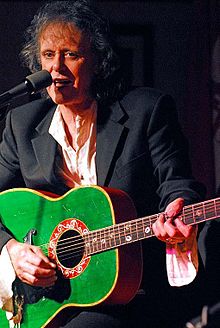
I Kind of Like Donovan

DonovanOn this day back in 1838, problem brother and assassin John Wilkes Booth was born. Movie composer Max Steiner was born in 1888. Fred Astaire was born in 1899. Film producer David O. Selznick was born in 1902. Electronic composer Milton Babbitt was born in 1916. Nancy Walker was born in 1922. And Sid Vicious was born in 1957—exactly one year before Rick Santorum. Coincidence?

Italian director Ettore Scola is 82 today. Comedy director Jim Abrahams is 69. Bono is 53. And science fiction writer John Scalzi is 44.

But the day belongs to Donovan? He’s 67 today. I kind of like him. He was really good in Don’t Look Back.

So happy birthday? Yes! Donovan!

Obama Was Never That Into You

FOIA RequestAccording to Glenn Greenward, the ACLU was interested in what the White House policy was on intercepting “private” test messages. So they filed a Freedom of Information Act (FOIA) request. And what you see on the left is the top of what they got back: 15 pages entirely blacked out (pdf). More and more I think electing Obama was a big mistake. I don’t mean that we would have been better off with McCain or Romney. (Although I have to say: I’m not certain if McCain wouldn’t have been better.) I just mean, in many ways, Clinton was a lot better and maybe his wife would have been too.

As I reported on Tuesday, the Obama administration is keeping up its fight against Plan B birth control. When the administration was against it last year, all the apologists said that it was just a political move. But it can’t be a political move now. It must just be that Obama really believes in limiting birth control.

This is the same thing I’ve been arguing for months about the Social Security and Medicare cuts: they aren’t compromises. They are policies that Obama really, truly, in his heart of hearts, wants. As I wrote a month and a half ago: Obama’s Just Not That Into You.

Is it time to admit that he never was?

Afterword

This is exactly what I’ve been saying for a long time: the rich are crazy to not pay attention to income inequality. They need to give a little to the poorer classes or it will create instability. And the rich have far more to lose than anyone. But they just don’t see it.

Humor in Iron Man 3

Ben KingsleyThere was one thing in Iron Man 3 that I really liked: Ben Kingsley. When I saw that he was in the film, I figured he was slated to play the bad guy. Those tend to be the kind of roles that he gets. And at the beginning of the film that looks about right. Actually, it sets up a plot with two bad guys who are working together. One is an evil scientist, played very well by the pretty boy in The Adventures of Priscilla, Queen of the Desert, Guy Pearce. The other is the Kingsley character, basically a fictionalized Osama bin Laden named “The Mandarin.” But there are tells.

Before I go on: you do know that I don’t think there are such things as “spoilers.” Well, that’s not exactly true. I wouldn’t give away what’s really happening in The Sixth Sense if you hadn’t seen it. But even in it, the film is really good even if you know. In fact, it is better. So if you really think that knowing what happens in Iron Man 3 is going to ruin it for you, then please click away now to this picture of a happy lamb. You have been warned!

I had a hunch that “The Mandarin” was not all that he seemed. But the truth was a lot more fun than I ever expected. “The Mandarin” is just a character being played by English Shakespearean actor Trevor Slattery. It seems the poor man had a real hard time staying off drugs. So the bad guy comes to him with an offer. Tony Stark says, “He said he’d get you off drugs?” Slattery, half nodding out, perks up and says, “No! He offered me more!” So the drug addled actor just thinks that he is performing a role. When he’s not on camera, he’s kept occupied with drugs and prostitutes. But that’s not what was so great!

What was so great was Kingsley’s performance, which is hysterical. And it was really great because his “The Mandarin” character was entirely believable. It was just the way you would expect a Shakespearean to perform it. Think: Patrick Stewart. And it is a nice reminder of many great actors (e.g. Gary Oldman) who come from working class backgrounds: after seeing them on the screen speaking the king’s English, it is shocking to hear them speak with their normal lower-class accents. Kingsley works that into comic gold. He also uses the drugs and the typical actor narcissism.

I thought that I ought to point this out. I don’t ever recall seeing something in one of these films that I liked so much. Even still, I doubt that there is more than 15 minutes of Kingsley in this 2+ hour monstrosity. But having anything that is really good is unusual, and worthy of note.

Afterword

I’ve long thought it interesting that The Adventures of Priscilla, Queen of the Desert, a film about three gay drag queens, stars three actors who generally play badasses. First there is Terence Stamp of The Limey. Then Hugo Weaving, Agent Smith in The Matrix. And Guy Pearce of Memento. I find that curious.

Escapism in Iron Man 3

Iron Man 3During the third act of The Purple Rose of Cairo, Cecilia (Mia Farrow) goes into the movie with Tom Baxter (Jeff Daniels). While in the townhouse, she sees a telephone and exclaims, “I’ve dreamed of a white telephone!” You see, Cecilia is a poor woman living during the Great Depression. The Purple Rose of Cairo celebrates how film allowed people to escape the hardships of their lives by watching the happy lives of Hollywood characters whose problems were always solved by the time the credits rolled. And the white princess telephone was a good example of the perfect life to people who would be lucky to even have their own black standard phone.

I was thinking about this today as I watched Iron Man 3 with my brother. As you may recall, my brother is a big action movie fan, with a particular love for Marvel Comics. I’m not fond of these films, but they are grist for a project I am working on about film propaganda. It is interesting that in the fascist countries, the governments had to take over the film industries. But in the United States, the private sector independently makes propaganda films that most governments would be embarrassed to produce. I feel more sullied by the average Hollywood action film than I do by an episode of The Factor.

That was fully the case with Iron Man 3. But it is done with a degree of cognitive dissonance that is staggering. Of course, that’s just perfect for an America propaganda film. Americans simultaneously think that we are the biggest, baddest country in the world. And that we are the most peaceful country in the world. We spend more on our military than the next 11 countries combined because all those other countries are a bunch of meanies who stop us from being the Gentle Giant we really are. So it makes perfect sense that Iron Man 3 would be similarly addled.

The biggest problem is Iron Man himself: Tony Stark. Since the middle of the first film, he is some bizarre kind of pacifist. He refuses to build weapons for the military. (This is how he and his father became rich, but that’s another issue.) Yet he spends all of Iron Man 2 and Iron Man 3 and The Avengers working with the military. Plus, he provides it with his “iron” suits, which are, after all, weapons. This is a real problem. The whole superhero genre is just vigilante fiction. And it works really well with someone like Daredevil, where the character is an outsider who is disliked by the authorities. You can’t be an iconoclast and an integral part of the social power structure. But that’s what all of the Iron Man movies would have us believe. And that is particularly true here where Iron Man must choose to save the president or his girl friend. Of course, in the end, through some kind of comic book lack of reason, he gets to save both; but the choice he makes is to save the president rather than Pretty Pepper Potts. Sorry: that’s Captain America bullshit.

Also, iconoclasts are not rich guys. Sure, they could have lots of money, in theory. But Tony Stark isn’t just rich; he’s corporate; he’s continuing to pull in the money. In other words: he’s David Koch with a goatee. Or something. Or rather: many things, because as usual for Marvel characters, he is whatever character the scene requires. But when he is at home in his billion dollar cliff mansion, he is above all, a rich man. He has the 21st century equivalent of the white princess phone.

And that’s important. It’s all important: rich, suave, badass. People need to escape the hardships of the second Great Depression.

Afterword

I have a general problem with the Hollywood action film: it does not celebrate real heroism. All kinds of people, but especially people who fight in wars and run into burning buildings, show great heroism. But these movies toss this sort of thing to the side. They also say that all human institutions are useless. The army, the police cannot manage anything. This is all strange, because superheroes are about as close as we ever get to the Greek heroes. But those heroes worked inside a social context. Patroclus and Achilles fought together in the war against the Trojans. Hector was above all a family man who just wanted to help run his city-state. The Hollywood action films are not the stories a great civilization tells itself.

(Take note: that last paragraph was pure conservatism. I don’t think any serious conservative would disagree with it. Of course, neo-conservatives would. Most people who call themselves “conservative” would. But real conservatives: they’d agree with me. But in general, I have no problem with real conservatives.)

Physics in Iron Man 3

EraserOne of the more interesting action sequences of Iron Man 3 involves the superhero’s catching of 13 people who have been blown off of Air Force One. He flies around and manages to get 12 of them. He can’t hold on to them all, so he has them hold on to each other, creating a giant chain. He hasn’t gotten the last guy. His computer announces that there are but 400 feet to go before they hit the earth. So he speeds up, grabs the last guy, and slows just in time to miss the surface of the ocean. The crowd goes wild!

The Iron Man films really bug me when it comes to physics. Of all the superhero films, I think they are the worst. And it is all the same problem: acceleration! It doesn’t matter if you are in a bunch of padding or an iron suit, if you decelerate too quickly, you will die. And this happens again and again and again in the Iron Man movies. I know: I’m being a pedant. What’s more, this is far from the only physics related problem in the films. But it is the one thing I just can’t suspend disbelief on. Classical mechanics is the one subject in graduate school that I studied far beyond what was required—because I loved it so much.

So let’s look at our little sky dive sequence. I’m going to keep this really simple because I figure it will be bad enough for those who are not freaks about this stuff like I am. Iron Man is at 400 feet. The man he needs to catch is further down, but I’m not even going to worry about that. We’ll just assume that Iron Man catches him at that point. Now the man is falling at terminal velocity which is roughly 120 mph. That’s 55 m/s at a height of 120 m. But iron man can’t be moving at that speed; if he were, he would never catch the guy. So I’m going to assume he is moving at twice that speed: 110 m/s.

Thus, if he keeps at that speed for one second, they crash. So there isn’t much time. Over the course of 120 m (d), Iron Man must decelerate from 110 m/s (v0) to 0 m/s (vf). And we want to know what the average acceleration (a) is for these 13 people. Luckily, there is a handy equation that people learn in the first week or two of physics that helps us out:

vf2 = v02 + 2 * a * d

The answer is that the average acceleration is 46 m/s/s or a tad less than 5 gs. This is about the level at which people lose consciousness. But there is a bigger problem here. I call it the Eraser factor.

I learned about this from my friend Mikhail. In Eraser, Arnold Schwarzenegger falls out of a plane and moves through the sky. He is looking for a parachute that also fell out of the plane. He grabs it and then fights to put it on, buckles it up, and pulls the rip cord. I asked Mikhail if this was possible. But I only mentioned the getting to the parachute part because frankly that was the impressive part for me. He told me it was, but that there was a problem. After locating the pack, you would have to “fight to put it on and buckle in.” Why? Because no one is strong enough to hold on to the parachute when it opens.

So think of our Air Force One survivors. Imagine a 150 pound man hanging from a pull-up bar. Now imagine what would happen if you suddenly attached 750 pounds of weight to him. He’d lose his grip and fall. As they all would. And this would happen at the beginning of Iron Man’s deceleration. So they would likely hit the ocean at a lot faster a speed than if Iron Man had never caught them in the first place. This reminds me of the film Hancock, where all of that superhero’s efforts to help people caused bigger problems. But the makers of Iron Man 3 just didn’t realize it.