Grade Inflation Is a Very Old Myth

Alfie Kohn - Grade InflationComplaints about grade inflation have been around for a very long time. Every so often a fresh flurry of publicity pushes the issue to the foreground again, one example being a series of articles in The Boston Globe that disclosed — in a tone normally reserved for the discovery of entrenched corruption in state government — that a lot of students at Harvard were receiving As and being graduated with honors.

The fact that people were offering the same complaints more than a century ago puts the latest bout of harrumphing in perspective, not unlike those quotations about the disgraceful values of the younger generation that turn out to be hundreds of years old. The long history of indignation also pretty well derails any attempts to place the blame for higher grades on a residue of bleeding-heart liberal professors hired in the ’60s. (Unless, of course, there was a similar countercultural phenomenon in the 1860s.)

Yet on campuses across America today, academe’s usual requirements for supporting data and reasoned analysis have been suspended for some reason where this issue is concerned. It is largely accepted on faith that grade inflation — an upward shift in students’ grade-point averages without a similar rise in achievement — exists, and that it is a bad thing. Meanwhile, the truly substantive issues surrounding grades and motivation have been obscured or ignored.

The fact is that it is hard to substantiate even the simple claim that grades have been rising. Depending on the time period we’re talking about, that claim may well be false. In their book When Hope and Fear Collide, Arthur Levine and Jeanette Cureton told us that more undergraduates in 1993 reported receiving As (and fewer reported receiving grades of C or below) compared with their counterparts in 1969 and 1976 surveys. Unfortunately, self-reports are notoriously unreliable, and the numbers become even more dubious when only a self-selected, and possibly unrepresentative, segment bothers to return the questionnaires. (One out of three failed to do so in 1993; no information is offered about the return rates in the earlier surveys.)

To get a more accurate picture of whether grades have changed over the years, one needs to look at official student transcripts. Clifford Adelman, a senior research analyst with the US Department of Education, did just that, reviewing transcripts from more than 3,000 institutions and reporting his results in 1995. His finding: “Contrary to the widespread lamentations, grades actually declined slightly in the last two decades.” Moreover, a report released just this year by the National Center for Education Statistics revealed that fully 33.5 percent of American undergraduates had a grade-point average of C or below in 1999-2000, a number that ought to quiet “all the furor over grade inflation,” according to a spokesperson for the Association of American Colleges and Universities. (A review of other research suggests a comparable lack of support for claims of grade inflation at the high-school level.)

–Alfie Kohn
The Dangerous Myth of Grade Inflation

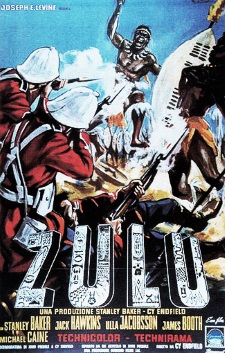
No, Zulu and Rocky Aren’t Racist; We Are

No, Zulu and Rocky Aren't Racist; We AreReddit has a series called “Today I Learned” (TIL). Frankly Curious articles have ended up in there before, but usually in a good way. Yesterday, someone posted, TIL Rocky and Zulu Are Racist Because the Villains Are Black. Oh, my! You can tell from the title that it’s pathetic. It is in reference to my article a week and a half ago, Zulu and the Racism We Bring to It.

Notice just how the two titles compare. On reddit, it is claimed that Zulu is racist because the villains are black. And on Frankly Curious I talk about the racism we bring to the film. I always wonder about these things. Are those who post such things just terrible readers? Or perhaps am I such a terrible writer, that they just can’t understand what I’m talking about? I tend to think neither. I think such people simply bring their pre-judgments to the article.

I’m a Fan of Zulu and Rocky

I was very clear that I like both movies very much. What’s more, I say that the movies are not racist. Rather, it is our racism that gets in the way of what is objectively on the screen. In fact, I said that as our society becomes less racist, the films will automatically be fixed, because it is not the fault of the film. The title of my article was very accurate: the racism we bring, not the racism in the films.

I can only stand to read so much of such comments, but I didn’t find any that defended me. It is mostly just the same thing over and over: how stupid I was. Of course, they just show themselves to be what they claim for me. For example, I wrote, “A South African filmmaker who wanted to do the same thing would doubtless tell the story of the Battle of Isandlwana (the one right before the events shown in the film).” One of the commenters responded, “Yeah, they did. It was called Zulu Dawn and was made as a prequel to Zulu.”

In this case, maybe it is just a question of reader comprehension. I’m well aware of Zulu Dawn. There’s just one problem with it: it was not made by a South African filmmaker. It was based on Cy Endfield book. Endfield was the writer-director of Zulu. And Zulu Dawn was very much a British production. (It’s also not really a war film. There is almost none of the battle in the film.)

The Films Aren’t Racist

But it all goes to show that these people did not understand what I was getting at. I was talking about ethnocentrism and that it was natural for the British to make a movie about the battle that they won, not the battle that they lost. But let me quote the first sentence in that paragraph:

It is because of this that the film isn’t racist.

But the people reading it are so determined to find something to whine about. Oh, the poor white man! Here I am beating up on him — saying that Zulu is a racist film (even though I explicitly said the opposite) because the “bad guys” are black.

It’s About Perspective Not Villains

It’s also that I wasn’t making a case about villains at all. I was talking about whose perspective the films were told from. Stuff like this just makes me want to give up writing. There seems to be no point to it because people are so determined to hear what they want. And now I can be another example of the foolish liberal who wants to make everything about race and says that you can’t have a “bad guy” who’s black without a film being racist.

Of course, reddit it a thick forest of ignorance and stupidity.

Afterword

I run into this all the time in my life. People want to tell me about some outrage, “Can you believe that blah, blah, blah.” But in every case, I go and look into the matter and find that they have a very one-sided version of things. In fact, things are much more complicated. And when you know both sides of the story, the outrage factor tends to go away — except when it comes to the Republican Party doing what they’re always very clear about doing: taking from the poor and weak and giving it to the rich and powerful. But people don’t rush to me to tell me about Trumpcare the way they do things like Barbara Lee not voting for war with Afghanistan.

There Is No Dark Side of the Moon

Dark Side of the Moon Is Not Other Side of the MoonIt seems I am constantly been offended with some mention of the dark side of the Moon. This isn’t an attack on Pink Floyd, because at any given time, there is, in fact, a dark side of the Moon. But in Space: 1999, Moonbase Alpha was located on the dark side of the Moon. Now I understand, Space: 1999 was not in love with science. It was 1 part science and 1999 parts fiction. But it isn’t alone. I see this all the time.

There are many things that lead people to think that there is a dark side of Moon. I think that people mistake the outer side of the Moon with the dark side. But anyone who thinks about it for an instant will realize half the Moon is lit up when we are at the quarter Moon. That means the outer side of the Moon must be similarly half-lit. Just the same, the mistake is easy enough to make with our foggy brains.

The Other Side of the Moon

The Moon is tidally locked with the Earth. That means that the same side of it always faces the earth. Until we started sending rockets out into space, we had no idea what the outer side of the moon looked like. Well, we knew it looked a lot like the inner side. It turns out that because of Moon wobbles, we can actually see 59% of the Moon’s surface. That’s not all at once, of course. We have to watch it for a long time. But it’s easiest to say that half of the Moon can’t be seen from the Earth.

Thus, in a sense, the outer side of the Moon is the “dark side of the Moon.” And it is what we people are getting at when they talk about putting Moonbase Alpha on the dark side of the Moon. But it actually doesn’t make any concrete sense. The Moon is between the the Earth and the sun. Compare this to the new Moon (when the Moon is right between the Earth and the sun). That is: when the Moon is “new” — meaning that the dark side of the Moon is facing the earth. The time when the outer Moon is dark is when the Earth is between the sun and the Moon.

The Dark Side of the Moon Is Constantly Changing

Regardless, the outer side of the Moon has a day just like every other part of the moon (unless you want to get technical and talk about the lunar poles): 27.3 Earth days. I think, however, that Pink Floyd is responsible for this error of thought in the song “Brain Damage.” That’s not to say that they were thinking wrong. Waters is a great lover of metaphor. And the song doesn’t even imply that the dark side of the Moon is any particular place.

But people have picked up on it. And “dark side of the Moon” sounds better than “outer side of the Moon.” Although actually, from a metaphorical standpoint “outer” is probably better than “dark” given that we can actually see a great deal of detail in the dark side of the Moon. It is the outer side that we can’t connect with.

The Moon Is Fascinating — We Should Understand It

Regardless, I bristle every time I hear the term used because I know that it is a sign that people are not understanding how the Earth and Moon interact with each other. And this is important to me because learning what caused the phases of the Moon was really important to me. Plus, as I learned when I taught planetary astronomy at college, people really don’t understand this stuff. And it’s so easy and so cool. If there really were a dark side of the Moon, that would be hard to understand.

American Checks and Balances Are Out of Whack

Mehdi Hasan - American Checks and Balances Are Out of Whack“You’re fired!” That’s what Donald Trump would bark from his boardroom chair at the end of each episode of “The Apprentice.” For years, millions of Americans would smile, laugh, and even cheer in front of their television sets as the property tycoon performed his signature move.

There is little to laugh about this week. The firing of FBI Director James Comey by President Trump will be remembered as a dark and depressing day in the downward spiral of American democracy. It’s difficult to disagree with the scathing assessment of CNN’s senior legal analyst, Jeffrey Toobin, who described the sacking as a “grotesque” abuse of power. “This is the kind of thing that goes on in non-democracies,” he told host Wolf Blitzer in a clip that has since, deservedly, gone viral. “They fire the people who are in charge of the investigation.” Toobin continued: “This is something that is not within the American political tradition. … This is not normal, this is not politics as usual.” …

American checks and balances are out of whack. The firing of the FBI director is only the beginning. There will be more sackings; more political corruption; more abuses of power. And, again, we can’t say we weren’t warned. Tinpot Trump, cautioned John Dean back in January, “is going to test our democracy as it has never been tested.” Whether American democracy is up to that test is another matter.

–Mehdi Hasan
After James Comey’s Firing, Who Will Stop Trump’s Tinpot Dictatorship?

Comey’s Firing Is About Our Democratic Despot

James ComeySo Donald Trump fired James Comey. And what’s hilarious about it is the reason: Comedy is being fired because he broke protocol when last July (you know: just short of a year ago) he went public with an ongoing investigation. This is great when you consider that the 2016 RNC could have been called the “Lock Her Up” convention. And Comey’s later entry into the race probably did cost Clinton the election. What’s more, we find out from The New York Times, Days Before Firing, Comey Asked for More Resources for Russia Inquiry.

What’s interesting about this is that Trump really does see being president as more or less the same as being a dictator. There’s no pretense that anything needs to make sense. Surely if Comey were to be fired for his handling of the Clinton case, he should have been fired when Trump came into office. Instead, Trump fires Comey at exactly the same time that the FBI director is turning up the fire on Trump and his friends.

Trump Has Nothing to Fear

But it’s hard to blame Trump for this. After all, what is going to happen to him? At the very worse, the Republicans will be forced to appoint a special prosecutor. And I wonder if even that will happen. The Republican Party is really only interested in getting tax cuts. And with getting their really vile Obamacare replacement through the house, they would not be keen to do anything that would sour relations with the Despot of Pennsylvania Avenue.

President Trump Wanted the Title, Not the JobFor a long time, I’ve been annoyed by people who claim that the Soviet Union was a communist system. Basically from the start, it was just an authoritarian regime. It was certainly not a dictatorship of the worker. What distinguishes Putin from Stalin is not that one is pro-capitalism and the other isn’t. Nor is it that one was nominally elected and the other was not. The difference was one of power and only power.

Trump’s Power Comes From the Republicans

The truth is that if Donald Trump had the Republican Party that Richard Nixon had, he already would have been impeached. And looking at it the other way around, had Nixon had this Republican Party, he wouldn’t have been forced out of office. And that is the essence of power. The truth is, any man is just a man. There are no superheroes. People have power because there are people around them who give them power. All else equal, it was as easy to kill Stalin with an axe as it was Trotsky.

So Trump’s recent effort at exercising his own power is ultimately a question of how much power that the Republican Party is going to give to him. And I tend to think they will give him as much power as he wants. That’s because the Republican Party cares only about power. That’s what happens when your ideology is reduced to “give as much money and power to the people like me who already have a lot of money and power.”

The Despot in the White House

The whole thing may backfire on Trump. It’s unlikely to — at least until 2018. but it’s possible. The main thing to keep in mind is that you can have a rabidly pro-capitaliat despot like Trump. Or you can have a rabidly anti-capitalist despot like Stalin. It’s not about economics. It’s about power.

But it’s telling that Trump thought he had anything to fear. The Republicans have his back. Comey was just one man. When the legislature and courts are on your side, you have nothing to worry about. And that’s especially true when the man you supposedly fear, Comey, had lost almost all credibility

Meanwhile, we live in a nominal democracy, with a despot in power. It’s very, very sad.

Why So Many People Hated Hillary Clinton

Thomas Frank - Why So Many People Hated Hillary ClintonYou want to know the biggest lesson I learned touring Trumpland? People hated Hillary Clinton — to a degree that even I, with my cynicism, did not understand.

I did not hate Hillary Clinton. I voted for her, and I agreed with Obama that she was very qualified. She deserved to be president. I didn’t think she’d be a great president, but I thought she’d be OK — certainly better than Donald Trump.

I knew how to hate Donald Trump. That’s easy. He boasts about groping women. He says these evil things about Mexicans, and mocks the handicapped. It’s unbelievable the stuff this guy did and said. Hating him was easy. What I did not understand was the degree to which people really hated Hillary Clinton. And that’s ultimately what this election was about: which one do you hate more? …


What Is It About Her?

She doesn’t say rude things. She tries so hard to not offend people. I think it’s the very things that you and I like about Hillary that were the problem: she is so professional, she is so polished, and she’s such a wonderful lawyer. She went to Yale law school, and was so brilliant, and was the best in her class. People hate this.

They hate what she represents, this kind of scolding liberalism that’s better than you. In Listen, Liberal, I talked about her goodness and her righteousness. I kind of made fun of her for it. But people hate that stuff. Hate it. And people running the Democratic campaign had no idea.

–Thomas Frank
 On the Road in Trump Country

Trumpcare to America: We Will Never Forgive You

Mo Brooks - Trumpcare to America: We Will Never Forgive YouI was really struck by the interview that Alabama Representative Mo Brooks had with Jake Tapper. They were talking about the issue of the new version of Trumpcare which grants states the right to allow insurance companies to discriminate against people with pre-existing conditions. Brooks, in the grand tradition of white men who thought it was worth fighting a war to maintain chattel slavery, saw this as a good thing. It showed how the conservative mind (and to a less extent the American mind) works: it doesn’t believe in mercy; it does not forgive other people.

Mo Brooks said, “My understanding is that it will allow insurance companies to require people who have higher healthcare costs to contribute more to the insurance pool. That helps offset all these costs, thereby reducing the cost to those people who lead good lives. They’re healthy, they’ve done the things to keep their bodies healthy. And right now those are the people — who’ve done things the right way — that are seeing their costs skyrocketing.”

Let’s Not Forgive Mo Brooks

Let’s quickly throw aside the ending point there: that healthy people are seeing their costs skyrocketing. That’s not true. What Brooks is getting at is what conservatives supposedly hate about Obamacare: that healthy people subsidize unhealthy people. We know they are lying about this, because healthy people subsidizing unhealthy people is what health insurance has always been about and conservatives generally didn’t complain about health insurance until they were attacking Obamacare.

We also should shove aside this idea that people are healthy because did things “to keep their bodies healthy.” I can’t help but see this as nothing more than a vague bit of fat shaming. I could be wrong about this. But I’ve heard this so much over the years. When people talk about “healthy,” they almost always mean “thin.” I discussed this almost two years ago, Meghan Trainor, Fat Shaming, and the Health Myth.

I noted in that article that actual scientific studies do not find that being modestly overweight is bad for someone’s health. It’s a great irony that when I was way too thin — so skinny that it actually was unhealthy — no one was ever concerned about my health. Now that my BMI is on the high side of normal, I do occasionally get told that I should lose some weight for the good of my health. The truth is that being my weight — and quite a lot heavier — is actually quite healthy.

But I’m sure that Mo Brooks, who seems to be a fairly slender man, imagines fat people cramming pastries into their mouths. This, of course, makes them unhealthy and who has to foot the bill? Poor old slender Mo Brooks.

Do People Deserve to Live Without Healthcare?

What I’m more interested in is the possibility that Brooks is right. Not about weight, of course. But consider one of my young friends who is a skydiver. Imagine if, in practicing this very dangerous hobby, he managed to suffer a spinal cord injury. Imagine all the extra bills that go along with that!

Or imagine an actual friend of mine who used to be a heroin addict. As a result, she got Hepatitis C. Now it’s been a long time since she’s done any drugs. She does live a very healthy lifestyle now. But she has not always “done the things to keep [her body] healthy.” I suspect that good ol’ Mo Brooks would see her as the the sort of person who should have to pay more money for her health care. He can’t forgive her for her past behavior. And the fact that she will almost certainly die much younger than she would have otherwise doubtless doesn’t make any difference.

Rob Portman and the Limits of Empathy

The Angel of MercyRemember when Senator Rob Portman became pro-rights for LGBT people — because his son came out to his father. As long as gay men had nothing to do with Portman’s life, he was against them. He could only see them as full human beings once he found out that one of them was his son. Then he could grant them the rights that everyone deserves.

This goes along with the widely documented fact that people who live in high crime areas are less punitive. That is to say that people who live in an area where almost no one ever robs a liquor store will tend to think the punishment for that crime should be much more harsh than people who live in an area where liquor store robberies are fairly common.

This makes sense. In a high crime area, everyone is much more likely to know people who have committed these crimes. Thus, they see these criminals as the human beings who they are. It’s easier to have empathy, just as it was easier for Rob Portman to have empathy for LGBT people once he knew that one of them was his son, who Portman knew was an actual human being.

Americans Have a Pre-Existing Condition

It’s amazing to think that Mo Brooks’ comment did not get push-back because he was saying that he can’t forgive. This isn’t a partisan thing. Americans, in general, are this way. They really do like the idea of punishment. It’s not enough to lock someone away in a cage for ten years, they must also be stopped from having a decent job the rest of their lives.

I’ve heard both Obama and Bill Clinton say on countless occasions that people shouldn’t be punished when they lose a job “through no fault of their own.” Because that’s the thing, right: if someone is culpable for any part of their current situation, we don’t have to worry about them. And that’s because we don’t forgive as a general matter. That is the great American pre-existing condition: lack of empathy.

I get it: if someone is a rock climber, they shouldn’t be surprised if they fall to their deaths. But that doesn’t make the death of a rock climber any less tragic. And as it is, people who are attracted to extreme sports like this aren’t in any more control of it than I am in my incredible fear of it.

Let’s All Learn to Forgive

Trumpcare is a vile piece of legislation. You could make its protections of those with pre-existing conditions even stronger, and it would still be vile. The whole idea of Trumpcare is vile: that the richer and healthier you are, the more the government should work to protect you. But Trumpcare is made worse by making protection of pre-existing conditions weaker.

But it’s sad that most Americans wouldn’t have a problem with denying access to care because people didn’t behave in the past. And this is a much bigger problem than Trumpcare. Americans need to learn how to forgive.

I wish we were better than even that. I don’t think we should feel like we must forgive these people. No one is perfect. We all do things we probably shouldn’t. And whether or not you have a pre-existing condition is nothing but a matter of dumb luck. But I understand that most people can’t understand this.

So how about looking to the Bible, which so many Americans claim to worship. How about embracing the idea of mercy? How about learning to forgive?

Senate Republicans Will Not Even Start With House Obamacare Replacement

Paul Ryan - Tax RedistributionSenate Republicans on Thursday said that they will come up with their own version of legislation to repeal and replace Obamacare rather than vote on the bill that House Speaker Paul Ryan (R-WI) and colleagues in the lower body of Congress have spent weeks hammering into passable shape.

Twelve lawmakers are working on a Senate proposal that may incorporate elements of the bill passed Thursday by the House, The Washington Examiner reported, but it will not be based on the current measure. …

Senate Majority Whip John Cornyn (R-TX) told The Examiner that the group of lawmakers has already been meeting for weeks, as House leadership frantically tried to whip enough votes to pass their own bill.

“It was kind of a moot issue if the House wasn’t going to be able to pass a bill and now they have and I’m proud of them for doing it,” Cornyn said, as quoted in the report. “Now it’s up to us to pass a bill 51 senators can agree to.”

–Esme Cribb
Sorry, Ryan: Senate Republicans to Scrap House Repeal Bill, Start From Scratch

In Our Society, Being Ideologue Is Best Thing to Be

Richard Stallman: In Our Society, Being an Ideologue Is the Best Thing to BeThe other day, I wrote something that touched on the cold war between Richard Stallman and Linus Torvalds, or maybe more accurately, their fans. And a colleague of mine mentioned that Stallman wasn’t a coder so much as an ideologue. I agreed with it and didn’t think much more. I don’t see “ideologue” as a pejorative. But it usually is meant in that way. And that got me thinking.

The truth of the matter is that “ideologue” is a word that people pretty much only use to describe someone they disagree with. Otherwise, they aren’t ideological so much as they are simply rational. They are people who have looked at the facts and come to the obvious conclusion. Of course, we know from neuroscience that things don’t work that way. In general, our local brains (or “guts” if you prefer) decide on things and then our upper brains come up with justifications for what are decidedly not rationally derived conclusions.

Linus Torvalds Is an Ideologue

But while it is true that Richard Stallman is an ideologue, so too is Linus Torvalds. It’s just that Torvalds’ ideology is a painfully typical one among the Silicon Valley crowd. He’s an atheist and everything I’ve heard him say that touches on politics makes me think he’s a glibertarian.

As a result, most people would say he isn’t an ideologue, because his thinking fits well inside America’s Overton window. And in terms of Silicon Valley, Torvalds’s political beliefs put him in the dead center of what is a tiny Overton window.But most people think Richard Stallman is an ideologue because his thinking actually challenges the status quo and the power elite. This isn’t to say that Stallman is a political genius. Based upon things he’s said, it’s clear that he could stand to learn a little about good old fashioned political science.

But Stallman is clearly a creative thinker. And that has made him come up with ideas that are dangerous. He is seen as an extremist. But is he really? I would say no. His ideas are not even as extreme as mine, and I stay pretty easily inside the world’s political Overton window. The whole thing reminds me rather of something we see a lot here in American political punditry: the professional centrist.

Centrism as Non-Ideological

In the United States, the professional centrist is best exemplified by our man from Slate, William Saletan. He’s a centrist. He calls himself a “liberal Republican,” and you can’t help but think that he wouldn’t have a cushy job at Slate if he called himself a conservative Democrat (because such things actually exist) or — God forbid! — a leftist. But the main thing is that Saletan supposedly represents the center of American politics and thus is like all the people in middle America who supposedly just want the folks in Washington to “get things done!”

The problem is that I, with my (by American standards) extreme leftist politics have much more in common with the people in middle America than William Saletan has. Saletan, like most professional centrists, is actually an extremist. He has extremist opinions on the right when it comes to economic policy and exttremist opinions on the left when it comes to social policy. The people of middle America are the opposite of Saletan: they have extreme views on the left on economic policy and extreme views on the right on social policy. So they don’t agree with Saletan about anything. They at least agree with me on economic issues.

The Power Elite Define the Ideologue

And so it is with Richard Stallman and Linus Torvalds. Among the power elite, Torvalds’ opinions (or lack thereof: he is of the “A plague on both your houses!” persuasion) are just fine. He would never do anything that might interfere with the profits of Pfizer, Disney, or Apple. So he isn’t an ideologue. The fact that his ideas are extreme and unpopular doesn’t matter. That’s what Orwell didn’t understand: give people a shiny enough prison and they will gladly give themselves life without the possibility of parole.

Richard Stallman is an ideologue because his ideas are unacceptable. But they are unacceptable not because most people would disagree with them; they are unacceptable because the power elite don’t like them. And they don’t like them because those idea threaten their power. But our society is so sick that even people who are not part of the power elite accept the thinking of the power elite because it doesn’t occur to them that they could do anything else.

In a society as screwed up as ours is, being called an ideologue is the highest of complements.

How the US “Protects” Us From International Terrorism

How the US 'Protects' Us From International TerrorismThe US government segregates terrorism cases into two categories — domestic and international. This database contains cases classified as international terrorism, though many of the people charged never left the United States or communicated with anyone outside the country.

Since the 9/11 attacks, most of the 796 terrorism defendants prosecuted by the US Department of Justice have been charged with material support for terrorism, criminal conspiracy, immigration violations, or making false statements — vague, nonviolent offenses that give prosecutors wide latitude for scoring quick convictions or plea bargains. 523 defendants have pleaded guilty to charges, while the courts found 175 guilty at trial. Just 2 have been acquitted and 3 have seen their charges dropped or dismissed, giving the Justice Department a near-perfect record of conviction in terrorism cases.

Today, 345 people charged with terrorism-related offenses are in custody in the United States, including 58 defendants who are awaiting trial and remain innocent until proven guilty.

Very few terrorism defendants had the means or opportunity to commit an act of violence. The majority had no direct connection to terrorist organizations. Many were caught up in FBI stings, in which an informant or undercover agent posed as a member of a terrorist organization. The US government nevertheless defines such cases as international terrorism.

415 terrorism defendants have been released from custody, often with no provision for supervision or ongoing surveillance, suggesting that the government does not regard them as imminent threats to the homeland.

A large proportion of the defendants who did have direct connections to terrorist groups were recruited as informants or cooperating witnesses and served little or no time in prison. At present, there have been 32 such cooperators. By contrast, many of the 296 defendants caught up in FBI stings have received decades in prison because they had no information or testimony to trade. They simply didn’t know any terrorists.

The Intercept
Trial and Terror

I Haven’t Been to Paris; I Haven’t Been to Rome

Frank Moraes with Grumpy Squirrel - Stallman vs TorvaldsThe title of this article comes from Jonathan Richman’s song “New England”: “I’ve already been to Paris, I’ve already been to Rome; and what did I do but miss my home? Oh, New England!” There’s a bit of irony in the song when you consider that within about a decade, he would move to California, after writing, “I have been out west to Californ’ — but I missed the land where I was born.” Anyway, I haven’t been anywhere unusual. In fact, I’ve been the most normal place (for me) in the world: my bedroom/office.

Work has just exploded and I’m trying to keep up. I didn’t manage to wake up today until 1:00 this afternoon, and it is only now at 5:00 this evening that I’ve had time to start writing this. There are lost of people depending on me. And it’s nice to be wanted.

Politics

So what’s going on in the world of politics? Have you noticed that when it comes to national politics, the answer is “nothing”? Or rather, “The same as every other day”? Donald Trump is saying something that doesn’t make any sense but ultimately, he isn’t getting anything done and so we cn all feel a little better about that.

James Hohmann wrote The Daily 202: Eight Ways Trump Got Rolled in His First Budget Negotiation. That’s something that is kind of interesting, but hardly surprising for those of us who were paying attention. We expected that Trump wouldn’t be much into the job of President of the United States. But many (little brains) thought that he would be some kind of deal maker. If you paid attention to his business career, you certainly knew that “Trump Deal Maker” was nothing but branding based on no actual truth.

The article is about the budget deal that Trump made. Of getting such a bad deal for himself, Trump said, “I think the rules in Congress and, in particular the rules in the Senate, are unbelievably archaic and slow moving and, in many cases, unfair.” I hate a paraphrase a man as evil as Donald Rumsfeld, but you know, you negotiate with reality as it exists, not reality as you wish it existed.

Every time Trump says something like this, it makes Hillary Clinton’s main campaign pitch (which I disagreed with) sound all the more devastating, “Vote for me because I know what the hell I’m doing.” Trump famously said that “no one” knew healthcare was so complicated. Everything is complicated to Trump. And the fact that he has a bunch of money is just another example of how the rich are not allowed to fail in our society.

Space Exploration?!

Space.com reported, Wow! See Epic Views of SpaceX’s 1st Spysat Launch and Rocket Landing. Now I’m all for private exploration of space. But let’s get one thing clear: SpaceX and other companies are following in the footsteps of a very big NASA. And it will continue to be that way. Oh, NASA may not be long for this world. Conservatives would love to destroy the space program. And regardless, the US is a dying empire.

But it is collective action that has allowed us to explore the Moon and the planets and the rest of the solar system. Companies like SpaceX are just like pharmaceutical and internet companies that have made their fortunes on the backs of our collective action. This is one of the reasons I’m not a capitalist: it’s always individuals making money after the really expensive part of the work was done by the government. And to make matters worse, once these individuals make huge amounts of money off the backs of the government, they do everything they can not to pay the meager taxes that they owe.

In this particular case, it was a big deal that a private company did something governments have been doing since the 1950s. I see that and I think, “Oh, how pathetic!” But Space.com thinks that it is, “Wow!” To top things off, SpaceX launched from a US government location: Cape Canaveral Air Force Station. If you ever want to know how scientifically sophisticated someone is, ask them what they think of Elon Musk. He’s the Steve Jobs of science. And those who have been reading me for a while, know that this is not a compliment.

Richard Stallman vs Linus Torvalds

This makes me think of the difference between Richard Stallman and Linus Torvalds. They are, generally, about equally smart. But Torvalds is not a creative man. And as such, he’s the much more famous of the two. It’s really interesting. Stallman — largely by organizing and energizing a large group of people — created a software structure. Torvalds came in and added one piece to it — a piece that would have been added by someone within a year or two. Torvalds without Stallman is nothing. Stallman without Torvalds is still hugely important.

For example, I’m not writing this on GNU/Linux, but I’m using a whole bunch of GNU tools. The truth is that it doesn’t much matter to me what kernal I’m running, as long as I have all those Unix tools that I’ve come to depend upon. Now in their cases, this isn’t a matter of money. But that’s usually how it is: whoever creates just the right piece of a technology at just the right time is the person who becomes rich. I still find it amazing that people don’t see this.

Some day, I think people will see the truth. They will get past their obsessions with facts that tell them that the GDP increased more this year than last, and start seeing that measuring GDP doesn’t really move them any closer to the truth. Richard Stallman does understand that the political and economic system we have is all messed up. It doesn’t even occur to a mind such as Torvalds that this is the case.

And Back to Donald Trump

So that brings us back to Donald Trump. He doesn’t much matter when you look at the big picture. On the small scale, he matters. People are dying because he’s president. And that’s why we must fight the Republican Party. But we also have to think much more deeply and see that regardless whether Donald Trump or FDR is president: we live in an immoral society.

I’m happy to be working more — to be valued by our immoral system. But to answer the rhetorical question of James L Brooks’ classic As Good as It Gets: yes, in this society, this is as good as it gets. And this should trouble a whole lot more people. But I find that most give me blake stares when I bring up the subject. They don’t see the problem. To anwwer Samular Becket’s rhetorical question: this one is good enough.

Well, not for me.

Chaos Theory as it Relates to Rick and Morty

Fractal - Chaos TheoryIt’s weird, but the television show Rick and Morty has given me many ideas for articles. There’s just so much to it. A show like Bob’s Burgers is really all about the characters. But Rick and Morty brings up so many bizarre ideas that I have a hard time not getting lost in them. Most recently, I was thinking of the infinite timelines. This is what explains the Council of Ricks and Jerryboree — the daycare center for Jerrys. Of course, it’s all absurd.

To begin with, if there are infinite timelines, why are there only three thousand Ricks on the Council of Ricks? Well, I do have what might sound like a reasonable explanation: out of the infinite timelines, there are only so many that just happened to have Ricks. This doesn’t work, of course. If there are an infinite number of timelines, there would be an infinite number of timelines with Rick. Infinity is that way. But that doesn’t bother me all that much. What does bother me is this: Rick, Morty, Summer, Beth, Jerry.

Chaos Theory

The issue is this: chaos theory. When I was in my 20s, chaos theory was the thing — even non-nerds were into it. I wasn’t, of course. And that’s because it’s actually a really simple thing. (Research on it, is another matter; but that’s beyond pretty much all but specialists.) It’s just about non-linear systems. Let me explain.

Imagine you are pushing a cart down the road at a fairly constant rate and I’m making measurements of it to figure out how far you’ve gone. That’s a linear system. If I make a small mistake in the measurement of your speed, it will cause me to be wrong in calculating the distance you’ve traveled. But the error will be proportional to the error I made in your speed.

Non-Linear Systems

Rick and MortyNow imagine that you are tripling your speed every ten seconds. Then a small error in my speed measurements will lead to a huge error in the distance traveled. In this case, the error will be squared for reasons that I’d love to explain to you, but don’t have the time (nor, admit it, do you the the interest — a fact I know from experience).

Non-linear systems can be highly non-linear, however. To (inappropriately) use the cart example, you could have a situation where a single small error would cause your final answer to be off by a factor of millions. And that’s what chaos theory is all about. And we have an example of that: the weather, which is where this all started. If you want to know more, learn about Edward Lorenz.

Chaos Theory and Time

Think about time. But first, let’s quote Robert Marley from John Dies at the End, “Time is an ocean, not a garden hose.” We have to forget that, even though I think it’s more or less correct. Imagine time as a garden hose — a line. How chaotic is it? Well, we certainly know it is nothing close to linear. Consider the following example:

A woman is going to buy a ticket for the state lottery. She uses the random system. On her way to the store to get it, a squirrel darts in front of her causing her to slow down and get to the store a couple of seconds later. That is the difference between her life going on as usual and her life completely changing because she won a half billion dollars.

That’s one example. So my belief is that time is the most chaotic system imaginable — indeed, infinitely chaotic — the ultimate example of chaos theory. And that brings us back to Rick and Morty. The best estimates are that our universe is 13.8 billion years old. Given that all of the universes in the show are roughly the same, they too must be that old. Time is just stuff happening: it’s a concept to explain why things change; this is why time doesn’t exist without matter. And 13.8 billion years is a lot of time.

A Long Time Coming: 13.8 Billion Years

Even if time were non-chaotic and changes had linear effects — if small changes would have small effects — that’s enough time that there just wouldn’t be multiple Ricks. But even if there were, how is it that they all marry the same woman who has a daughter named Beth, who goes on to marry a man named Jerry with whom she has two children named Morty and Summer.

Okay: infinity. If there are an infinite number of timelines, then literally every possible universe would exist. (It’s still odd that all of those universes start at the same time.) But if that’s the case, where are all the timelines that are exactly like the 3,000 that we know about except that Morty’s sister is named Winter?

I understand: Rick and Morty is just a television show — one I find quite entertaining. But I actually think that it is dangerous to think that time is not chaotic. Politically, it’s the same as believing in an activist God. It justifies kings because they are the result of fate rather than blind chance.

Who You Are Is the Result of Dumb Luck

The more we know about the world, the more we know that luck is everything. Were you born with a good body? Were you born to parents who raised you in a loving and intellectually stimulating environment? Did you inherit billions of dollars? Were you born in the San Francisco rather than Monrovia? Did a squirrel run in front of your car when you went to buy your lottery ticket?

I think that if people can see that their entire success in life is due to nothing but luck (and I cannot escape this conclusion myself), then we will build a more equitable society. Feudalism existed because people believed that God chose how people’s lives should be. Capitalism exists because people believe that the rich have earned what they have — at least to some extent.

Thomas Paine: Computer Program

Thomas PaineThomas Paine was a great rhetorician who was far ahead of his time in terms of social thinking. But that’s just because he was born with the perfect body and environment to make him Thomas Paine. He didn’t choose to be Thomas Paine. Now that’s not to say that we shouldn’t look up to him. The society should pay tribute to people who made the world better, because we want to create an environment that causes people to be better. Thomas Paine’s body born into 1950 Soviet Union would not be the Thomas Paine we all know and love.

But recognizing that Thomas Paine could no more be anything other than what he was than that a computer program can do anything other than what it was programmed to do allows us to see that having great material differences between people is immoral. Thomas Paine should not have had any more comfortable a life than the millions of African slaves that supported the southern colonies’ economies. We are nothing more (or less) than exactly what we have to be.

Immoral Society Based on False Premises

And these are the kinds of things that you can think about if you watch Rick and Morty. Time is the ultimate example of chaos theory. Luck is the only thing that determines who we are. There is no free will. Our unwillingness to see this provides intellectual cover for an immoral system — one that (if we are very lucky) future generations will look back on in horror, just as we look back at the burning of witches and the enslavement of humans.