Odds and Ends Vol 15 — Cool Images Edition

Odds and EndsThis is a special edition of our Odds and Ends posts. I’ve been collecting random images from the internet. I’ve been wanting to do something with them, but I haven’t found a use. And they are sitting around in the place I put temporary images before uploading them to Frankly Curious. So they are just in the way. And if I find a permanent place to store them, they are as gone as if I had just deleted them. But they are pretty good. I’ll do my best to provide context.

Nixon: Prince of the Deep

First up is an image from The Daily Show in a segment called, Start Wars — a pun on Star Wars. It is about the Iran nuclear deal, noting the hypocrisy of Republicans in wanting to control the president regarding treaties but not wars. One of those treaties is the Law of the Sea Treaty. James Inhofe said that it would make us relinquish sovereignty of “70% of the world.” Jon Stewart responded, “As you know, America currently owns the oceans ever since President Nixon blew on Neptune’s fabled conch shell and became Prince of the Deep.” That went along with the following wonderful image:

Nixon as Neptune

Bigotry Buddies

Next we have two images from The Nightly Show. The first is from a bit on Ferguson Police Bias. During it, Larry Wilmore joked about a television series featuring George Zimmerman and Darren Wilson called, “Bigotry Buddies.” I’d watch it:

Bigotry Buddies

Blacks Do the Darndest Things!

The second is from Tuesday night’s excellent show on the Baltimore situation, What a Riot. A Fox News commentator said, “We got two stores right now, this guy’s walking out with a Colt 45 poster and then he’s burning it but you certainly got a lot of free liquor there that’s going on in the five finger discount here.” Wilmore responded that the clip was from the new show, “Blacks Do the Darndest Things!”

Blacks Do the Darndest Things!

Mystery Insect

This next one comes from a great photographer I follow on Google+, Robert Langdon. He is out of Florida, and does these amazing backlit shots. I don’t know that much about photography — just enough to be really impressed by his work. One day recently, he posted the following unidentified insect. But even more than the identity of this little charmer, is what that silver ball is underneath her. If you all have any thoughts, let me know.

Mysterious Insect by Robert Langdon

You can also check out Robert Langdon at Fine Art America.

Hipster Flintstones

And finally, we have have something that came to me from someone I follow on Google+, but I don’t remember who it is. But it is everywhere on the internet. Still, I thought it was pretty good. It is also self-explanatory. But I will note one thing: there is nothing to indicate Jesus in this image. Perhaps they are just celebrating the winter solstice?

Hipster Flintstones

That’s all for now kiddos. But we’ll be back later with another loose collection of things whenever it seems appropriate.

The True Western Religion

Glenn GreenwaldIt was redolent of how NBC News immediately organized a panel to trash its own host, Chris Hayes, after Hayes grievously sinned against this religion simply by pondering, on Memorial Day, whether all American soldiers are “heroes” (a controversy that died only after he offered some public penance). The church in which Americans worship this religion are public events such as football games, where fighter jets display their divinity as the congregation prays.

This is the religion — of militarism and tribalism — that is the one thriving and pervasive in the west. The vast, vast majority of political discourse about foreign policy — especially from US and British media commentators — consists of little more than various declarations of tribal superiority: we are better and our violence is thus justified. The widespread desperation on the part of so many to believe that Muslims are uniquely violent, primitive and threatening is nothing more than an affirmation of this religious-like tribalism. And nothing guarantees quicker and more aggressive excommunication than questioning of this central dogma.

—Glenn Greenwald
Cowardly Firing of Australian State-Funded TV Journalist Highlights the West’s Real Religion

Ginger Baker Is a Very Typical Jerk

Beware of Mr BakerI just watched the documentary about iconic drummer Ginger Baker, Beware of Mr Baker. It is quite good, but I don’t mean to talk about the movie here. I want to discuss Baker himself. You see, he really is a vile man. And if you eliminate his amazing musical abilities, he is just like countless men that I’ve known. It’s a curious thing. There is a mixture of narcissism and hopelessness that don’t seem to go together. He clearly thinks that the most wonderful and perfect thing is himself. But that hasn’t made him happy. So he blames the rest of the world.

There is a telling moment toward the end of the film. Baker is, bizarrely, into polo. As a result, he owns about thirty horse. He has to, because apparently, no one will allow him in their polo clubs because, as I said, he’s a vile person. While petting one of his horses, he says, “Horses don’t let you down. Nor do dogs. They all know who I am.” Who is he? I assume he means the center of the universe. This is coming from a man who is known in the music business as one of the very greatest drummers, but someone who no one wants to work with because he’s so unpleasant. He is estranged from his children. Even his current wife seems to have glommed onto him as the best of bad options.

If I hadn’t know so many men who are like this, I might think this is all a function of Baker’s musical brilliance. But it isn’t. Most men who behave as he does don’t have anything particularly impressive to offer to the world. So I’m sure that if Baker had simply become a coal miner, he would be exactly the same. So it’s hard for me to consider him just a lovable rogue. He’s very unlovable. But people are more willing to give him a pass because of his past accomplishments. Obviously, I’m not.

Another moment, just about a minute after Baker’s comment about horses and dogs, the filmmaker, Jay Bulger, asked him if he thought about going back into music. This is following Baker’s never ending complaints about being broke. Bulger tells him that he may be forced to if his ranch is going to be foreclosed on. And he adds, “Besides, it’s who you are.” And Baker, ever the charmer, spits back, “Oh, for fuck’s sake, why are we talking about this shit?!” I get it: Baker is unhappy. But this is just bully nonsense.

During the credits, Bulger runs through various clips of Baker insulting him. In some cases, it is clear that he’s half joking. But mostly, he’s just angry because he isn’t being asked the right questions and given the right respect. But there is no joking at all when Baker slams his cane into the nose of Bulger. The reason he does this is incredible. Baker doesn’t want him to interview people that Baker has left behind “on my film.” His film. His life. His world. But Bulger’s ultimate reaction to this is part of the problem, “I realized: the madman is alive and well!”

But not really. In that sentence, “madman” is a euphemism for what the Frankly Curious style dictates I call a “jerk” but would prefer to call something more colorful and forceful. And more important, Baker may be alive, but he is not well. He is miserable. And he is one of countless men who deal with their unhappiness about the fact that the world does not worship them by making everyone pay. As a James Thurber cartoon I once saw said, “You’re disappointed? We’re all disappointed!” Most of us manage to get through life without making everyone else more miserable than they already are.

Judith Miller Hasn’t Learned a Thing

Judith MillerIn general, Judith Miller’s book tour has been really upsetting. It isn’t that I blame her for the Iraq War. But she was at a bare minimum a useful fool of the Bush administration that was determined to go to war with Iraq. Yet here she is with her new book, The Story. And every time I see her, she is making the same reasonable sounding, but wrong, claims that it wasn’t her — it was the flawed intelligence. If pushed, she will admit that, sure, it wasn’t the intelligence as such, but rather the intelligence filtered through the White House that was wrong. But then she will follow it up with something to the effect that all the reporters got it wrong — except Knight Ridder. But even that heads back at her, because eventually even they assumed they were wrong because, well, look at what The New York Times was reporting!

So normally, I wouldn’t have watched Jon Stewart’s interview with her on The Daily Show. But I heard that he really went after her. And he did indeed. But the truth is that Judith Miller is very good at deflecting criticism. And she is just going to sit there, smile, and repeat her mantra, “I was just reporting what I thought was true; all the other reporters were doing it.” It’s just shameful. And Stewart’s conclusion was appropriate:

We’re obviously never going to see eye-to-eye on it. I appreciate you coming on the program. These discussions always make me incredibly sad because I feel like they point to institutional failure at the highest levels and no one will take responsibility for it, and they pass the buck to every individual but themselves. It’s sad.

But the main thing was the total disgust that was on his face. Miller, of course, smiled through it all. She is, after all, not just selling a book; she’s selling herself. But the best that Stewart could manage was a very tight, clearly angry, forced smirk. I was glad to see it. He clearly feels the way I do.

I want to be clear about what this feeling is. I have no wish to see Judith Miller harassed and belittled for the rest of her life. People make mistakes. For some, it is small and maybe all it does it ruin their lives. But some make mistakes on a grand scale. Miller is such a person. Now I fully appreciate that if Cheney and company didn’t have access to her, they would have found someone else. But they did have her, and it isn’t asking so much for her to admit that she did a bad job.

Ultimately, the problem is with the media system itself. Judith Miller has presented herself — and continues to — as a neutral observer. She’s just reporting the facts as she finds them. But as The Daily Show interview shows, this isn’t the case. She actually did have an ax to grind. I don’t doubt that she was unaware of it. But she appears to be so focused on exonerating herself that she is still unaware of her biases. If she were honest and admitted that, yes in fact, she wanted to believe the nonsense that the White House was dishing, then it would all be over. I would accept that she — very much like myself — is imperfect. But the Judith Miller going all over the nation pimping her book? She hasn’t learned a thing.

Morning Music: Blind Faith

Blind FaithI’ll be writing about Ginger Baker later today, but it made me think about a lot of the great music that he was involved in. The Steve Winwood song “Can’t Find My Way Home” of the original Blind Faith album really sticks out to me. It works very well as Baker’s lament about not being able to find the key to happiness and thinking it is just one person or thing away.

Here is the band at its premiere concert in Hyde Park, London. They really are an amazing band. And Baker’s work on the drums is stunning. But as you will see later today, I still think he’s an awful human being who is not at all redeemed by his music.

Why People Like Moonrise Kingdom

Moonrise KingdomThere is a wonderful moment in Moonrise Kingdom. Suzy just revealed a painful secret to Sam and he laughed at her. She stormed away and hid inside the tent. Shortly after, Sam opens the entrance to the tent and says, “I’m sorry… I’m on your side.” And the conflict is over. It’s very mature. Yet those two are outcasts in the world. No one understands them. But more important, they don’t understand the world. They are looking for a way to navigate the world in the same way they attempt to french kiss. And in this way, they are connected to everyone else.

Despite its extreme charm, Moonrise Kingdom is an existential nightmare. It is a narrative demonstrating what Schopenhauer said in The World as Will and Idea, life consists of “momentary gratification, fleeting pleasure conditioned by wants, much and long suffering, constant struggle, bellum omnium [everyone against everyone], everything a hunter and everything hunted, want, need and anxiety, shrieking and howling; and this goes on in saecula saeculorum [forever and ever] or until once again the crust of the planet breaks.” Physical circumstances may change — generally for the better in this film — but no one is anymore happy at the end than at the beginning. They simply make it through today in order to be allowed to make it through tomorrow.

None of this depresses me. This is simply the way I see the world. At least for the time, I have made my peace with the Will. But most people find my outlook on the world to be a decidedly unpleasant one. So why does everyone seem to find this film so pleasant? Is it just that they don’t over-think films like I do? Or is it just that it is about children and we assume that things will work out? After all, we all know how well things work out for our childhood selves! I don’t think it is any of this.

Wes Anderson creates such odd characters that we don’t see them as real people, even as we recognize ourselves in them. The characters are taciturn as they suffer through their lives — just as we all secretly think we are. It doesn’t matter how much we complain about the injustices that plague us, there are more profound wounds that we simply don’t have the language to communicate. But only in an Anderson film do we see characters manifested who share this existential dread that, just as always, today will be just like yesterday.

A good part of Wes Anderson’s work leaves me cold. But as big a part of it is exceptional work. And I think Moonrise Kingdom is the best film of his that I’ve seen — unquestionably a great film. But it is great almost by accident. And this may be why so many of his films don’t really work. They are cut off from external reality, and so only sometimes do they manage to grab hold of an internal truth and sing it. Otherwise, it is just odd characters acting in odd ways.

Having said this about his films working, I want to be clear that they are always well made. He has a distinct visual style that is usually rendered with great care. And that really is the case here. Moonrise Kingdom is an incredibly beautiful film. It could consist of only still images and it would be compelling. What’s more, it is genuinely funny with an extremely well structured story that triumphs over its own cherished absurdity. But what makes it work escapes me. And I think it escapes Anderson too.

So what is the “happy” truth in Moonrise Kingdom? I think it is that we are all lost — muddling through life on a hopeless quest. One moment we are the shame of the troop and the next, we are the hero. But always, we should cut each other some slack. Not that it matters.

Conservatives Aren’t Practical: Obamacare Edition

We Heart ObamacareIn Paul Krugman’s column on Monday, he went after those pundits who will never admit to being wrong, Nobody Said That. It is about this tendency for pundits to make predictions, and then, when they are shown to be wrong, to claim that they never made the prediction. Krugman focused on Obamacare. It is now common for people to claim, “Nobody ever said that Obamacare wouldn’t insure more people.” But of course, lots of people did just that — including Speaker of House John Boehner just one year ago.

What’s really going on here is that conservatives are not being honest when they make their arguments in the first place. As I’ve been saying for many years, the real conservative complaint about Obamacare has nothing to do with what they talk about. The law raises taxes on the rich. Conservatives are completely against that on principle. But the optics are terrible. Conservatives can’t go around saying that they hate a law that helps struggling workers just because millionaires can’t ever be taxed. So we got arguments about the tyranny of the individual mandate — an idea conservatives had supported just a few years earlier. And, of course, we got “Socialism!” and “Death Panels!” and all the other hysteria.

Paul KrugmanThis pattern is something that I’m very used to with regards to libertarians. The classic minimum wage discussion with a libertarian goes as follows. The libertarian will say that the minimum wage costs jobs. When you point out that at its current rate it doesn’t cost jobs — or at least that the research on it doesn’t show much to support their claim — they change the argument. Now the libertarian will say that people should have the right to enter into any contract they want. These arguments always go from practical claims that are not supported to theoretical claims about values that cannot be countered with evidence.
The same thing is going on in the fight about Obamacare. Elites who hate the law could not care less about what the law is trying to accomplish. But most people aren’t interested in theoretical arguments. So they start with the practical claims. And the truth is that even the claims that it is “Socialism!” and “Will kill granny!” are practical claims that really can be countered with evidence — and have been! But there is a certain amount of brilliance on the part of conservatives with regard to this.

Critics of Obamacare always acknowledged that if the law got going, it would be impossible to stop. Once people are receiving benefits from a government program, they tend to like them. (This doesn’t stop conservative elites from continuing to try to kill Social Security and Medicare.) So it made sense to make dire predictions about the law that even they knew were rubbish. The same tactic was used to get us into the Iraq War. By the time the truth came out, those who wanted the war had succeeded.

But notice how different this is from the liberal movement, which for all its problems, is very practical. If Obamacare had failed to insure more people, if it had caused prices to go up, if it had tanked the economy, then something would have to be done. This is because the Democratic Party pushed Obamacare for practical reasons. It wasn’t pushed — as many conservatives fatuously claim — just to make government bigger and control more people. The arguments for Obamacare were the actual reasons that supporters had for the law.

What continues to boggle my mind is that so many people vote for the Republican Party when it actually doesn’t talk straight. We have seen the case of Tea Partier James Webb who decided (briefly) to vote for the Democrats because of Obamacare. But I suspect in the end, the conservative movement will be fine because of what our good friend Ambrose Bierce knew a century ago, “Radicalism: the conservatism of tomorrow injected into the affairs of today.” Obamacare will become something that the conservative base depends upon (while its elites continue to look for ways to kill it). But the base will continue to vote for tax cuts for the rich in the name of whatever distractions the conservative elites are pimping at that time.

What’s important to remember is that for the conservative pundits, what they were saying over the last few years about Obamacare doesn’t matter. What they meant was that they didn’t like the law because it took money from the rich and gave it to the non-rich. That was always the issue. The practical arguments were just for the prols.

Anniversary Post: Le Nozze di Figaro

Le Nozze di FigaroOn this day in 1786, Mozart’s great opera Le Nozze di Figaro — “The Marriage of Figaro” — was first performed in Vienna. It was the first of the big three — the others being Don Giovanni and Die Zauberflöte — “The Magic Flute.” All three operas are still in the top ten of operas performed.

The opera is based upon a now largely forgotten play, La Folle Journée, ou Le Mariage de Figaro — “The Mad Day, or the Marriage of Figaro.” It is associated with the French Revolution because it is largely a denunciation of the aristocracy. At the end of the play, the title character gives an angry speech against the idea of hereditary rule. That was a big deal at the time. Now, of course, we don’t believe in it; we just quietly legislate it. But the opera was made non-political.

If you’ve seen the movie Amadeus, you probably have a very skewed view of both Mozart and Le Nozze di Figaro. The libretto was approved by the state before Mozart started working on it. And it was quite a success. I love the movie, but it is almost as much a distortion of Mozart’s life as it is of Salieri’s. In particular, Mozart’s financial fortunes were definitely improving — and had he lived, he would have been quite comfortable within just a couple of years. He also wasn’t childish and self-destructive — or at least any more so than any other artist at that time or this.

Le Nozze di Figaro is long — about three and a half hours when done in total. It usually isn’t done in total. Sometimes, it is savagely cut. But that isn’t necessarily a bad thing. Here is a 16 March 2013 performance that comes in at a respectable two hours and forty minutes. It is quite charming, and has a lively audience interaction. You can also check out the 1975 filmed version directed by Jean-Pierre Ponnelle. The music is especially good in it. But if you don’t know the opera well, there is this filmed stage production that is mostly notable because it has good subtitles:

Happy birthday Le Nozze di Figaro!

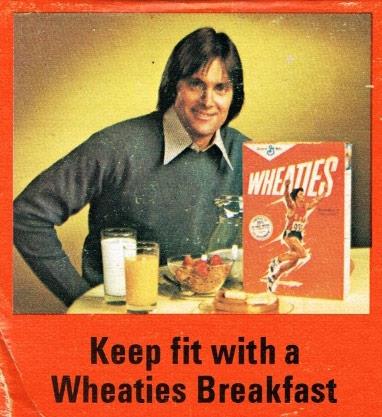
How Not to Stay Healthy With Wheaties

Wheaties Breakfast

While writing my previous article, I came upon this image. It must be from the late 1970s. And look at the breakfast that we are supposed to keep fit with:

  • Bowl of Wheaties (110)
  • Three strawberries (12)
  • Two pieces of Wonder Bread toast (158)
  • Glass (8 oz) of orange juice (112)
  • Milk (4 oz) for the Wheaties (73)
  • Glass (12 oz) of milk (219)
  • Cube of butter for toast (102)

Okay, I’ll admit: it isn’t a cube of butter. But it is enough butter for about half a loaf of bread. I really wonder if General Mills is heavily invested in the dairy industry. They have, regardless, a cozy relationship. And I think even at that time, we had a good idea that milk was not something we should be consuming a lot of.

Also of interest here is that this “keep fit” breakfast has a whole bunch of grain. And I say that as a grain guy myself. But really, is it necessary to have two grain products in this breakfast? We have bread, which is made out of wheat. And then we have a cereal that, if I had to guess, you know, based on its name — “Wheaties” — was made out of, I don’t know, wheat?

But this isn’t all wheat and dairy. We also have a hulking big glass of orange juice. I remember in the day, this was called “a serving of fruits and vegetables.” It doesn’t much fly. Once you distill fruit down to juice, you remove most of what is good for you. There really isn’t much more to say for the glass of orange juice in the picture up there than there is for a can of Pepsi. Except that your mom probably wouldn’t have complained.

The numbers above are the approximate number of calories. I used whole milk, of course; this is from the 1970s! But that adds up to a total of 786 calories. And I’m going easy on this. Those glasses look bigger than I’ve estimated. And despite what every breakfast cereal label in America says, people put more than a half cup of milk on their Wheaties. And I’m pretty sure there is more than a tablespoon of butter on the bread (that’s what I used, not my joke cube). That’s a whole lot of calories for what is an uninspiring meal.

As you may know, I don’t much think about nutrition. It is filled with pseudoscience. Every time I hear about the current nutrition fad, I ignore it. I just don’t care. In a few years, they’ll probably be saying something different. And I don’t care anyway. I just eat what I like. I try to mix it up. That’s about it. But I know that picture up there is not of a healthy breakfast. For one thing, who wants to drink that much milk?! It’s just propaganda.

With or without the strawberries.

Court Take Middle Ground on Marriage Equality?

Same Sex Marriage - Homer - SimpsonsHaving just written an article about my confusion regarding whether we should allow bakers to be bigots, I want to talk a little bit about the Supreme Court oral arguments concerning Obergefell v Hodges. The are two questions before the court. The first one is whether same sex marriage should be mandated nationwide. The second, should the court find against the plaintiffs in the first, is whether states that do not allow same sex marriage will be required to recognize same sex marriages in other states — this is called “reciprocity.” From the standpoint of the law, the second question is more important. From the standpoint of civil rights the first question is key.

The reason the second question is more important as a matter of law is because not doing so causes all kinds of legal issues. States must recognize the power of other states to run their affairs. If a same sex couple is married in California, that marriage is now accepted by the federal government. But it isn’t recognized by, for example, the state of Ohio. What happens if that couple has a child and then they move to Ohio? Suddenly the couple isn’t married and the child is the responsibility of… who? There are all kinds of less consequential issues that come up when states do not reciprocate in this matter.

The first question is a matter of civil rights because it involves equal protection. If the court finds for the defendants in the first question and for the plaintiffs in the second, they will be setting up a situation where rich members of the Ohio LGBT community can fly over to New York and get married. But lower income members can’t do that. So in effect, poor LGBT people will not have the same rights. Now one could argue — And I would! — that this kind of discrimination is everywhere in our society. But that’s hardly a justification for allowing it in this case. Same sex marriage in Ohio would be a kind of Animal Farm equality, “All LGBT people are equal, but some LGBT people are more equal than others.”

Having said all this, I tend to think that the Supreme Court is going to worm out of this — splitting the difference by just finding for the plaintiffs in the second question. But maybe not. At BuzzFeed News, Chris Geidner seems to think that Kennedy is going to go for full marriage equality, Supreme Court Appears Ready To Rule In Favor of Marriage Equality. The basis for this claim is something interesting that Kennedy did. The hearing was divided between the two questions. During the hearing for the first, Kennedy was dominant, asking many questions and making many comments. But during the hearing for the second question, all he did was ask if the court could rule differently on the two questions.

I don’t find this particularly heartening. This is because during the first question’s discussion, he asked about the history of marriage being between “one man and one woman.” As Huffington Post summarized it, Supreme Court Mulls How Marriage Equality Will Come About. So there doesn’t seem to be any question that Kennedy thinks that same sex marriage should be made legal nationally. I took his question in the second half of the hearing to mean that he thought that the plaintiffs had the better of the argument, but for the sake of social conservatives, we should go slow and just mandate reciprocity.

I still think this is a good outcome. But it will indicate just how political the Supreme Court really is. On the other hand, if the court decides to not ruffle the feathers of the social conservatives and then finds for the plaintiffs in King v Burwell (the current Obamacare case), it will mean that they are just a bunch of hacks. Let’s hope not.

Christians and Wedding Cakes Still Confuse Me

Sweet Cakes by Melissa Pimping at the 2014 Values Voters SummitI’ve been trying to get my head around the issue of wedding cakes and same sex weddings. And part of my problem is that it is all so silly. On the Christian side, it doesn’t make any sense at all. The Bible — the old testament anyway — is kind of down on same sex relations. But it doesn’t actually say anything about marriage. This is just the same old modern Christian nonsense, “This is the literal word of God and I know that because my pastor told me it was!” It is so insulting to religion itself. What incredibly weak theology.

Just the same, why would same sex couples want to do business with such vile people? I understand if there is only one bakery in town. But this most recent case was in Gresham, OR. That’s right next to Portland. There are a lot of bakeries in that area. The only reason I can see a problem here — and it does apply — is because the couple didn’t know that this was a bakery that reserves the right to discriminate against same sex couples. Overall, it is hard for me to get too upset about this. There are total jerks in the world, and a lot of them have always called themselves Christians.

The case in Oregon is very clear as a matter of law. The state has a non-discrimination law. Sweet Cakes by Melissa very clearly broke the law. A same sex couple sued them. The owners lost. Boo hoo. This is what happens when you decide your business should be used for moral grandstanding instead of making money. You lose. Check the law the next time you decide to do something like this. Above all, stop whining. See that picture of Melissa crying to all the true believers at the 2014 Values Voters Summit? This is what happens when you let your husband be a bigot behind the counter.

Of course, the bakery owners — like the Indiana pizza store owners — have seen donations following in from like minded Christians from across the country. But these things are only going to last so long. These are not customers chipping in to keep a well loved store afloat, like we saw with Borderlands Books. The donations will last only as long as Fox News is pimping the story. This is a thing, but it is not going to keep the bigot bakery industry afloat past next Thanksgiving. A better solution needs to be found.

The End Is NighThis is where the push for all these “religious liberty” laws are coming from. But even they have a short self life. In a place like Portland, I suspect the problem could be solved simply by letting people like Melissa discriminate but require that she put up a sign that says, “We don’t serve same sex weddings.” I think that would put a pretty quick end of Sweet Cakes by Melissa. But that’s just it. I suspect Melissa and her husband would be upset at having to post such a sign. They would see it as persecution — like the Nazis making the Jews wear arm bands. It wouldn’t be. It would just be truth in advertising. They should be grateful that the sign didn’t read, “Warning: we are bigots.”

So the sign wouldn’t solve the problems in Oregon, much less rural Mississippi. But given that this isn’t a question of basic needs — food and lodging — I would like to find a free market solution to it. Maybe I’m just being naive, but I really don’t think this kind of prejudice is going to survive the cold light of day. I want to watch as places like Sweet Cakes by Melissa get wiped out as only the most hardcore bigots are willing to do business with them. But like I said, I’m still struggling with the issue. But one thing should be clear, “Christians: the end is nigh!”

Morning Music: Suzanne Vega

Tom's Diner - Suzanne VegaWill sent me a text, “What’s the Suzanne Vega song that goes dun dun dunna?” I knew immediately what song he was talking about. It was off her second album. He added, “I think it’s a cappella.” Yep, that was the one. So I entered “song a cappella Suzanne Vega” into Google and it spit out, “Tom’s Diner,” which is indeed the first song on Solitude Standing.

There was just one problem. When I clicked on the first video for it — Official music video! — it wasn’t the song. Well, it kind of is. It is a DNA remix of the song with understandably mellow drums and synth work below it. It’s not a bad song that way. The story behind it is more interesting because it shows some actual sense coming from a corporation.

The producers of this remix did not get legal authority to do it. They just did it and released it kind of on the sly to various dance clubs. When the song seemed like it might be a winner, A&M bought the track rather than suing. And the song became a big hit. This is yet another example of how copyright normally does just the opposite of what it is supposed to do. In this case, a pretty a cappella song was turned into dance hit. This wouldn’t have happened if the copyright system worked the way it is “supposed” to.

But I still like the original better. It has nuance that it filtered out in the remix.