Nick Cave, There Is No More to Say

Nick CaveListen up folks: Nick Cave is 57 today. I have almost nothing to say about him. His work speaks for itself. I understand that he is a novelist and a screenwriter. And I even remember him acting (so to speak) in Tom DiCillo’s first film, Johnny Suede. But I don’t know much about this side of his life. I just know his music, especially in Nick Cave and The Bad Seeds. Of course, at this point it is hard to separate him from the band since Mick Harvey and Blixa Bargeld left the band — the three of them pretty much were the band. Of course, the band is as good as ever. That’s perhaps that greatest thing about Nick Cave: he hasn’t decreased the quality of his work over time.

Here is a whole set from when the original members were all still in the band. There is no more to say:

Two Jokes and a Song for Scotland

Scottish FlagIn Amadeus, Mozart tells Emperor Joseph, “I’m a vulgar man…” Well, I’m not a vulgar man. At least I don’t think I am. Instead, I am a silly man. I delight in pretty much the same things I delighted in at five. And although I flatter myself that I have a sophisticated sense of humor, most of my writing is much more silly than clever. In fact, last night on the Colbert Report, the segment on Prince Hawkcat made me gasp for air because it was so funny.

This is why I bring you what many probably consider silly jokes. And given that today the Scots are voting on independence, I thought I would offer up a Scottish joke or two. But before that, let me just go on record about this vote. I really wish the independence movement had worked out their currency issue. It is certainly the case that we now know that countries need their own currencies so they can weather the various financial crises that will be brought on by the dark forces of the Power Elite. But overall, I think they ought to go for it. And they should blame it on Margaret Thatcher. And embarrassing David Cameron is a big boost.

What’s more, Roy Edroso makes a great argument for being in favor of Scottish independence: the people who are against it are such wankers like David Frum. Of course, if I had to bet, I’d say that it will not pass. I heard that in the lead up to our own Revolutionary War, only about a third of the country was in favor of independence. So it is a tough sell. But we’ll know soon enough.

In the mean time, here is a very silly joke by keta, posted over on alicublog (lightly edited for language):

This Scottish bloke goes on a skiing holiday to Canada. After a hard day on the slopes he retires to a bar at the bottom of the mountain.

Into about five or six whiskeys, he looks up and notices a stuffed animal with antlers on the wall.

He asks the barman, “What the hell is that?”

The barman says, “It’s a moose.”

The Scottish chap says, “Bloody hell! How big are the cats?”

In response, commenter Spaghetti Lee offered another good joke:

So this American is vacationing in Scotland. He goes into the local pub and says “I hear you Scots know how to hold your liquor. Well, I’ve got a hundred American dollars for the first man who can do ten shots of whisky back to back.”

No one takes him up on his offer. One man even gets up and leaves. About ten minutes later, he returns and says “Is your bet still good?”

The American says yes. The bartender sets up the shot glasses and the Scot downs them all back to back. The whole bar cheers and the American sheepishly hands over the money. “If you don’t mind me asking, where’d you go for those ten minutes?”

The Scotsman says “Ach, I went to the pub down the street to make sure I could do it, first.”

Good luck, Scotland! If it becomes independent, I think Oi Polloi’s “Don’t Burn the Witch” should be its national anthem:

I love these guys!

Put to death in flames and smoke
You were used as a scapegoat
Troubles blamed upon the witch
When they should’ve really burned the rich.

Get down on your knees in their church
You refused and worshipped the earth
They tried to stamp out all you stood for
Wise woman power and herbal lore.

Inquisition in the middle ages
Phallocentric Christian outrages
There are those who’d bring back those days
Don’t let the right-wing Christian nutters have their way.

Don’t burn the witch!

Update (18 September 2014 11:03 pm)

It went as I expected. The Los Angeles Times has reported, Scottish Voters Reject Independence From Britain. But it was closer than anyone would have predicted a few months ago. The vote went down 45-55. With that much discontent, this is not over. I hope that that the UK makes accommodation for Scotland as they have promised. But now that the pressure is off, I suspect that nothing will be done.

The Saviour and the True Meaning of Love

The SaviourFollowing is the complete video of the 2005 short film, The Saviour. It is written and directed by Australian filmmaker Peter Templeman. And it is a good example of something I tell people all the time: short films are generally far better than feature films. I think there is a simple reason for this. Most feature films don’t have 90 minutes of content. They are padded. What’s more, feature films are expected to make money. So they are far more commodity than art. Short films are generally works of love and so are artful or at least reflect the filmmaker. And they are as long as they need to be. No one ever pads a ten minute film with five minutes of nonsense just to reach that magic 15 minute length.

The Saviour is a magical film. I suppose that everyone will see it in their own way and I highly recommend watching it before you read what I have to say. I don’t believe in “spoilers,” but The Saviour is the kind of film where you really ought to make up your own mind before allowing me to poison you. The basic story is that a young Christian missionary has had an affair with a married woman he is trying to convert. She has cut it off, and he is obsessed. He believes he will save her from what must be a bad marriage, given that she was willing to commit adultery with him.

So, have you watched it? It is 16 minutes of your life that you won’t regret.

Continue reading

Pity for Amy Winehouse

Amy Winehouse Statue

This is a statue of the late singer-songwriter Amy Winehouse with her father. The life-sized statue was erected for what would have been her 31st birthday. She apparently had struggled with opioid and cocaine addition for much of her young life. Later in her life she gave up these drugs but began doing the socially acceptable but generally more dangerous alcohol. She eventually died two months shy of her 28th birthday because of alcohol poisoning.

I’m so out of it that I didn’t know who she was. So I listened to some of her music. I am very impressed. It is not only great work, it is the kind of stuff that I enjoy. Here is a brilliant song, “Stronger Than Me”:

But the only reason that I took note was the comment that went along with it, written by an otherwise smart and humane person:

No. No, no, no, no, no, no, no, no, no. Junkies are not to be honored. People who make records about defiantly be junkies should not be honored. Period. End of story. Done.

This is an issue that I’ve been fighting against for coming up on two decades. What is it about being a heroin addict that causes everything else in their lives to vanish as far as others are concerned? People don’t seem to have trouble compartmentalizing people in other contexts. Thomas Jefferson has statues built for him all over the nation despite the fact that he was not only a slaveholder but kind of a jerk who left many of them in bondage following his death. But we can’t honor a very talented young woman just because she was troubled?

What’s more, I think her violence is more troubling than her use of illegal drugs. But it is interesting that her violent outbursts did not occur when she was doing illegal drugs. It was only after she gave up illegal drugs (following arrests for cannabis and cocaine) that these became an issue in her life. But I’ve talked a lot about how in our society, the use of illegal drugs have a stigma that is worse than violent acts even including murder.

But what about other highly admired and unrepentant drug users? There is Lou Reed and William S Burroughs and Hunter S. Thompson. And all of them strike me as having been more in control of their lives. I don’t get that impression from Amy Winehouse. If she had lived longer, she might have gained wisdom and gone on to be the grande dame of jazz singers. But as it is, she seems to have been more like a fragile child. The crime is that our society did not know how to help her.

In the end, she gave far more to our culture than she took. She should be admired for that. And if we can’t do that, we should at least pity her. And we should pity her family.

Never Gonna Give Up Barry White

Barry WhiteOn this day in 1944, the great singer and songwriter Barry White was born. Above all, he created great sounding music that generally transcends any particular genres, although I guess we would have to classify his work as generally soul. Added to his music was his amazing bass-baritone voice. I still listen to him a lot.

He was born in Galveston, Texas. And in his teens, he became involved with gangs and ended up serving four months in jail for stealing car tires. There is a story that may be true that he heard Elvis Presley on the radio while in jail and it changed his life. Regardless, after getting out of jail, he started performing music. In fact, he was in a band that released a single when he was only 16 years old. He went on to work for Del-Fi Records, developing talent, writing songs, and eventually producing. One of the acts he discovered was Love Unlimited — a trio of female singers, kind of like The Supremes.

A couple of years later, he was developing music for a male singer. As a result, he put together a three song demo tape with himself singing. People at 20th Century Records (where he had moved to a couple of years before) loved what he had done and convinced him to record an album that became, I’ve Got So Much to Give. And the rest really is history. He went on to earn over a hundred gold records world wide.

Here is a very unusual (but still great) version of his top-ten hit “Never, Never Gonna Give Ya Up”:

Happy birthday Barry White!

A Small Part of “Tangled Up in Blue”

Tangled Up in BlueThe last couple of days I’ve been listening to Bob Dylan’s Blood on the Tracks while I work out. Almost every song on it begs for interpretation. It is Dylan at his most gothic. It is also probably my favorite album of his, although I probably listen more to his more fun albums like Highway 61 Revisited. But there is a reason I’ve been pushing Blood on the Tracks on myself: I’m trying to figure it out!
For some time, I’ve been wanting to write an article about the meaning of “Lily, Rosemary and the Jack of Hearts.” But I must admit that certain parts of the song elude me. Admittedly, they are details. What is most important is the thematic arc of the song. It is about Rosemary and her quest for redemption. And most of what I’ve read about the song is just nonsense. But I dare say that Dylan wrote the song explicitly to bring out the crazy theories. Much of it is left intentionally vague. But I can explain the basic story and perhaps I will do that some day soon.

Right now, I want to discuss another song on the album, “Tangled Up in Blue.” That’s another mysterious song. Or at least, the version on that album is mysterious. I don’t think he’s ever done the song the same way twice. You can see the various versions of the lyrics on Other Versions Of Tangled Up In Blue. It contains four different versions. I can’t say that they clear things up. He’s playing around with perspective and it is never clear if there are two or three characters. He says, “I lived with them on Montague Street…” Is “them” the woman and the man she was married to or the women and the man who helped her out of a jam? I could argue both cases.

The most evocative part of the song is the verse in the strip club:

She was working in topless place
And I stopped in for a beer
I just kept looking at the side of her face
In the spotlight so clear
And later on when the crowd thinned out
I was just about to do the same
She was standing there in back of my chair
Said to me, “Don’t I know your name?”
I muttered something underneath my breath
She studied the lines on my face
I must admit I felt a little uneasy
When she bent down to tie the laces… of my shoe
Tangled up in blue

I love those first four lines: they are so sweet. He is love. He’s in a strip club, yet it is her face that that he is focused on. Again, it isn’t clear in the song whether this is because he has known her or it is just love at first sight. She says, “Don’t I know your name?” This could mean she recognizes him, or it is just a pickup line. In other versions, she says, “What’s your name?” and “It ain’t no accident that you came” and even “What’s that you got up your sleeve?” So it’s hard to argue one way or the other. But I like to think that she approaches him because he’s different: he wasn’t checking out her curves.

The last four lines before the refrain are just plain funny. You can just imagine a bare chested woman bending down in front of the flustered narrator. But it too is rather sweet, indicating more maternal feelings than anything. This is, in fact, the verse that makes me think the whole song is about a love triangle of the kind in Sophie’s Choice — with the narrator silently pining for the heroine. That may be giving the story too much credit, but it is what works for me.

The remainder of the verse consists of two lines that I just love, “And later on when the crowd thinned out; I was just about to do the same.” He takes a macro-scale metaphor of a crowd as a liquid and applies it to the micro-scale. And thematically it is very strong, implying that the narrator might just fade away. Of course, we know what he means: he was just about to leave. But it is a wonderful way to say it.

The great thing about songs is that you really can make them your own. When I analyze them, I normally find much more positive meanings than most people. That’s true of “Ode to Billie Joe” and “Marlene on the Wall” and even “Rapture.” Although I don’t think I’m inclined to take as many liberties with most songwriters. But Bob Dylan begs for it. It is a big part of his genius.

Brel, Bowie, and Viva Las Vegas!

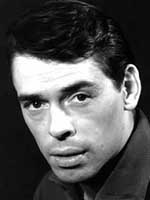
Jacques BrelTo make up for the catchy pop folk I put you through earlier today, I present to you a great performance with David Bowie and Mike Garson, who does an extended keyboard solo in the middle. You may remember Garson for his playing on a number of Bowie albums, most especially on the title track of Aladdin Sane, where his avant-garde solo steals the whole album. There is no avant-garde here, just a delicious and effortless piece of musicianship.

The song is “My Death,” which was apparently from Ziggy Stardust and the Spiders from Mars, which I have not seen. The song is a translation of a Jacques Brel song, “La Mort,” off La Valse à Mille Temps. Lyrically, the translation isn’t bad. There are a couple of problems. The first is that the French conception of Death is not ours — it is a pale woman. So the chorus sung to “you” in front of the door has a romantic element that is totally missing in the English version. Also, the original has constant references to time slipping away. This is also missing in the translation.

The way that Bowie chooses to do it is odd too. He sings it like a dirge. Brel’s chorus is upbeat. It’s like he is saying that as long as he can flirt with death, he can stay alive. Or something. You can never say with Brel because his work is so layered. None of this should be taken to mean that the Bowie version is bad. It isn’t. But the Brel version is better:

But Brel doesn’t have Mike Garson backing him up. What’s more, we expect Bowie in his old age to croon for us. He’s been doing it since David Live back in 1974 when he didn’t expect it. (I still think it is a great album; I don’t care what anyone says.) If you want to skip ahead to the Garson solo, I forgive you. It is at 4:50. And if you have any doubts about whether you should watch this, consider this: the translation was done by Mort Shuman, best know as the co-writer of “Viva Las Vegas”!

I can’t resist. In general, I don’t like Jello Biafra’s vocals. I think they detract from Dead Kennedys, which is still one of the great California punk bands. But with “Viva Las Vegas,” Biafra’s vocals are just perfect:

Getting Mellow With Kenny Loggins

Kenny LogginsI am not really a Kenny Loggins fan. But there is much to be said for his earlier folky stuff. And I got “Danny’s Song” stuck in my head today, so I went looking for it. But I tried to avoid both Loggins and Messina and Anne Murray. And that brought me to the following lovely version of the song with two guitars, one bass, and three voices. It is Loggins on lead vocal. I don’t know who the other guys are.

What most impressed me was the lead guitar. I love tasteful music like that. And that country rock bass works really well too. With all the posing that goes along with popular music, it is nice to see a well crafted song performed beautifully.

You might notice that Loggins sings, “Conceived in lust” rather than “love,” as it is on the original recording. Apparently, he thinks it is funny. What it shows to me is that, like most musicians who have a hugely popular song, he secretly hates it. And I have to say that I have always found the song far too precious. Let’s see: you are poor and about to become a father and that’s just great because you have “love”? Grow up!

Of course, if the lyrics had been more mature, it probably never would have been a hit. It is nice regardless. And as I said: beautifully performed.

Afterword

The show (or video) is sponsored by Taylor Guitars, who make some very attractive instruments.

The Pros and Cons of Roger Waters

Roger WatersThe great singer and songwriter Roger Waters is 71 today. He is best known as the longtime front-man for the band Pink Floyd. And toward the end of tenure with the band, he pretty much took it over. The last album he did with them, The Final Cut, is better thought of as the first Roger Waters solo album.

At this point, I find Waters’ work generally a bit too much. But there is no question of his genius. His best work was the middle period of Pink Floyd when the other members of the band were able to dilute his excesses. His best work is found on Dark Side of the Moon and Wish You Were Here. By the time of Animals, it was clear that things were getting out of hand. And The Wall, which is a brilliant album, signaled the end of Pink Floyd as a collaboration. At that point, Waters’ work was too personal and it was right that David Gilmour took over the band and Waters went on to solo work.

I haven’t paid that much attention to his solo work. It is quite good but I feel like I’ve gotten as much out of Waters as I can. And now some of his clichés drive me crazy. The biggest example is his tendency to jump from very quiet sections to very loud sections. Although things like Jesus Christ Superstar have been called rock operas, Waters work is really the only thing I know of that I think deserves the term. That’s high praise coming from me. But I am rarely in the mood.

Here is the video from the title track from Roger Waters’ first official solo album, The Pros and Cons of Hitch Hiking. It is a great example of everything that is good and bad about Waters. I especially think it is a weak concept of a man having a vaguely contiguous series of nightmares. But it does show how he can manage to create an interesting album with the thinnest of ideas. The album also features some of the best work I’ve ever heard by Eric Clapton.

Happy birthday Roger Waters!

Sid Vicious Selling Cars Just Like He Should

Acura TLXI got to watch a little television recently, and I saw a commercial for the Acura TLX. It is apparently a car. But what struck me was that the music for the commercial was “My Way” performed by Sid Vicious. About a year ago, I wrote, Commence Conformity Protocol, about the Infiniti Q50 commercial. I think it is pathetic the way that advertisers try to convince people that buying their products will make them “cool” and “dangerous” or (most laughably) “nonconformist.” But in this case, the song is entirely appropriate.

It makes me crazy that many, even most, people think that Sex Pistols somehow invented punk music. Far from inventing it, I don’t even consider them a punk band. Punk is not really a kind a music so much as it is an approach to it. And I’ve always found the band to be kind of a joke. It’s all too packaged and intended to offend. It’s no surprise that Sex Pistols are now considered the prototypical punk band: that’s what they were sold as. None of this is to say that some of their work wasn’t really good. (So was some of The Monkees!) And I think that John Lydon is one of the greatest rock singers ever.

The ultimate expression of everything that was bad about Sex Pistols is found in “My Way.” Vicious stumbles up to the mic with all the practiced disregard of a seasoned con man. He then does a childish parody of Sinatra, I guess — including rolling his eyes. And then the pop heavy metal music comes in and Vicious goes on to show that he can’t sing like John Lydon any more than he can Sinatra. But the main thing is that he’s there posing for the folks. He is Punk Rocker™. It’s just offensive.

I understand that there is a posing aspect to all forms of rock music. But to embrace that is exactly to abandon the philosophical core of punk music. It was always a do-it-yourself movement — a rejection of the polished, substanceless music of the time. (Actually: of all times.) The idea was never to be bad for the sake of being bad. And if you listen to Never Mind the Bollocks, Here’s the Sex Pistols, you’ll find the band is fairly good. Of course, it helps that Vicious doesn’t play on the album.

So I think it makes perfect sense that Sid Vicious being used to sell cars to insecure middle aged corporate cogs who fantasize about being paradigm-breaking rebels. If Malcolm McLaren were alive today, he would be so proud. Because that was exactly what he had in mind all along.

Afterword

Since you were good enough to read my rant, he’s some of the best punk music ever made — “I Felt Like a Gringo” off Buzz or Howl Under the Influence of Heat:

John (Not Jon) Stewart

John StewartOn this day in 1939, the great singer-songwriter John Stewart was born. He is probably best known for writing The Monkees’ number one hit “Daydream Believer.” But he was also in the Kingston Trio through most of the 1960s. After that, he had a successful solo career, which culminated in 1979’s Bombs Away Dream Babies and the top ten hit “Gold.”

Many years ago, while I was in the process of flunking out of college, John Stewart came to my campus. He gave a lecture about nothing in particular and everything in general: his life, songwriting, cars, women, performing. This was only a few years after “Gold,” so it was surprising that not many more than a hundred people were in attendance. I had something else that I had to get to, so I knew that I was going to have to slip out of the lecture half-way through. Stewart did not allow me to do this unnoticed, however. He cheerfully chided me for missing his pearls of wisdom.

After I was done with my thing and he was done with his thing, we happened to run into each other. He remembered me: it had only been two hours and I was, after all, the guy who walked out on him. We walked to his car, which, if I remember correctly was some piece of junk. I don’t remember what we talked about, but I do remember two things he told me. First, he said, never listen to what your friends and family tell you about your work. He said, everyone told him that he sucked — until he sold his first hit and made $50,000 on it (in the late 1950s, I think); people who don’t know you are the only ones who can really see your talent. The second thing he told me was that art was whatever the hell you make it. He had an example: “Happiness is a Warm Gun.” It is just four song fragments pasted together. By traditional standards, it’s a piece of garbage; but as we all know, it is a masterpiece.

Here is Stewart from that time, doing “You Can’t Go Back to Kansas”:

Happy birthday John Stewart!


Part of this article taken from John Stewart and Jules Shear.

Darius Milhaud on the Roof

Darius MilhaudOn this day in 1892, the great French composer Darius Milhaud was born. He was a member of Les Six — the six French composers of the early 20th century that I have such a love of. And of them, Milhaud is probably the most charming. He integrated traditional melodies into his work. And although most jokes that composers put into their works are subtle, Milhaud is kind of like the Charlie Chaplin of composers.

In addition to everything else, Milhaud composed at a furious pace. I’ve only heard a small faction of his work. But I quite enjoy it all. His speed was not an indication of a lack of quality. You will see this if you bother to listen to the music I’ve embedded below. I really encourage you to do so. Unlike most modern composers, his work is lyrical and fun.

He was also a major music teacher during the last century. In 1940, he and his family were forced to flee France because he was nominally Jewish. He ended up at Mills College, which is just down the road from me. Leave it to a French man to end up at a woman’s college! But the school did accept men in its graduate program, which is where he taught such luminaries as Dave Brubeck, Philip Glass, and Burt Bacharach. Apparently, Milhaud once told Bacharach, “Don’t be afraid of writing something people can remember and whistle. Don’t ever feel discomfited by a melody.”

And speaking of melodies, here is Milhaud’s Le Boeuf sur le Toit (“The Bull on the Roof”), which is based upon music he heard in Brazil while working there. It has very lively counterpoint with polytonal harmonies that often come crashing together for great effect.

I can’t find a live performance of it, but if you want to hear something really charming, check out his Suite per Violino, Clarinetto e Pianoforte. He wrote it in 1939. Imagine: the Nazis would have killed the man who wrote this. In addition to just being evil they had no sense of beauty and the joy that it creates.

In 1922, Milhaud first visited the United States and got to hear his first “real jazz” in New York. This led to his composition, La Création du Monde (“The Creation of the World”). It is a wonderful piece, but all things considered, not one of my favorites. But it is an important piece. If you are only going to listen to one piece, I’d pick one of the two above.

Happy birthday Darius Milhaud!