Morning Music: Georges Brassens

Georges Brassens

Georges Brassens was a French singer-songwriter from roughly 1950 until his death from cancer in 1981. He was incredibly prolific but almost never performed outside France. So he isn’t as well known here as Jacques Brel even though their careers overlap almost perfectly.

He has a beautiful voice. It reminds me of Roger Whittaker. But Brassens is not pretentious about it. In fact, you don’t get the impression that he even knows what a fine voice he has. Regardless, his focus is on the music and lyrics.

Brassens was diverse in terms of his subjects, so I’d like to highlight two songs.

Le Parapluie

“Le Parapluie” (The Umbrella) is a sweet song about a man who sees a women walking in the rain. He offers her his umbrella and they fool around a bit. But the narrator seems naive like the one in Brel’s “Madeleine.” So it’s easy to see him as deluded. Maybe he’s just thrilled to be anywhere close to a woman. Regardless, she goes on her way at the end.

Brave Margot

“Brave Margot” is one of Brassens’ best-known songs. It’s funny but ultimately heart-breaking and cynical. A shepherdess finds an abandoned kitten, which she breast-feeds. Eventually, all work in the town stops because the men have come to gawk at her.

The shepherdess is naive and thinks they are just looking at the kitten. Eventually, however, the women of the town get angry and burn the kitten to death. The shepherdess gets married in her heartbreak. But the old folk continue to tell the story to new generations.

As with all great art, I don’t think there is a single meaning to this song. It’s funny and sad the way that life is.


George Brassens by Roger Pic — Bibliothèque nationale de France, Public Domain.

Morning Music: Sail Away

Sail Away - Randy Newman

One of the best things about Randy Newman is that his intent is always clear. When I was 17, I got his album Sail Away. I played it endlessly. It had many of the songs I still think are among his best like “Last Night I Had a Dream,” “Political Science,” “Burn On,” and most especially, “Lonely at the Top.”

That last one was written for Frank Sinatra, and I think he missed a great opportunity to make light of himself by recording it. He would have killed it! Sadly, Sinatra had as much of a sense of humor about himself as Donald Trump.

But arguably the greatest song on the album is the title track. Its conceit is that a typical salesman is making an argument for Africans to come to America for the great life — unstated to be as a slave.

As is typical for Newman, he sprinkles in racist references like “sweet watermelon and the buckwheat cake.” And this is combined with weird ignorances like mentioning tigers, which don’t live in Africa.

The song is about more than literal slavery. It’s about the absurdity of the idea of being American. The idyllic life he describes is not just unavailable to the slaves who were kidnapped but also to the entire working class. All of these people labor so the rich can “sing about Jesus and drink wine all day.”

“It’s great to be an American.” And if we just define “American” narrowly enough, that’s true.


Sail Away Album Cover by Reprise Records under Fair use.

Morning Music: The Old Man’s Back Again

Scott 4 - Scott Walker

Over time, art loses its relevance. Today, people think of Jane Austen’s Sense and Sensibility as a nice romance. When it was published, everyone understood that it was a critique of inheritance laws and the status of women. Additionally, its razor-sharp satire of Romantic affectation has lost its edge to the point where few notice it as anything but a comment of the follies of youth.

The same is true of Scott Walker’s song “The Old Man’s Back Again.” I recently heard the song used in the first episode of the second season of Ash vs Evil Dead. There is nothing clever about its use. Ash goes back home to Elk Grove and we get, “The old man’s back again.” (In it’s defense, the scene is really well directed with the song playing on the car radio, then switching outside showing the city sign as the car passes by and music at full volume.)

The song is off Scott 4 and is “Dedicated to the Neo-Stalinist Regime.” It is a reference to the Prague Spring where the newly elected First Secretary of the Czechoslovak communist party, Alexander Dubček, began to reform the country. He and others in the government made a lot of progress in this effort even while maintaining what they thought were good relations with the other Warsaw Pact countries.

But they were wrong and on 20 August 1968, seven and a half months after it began, the Prague Spring ended. The old policies were gradually put back in place and Dubček was forced to resign a few months later. The “old man” Walker refers to is Stalin — or at least his authoritarian policies.

It’s a very sad song. Each of the verses (except the last) is about the hope of the reformers for “socialism with a human face.” Dubček and his policies were hugely popular. And then it all came crashing down:

I seen a hand
I seen a vision
It was reaching through the clouds
To risk a dream
A shadow cross the sky
And it crushed into the ground
Just like a beast
The old man’s back again.

The last verse is told from the perspective of one of the invading soldiers, which I assume is meant to be Russian because the song specifically says he is “Ivan.” (There may be some other significance of this; if so, please let me know!)

But Walker still paints a sympathetic portrait of a young man who is confused and longing:

Devoured by his pain
Bewildered by the faces
Who pass him by.

Scott Walker’s gorgeous voice and the lush production hide just how painful a song this is. But I think that understanding the song in context makes it all the more beautiful.

Sadly, Walker died just over a year ago of cancer at the age of 76.


Scott 4 Album Cover via Wikipedia uder Fair use.

Morning Music: Gott erhalte Franz den Kaiser

Joseph Haydn

Let me start with a sad but beautiful story from classical music lore. Last night, I decided to tell it on Twitter.

Joseph Haydn was the father Mozart never had. You know: the father who wasn’t a total prick.

Haydn was 24 years older than the younger composer. Mozart was very protective of Haydn. When Haydn was preparing for a trip to England in 1791, Mozart begged him not to go

He was afraid the older man (58 years old!) would get ill and die. But Haydn went anyway. Mozart died while Haydn was in England.

Haydn lived almost 2 decades longer, dying in 1809 at the age of 77.

“Deutschlandlied”

With Haydn on my mind, I started listening to a playlist of his work. And I came upon “Gott erhalte Franz den Kaiser.” But I knew it as a different song: “Deutschlandlied” with the beginning lyrics, “Deutschland, Deutschland über alles.” I had no idea!

This shouldn’t come as a shock, however. People do this all the time. “The Star-Spangled Banner” uses the tune of John Stafford Smith’s “The Anacreontic Song.”

Indeed, “Deutschlandlied” has been the German national anthem from 1922, but they only use the third stanza, which is about unity, justice, and freedom. Supposedly, the song was never intended to be about Germany conquering other countries but rather the desire for German unification.

It is a great tune. It annoys me the US has a third-rate national anthem while countries like Germany and Russia and France have such great ones.

Austria

It’s a little weird to think that Joseph Haydn wrote the German national anthem when he was Austrian. But do you know who else was Austrian? Right. So it’s all good.

Here is Haydn’s “Gott erhalte Franz den Kaiser”:

Note that I did not hear “Gott erhalte Franz den Kaiser.” Haydn uses the melody as the basis of of the second movement of his string quartet Opus 76 No 3.


Image cropped from the John Hoppner portrait of Haydn in England in 1791. It is in the public domain.

Morning Music: Kill the Poor by Dead Kennedys

Dead Kennedys

It is often the case that something I see the government do causes me to think of “Kill the Poor” off Dead Kennedys’ debut Fresh Fruit for Rotting Vegetables. It’s sad. At least to me, it shows how often policies are proposed and enacted with the clear intent to harm the poor.

This is certainly true of the recent efforts to cut back food stamp (SNAP) funding. And that’s very telling. The original idea of supporting food for the poor was because of government price floors on food. Since the government was making food more expensive, the least it could do was to help poor people struggling to afford it.

Today, we have conservatives who are all for continuing to enrich farmers (who are increasingly just large farming corporations) while hurting the poor. The justification conservatives use is the same as we recently heard from Ron Johnson about why he was against relief for people affected by Covid-19: it will make workers lazy.

Kill the Poor!

But that’s just their cover. They actually want to kill the poor and that brings us back to Dead Kennedys. You see, the truth is that “Kill the Poor” is not actually about this kind of thing. In the grand tradition of Jello Biafra, it’s much more concrete. It’s about the neutron bomb.

For those who don’t know, the neutron bomb is basically what our country termed a “dirty bomb” when it was speculated that terrorists might use it. It’s a bomb that has a low explosive yield and instead creates a bunch of neutron radiation, thus killing people but leaving structures mostly intact.

So I feel weird using it more generally to express how I feel. But I shouldn’t! It’s all the same psychopathy and xenophobia. Ron Johnson would be all for dropping a neutron bomb on San Francisco. But frankly, he probably doesn’t know they exist. He’s known to be something of a dimwit. And evil.

But you could say that about most American conservatives these days. Do you think the Senate would be seriously considering a relief bill if Hillary Clinton were president? There’s just no way.


Dead Kennedys by Zvargas16 licensed under CC BY-SA 4.0.

Morning Music: Perfect Blue Buildings by Counting Crows

August and Everything After - Counting Crows

I listen to a wide variety of music, but there are particular artists who speak to me. The most obvious is American Music Club. But another is Counting Crows, who I’m sure a lot of people now hate simply because they were so popular. But I am never disappointed when I go back to them.

The song of their’s that most stood out to me was “Perfect Blue Buildings” off August and Everything After. It’s depressing even by the standards of Adam Duritz.

To me, it’s always been a junkie song. Just in the first verse we have “I stay at home with my disease” and “Help me stay awake, I’m falling.” There are other lines. Hell, almost every other line speaks about despair and death.

Obviously, it doesn’t have to be heroin — or any drug for that matter. In fact, it would be kind of a stereotype of heroin addiction, which normally gives junkies plenty of meaning, even if it is pretty thin.

But people do all kinds of things to keep themselves away from themselves. And the connection with the song is emotional. I think that the fear of a life out of control is universal.

This is an excellent live version of the song:


Image of August and Everything After via Amazon under Fair Use.

Erik Satie Makes a Joke

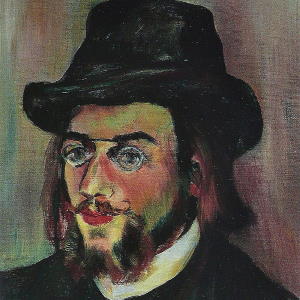
Erik Satie by Suzanne ValadonFor most of my life, I’ve dismissed Erik Satie as a composer who created pretty but ultimately uninteresting music. Like most of the opinions I developed as a teen, this was wrong. And over the last few months, I’ve been listening to a lot of his work. It’s magnificent.

The other night, I was listening to Embryons Desséchés. It’s pretty typical of his mature work. But right at the end of the piece, he makes a joke. And it was wonderful for me to hear because I don’t usually get musical jokes. While it’s true that I know a lot more about classical music than most people, I don’t actually know that much about classical music.

What’s more, musical jokes are like regular jokes: they don’t age well. Satie’s joke only works in the context of the move out of the Romantic period. And I only get the joke because I’ve spent so much of my life fuming about the excesses of this most-played and least-fulfilling period of classical music.

Find the Joke!

Before I explain the joke, see if you can’t hear it in the third movement. You should at least note that the ending seems out of place with the rest of the piece.

Slapping Romantics for Fun and Profit

Even in this one movement, you can tell that Satie is messing around. He skips around in terms of style — as he does in the piece as a whole. The first movement even previews what he will ultimately do in the third.

So as I listen, I enjoy hearing Satie having fun bouncing around stylistically. And then he says, “Hey! Remember this?!” And he provides one of these ridiculously extended endings that I love to hate.

This is usually said to be a direct attack on Beethoven’s Eighth Symphony. That does seem to be the case, but I think Satie means for his attack to be broader:

Erik Satie’s Other Jokes

Apparently, Satie was making more jokes than this one. In particular, he ridicules the music-hall song “Mon rocher de Saint-Malo” (“My rock of Saint-Malo”), which you can hear quoted very clearly in the first movement.

This isn’t really a musical joke, however. You can only see it in Satie’s notes on the score such as, “‘It was a very nice rock! Very sticky!” But even if musically it had been more than a quotation, I wouldn’t have noticed it. I don’t recall hearing the song before. And I have no context within which to find it funny. Apparently, the song was very popular at that time and Satie was not a fan.

Humor Ages Poorly

This is a problem with all humor. In fact, I developed my approach to theater in an effort to find an audience for my jokes. I found that people didn’t find my jokes funny because they couldn’t understand them. So I got the idea of creating theater to teach the audience so that they would then laugh at my esoteric jokes. How well that works is open to debate.

The good thing about music is that by the time people don’t understand any jokes placed in a piece, they’ve also gotten to the point where the joke doesn’t stand out as odd. A great example of this is Mozart’s Ein Musikalischer Spaß (A Musical Joke). Most people think it sounds fine. To me, it sounds clunky and certainly not the work of Mozart at this late stage of his career. But I have little doubt that he and his friends screamed with laughter when they performed it.

I’m just glad that I was able to pick up a notable musical joke for a change. And I did laugh — a lot!

Betty Hutton

Betty HuttonI’ve gotten into the habit of posting little things that occur to me on Facebook. But I’m in the process of leaving Facebook. It really is an evil dump. And it bugs me that I’m creating free content for it.

Few songs feel me with so much energy as “Murder, He Says” written by Frank Loesser and Jimmy McHugh for the film Happy Go Lucky (1943). It is sung by Betty Hutton who co-starred in the film.

Hutton was never what I would call a movie star. Her focus was more on live performance although she had a number of hit records like the Hoagy Carmichael song Doctor, Lawyer, Indian Chief. If you watch the video for that song, you can tell that Hutton was something of a goof.

Her biggest success was probably in the title role of Annie Get Your Gun — a role she was born to play. I’m just not that fond of musicals like that anymore. (I loved them when I was a kid!)

The Miracle of Morgan’s Creek

The film I most associate her with is The Miracle of Morgan’s Creek (1944). It was one of the handful of Preston Sturges classics made during World War II. In it, Hutton plays a classic girl who can’t say no. She wakes up one morning having remembered that she married a soldier the night before but can’t remember his name (except that it had a “z” in it). Later, she learns that she is pregnant.

The film is a maze of absurdities in its attempt to justify what everyone watching knows is about premarital sex in the age of the Hays Code. If you get a chance, you should watch it. The plot doesn’t make much sense. But Sturges’ dialog is as witty as ever and Betty Hutton is her usual effervescent self.

Murder, He Says

Here is Hutton performing “Murder, He Says” for the troops:

Don’t See Randy Rainbow Live

Although I went out of my way to not have this site’s automatic twitter posts tag Randy Rainbow, many of his fans noticed. They were so angry I figured I must have written something really bad. But I’ve gone back and read this article. It’s fine. Unlike most of the press that Rainbow gets, however, it is not glowing. I have yet to see what I think of as a real review of his act. And that’s just not taking him seriously as an artist.

The complaints were mostly about my criticism of Randy Rainbow’s dismissiveness. People apparently can’t read. I was accused of calling him an “asshole.” I did not. (No one seems to have taken the time to even glance at the link.) I was also accused of calling his fans idiots. I did not. These people clearly didn’t like my less than rave review and latched onto fragments that gave them the best option for attacking me.

Not one person evidenced any understanding of the two points I was making. It was tribalism and nothing more. And that’s all art is for most people. Apparently, Good People never criticize anything about Randy Rainbow. Only “shitty” writers and general “douchebags” do that. And that’s fine. But it says a lot that not one of these people who were so upset could bother to leave a comment. Twitter really is the perfect medium for a country that lacks nuance.

–Frank Moraes (20 April 2019)

Randy RainbowLast night, I went to see Randy Rainbow. I got a free ticket. But it was extremely troubling.

It’s hard to write this because I had a great time last night. The show was funny and the band was great. But part of me can’t watch a show without seeing it from a professional and political standpoint. And on these fronts, it was pretty bad.

Professional Entertainment

The crowd that came out to see Randy Rainbow last night was scary. I thought that I liked his work. These people were crazy in love. During the question and answer section of the show, I suffered greatly from pena ajena. The questions were embarrassing. One example, “If your mother ever wants a break, I’m willing to step in.” Rainbow dealt with the question well, “You know I’m in my 30s, right?” (He’s fast approaching 39. Vanity, thy name is Randy!)

So it shouldn’t be surprising that the audience ate up the performance. But my seat cost $55. So I had expectations even if I wasn’t the one paying.

Problems With the Show

Probably the worst part of the show was that the sound was horrible. All the canned sound (more on that in a minute) seemed to come from one speaker. And the EQ was off. There wasn’t enough bass and there was too much treble. It made me uncomfortable. And even though I was otherwise enjoying the show, I probably would have slipped out if I hadn’t been packed in on both sides.

More annoying when it came to the ticket price was the fact that roughly a quarter of the show was pre-recorded video. And these weren’t recorded for the show. They were mostly standard Randy Rainbow YouTube videos. I’d seen half of them before.

And they’re good. (Of course, blown up on a big screen they don’t look so good.) But I could stay home and watch it for free. I think it says a lot about Randy Rainbow’s contempt for his audience that he doesn’t think he needs to program a full 90 minutes of live material.

Canned Music

The live songs always include canned music — mostly background vocals. I don’t particularly like this, but I understand it. I wouldn’t even bring it up except that when Rainbow is singing live, he is usually up on the screen singing as well.

It also highlights the fact that Randy Rainbow isn’t that compelling a live performer. His singing is fine but his gestures are muted — designed for nightclub performances, not a large theater. I think that having a giant screen is meant to make up for this but it only made the live Randy Rainbow seem smaller. It was also extremely distracting.

Often, when performers don’t have a great stage presence, they make up for it in other ways like having outrageous costumes. Rainbow does this to some extent, but not nearly enough. His costumes are more along the lines of prototypes. Like he’s saying, “If this were a real performance, I’d have an amazing costume here.”

Another factor that makes it less than it could be is Randy Rainbow’s dismissive personality. His attitude toward the audience is the same as it is toward Trump. And I kept remembering a headline in Current Affairs, People Who ‘Pretend’ to Be Shitty Are Frequently Just Shitty. Although given his audience, I can’t necessarily blame him.

Commodity Machine

Truthfully, the show would be far better if Randy Rainbow just performed show tunes with his exceptional band. I was especially taken with Justin Vance on sax, clarinet, and flute. He really added to the feel that there was an orchestra on stage instead of just a four-piece combo.

Of course, such a show wouldn’t be popular. It certainly wouldn’t pay for the caliber of the band. But that’s the point. The entire Randy Rainbow organization is a commodity machine.

Randy Rainbow Merch

There are a half-dozen different Randy Rainbow t-shirts you can buy. They are low-quality and made in Honduras. But hey, a good-quality t-shirt might have taken a dollar off the profits.

So perhaps you would like Randy Rainbow glasses? How about socks? The t-shirts are $30 but the socks are a real bargain at just $20.

For only $5, you can get a “what the fuck you guys?” bumper sticker, which is more or less what I thought about this exercise in non-productive capitalism.

Making Money

The two young women selling all the Randy Rainbow stuff were working very fast to meet the demand. It made me start to do some rough calculations.

There were 1,633 seats at the Luther Burbank Center for the Arts. Seats were $39.50, $45.00, and $55.00. Based on where I was sitting, I would say these represent about 30%, 50%, and 20% of the total seats. The place was packed, so that’s roughly $75,000. I figure rental is $10,000 for the night. The total cost for labor is $10,000 — if Randy Rainbow pays really well. And let’s give him another $10,000 for misc expenses.

That means, even without at least a few thousand dollars from Randy Rainbow merch, the production netted $45,000 playing in a small city. I don’t begrudge Randy Rainbow. Get it while you can!

Capitalism Destroying Art

But the whole thing highlights many problems with capitalism. First, Randy Rainbow is making an excessive amount of money while producing relatively little material. And he’s fast approaching the point where he will not have to produce anything at all.

Then there is the fact that people have to pay $40 just to get a bad seat at this event. And they are apparently paying it because of Randy Rainbow’s celebrity. I too went in eager to like it. But had I paid, I would have felt let down. There was maybe $15 up there on stage. The extra $25 to $40 was what we pay because the market can bear it.

Whatever. Randy Rainbow remains an interesting creative artist. And the people love him. But there really is no reason to leave the house. You can buy all that crap from home too.

YouTube and Twitter are the perfect venues for Randy Rainbow.

Image and Capitalism

Female Classical MusicianElizabeth referred me to a very interesting academic article, Orchestrating Impartiality: The Impact of “Blind” Auditions on Female Musicians. It finds that when the judges can’t see the performer, women musicians do markedly better.[1] This is not surprising.

You probably remember that widely cited study about people with black-sounding names receiving fewer interviews than people with white-sounding names. A more recent study has called it into question. The researchers claim that the results may not indicate race but rather social status. Personally, I don’t find the study all that compelling. But even if true, it just indicates a different kind of prejudice — one that just happens to correlate with race in this country.

I’m interested in this question on a very basic level. I’m interested in the way that things like height, weight, and perceived attractiveness affect how people are rewarded. This is not because they are particularly important. Instead, I’m interested in the ways in which even on the most facile level, meritocracy is nonsense.

Image and the Workplace

Consider someone needed to do data entry. All that matters is typing skills. There are two candidates. One of them is sullen and ugly with a typing speed of 100 wmp. The other is chipper and attractive with a typing speed of 90 wmp. Just based upon the work that needs to get done, the first candidate should be hired. But we all know it is the second candidate who will be hired.

In this case, people will complain that it’s a drag to be around sullen people. First, those who think that have never had a data entry job. But beyond that, I think the same would be true if the job were done remotely. As I learned in a career class in high school: the candidate who is hired is the one the employer likes the most.

I’ve seen this in the freelance writing world. Writers do not like to update their pictures. This is, not surprisingly, most true of female writers because they are most judged on their appearance. This is far too common to be simply a question of vanity. Image = money.

Capitalism and the Ugly Person

This is a fundamental failing of capitalism. Without capitalism, people will still be discriminated against. But their livelihoods will not depend upon their attractiveness. And they will be better able to find meaning in their lives outside their value in the market.

It’s funny how capitalism makes all our social problems worse. Yet we are just supposed to accept it because “Stalin!” Or “iPhones!”

The Music Biz

It’s shocking the degree to which personal attractiveness dictates the careers of classical musicians. You might have noticed how opera changed from the 1960s when the singers tended to be overweight to the point now when most singers are hunka hunka burning loves.

Or look at almost any recent instrumental star like Tine Thing Helseth (who is nonetheless great).

But it’s worse than that. The rise of child stars in classical music is part of this. They have always existed but now that there are more and better ways to monetize them, they have exploded.

What drives me crazy, is the tendency of musicians (Especially pianists and violinists!) to sway and close their eyes and do everything else to communicate to the audience who very much they feel the music. Rubbish! That’s image over music. (It’s also a classical music audience that is mostly tone deaf.)

Back to Reality: Managers Are Dumb

All of this brings me back to an interview I was at where the guy being interviewed was clearly incompetent. But he was a good-looking, ex-military guy. And he was very confident. I knew he would be useless, but the owners loved him.

This problem only gets worse the more inequality there is in the economy. When you have millions of dollars, you can stand to waste some of it in the name of surrounding yourself with the cool people. If that means your employees type 10 percent slower — or even that they never get any work done at all — no big deal.

Capitalism: all your worst prejudices realized!


[1] There is something odd that goes on in semifinal rounds. You can read about it in the paper if you are interested. If anything, however, it is further indication that women are discriminated in getting seats in symphony orchestras.

Why “Solsbury Hill” Still Works

Peter GabrielNot another song post! Sorry. It just turned out that way.

My favorite Peter Gabriel song is “Solsbury Hill.” There have been other songs of his that I’ve liked more, but “Solsbury Hill” is the song that continues to engage me.

Lyrics

Part of this is just the lyrics. Despite being very “literate,” I don’t usually pay attention to lyrics. It’s only after a long time that I can get past the much more profoundly moving music to note them.

But in the case of “Solsbury Hill,” the lyrics are so clear and musically connected that I followed them from the start. What’s more, the refrain says it all:

“Hey!” he said. “Grab your things, I’ve come to take you home!”

There is obvious religious subtext here. But it’s deeper than that. Acceptance is a great thing. Recently, I became accepting of losing my biggest client. I knew if it happened, it was going to be painful. But my relief in accepting it was so profound that the future looked easy. And my client is still around. Things are going well.

That’s a relatively trivial example, of course. And acceptance isn’t always a good thing. For example, a sudden improvement in the mood of a depressed person can be an indication that they have decided to kill themselves. In general, I think that’s a bad thing. But it isn’t always. And we all should work on accepting death.

Music

I bring up the song now, however, because it has an interesting rhythm.

It’s said to be in 7/4 time with a bit of 4/4 at the end of the chorus. What this means is that it has the same 7-beat patterns over and over with a 4-beat pattern during the refrain.

But this is not quite true.

The song alternates 3/4 and 4/4. Yes, 3 + 4 = 7. But consider Pink Floyd’s “Money”:

It’s in 7/4 time. It is built on that irresistible 7-beat bass line. You can divide it into 3-beat and 4-beat sections. And although the 4-beat section would work on its own, the 3-beat section would not. It really only works as a 7-beat line.

“Solsbury Hill” is very clearly a three-beat section and then a four-beat section.

Notice both the repeated guitar and synth/flute phrase: they are three beats and then four. In the case of the synth/flute, it is 3 beats and then a whole note.

This is key to what make the song work. This switching causes the listener to yearn for some kind of resolution. There is a feeling that things aren’t quite right. And then, on the refrain, it resolves with two measures of 4/4. And it is done with the same lyrics that define the song:

“Hey!” he said. “Grab your things, I’ve come to take you home!”

Why It Works

This is an exquisite musical orgasm. But it is brief. Almost as soon as it happens, we are dragged back to that nagging 7/4 section.

I think this is key to why I continue to yearn for this song. It’s about acceptance both lyrically and musically. It’s about resolving conflict. And it doesn’t just show it; it takes us through an actual journey of acceptance and resolution.

The Search for a Decent Version of “The First Cut Is the Deepest”

Cat Stevens“The First Cut Is the Deepest” was a huge hit song for Rod Stewart in 1977. It reached #21 on the US charts but stayed at #1 for four weeks in the UK. But even if you haven’t heard that one, you must have heard some version of it. Singers love it. I’m pretty sure every pub band knows it.

But there’s something interesting about the song. It was brilliantly written by Cat Stevens (Steven Demetre Georgiou, Yusuf Islam) back in 1965. Yet I have yet to find a version that I really like.

PP Arnold

Before Stevens could release a version of the song, it was recorded by PP Arnold. In 1964, she became a background singer and dancer for the Ike & Tina Turner Revue. She was just 18 years old — already with two children. Two years later, she quit the band and went solo. She was in the UK at the time and her career has been focused there.

The following year, she released the first version of “The First Cut Is the Deepest.” Supposedly, she paid Stevens £30 for the song, but I doubt that means anything other than the right to record it first. Stevens would still get royalties.

The version is good. Arnold has a great voice. But the production leaves me cold. It’s produced by Mike Hurst who goes full Phil Spector Wall of Sound in the chorus. That’s especially true with the background vocals, that destroy the strength of Arnold’s voice.

Norma Fraser

That same year, reggae singer Norma Fraser released a version. Bob Marley asked her to join her band, but she remained solo even though she recorded with him, Peter Tosh, and just about everyone else in the reggae scene. She was part of the Studio One stable, which pretty much says it all.

Her version of “The First Cut Is the Deepest” is fine. But I’ve never found reggae to be able to milk all the emotion from a song. And that’s what I’m looking for in the song. It appears to be what most producers are looking for too — hence the common over-production of the song.

This is a simple version and, frankly, one of my favorites.

Cat Stevens

Cat Stevens didn’t manage to get the song out until the end of 1967 on his second album, New Masters. Like Arnold’s recording, this version is produced by Mike Hurst. And it’s better. the chorus isn’t overwhelming (although I could do without the strings, which become unbearable toward the end). The lead guitar is also annoying. And Cat Stevens just doesn’t have a very compelling voice at this point in his career.

Still, it’s listenable.

Love Affair

On Love Affair’s debut album, The Everlasting Love Affair, they recorded “The First Cut Is the Deepest.” It features a horn section in the chorus. I rather like it. It’s no wonder it didn’t become a hit. (Love Affair released a very good version of “Everlasting Love.”)

Keith Hampshire

The song has been recorded too many times to mention. But the next notable version was by Keith Hampshire in 1973. (It was recorded in 1971.) That was three years after Stevens conquered the world with Tea for the Tillerman. I love Hampshire’s voice, but I hate this version. It was produced by Bill Misener but is Phil Spector all the way. It’s worse than “The Long and Winding Road” — pretty much the gold standard in over-produced, sentimental trash.

I suppose it triumphs a bit just because of Hampshire’s voice. But even if Spector wasn’t a murderer, he belongs in jail.

Rod Stewart

This version has the advantage of being recorded in 1976 (released in 1977). This is after the British invasion and everyone trying to sound like Phil Spector. It’s still the time of the singer-songwriter, so the production of this song gets that treatment. So it’s not as annoying as most of the 1960s versions.

Just the same, it’s pretty anemic. Despite the swelling string section, the chorus always feels like a letdown. But Stewart was always chasing the current top-40 sound, so it isn’t surprising that this version of the song doesn’t hold up.

Papa Dee

I wasn’t aware of this version of the song. Papa Dee is a Swedish musician — kind of soul with some rap although he does straight reggae too. He’s really good. He doesn’t do the song quite the way I would prefer, but it works better than any other version I’ve heard.

Sheryl Crow

Sheryl Crow released a cover of “The First Cut Is the Deepest” because of course she did. It is a solidly inoffensive cover of the song. It’s basically just an update of the Rod Stewart version with predictable results (mega-hit). I don’t find it compelling. And really, Crow’s affected voice has not worn well.

Maybe It’s the Song

Maybe I’m wrong to think that “The First Cut Is the Deepest” is a great song. After all, some of the best musicians of the last 50 years have recorded it without my liking it. And I’ve heard tons of other versions and they are all derived from one of the above.

I see two problems with all the versions of the song. First is that with a line as great as “the first cut is the deepest,” I think it should have an edge. The second is that the chorus should attack. Most all the versions are too “nice” and they depend upon the production to make the chorus work.

Now I wonder if it isn’t that I just love that line. It deserves a more appropriate song, I’m afraid — Maybe written by Dee Dee Ramone or Iggy Pop or Nick Cave.