Frank Moraes is a freelance writer and editor online and in print. He is educated as a scientist with a PhD in Atmospheric Physics. He has worked in climate science, remote sensing, throughout the computer industry, and as a college physics instructor. Find out more at About Frank Moraes.
According to UPI, “Protesters gathered outside President Obama’s fundraising lunch in San Francisco Tuesday, speaking out on a variety of issues.” Many of the protesters were organized by a cell phone company: CREDO Mobile. People talk a lot about companies being good corporate citizens[1], but I don’t see much of it. CREDO comes as close to this ideal as I’ve seen.
Earlier today, I was reading The Progressive and on the inside cover was the image you see above (click on it to see a high-resolution version). It looks like a social cause ad. It says, “Does your phone company want a Tea Party president?” Then it states that AT&T gave Michele Bachmann’s presidential campaign $386,000 and Verizon Wireless gave another $35,500. That got my attention and made me glad that I don’t use either of these companies. But then I noticed: this was not a social cause ad; it was an ad for a competitor: CREDO Mobile.
The truth is that we can’t wait around for companies to behave as we would like. It is necessary for companies like CREDO to use their own good behavior and their competitors’ bad behavior to get business. You don’t have to go without a cell phone. You have an option. And as it turns out, a rather good option. According to Wikipedia, they (formerly known as Working Assets Wireless) have, “raised over $65 million for nonprofit organizations such as GreenPeace, Planned Parenthood, Democracy Now etc.”
If you have AT&T or Verizon or you are just looking for a cell phone company, consider CREDO Mobile.
[1] I don’t like the phrase “good corporate citizen” because it implies corporations are not only people but citizens. They are not. Perhaps at a later date, I will write more about this. I have much to say.
I found a delightful little poem in The Grammar Bible by Strumpf and Douglas. I plan to write a write more about little gems I’ve found in this fine book. But for now, here is the poem of unknown origin:
I have a lovely spelling check
That came with my PC,
Witch plainly marks, four my revue,
Miss takes I can not sea.
I’ve run this poem threw the thing,
I’m sure your please too no.
It’s latter perfect in every weigh.
My checker tolled me sew.
Transient Global Amnesia (TGA) is a form of short-term memory loss that goes away after 24 hours. While it is occurring, the patient’s memory resets on a set period. You can see the effect in the following video. It is a conversation between a mother who is in the middle of a TGA event and her daughter.
The behavior of the mother in the video is typical of all people suffering from TGA. This makes me more convinced than ever that free will is an illusion. The short-term memories of patients reset every X seconds and what do they do? They repeat the same behavior over and over. Even though the environment changes substantially. The daughter varies her response but the mother stays on topic.[1]
This behavior is very much like a computer when it boots. Every time you restart your computer, it goes through a number of steps: the same steps in the same order every time. That is what people experiencing a TGA event are doing. Each cycle is like a computer reboot. And just like with a computer, each time they go through the same steps as they try to make sense of the world. The fact that they do the same thing time after time indicates that their behavior is determinate. It is so determinate that we can see it. It is not subtle.
Clearly, as more time goes by the predictability of a person’s actions will decrease. For example, if a person’s memory resets every hour, environmental factors would become more important and the conversation at the end of each hour would likely be quite different. It is a chaotic system after all. But that is not the point. Rather, given the starting conditions (the brain and the environment), future behavior is predictable. How long it is predictable is determined by how skilled the predictor is. The behavior is nonetheless predetermined. As the period of memory reset increases, the more the mother acts as though she has free will. But her behavior is only unpredictable (By us!), it is no less predetermined.
The implications of this are extraordinary. The universe really is just a wind up toy that does the only thing it can do. Or at least it seems that way. But if the human brain—one of the most complex things imaginable—is determinate, is it such a leap to suggest the entire universe is?
Regardless, human behavior certainly seems to be determined. This idea is freeing. And terrifying. And vindicating. I always knew the universe was unjust.
[1] This video is toward the end of this woman’s TGA event. The repetition earlier on is much more rigid. You can hear it on Radio Lab’s Season 10 Episode 3: Loops.
On a Last Word internet exclusive, Michael Moore makes a plea to the police officers of New York to join the Occupy Wall Street protests. Absolutely. He is right about this and I hope that some answer his plea. I have nothing particularly against the police. They are working stiffs just like the rest of us 99%. But then Moore said something that really bugged me. Actually, he said two things that really bugged me. Both fall under the same category: people very often defend the police (sometimes to justify their misbehavior) because of their supposed dangerous jobs and their low pay. Ha!
Did you catch the one about danger? “You have the most dangerous job in the country.” Sorry. Not even close. I am so tired of hearing this lie. Here is a list of the ten most dangerous jobs from the Bureau of Labor Statistics for the year 2009 (the numbers represent the number of deaths per 100,000):
Fishing: 116
Logging: 91.9
Aircraft engineering: 70.6
Farming: 41.4
Mining machinery: 38.7
Roofing: 32.4
Refuse collection: 29.8
Driving: 21.8
Industrial machinery: 20.3
Policing: 18.0
What most strikes me here is that taxi drivers are at number 8 (along with truck drivers). Unlike most of the other workers on this list, taxi driving is not much more than a minimum wage job. This relates to the thing Moore said about the police salaries, “You aren’t paid enough.” Nationwide, police officer recruits are paid $51,000 according to Indeed. This does not include overtime. And it does not include the excellent benefits that the police get. Perhaps most important of all: police salaries go up with time; this is the average starting salary. For example, sergeants are paid $71,000. (They all make a lot more where I live in expensive California.) Police officers commonly make two to ten times what a taxi driver makes and they have less dangerous jobs.
Police officers can and should be part of Occupy Wall Street. But can we please stop whining about how hard they have it? We all (all 99% of us) have it hard.
Paul Krugman has an excellent post about Ricardian equivalence. What is Ricardian equivalence? It is an economic model that claims that any money spent by the government will be offset by money not spent by the private sector. Basically, it goes like this: if the government spends $100, the private sector will know that at some point that $100 will have to be paid back in taxes, so they will set aside $100 that they would normally spend. Unfortunately for the model and the conservatives who believe in it, the model depends upon such untrue assumptions as “[C]onsumers have perfect foresight, live forever, have perfect access to capital markets.” Krugman shows that even if you do accept this highly questionable model, government stimulus can still be used to help the economy. But then one of his commenters—CES from California—responds:
Or people just don’t think that the government spends money wisely…
I wish you would make a detailed list about where you think the government should be spending the additional $2 trillion you think it needs to spend to get us out of this liquidity trap. Without saying that, you’re just waving your hands around.
Just so you understand: although it would be nice if the government spent money on useful things, it doesn’t matter. Remember how World War II got us out of the Great Depression? Wars are not a good way to spend money; they don’t build infrastructure. And yet, even though much that government spending was effectively thrown away, it still got us out of the Great Depression!
I just read Stanley Fish’s How to Write a Sentence. It is an interesting and often enjoyable book. Fish writes beautifully and is very funny. Unfortunately, his whole philosophy is utterly contrary to my own untrained, intuitive approach. Yes, it is true that I love reading about writing and grammar—that’s why I picked up this book. But I don’t take anyone’s word for anything; if I can see that some advice will improve my writing, I accept it; if I can’t, I scratch my head and move on. Fish makes grammar conservatives look liberal. Here is the thing: he thinks all great (his opinion) sentences can be reduced to a number of forms and that as a writer, one should mimic those forms.
What’s wrong with that? Isn’t much of the technique of writing just imitation of those who write well? To a large extent, yes. But there is a big difference between trying to create a story as great as Irwin Shaw’s “The Eighty-Yard Run” and diagramming each sentence in the story. This distinction is at the heart of what is most bothersome about Fish’s book: his love of the isolated sentence. I love language on a small scale too. Take, for instance, the following poem fragment by Sappho, translated by Mary Barnard:
Pain penetrates
Me drop
by drop
That’s beautiful. It is also, as it happens, poetry. I think the point is made very well by Fish himself in discussing last sentences. He starts by mentioning four great last lines: “Well, nobody’s perfect” from the movie Some Like it Hot; “After all, tomorrow is another day” from the movie Gone With the Wind; “Isn’t it pretty to think so?” from the novel The Sun Also Rises; and “He loved Big Brother” from the novel 1984. I agree with him: these are all great last lines. However, Fish has something else on his mind:
But these sentences will not serve my purpose here, because any assessment of their impact depends on a full knowledge of what has preceded them. Standing alone, “Nobody’s perfect” is a cliche; “Tomorrow is another day” is a banality; “Isn’t it pretty to think so?” an unremarkable question [I disagree. -FM]; and “He loved Big Brother” an apparent piece of sentimentality. [Italics are mine. -FM]
He is right, of course: these are great lines because of what preceded them. But no one reads a novel or sees a movie for the experience of a really great sentence. And just as a reader cannot divorce a sentence from the work it is in, neither can a writer.
None of this would matter if Fish explained how to write a great sentence. He doesn’t. He explains how to write sentences like those that you admire. That’s not the same thing. That’s just copying. There is something to be said for that. Maybe his technique can teach writers to improve their sentences. But at what cost? The same goes for readers: are they to miss the glories of the story for those of the sentence? Appreciate the sentence—sure—but not outside its context.
<%image(20111012-SaveAtAmazon.jpg|450|576|Save at Amazon)%>
So let me get this straight, if I buy this book and sell it back to Amazon, it only costs $92.95? Otherwise, it will be $94.95!? That’s a hard deal to pass up. For Amazon.
See that image to the left? That is the future of computing. Or the end. I’m just not sure. Actually, I am. It is the end. Microsoft’s newest operating system is intended to be their response to the Open Handset Alliance‘s Android operating system. The problem is that a desktop (or laptop) computer is different than a tablet or smart phone. Let me be as clear as I can be: no one writes their dissertation on a smart phone, unless the dissertation is titled something like, “Studies in Extreme Behavior.”
The first thing I noticed when I got Windows 8 up and running was how quick it was. This was not a heavy operating system! It is great for doing what you do on your phone: start apps and surf the web and… Well, that’s about it. It is not that you can’t install something like PhotoShop or Office, though. All you have to do is go to the desktop. You know: that part of the operating system you’re not supposed to need to use any more! Then you will be transported into a wondrous land that looks like old fashioned Windows. Except that all kinds of thing that you rely on aren’t there like “Control Panel” and “Computer.” Not to worry! You can click on the Windows Explorer icon. Once you’re there, you can run anything you want. All you have to know is where it is. Want to open the device manager? Simple. Navigate to the primary drive (probably C: because many at Microsoft still think DOS 2.0 was the pinnacle of computing). Then go to the system directory (probably WINDOWS because capital letters so easy to read). Then go to the SYSTEM32 directory (even though you are running a 64-bit operating system). Then run the intuitively named program DEVMGMT.MSC (Don’t you just love 8.3 file names? And the word “manager” abbreviated “mgmt”?). Wasn’t that easy?!
The main thing about this new operating system is that it is not a step forward. The Android operating system is designed the way it is because of its limited input/output devices. It doesn’t have a keyboard. It doesn’t have a mouse. Thus, great tools like hierarchical storage are not that helpful. But given that regular computers do have these devices, Microsoft should try to create an operating system that uses the good tools of the past and develops new tools. It should not brush these tools and opportunities aside in the name of making a desktop computer act more like a phone.
But this is not the first time that Microsoft was totally wrong about the future of computing. Remember that time they totally misread the market, but managed to stay in business because of their monopolistic practices? No, not that time! Not that time, either. Oh, yeah; kind of like that time, but it’s not what I’m thinking of. No, no, no! Not that time. Not that time either. Well, you know what I mean.
As I noted previously, Justin Bieber’s Baby ft. Ludacris is the most watched video on YouTube with over 630 million views—200 million views more than the next most watched video, Lady Gaga’s Bad Romance, which I will come back to shortly. The thing is, I really had no idea who Justin Bieber was. I am not exactly on top of pop culture. When I happened to see a few minutes of TMZ, I never know any of the people they feature. If I go to the trouble of finding out who someone is, I am usually disappointed; it doesn’t take much to be a celebrity today (and maybe it never did): being the girlfriend of the sax player of a band that once had a song that dipped into the Top 40 for a week seems more than enough. I knew, however, that Justin Bieber was more than that.
So I decided to listen to this song.
Wait. Really. Just a minute. I need a drink to steady myself.
First things first. When this song was released Bieber was 15 years old. Packaged to look 12. Singing lyrics that are adult in concept, if not in any other way. The verse lyrics? If I had a five-year-old who wrote them, I would encourage him to work on his math skills. The chorus lyrics work better—or at least they would if sung by someone who had to shave more than a couple times a year. “And I was like; Baby, baby, baby no; I’m like baby, baby, baby no; I’m like baby, baby, baby no; I thought you’d always be mine mine.” Could Barry White makes those lines work? Of course. He could make anything work. At the same time, he didn’t depend upon it. Can’t Get Enough of Your Love Babe is a great song in its own right. And the lyrics are hardly complicated.
It was horrible listening to what sounded like a child sing these lyrics, and prance around provocatively. Is our shame limited to female children who populate our stages and screens behaving inappropriately for their ages? (Not that most people have any shame about that, either.) I understand that 15-year-olds are sexually mature in a biological sense, but they are not in a cultural sense. This is why they can’t drive until they are 16, vote until they are 18, and drink until they are 21. This is why 18-year-olds go to jail for sleeping with 17-year-olds. Is this right? Probably not. But it is the deal we’ve accepted.
All of this is minor.[1] From the first syllable out of Bieber’s mouth, I was assaulted by the worst technological innovation since the atomic bomb: pitch correction. I hear it everywhere. It first came to prominence in Cher’s hit Believe (You know: “Do you believe in love after love?”). The effect on Cher’s voice is pitch correction used at a high level. But it was an effect. It wasn’t being used because Cher (1) couldn’t sing in tune or (2) had a very weak voice that required some help. After that song, the effect became a fad. It finally died away, but afterwards, there was this residue of the stuff. I could always hear this effect used on some (many) singers’ voices. It wasn’t as strong as in the case of Believe, but it was there nonetheless. And then it hit me: these people (e.g. Taylor Swift[2]) couldn’t sing in tune! Why not? That makes the job of record companies much easier: find someone cute who can move. The pitch correction works in real time, so these tone-deaf savants can even perform live. Ladies and gentlemen: Island Records recording artist Justin Bieber!
A couple of notes. The production on the song is first rate. The Ludacris section is quite good. But there are always professionals for hire to do professional work.
Lady Gaga does not, in general, use pitch correction. She can sing. She can dance. But have you noticed: she is not cute.
The end of western culture came some time ago. I just hadn’t noticed.
[1] Andrea points out this is an excellent pun. It never occurred to me, of course.
[2] Have you seen the Taylor Swift Covergirl ads? She does her own talking and not a hint of pitch correction!
This is really annoying. I installed uTorrent to get something that it turned out I already had. Either because I wasn’t paying attention or I wasn’t wearing my glasses, I didn’t notice that in the install process, they added the “uTorrent Toolbar”! In general, I hate toolbars. (Who doesn’t?) I use just one: my favorites toolbar in Chrome (or the Links toolbar in IE). But as you can see in the following screenshot, there is an extra toolbar:
Okay, fair enough. Big deal. All I have to do is go in and uninstall the toolbar. I do it. Nothing. It’s still there. Reboot. Nothing. So I uninstall uTorrent itself. Nothing. Reboot. Nothing!
I did some other things. Before I started and several times in between, I right-clicked on the toolbar. Sure enough, there were options. But none of them allowed me to get rid of this toolbar. It took me forever to notice the little green “u” in the upper right-hand corner of the window! Right-click on that, and there is an option: uninstall. That was it. A second later, it was gone. (I did have to reopen the window.)
Why did this have to be so difficult? I guess this is how Chrome deals with toolbars. Live and learn, I guess.
I am working on a book about nice people. Unfortunately, I am having some difficulty finding women and minorities who are known particularly for being nice. I’ve been reading and watching a lot of stuff about the modern civil rights movement, looking for people who can flesh out what one friend has taken to calling, “Frank’s Nice Guys.” But it is hard to find the niceness of people’s personality when they are in the middle of a struggle for their very lives—in the middle of a war.
I just got a video Free At Least: Civil Rights Heroes—Part 1 Emmett Till / Medgar Evers. I think this title is incorrect, because Till was not a hero: he was just one of many casualties.[1] He was brutally murdered for whistling at a white woman, Carolyn Bryant. Or was it that he said, “Bye, baby”? Or did he ask for a date? Or did he do nothing all? Based upon the video, he seems like he was a nice kid. Certainly, his “crime” seems to have been one of niceness.[2] So I’m not inclined to think of niceness as that great a thing just now. And that is the whole problem. Those without power very often are nice. It is when the powerful act like human beings that we take note.
On a more positive note, the more I learn about Medgar Evers, the more I think he was a nice guy in the best possible sense. I think he is going to be one of my nice guys. But it was very hard to watch the video. Myrlie Evers-Williams, Medgar’s wife, spoke very beautifully about their final days together. I can’t imagine knowing that my death (or that of my spouse) was about to happen and being so calm. They are built of better stuff than I. By the end, I was a mess—sobbing uncontrollably. But at least I was that much closer to my goal.
[1] I am inclined to take this back. Perhaps we need to distinguish between Emmett Till the boy and Emmett Till the symbol. Regardless, this is what Till’s mother, Mamie Till-Mobley (who was a hero—there is no doubt of that), said, “I believe that the whole United States is mourning with me, and if the death of my son can mean something to the other unfortunate people all over the world, then for him to have died a hero would mean more to me than for him just to have died.” Indeed.
[2] I can understand that someone can find a sexual advance threatening. Just the same, mating rituals for humans are generally ones of charm rather than coercion. Clearly, Mrs. Bryant felt threatened: she went to her car and got a gun. But that in itself showed the level of control she had. And after the fact, she did not mention it to her husband. Given that, I suspect that after it was over, even she saw that she had over-reacted. And so I don’t imagine that Till was aggressive in any way. Bryant was just hopped up on racist stories of the over-sexed black man and his insatiable desire for white women.
Update
I am watching PBS’s excellent Eyes on the Prize. Because I am an iconoclast, I have always tended to minimize Martin Luther King, Jr. And I still do think that his role in the modern civil rights movement is generally over-stated, in the same way that George Washington’s is in the American revolution. But King as amazingly eloquent. This is especially true when he is speaking extemporaneously. Truly amazing. Watch Eyes on the Prize and see what I mean.
I love potato pancakes, and I consider myself something of an expert on them. Most people are not aware that there are two kinds of potato pancakes. First, there are the traditional—What will we do with these left-over mashed potatoes?—and then there are those we make from scratch as an exquisite touch to any meal. I will present you with recipes of both.
Left-Over Potato Pancakes
You can’t just plop some mashed potatoes into a frying pan and expect to get something like a pancake. A binding agent is necessary. In the case of potato pancakes, this is egg and flour. So for each cup of mashed potatoes, add two small eggs and and one and a half tablespoons of flour. To this, add about a quarter cup of finely grated onions, a half teaspoon of salt, and a quarter teaspoon of pepper. Mix it all together. Then, in a skillet of oil (about one-quarter inch in depth), fry small patties of about three-eighths inch thick and two to three inches around. Use a high temperature oil like corn or peanut. Cook until the bottom of the patty is browned, flip it over (Don’t splash the oil and burn yourself!), and cook until the other side is browned. Soak up extra oil with paper towels and then serve.
Some people don’t like pepper in their potato pancakes, so feel free to skip that. Also, it isn’t necessary to add onions to this recipe, but I wouldn’t think of having potato pancakes without them.
Specially Prepared Potato Pancakes
Grate about two cups of potatoes. There is no need to peel them. Before putting the grated potatoes in your mixing bowl, squeeze as much of the water out of them as you can. This is very important! Chop up a half cup of onion. Squeeze what little water you can out of these and add them to the potatoes. Add three medium eggs, two tablespoons of flour, a teaspoon of salt, and a half teaspoon of pepper. Mix it up and fry as stated above. If the mixture is too soupy (or becomes so), just add more flour. Contrary to many sources, you aren’t going to ruin your potato pancakes with too much flour (within reason).
Potato pancakes are no big mystery. Making them is more a knack than anything else. As long as you minimize your mixture’s liquid content, you should be fine. There are few things in the universe better.


 According to UPI, “Protesters gathered outside President Obama’s fundraising lunch in San Francisco Tuesday, speaking out on a variety of issues.” Many of the protesters were organized by a cell phone company: CREDO Mobile. People talk a lot about companies being good corporate citizens[1], but I don’t see much of it. CREDO comes as close to this ideal as I’ve seen.
 On a Last Word internet exclusive, Michael Moore makes a plea to the police officers of New York to join the Occupy Wall Street protests. Absolutely. He is right about this and I hope that some answer his plea. I have nothing particularly against the police. They are working stiffs just like the rest of us 99%. But then Moore said something that really bugged me. Actually, he said two things that really bugged me. Both fall under the same category: people very often defend the police (sometimes to justify their misbehavior) because of their supposed dangerous jobs and their low pay. Ha!
 Paul Krugman has an excellent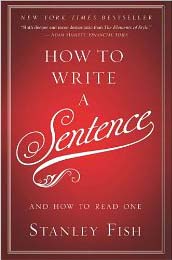
 See that image to the left? That is the future of computing. Or the end. I’m just not sure. Actually, I am. It is the end. Microsoft’s newest operating system is intended to be their response to the
  I am working on a book about nice people. Unfortunately, I am having some difficulty finding women and minorities who are known particularly for being nice. I’ve been reading and watching a lot of stuff about the modern civil rights movement, looking for people who can flesh out what one friend has taken to calling, “Frank’s Nice Guys.” But it is hard to find the niceness of people’s personality when they are in the middle of a struggle for their very lives—in the middle of a war.
 I love potato pancakes, and I consider myself something of an expert on them. Most people are not aware that there are two kinds of potato pancakes. First, there are the traditional—What will we do with these left-over mashed potatoes?—and then there are those we make from scratch as an exquisite touch to any meal. I will present you with recipes of both.