You Don’t Know What an Editor Does

What an Editor DoesI’ve noticed that most people don’t know what an editor does. They almost always think that an editor is a copy editor. That means that they think what editors do is work their way through a writer’s text and replace “than” with “then” when the need occurs. And this is an important job that is done less and less. Who has time for copy editing when you have to get an article out on the results of National Federation of Independent Business v Sebelius within five minutes of its release? It’s a now, now, now world — and I’m just trailing behind it.

I’ve known a couple of great copy editors in my life. They are amazing. Copy editing is like playing music: you can study and get good at it. But some people just have the mind for it. I was not born with this gift. But I’m an okay copy editor because I’ve developed a few tricks. But I never do any copy editing here. It’s hard enough to get myself to do a quick read through of an article after I’ve taken the time to write it. If I happen to read an article I wrote a long time ago, I always find errors. And roughly half the time I can’t even be bothered to fix them then.

Editor Ecosystem

It’s not surprising that people think editors are all copy editors: it’s so concrete. What’s more, “editor” is not actually a job title. The editing process is so vast that calling yourself one is like calling yourself a scientist. Sure, if you were a theoretical atmospheric physicist, you might tell the prols you were a scientists just to avoid getting a bunch of questions. But you would think of yourself as an atmospheric physicist because your job doesn’t involve a white lab coat or the use of a pipette.

At big publishers — book, magazine, website — you will have layers of editors. You have editors who screen material and send it on to other editors. You have development editors who work with known writers to come up with in-house projects. And you have content editors, who actively work with the writer throughout the project. But these are only used when publishers think they have something big — generally when they have a famous non-writer creating something. I don’t live in that world and I never have.

Now, of course, the title “editor” has lost much of its meaning. Brian Beutler is Senior Editor at New Republic. I would be shocked to learn that he sits in on editorial meetings and works with writers. Beutler is one of the most senior writers at New Republic. He is also pretty much their best. But I guess at a lot of places, an editor is a step up from a writer. So if a writer becomes too dear, they become an editor, even if they are doing the same thing they were doing before.

The Ginsu Knife Editor

The name for what I do is “line editor.” It sounds like an intense copy editor. But it is actually a jack-of-all-trades editor. It is the editor that small companies have because they don’t have enough work to split the job up. So here are the main things that I do, more or less in the order of importance:

  • Mother: I make sure the writers are happy. I try to get them to do more work. And I advocate for them. I also tell them (in the nicest way possible) about various hard truths of life. This is easy for me, because I’m older than everyone else and I genuinely like my writers.
  • Develop: I get a constant stream of requests for articles that will fill some need. It’s often quite a lot of work to figure out what that article should be and how to communicate it to the writers. This last part is key. I don’t want writers wasting their time (And mine!) writing about the wrong thing.
  • Edit: this is mostly copy editing. But it involves a fair amount of content editing. It also involves fact-checking.
  • Publish: there are a lot of different parts of this. It ranges from typesetting to finding graphics to pushing things live. Interestingly, it’s both tedious and terrifying work. It’s also great, because it is the end of a project — in some cases, one that took over a year to complete.
  • Write: when I don’t have a writer for a particular task, I have to write it myself.

Editor as Generic Middle Manager

There’s no doubt that I do much more than that. At the end of any day, I’m not usually sure what I got done. I feel like I’ve spent the whole day playing Fruit Ninja (which I only know about because of work).

There are many kinds of editor. But being a line editor (“lone editor” would be a better term) is very much like being a middle manager at any other company. There are people, they do work, you try to keep it all flowing while maintaining an acceptable level of quality. Oh: and you try to remain calm.

Odd Words: Allochthonous

Allochthonous - Stone Formation in WaterPage eight of The New York Times Everyday Reader’s Dictionary of Misunderstood, Misused, and Mispronounced Words: Revised Edition is an odd one. In the first column, I knew perhaps half the words. I knew all the words in the second column — except for one that I’ll come back to in a moment. In the mean time, get chomping on “allochthonous.”

American Plan?!

There is this thing in the hotel business called “American Plan.” It is a system where you pay a single rate for your hotel and meals. I’ve traveled quite a bit and stayed at a lot of hotels. I’ve never even heard of such a thing. I guess cruise ships work that way. But I always figured that if you didn’t keep people on a ship constantly busy eating, drinking, and watching banal entertainment, they would realize just how awful they felt about spending thousands of dollars to be stuck with all of these people for a week!

Allochthonous and Others

I’ve noticed this before: words I don’t know come in clumps. I assume it is because there are a bunch of specialized words that are based on the same foreign root that I just don’t know. But I can’t say for certain. Doing so would require that I do a bunch of work. And I’m really tired and just want to get this post done!

Here it is; the word you’ve been waiting for: allochthonous:

Al·loch·tho·nous  adjective  \ə-läk’-thə-nəs\

1. not native to the region where found.

Date: early 20th century.

Origin: it comes from two Greek words: allos (other) and khthōn (earth).

Example: The nitrate assimilation rate has been examined to determine new production because nitrate is considered the major allochthonous source of nitrogen, supplied to the euphotic zone from deep water.Shiozaki, et al

It seems to be a geological word. But it would be a great word to have for invasive plants. I suspect there is a different word for that.

Sudoku Meaning on Labor Day 2016

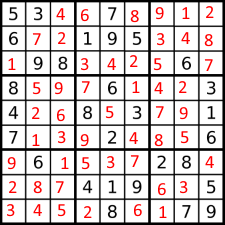
Sudoku MeaningIt’s Labor Day and I do hope that you aren’t working. I am of course working. There are a lot of reasons that are specific to me. One is that I work with people all over the world. International Workers’ Day is on 1 May. We have Labor Day because of the federal government’s disastrous response to the Pullman Strike. Those were the days when politicians actually worried about revolution (although not enough to do what was right in the first place). So most of the people I work with will not have today off.

The other reason is because I work all the time. The closest I’ve had to a day off since I returned from Mexico was on Friday when I worked about two and a half hours. The truth is that this work is kind of addictive. I’ve come to think of it as providing me with Sudoku Meaning. It’s the kind of meaning that I get from doing Sudoku puzzles. I’m very good at them. They engage my mind. They require a fair bit of creativity. But they aren’t deep. What television is to most people, Sudoku is to me.

Sudoku Meaning and My Job

I get Sudoku Meaning from my job. What’s more: I get paid to get Sudoku Meaning. I consider myself quite lucky in this regard. Just the same, this feeds itself. I shouldn’t work this much. But to stay with the television analogy, it’s like people who always watch The History Channel or whatever. They know there are other things on. But it’s just convenient. In this regard, my job is way easier than running Frankly Curious. I never know what I’m going to write around here. There’s no structure. There’s just a vague notion that I should write something interesting for the people who make a special trip here each day — and there are quite a number of them.

Frankly Curious Too!

But the truth is that Frankly Curious mostly provides Sudoku Meaning to me. There isn’t anything fundamental about it. There are times when what I write about transcends the format. Some of my work on Don Quixote works that way — providing me with sense of self-actualization. But way too much of it is facile craft. Give me any subject and two hours and I’ll give you an 800 word article, typeset with images. Hell: give me a first sentence! After writing over 7,000 articles for this blog, I’m good at that kind of stuff.

Rather than find meaning that has substance, we settle for a simulacrum…

It’s all Sudoku Meaning. So I’m looking for some deeper meaning. What that requires, I think, is slowing down. And that brings us back to Labor Day. We should have lots of them. But the truth is that most people don’t get one of them. Even if they get the day off, they don’t get paid for it. It’s hard to have friends and family over for a barbecue if you don’t have any money. But I think we lack leisure because we’ve embraced Sudoku Meaning.

Sudoku Meaning Is the Modern Sisyphus

Think about Sisyphus — the guy who rolls a huge boulder up a hill, only for it to roll back down, requiring him to repeat the process — for eternity. I see this — Quelle surprise! — in Schopenhauerian terms. It is the struggle of life that we live through each day just so we can repeat the same struggle tomorrow.

But we don’t need to struggle anymore. There is more than enough food for all. We can shelter everyone. In the west, we are doing quite well. So I think we developed Sudoku Meaning to help us carry on the Sisyphusian struggle. As Neil Postman put it in Amusing Ourselves to Death, “Big Brother does not watch us, by his choice. We watch him, by ours.” Rather than find meaning that has substance, we settle for a simulacrum of it.

I see the problem very clearly in my own life. And I am fighting it. And losing. Badly.

Happy Labor Day.

Odd Words: Aliquant and Aliquot

Facepalm: Aliquant and AliquotWe are on to page seven of The New York Times Everyday Reader’s Dictionary of Misunderstood, Misused, and Mispronounced Words: Revised Edition. I had planned to do a legal word, but then I found these two mathematical words that I just had to do: aliquant and aliquot.

You Say Aliquant and I Say Aliquot

I love math. You all know that! God is a mathematician. But that should tell you something right there. Jim Holt once speculated that “the universe was created by a being that is 100 percent malevolent but only 80 percent effective.” There’s no question but that mathematicians are an odd bunch. And the choice of these two words does strike me 100 percent malevolent.

So first up, we have: aliquant:

Al·i·quant  adjective  \al’-ə-kwənt\

1. (of a number) not dividing evenly into a larger number, as 6 is an aliquant part of 16. See also aliquot.

Date: late 17th century.

Origin: it comes from the Latin words alius (one of many) and quantus (amount or number).

Example: You don’t mean “aliquant” you mean “aliquot.” —Countless Mathematics Students

Next, we have: aliquot:

Al·i·quot  adjective  \al’-ə-kwət\

1. (of a number) dividing evenly into a larger number, as 6 is an aliquot part of 18. See also aliquant.

Date: late 16th century.

Origin: it comes from the Latin word aliquot (some, a small number).

Example: You don’t mean “aliquot” you mean “aliquant.” —Countless Mathematics Students

That’s right: these two words that sound almost identical mean exactly the opposite. It would be like deciding the best words for “yes” and “no” would be “yes” and “yef.” Only a mathematician would do this!

Atheists Respond to Unwelcome Science Just Like Theists

Why Does the World Exist? Jim HoltThose at the other ideological extreme [atheists] gnashed their teeth — Marxists in particular. Quite aside from its religious aura, the new theory contradicted their belief in the infinity and eternity of matter, which was one of the axioms of Lenin’s dialectical materialism. Accordingly, the theory was dismissed as “idealistic.” The Marxisant physicist David Bohm rebuked the developers of the theory as “scientists who effectively turn traitor to science, and discard scientific facts to reach conclusions that are convenient to the Catholic Church.” Atheists of a non-Marxist stripe were also recalcitrant. “Some younger scientists were so upset by these theological trends that they resolved simply to block their cosmological sources,” commented the German astronomer Otto Heckmann, a prominent investigator of cosmic expansion. The dean of the profession, Sir Arthur Eddington, wrote that “the notion of a beginning is repugnant to me… I simply do not believe that the present order of things started off with a bang… the expanding universe is preposterous… incredible… it leaves me cold.”

—Jim Holt
Why Does the World Exist?

A Slightly Annoyed Defense of Hillary Clinton

I saw that tweet the other day. And I got a little annoyed.

Why? Because I actually don’t think it sounds like Clinton. At all. I didn’t think that a year ago. And I don’t think it now. There is a reason for that.

Clinton Has Been Very Open

Clinton has always released her taxes, her email, her family’s foundation records, her fundraising records, her donation records, and her life’s story when asked by appropriate parties. Appropriate parties are: the American people, the government, the press, and the editors of her books.

Not once do you have a record of her refusing to release something that she felt she had a legal or ethical obligation to release.

When you have someone who is that willing to release information, you have someone not trying to hide anything. Are there times she fails to release? Yes — because we are talking about multiple tons of documents. Is there a pattern of her hiding anything? No.

Donald Trump Political Donation ScandalNow on to the bribing. Because she has released all of this information, we can go through and see if she has any record of using sketchy ways of handling business. And guess what? She doesn’t have that record. She complies with the rules even when she gets suggestions to not do so. (I’m looking at you Colin Powell.) Even when she probably should have used an Official Government Email Account™, she followed the rules for not using one.

Having been in government, I know why she used the single device. It is a decision most people in leadership have to make. And most of them hate using two or three devices. Clinton’s having it set up with her husband’s server was probably better than using gmail. But I digress.

Clinton’s Clean Donation Record

The fact is that you can trace her giving to whomever via her taxes, her family’s direct foundation, and the Clinton Foundation. You can look to see what they did with every dollar they received. You can spend months on this — just like most of the charity watchers do. And nothing — Absolutely nothing! — shows it was not above board. There was no using donation funds to buy things, no using funds to make political donations, nothing. Nada. Nichts.

Clinton does have a track record: not lying whenever she wants; not using her money to get out of scrapes; admitting fault; apologizing when she screws up…

Yet where does Justin Green, Political Editor for Independent Journal Review, start? Saying that Hillary Clinton is who first comes to mind when reading, “Rich person laundering political donation (bribe) through his foundation and hiding it on IRS filings”? And he is surprised that it is Trump?! Clinton has zero record of doing anything so unbelievably illegal and Trump is, well, Trump.

Clinton’s Track Record

Clinton does have a track record: not lying whenever she wants; not using her money to get out of scrapes; admitting fault; apologizing when she screws up; not breaking the law; not bribing public officials; not creating investment or university scams; and on and on.

So why the hell would anyone — especially a professional political editor — even conceive of writing such a statement?

Clinton has screwed up before — the Iraq war vote, using a private server that the State Department hadn’t authorized[1], most of the 2008 campaign, pushing for the use of American power when a wait-and-see approach would probably have been better. But these are policy decisions. When it comes to behavior? She doesn’t do anything wrong.

[1] This always struck me as weird, since she was in charge of it and Obama clearly knew she had the server and didn’t care.

Odd Words: Agglutinate

influenza A Virus - AgglutinateWhat an exciting day we have with page six of The New York Times Everyday Reader’s Dictionary of Misunderstood, Misused, and Mispronounced Words: Revised Edition! Although I must admit, it’s not a very good dictionary. I often have to consult other dictionaries to figure out what a word means. That’s definitely true of today’s word: agglutinate.

Offline Latin

Over the past few days, I’ve been very glad to have A Latin-English Dictionary for the Use of Junior Students. I picked it up at a thrift store years ago when I was writing a play about Latin. I have the Thirteenth Edition, which is from 1898. But it must have been a best-seller because it was up to the Twenty-fourth Edition by 1915. Regardless, it’s far more dependable than Google Translate. Of course, Latin is a late edition to the system. But you would think: Latin. That ought to be an easy one. I mean it gets Spanish and Italian and they are just Latin++. What’s the big deal?

Beyond Agglutinate

There were other interesting words. “Agio” is supposedly the fee charged by brokers to turn coin into cash. So that’s what those awful machines are charging. And it’s like 8.9 percent, which is an outrage! But this is the page that includes a personal favorite of mine: agoraphobia. Most people will never know the thrill of being freaked out by an empty parking lot!

Instead, you have have to settle for thrilling to the word “agglutinate”:

Ag·glu·ti·nate  verb  \ə-‘gloo-tən-āt\

1. (in linguistics) to form and express grammatical relationships by the continued additions of strings of meaningful elements, as in Turkish.

Date: 16th century.

Origin: Latin: agglutino, which means “to fasten to, or attach.”

Example: Let’s get together and agglutinate – and more linguistics valentines.AllThingsLinguistic

The Real Meaning of Agglutinate

Dictionary.com defines agglutination as, “a process of word formation in which morphemes, each having one relatively constant shape, are combined without fusion or morphophonemic change, and in which each grammatical category is typically represented by a single morpheme in the resulting word, especially such a process involving the addition of one or more affixes to a base, as in Turkish, in which ev means ‘house,’ ev-den means ‘from a house,’ and ev-ler-den means ‘from houses.'” So now you understand that business about Turkish!

Imperial’s Hamlet Chicken Factory Fire

Erik LoomisOn September 3, 1991, a chicken factory in Hamlet, North Carolina caught fire thanks to nonexistent safety procedures, killing 25 workers and injuring another 55. This was the largest workplace disaster in North Carolina history. This entirely avoidable accident was reminiscent of workplace disasters of the past, with open employer contempt for safety regulations and the lives of their workers.

In 1980, [the factory] was purchased by Imperial Foods… The factory had no fire alarm system. The factory was used to process chicken for fast food restaurants and pre-frozen products for grocery stores. That meant cutting, bagging, weighing, and, most importantly for this story, frying it. About three-quarters of the workers were African-Americans. Hamlet is a small town close to the South Carolina border and the worker histories reflected that. Many of these workers had grown up doing farm work in the area and for some, this was their first factory job.

Imperial’s CEO Emmett Roe had moved from Pennsylvania to the South in order to bust the unions in his plants there and move to a state with a “more favorable regulatory climate,” ie, the kind of state that won’t inspect your factories or enforce safety violations… North Carolina regulators never inspected the factory because the budget for inspections was minuscule. In 11 years of operation, it received no fire inspections… According to one survivor of the fire, the plant managers locked the door to stop workers from stealing chicken. This was the same excuse sweatshop managers gave to locking the doors at Triangle when that disaster killed 146 workers in 1911.

[T]he deep fryer caught fire after a hydraulic line to a cooking vat failed, with obvious problems with it not found because of the company’s indifferent safety culture. It spread very quickly thanks to a combination of burning cooking oil, insulation, and exploding gas lines hanging from the ceiling. It didn’t help that all of the phones inside the building were nonfunctional. The workers at the front of the plant all managed to get out. But at the back of the plant the company did not place any fire alarms. Moreover, Imperial managers not only locked all the exits but sealed the windows as well. Those workers had nowhere to go. As an old plant, it was a maze of paths inside. The smoke meant they couldn’t find their way to the front. They were doomed. Like at Triangle, which this fire reminded many of, a few workers did get out the back by breaking open a locked loading bay, but most died. On one door, near charred bodies, blackened footprints could still be seen, signs of the desperate attempt to escape. Eighteen of the dead were women. Most of the dead were African-American.

—Erik Loomis
This Day in Labor History: September 3, 1991

California District Dreamin’: 10 and 25

Bryan Caforio - California District 25There are no more open toss-up districts. So I’m going to discuss some of the juicer campaigns. We have incumbents to talk about! So off we go to Frank’s current stomping grounds and my home state: California. So I am going to look at an almost certain Democratic pick-up, California District 25, and then the promising District 10.

California has a top two primary system. This creates some interesting general election contests. While this system was sold as a way to increase voter turn out, it doesn’t. It was supposed to make politics less partisan, it hasn’t. In fact, in a general sense, Top-Two Primary System Hasn’t Worked as Proponents Promised.

California District 25 (CA-25)

I start with the most vulnerable incumbent — Representative Steve Knight. Knight is known for his being conservative but not too conservative. Oh, and telling off his constituents after realizing that Congress-critters don’t have total power over the US government. He also has a fairly dismal record of working well with others, but at least he shows up for work.

He is facing challenger Bryan Caforio, an attorney originally from Los Angeles. Caforio seems to have one main flaw: he is new to the district. Otherwise he doesn’t seem capable of putting a single foot wrong. The Democrats have been active in getting voter registration figures up. This California District went from a 14,000 deficit (PDF) to a 5,000 advantage (PDF).

Caforio is stapling Trump all over Knight who keeps trying to duck questions about his party’s presidential nominee. Back in June, Caforio polled 6 percentage points down. A month later, he polled 8 points ahead of Knight in California District 25.

This means that this race is probably already over, even though no ballots have dropped. It should be an easy pick-up for the Democrats.

California District 10 (CA-10)

Michael Eggman - California District 10The current serving Representative in California District 10 is Republican Jeff Denham. He has been around since 2010, when he got the dubious distinction of getting dishonorable mention in CREW’s Most Corrupt Report. Otherwise, he has been a fairly conservative politician who works somewhat well with others. Outside of that he hasn’t done much to distinguish himself or make himself look bad.

He is facing, for the second time, a Democrat by the name of Michael Eggman. This is where sometimes looking stuff up on candidates will yield bizarre results. Michael Eggman is something of a stereotypical California dad. Well, he has had frosted tips. Regardless, he is definitely bringing up Trump.

There has been one poll done in the race by Anzalone Liszt Grove Research. It was done back in July and found Eggman losing by 7 percentage points. However, Eggman had little name recognition at that time. What’s more, the fundamentals of this California district are distinctly Democratic — 7 point advantage for a generic Democrat versus a generic Republican. Eggman’s problem is getting his name out there. And since he has less than a million dollars on hand, that might be difficult.

This may be a keep for the Republicans but hey, frosted tips can do wonders for a man!

Odd Words: Afflatus

Divine Inspiration of Music - AfflatusI am now on page five of The New York Times Everyday Reader’s Dictionary of Misunderstood, Misused, and Mispronounced Words: Revised Edition. Do you know what that means? Word that start with “ae.” And that also means a lot of, “See [word that starts with “e”].

I was struck by the definition of a fairly common word: aesthete. I do know that people very often use it as a pejorative. But I was still struck with this: “a lover of beautiful things, especially to the scornful exclusion of practicalities.” Ouch! Why is it necessary to throw “scornful” in there? It makes aesthetes sound like monsters!

Other Good Words

There were other good words as well. “Advalorem” has something to do with the value of something for the purpose of an import tax. There was also “afferent,” which has something to do with a nerve impulse toward the inside of the body. So maybe when you touch something, the signal moves in an afferent way? I don’t know. And I don’t have to know. It isn’t today’s word!

Today’s word is a great one: afflatus.

Af·fla·tus  noun  \ə-flā’-təs\

1. inspiration; knowledge or understanding. (Note: other sources tend to include the word “divine” in this definition.)

Date: 17th century.

Origin: it comes from the Latin word afflare, which means “to blow or breath on.”

Example: But [Thomas] Wolfe’s temperament was white-hot, his need to digest experience more urgent, and his style of expression too full of the divine afflatus, to the point where his bombastic writing strikes contemporary tastes as almost unreadable.Gerald Howard

August Jobs Report and the Presidential Race

Hillary Clinton - Jobs ReportThe polls continue to look better and better for Donald Trump. FiveThirtyEight’s “polls plus” analysis now give him a 30% chance of winning the presidency. This would be a catastrophe for the country. And I say that not because he is a bigot and a buffoon. I say it because if elected, he will be just like any other Republican. The truth is that I believe this presidential race will be like any other one: a Democrat versus a Republican. And so what we really need to do is look at the fundamentals. And that’s why today’s jobs report is important.

Today’s report is slightly bad. The economy added 151,000 jobs, this is a bit less than expected. The unemployment rate stayed flat at 4.9 percent. Since my very simple model of the presidency only takes this number into account, it isn’t good news. Whereas last month, Clinton had roughly the advantage that her husband had against Bush in 1992, she now has the advantage that Al Gore had in 2000. The trend is not good, but certainly it is better to have the economic fundamentals on your side than to not.

Does It Matter That Trump Is a Terrible Candidate?

Now it is true that Donald Trump is a terrible presidential candidate. I don’t mean that in an ideological sense. I mean simply that he isn’t good at the nuts and bolts of campaigning. But I really wonder if that matters. And I’ve wondered that for a very long time. While virtually every liberal I know is outraged about Citizens United and money in campaigns, I’m really not. It is clear to me that money soils politics indirectly because politicians believe that they need it and so govern in ways they wouldn’t normally. What happens usually is that business interests see that a candidate is going to win, so they flood them with cash they don’t need in order to curry favor.

Whereas last month, Clinton had roughly the advantage that her husband had against Bush in 1992, she now has the advantage that Al Gore had in 2000.

It’s quite clear why Trump’s polling looks better: Clinton has been getting a lot of bad press recently. And this will change over time. But it does seem that there is nothing that the Clinton or Trump campaigns themselves do that has much of an effect on the numbers. The only reason I’m not freaking out and making plans to move to Uruguay is that I think the baseline for Trump is low and that the economy will remain stable through election day.

The Jobs Report Won’t Change Next Month

It would not surprise me in the least if the next jobs report has the same 4.9 percent unemployment rate. There will also be a jobs report right before the election, but my model disregards it. Anyway, I won’t be surprised if it too is 4.9 percent. It’s funny that this seems to be the new normal. Of course, it isn’t helped by the Federal Reserve. The top two people at the Fed seem to look for any opportunity to tell everyone that they really, really, really want to raise interest rates. And this always has the same effect of freaking out the business community and constraining the economy.

And what does this jobs report tell us about the current state of the economy and if the Fed should really be worried about inflation? Well, Dean Baker noted a few things that are interesting. First, although the employment-to-population rate was unchanged, it was down 0.2 percentage points for prime age workers. And it is still 2.5 percentage points below its pre-recession level. There was an increase of over a hundred thousand people working part-time involuntarily. The total number of hours worked is down. And wages are not accelerating. So where is the potential inflation?!

The Fed Won’t Screw Us — Yet

The one good thing is that this jobs report does not give the Fed any excuse for raising rates before the presidential election. And that’s good news for the country, because any Republican president would be terrible just on the basis of the Supreme Court. But you can depend upon the Fed to screw the American worker just as soon as they can possibly justify it.

Odd Words: Actinism

Sunrise - ActinismI had a much better time with page four of The New York Times Everyday Reader’s Dictionary of Misunderstood, Misused, and Mispronounced Words: Revised Edition. There were a handful of words I didn’t know. In particular, did you know there’s a word for a lack of perspiration? There is: adiaphoresis.

But the page does bring up something I said earlier: that if you get past 50,000 words, you’re basically down to different kinds of fish. Most of the words I don’t know are technical — usually medical. At this point, I’m thinking that I may actually have a vocabulary of 50,000 words. That’s a shocking thought. Where are they? And do I really need all those little buggers clogging up my brain? Certainly I don’t use them for writing.

How Long Can This Go On?

To be honest, I’m not sure how long I can keep this all up. The words aren’t that interesting. And dealing with the definitions is a real pain. That’s especially true because I’m trying to stay as close to the book as possible. And the type is so small and my eyes so bad that I can’t use the book while writing because the light isn’t good enough.

Regardless, I have a science word for you today. And given what it is, it’s surprising that I didn’t know it: actinism.

Ac·ti·nism  noun  \ak’-ti-nizm\

1. the property of radiation to produce chemical changes.

Date: 1840.

Origin: it comes from the Greek word ἀκτῖνος, which means beam, as in “light beam.”

Example: Niepce, a Frenchman, discovered “actinism,” that power in the sun’s rays which produces a chemical effect…Henry David Thoreau