
 Kevin Drum asks, Who’s On the Left’s Television A-Team? This comes from Paul Krugman’s lackluster performance up against Joe Scarborough on the Charlie Rose Show. Afterwards, even Krugman said it was his Denver debate and, “I was tired, cranky, and unready for the blizzard of misleading factoids and diversionary stuff.” And so Drum (and even more a liberal friend of his who was very disappointed) asked, “Who do we have on the left who’s got the real-world debating skills to take on someone like Scarborough?”
There are a lot of people, of course. Let’s face it: Krugman is not and never has been good on TV or in front of a lectern. Even after a lot of experience, he suffers from stage fright. He just isn’t comfortable up in front of people. There are a lot of people like that: they never get over it. Yet in print, he shows himself to be an incredible rhetorician. But he is well aware of his strengths and weaknesses. This morning he wrote about someone who called him “unimpressive”: “I’ve had the experience of being overlooked by the people who were supposed to meet me at the airport, and eventually being told, ‘We expected you to be taller’.” (I’ve had this same experience with being interviewed by people; they think based upon my writing that I will be dramatic and organized; the fools!)
One thing I don’t think we should try is to be something that we aren’t. As Dean Baker says: the facts are on our side. We have to learn to be as good as possible at explaining our ideas. What we don’t need to be is more charming. I find Arthur Laffer charming as hell. But his arguments can be easily carved up. We liberals may not be fun, but we can be effective. You can’t really learn charm. You can learn right wing canards and effective ways to counter them.
This reminds me of the film Flock of Dodos, about the fight between the scientists and the Intelligent Design folks. The ID people are very charming—they’re just like your grandmother! It looks very bad for the scientists because they aren’t good at talking on TV and the ID people seem so nice: why not let them bring their bullshit into the classrooms? But at the end, it is clear that the scientists are most effective when they they toss aside all the niceties and just say, “This is bullshit. Here is how it works. You want to go off and pray to your God and think that everything was explained 2000 years ago, fine. But that isn’t science and you don’t know what you’re talking about.”
What I’m talking about is authenticity. We need to stick with who we are. Liberals don’t hold their opinions because that’s just what liberals believe. They hold those opinions because they are open to evidence—because they are looking for the best outcomes. And that is our greatest strength. If we start hiring our own Frank Luntzes and packaging talking points to appeal to the masses, we lose. The masses really are smart. They really can be convinced of our wonky ideas. And here’s the best thing of all: they already pretty much agree with us on all the issues. (Except the death penalty.)
So the only thing liberals need to do is get better at being liberals. Oh, and also: keep anxiety prone liberals off TV!
Afterword
Here is 5 minutes of Baker’s lecture when he talks about this:
 Today, Alex Seitz-Wald at Salon wrote about,
 Ramesh Ponnuru is a smart observer of conservative politics. He is also kind of a conservative freak when it comes to his own policy ideas. But he is worth reading because of his insights into what the conservatives are doing. Earlier this week, he asked an interesting question,
  The Associated Press reported this morning,
  This morning, Greg Sargent wrote,
  I’ve been none too happy with Chris Christie’s approval rating in New Jersey. The truth is that he’s been an awful governor. I can’t believe that the residents of the state have forgotten all about his crony capitalism and grandstanding against the president (Remember the tunnel he killed?!) and are just focusing on how he acted like any other governor during a catastrophe. But I’ve been hoping that it is all temporary—that in an actual campaign, his positives would be moved downward as people were reminded of the kind of governor he’s generally been.
 Under normal circumstances, I would tell you that 5 March is the date my younger sister was born. And that’s kind of interesting, when you consider what a druid kind of earth mother she is. You see, on this day back in 1938, Lynn Margulis was born. She did some of the most important early work on the Gaia Hypothesis—the idea that the earth itself is a living system. Many years ago, when I was in graduate school, I saw her talk at a very intimate brunch. We were all eating our Eggs Benedict and she was telling us about bacteria. Actually, she was talking about how hard it is to distinguish between plant, animal, bacteria. Personally, I wish I were a plant; people always expect me to move a lot; I’d rather just sit here.
 Matt Yglesias
 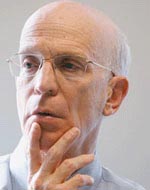 Alan Blinder is a economics and public affairs professor at Princeton. Recently, he got placed in the middle of the argument between Paul Krugman and Joe Scarborough when Scarborough claimed that Blinder was on his side. Blinder didn’t like that much. Yesterday, he wrote a short article in Politico,
  I just watched the third season of
  Sorry for being gone all day, but I had to do some paying work and since then, I have been feeling rather ill. In fact, I still do. But I thought I would do a quick birthday post. On this day in 1678, Antonio Vivaldi was born. I have always loved his work. This started when I was rather young and playing the flute. His Concerto in D was one of the first real pieces I ever learned. You don’t hear it played very often because, I think, because it is so easy to play.