Christianity Stifles the Search for God

Richard CarrierIn the following 12 minute conversation (really more of a monologue), Richard Carrier explains why he is not a Christian. One of the reasons that I really like Carrier is that he isn’t an idiot. Unlike most atheists, I feel that he would understand where I come from. I’m an atheist but I understand the purpose of religion and I think those unanswerable questions are the most important questions there are. As I always say, my thinking about these issues never leads to answers, but it does lead to better questions. And that’s all I want: more insightful questions.

When it comes to the issue of Christianity, I am a pretty typical atheist. Christianity is a pretty silly religion. I don’t say that to be mean. All of the Abrahamic religions are silly. Anyone who thinks that they really answer the fundamental existential questions must have a very primitive notion of what those questions are. The Bible answers the great questions as much as Hugard and Braue’s Expert Card Technique. Look, both of those books are great—there is no question of that. And I love them both for completely different reasons. But neither has helped me understand my existence, which is so improbable that it can be treated as a singularity. (On the other hand, the Bible has some great stories in it and ECT has some swell card tricks.)

Carrier presents four reasons why he isn’t a Christian. The first is that God is silent. This is the biggest reason for me. If God cared about us at all, why did send his only begotten son to a backwater and then expect word to travel? Was it all part of God’s plan that billions of people should burn in hell because they just happened to grow up learning a different religion? Really?! If that is really who God is, he is either so unknowable or so evil that he does not deserve to be worshiped. This is like Theology 101. And I has a question to all the Christians in the US, “Do you think it is a coincidence that you think Christianity is true and you just happened to be born in a country that is overwhelmingly Christian?” Come on!

The rest of Carrier’s reasons aren’t as compelling. The second is basically the argument from evil. Why does God allow so much evil. He follows these with the fact that the evidence for Christianity sucks and that if Christianity were true, we would live in a different universe—one more like that described in the Bible. Christians have arguments for all of this, of course. In fact, they have arguments for every objection that we atheists have. The problem is that as they counter arguments, it becomes clear that only a fool would worship such a god. He is perfectly good, but in a way that we can’t comprehend. That is to say that whatever the hell he does is by definition good, which is what I call evil. What’s more, he is omnipotent, but not so omnipotent that he could provide us with a universe without paradoxes. (Good example: can God create something that is so heavy he can’t lift it?)

As usual, I really want to talk to other people about the wonder that I feel about my existence. People who are into New Age stuff are usually cranks, but they are open minded. Christians, on the other hand, nine times out of ten, just want to quote Bible versus. But there are two problems. First, I already know what the Bible says. Second, I know that the Bible is no more written by God than is Don Quixote. So these people don’t really want to talk about God. They’re more akin to Amway salesmen. It’s sad, really. They have long given up looking for God. And thus, they are dead to him, her, or whatever the hell it might be.

Marshall McLuhan Is the Message

Marshall McLuhanFrench astronomer Jean Picard was born on this day in 1620. I bring this up only because I never understood why Star Trek‘s Jean-Luc Picard had a British accent. And that includes the episode where he goes home and we find that his brother had a French accent. And what did the family do for a living? Make wine, of course. That’s because the only thing that Star Trek writers knew about France is that they make a lot of wine. Pathetic. French pioneer of thermodynamics, Henri Victor Regnault was born in 1810. So that’s two famous Frenchmen who didn’t make wine for a living. Just in case any Star Trek writers are reading…

Train robber (who apparently always had their picture taken) Sam Bass was born in 1851. Austrian painter Emil Orlik was born in 1870. As much as he was a fairly awful human being, the absolutely great writer Ernest Hemingway was born in 1899. Painter and sculpter Constant Nieuwenhuys was born in 1920. That same day, the great violinist Isaac Stern was born. Just how good was he? Well, here he is playing one of Bach’s ridiculously difficult pieces for solo violin, Chaconne in D minor. Admittedly, unlike when a flute player does one of these pieces, Stern doesn’t need to worry about breathing. But it is hard to make these pieces musical, and just listen to what he does. It is a joy:

And finally, comedian Don Knotts was born in 1924. Here he is in the still very good The Ghost And Mr Chicken:

The great Hollywood director Norman Jewison is 87 today. Janet Reno is 75. I bring her up only because libertarians really hate her for the Waco siege. Ken Starr is 67. The only reason I bring up this villain of American history is because he is so much like Russell George. I guess there isn’t much variation between different Republican lackeys. Two great artists are turning 65 today, so of course, they will retire and we won’t be seeing any work from them. (In case you haven’t noticed, that is the same joke I use every day that anyone turns 65.) First is Doonesbury creator Garry Trudeau. The second is Steven Demetre Georgiou. Or Yusuf Islam. Or Cat Stevens. Here he is as the second name (just to show you that he still has it) performing “Where Do the Children Play”:

Wildman Robin Williams is 62. And not so wildman Jon Lovitz is 56.

The day, however, belongs to communication theorist Marshall McLuhan. I never really understood him until I read Neil Postman’s Amusing Ourselves to Death. That was when I understood that The Medium is the Massage. If you really want to understand the modern world, you have to read McLuhan’s work. Because how you take in information really does change it. And more important: it limits you. Approached in the right way, McLuhan is the most terrifying writing in human history. Here is a wonderfully ironic interview with him where you can misunderstand his ideas in the visual medium:

Happy birthday Marshall Mcluhan!

Afterword

Here is, sadly, what McLuhan is most remembered for:

Free Markets Won’t Fix Monopolies

Why I Left Goldman SachsThere is big news this morning. At the New York Times, David Kocieniewski has written an article about how Goldman Sachs has used its effective control of aluminum warehouses to increase prices on the metal by an estimated 7%. Now I understand that 7% doesn’t sound like that much. And in the grander scheme of the economy, it isn’t very much. But it is like how oil companies are always screaming about drilling on national parks in Alaska: not much oil for us, but huge profits for them.

In talking about the article, Dean Baker noted that this is on the order of what he always though more generally. “The piece suggests that the impact on price is limited, but worth a huge amount given the volumes involved. This is what I had always assumed about the extent to which this sort of speculation can affect the price of products. Speculation might add 20-30 cents to the price of gas, but it can’t explain why we are paying $4.00 a gallon rather than $1.50 a gallon.” But the huge profits are not the whole story. After all, why stop at huge when you can go for huger?

I thought about this because of Matt Yglesias’ head scratching article this morning, How Does This Commodities Scam Work? It is frustrating, because Yglesias is such a smart guy. But he allows a certain kind of “everyone knows” blindness that really hurts his analysis at times. It is the typical kind of upper-middle class belief in supposedly free markets. In this case, he couldn’t understand how Goldman Sachs could add a price premium to aluminum storage. He was making a classic libertarian mistake (even though he isn’t a libertarian) when he wrote, “The story is entirely missing a clear explanation of why this doesn’t just lead someone else to open aluminum warehouses and undercut them.” Oh, Grasshopper!

The reason is the 7%. Goldman Sachs isn’t causing prices to go up by 300%. What is the point of another company coming into the market just to deprive Goldman Sachs of this small marginal profit? Remember: Goldman Sachs is already in this business. A new competitor would have to invest to start doing it. What’s more, if they did, Goldman Sachs could just lower its prices and drive them out of the market. The delays and costs that Goldman Sachs adds to the process just don’t offer great market opportunities. And in this way, we could say that the market is working. Goldman Sachs knows they can only screw people so much before they will cause other businesses to see an opportunity.

None of this takes away from the outrage factor of this story. But then, like most people, I believe in antitrust laws. I think that capitalism is a useful tool that can help everyone. But allowed free reign, it will do great damage. Allowing Goldman Sachs to gain this extra profit is like pretending that stealing is not wrong. Unfortunately, if recent American history is any gauge, nothing will be done to Goldman Sachs because, you know, stealing is only wrong if the thief is poor.

America Accepts Police Power Abuse

Police AbuseThe video below is quite interesting and worth watching. But let me give you an overview. The police have a woman in handcuffs and are searching her and her car. A man who lives across the street yells at the cops that they are Nazis and similar taunts. The police are in the process of letting the woman go, so two of the cops go up to the guy and demand to see his identification. They eventually arrest him for disturbing the peace or some such. Toward the end of the video, you case see a lot of guy’s wacky beliefs. But that doesn’t matter as far as I’m concerned. People have a right not only to hold wacky opinions, they have a right to say them.

What’s clear in the video is that this guy didn’t disturb any peace and he didn’t interfere with an investigation—note that the police only approached the man after they were done with the woman. What the guy did do is annoy the cops. And the cops used their power to arrest someone for no other reason than that they did not like the guy. Anyone who has had any interactions with the police knows how this works. If they don’t like you, they will arrest you. It doesn’t matter what it is for and it certainly doesn’t matter if the charges are later dropped. You will be out time and often money because, for example, your car got towed.

This situation is actually worse than a police state. It effectively means that the police are above the law. Think about the situation above. Lots of people do important jobs, but those people don’t have the right to just arrest anyone they think is making their work less productive. In the video, it is clear that if the guy had just backed down and allowed the cops to feel like they had the power in the situation, the guy never would have been arrested. So he was arrested because he didn’t show due deference to the police. That’s a very bad situation and it exists everywhere in the United States.

What really struck me about the video, however, were the comments. Based upon my viewing, over half of the comments were against the guy. People thought that he should have been arrested. Look: I understand that the guy is a walking, talking anarcho-cliche. But the issue is not him. There is no (official) law against calling the police Nazis. What’s more, nothing the guy did interfered with their work and the cops could have just gotten in their car and gone. In fact, I think it was only one of the cops who really pushed it. Did the cops have a right to be annoyed by this guy? Absolutely. They also had a right to talk to the guy. But beyond that, they overstepped their rights. And the fact that over half the comments on YouTube don’t seem to understand that is a big problem.

It’s also interesting that the police handcuffed the woman, and searched her car and body (including her breasts) thoroughly. There were also three police cars on the scene to deal with this dangerous woman. And then they let her go. It makes me wonder if arresting this guy was a consolation prize for the officers. I know they get an adrenaline rush during stops like this one. They must have been sorely disappointed that they didn’t get to arrest the woman. So they went after the guy.

This video should be enough for anyone to see that we don’t live in a free country. This is feudal lord kind of stuff: mustn’t annoy the police or they will arrest you. Personally, I avoid cops for the same reasons I avoid grizzly bears: they are dangerous, only interested in themselves, and stupid. But that doesn’t mean that others shouldn’t express their contempt for a profession that has become almost completely divorced from real crime.

H/T: Paul Day

NSA Data Recovery Program

NSAI was emailed the following image, which I think is pretty clever. I have two reasons for thinking it is almost certainly created by a conservative. First, the line about it costing Republicans more. Only conservatives think that they alone are the targets of government intrusion. That was what the whole IRS scandal was about. Of course the government isn’t going after those big government liberals! The fact that liberals are generally against exactly the government programs that directly limit freedom never seems to occur to them. The second reason is that the graphic quality is low. I don’t know why it is, but bad Photoshop work is more associated with conservatives than liberals. And I say that as a bad Photoshopping liberal. Anyway, it is well done:
NSA Data Recovery Program

How We Treat Real American Heroes

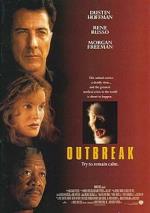
OutbreakI just watched Outbreak with my father. He was interested in it, because he had heard that they used the little California town of Ferndale as the primary location. He has fond memories of the town and I figured he would like the movie anyway. So we watched it and he did indeed like it—a lot more than most movies I make him watch. I’d seen the movie a long time ago, so I spent most of it thinking about people like Bradley Manning.

The main character in the film is Colonel Sam Daniels (Dustin Hoffman). He is a typical kind of American movie hero: he does what’s right rather than following orders. But because he is so brilliant, he gets away with it. What I find fascinating about this is that we just love this kind of character on the big screen, but we do not give half a shit about him in real life. In this regard, I don’t think so much of Bradley Manning and Edward Snowden. The Daniels character seems more to me like John Kiriakou. He’s the guy who disclosed the CIA torture program who is now serving two and a half years in prison for this “crime.” Meanwhile not one of the people who authorized or performed the torture has even been indicted.

This is what Kiriakou said about what he did, “I am proud that I stood up to our government. I stood up for what I believed was right, conviction or no conviction. I mean they can convict anybody of anything if they put their minds to it, but I wear this as a badge of honor. I am not a criminal. I am a whistleblower. The thing that I blew the whistle on is now the law of the land. Torture is illegal and it’s officially abandoned in our country and I’m proud to have had a role in that.” That’s the sort of thing that Daniels would have said.

I was thinking about what would have happened to the characters after the end of Outbreak in the real world. Not only would Daniels have been court-martialed, so would his subordinate helicopter pilot Salt (Cuba Gooding Jr). And so would the two pilots who dropped the bomb over the ocean. Oh, sure: the evil general (Donald Sutherland) would have been held to account. But all the other guys would be told that it didn’t really matter that what they did in the end was right, they broke the law of the military. They didn’t follow orders. And in the end, the evil general would probably end up with a slap on the wrist. At least, that’s how it seems to work in the real world.

Also in the real world: the only part of the society that gets really high marks from the public in the military. I have no particular animus against it. It is sadly necessary for a country to have. But it is a dirty business and one that we should never romanticize. And it is already (in proportional terms) at least a 100 times larger than any of our founding fathers would have been comfortable with. But we just love our huge army. Most Americans would like it even bigger. Combine that with the general belief of Americans that one should always follow the law—always follow orders. This country of ours increasingly gives me the creeps.

Afterword

There is a really positive portrait of the government in Outbreak. That is in its portrayal of the Center for Disease Control. The truth is that all those bureaucrats that Americans mostly think so ill of are working every day to keep us safe. And they don’t do it at the barrel of a gun.

What We Inherit from Gregor Mendel

Gregor MendelOn this day in 356 BC, Alexander the Great was born. Or maybe it was tomorrow. It was a long time ago. Memories fade. I’ve never thought much of him and his pointless life. His was a very typical story: conquered a bunch of stuff, die, and it all falls apart. I don’t mean to say that had his accomplishments lasted it would have made his life more meaningful. But it surely is the case that the only real purpose of his conquests was power. In this regard, Genghis Khan comes off a lot better. The one thing that’s always interested me is that Aristotle was his tutor. In general, it tends to lower my opinion of the philosopher who regardless was never one to question existing power. I do hope he was paid well to teach the little bastard.

German impressionist Max Liebermann was born in 1847. He thankfully died before the Nazis got to kill him. The same cannot be said of mathematician Otto Blumenthal who was born in 1876. He managed to escape to the Netherlands. Unfortunately, that was not far enough away as the Nazis took over control of the country in May of 1940. Blumenthal was deported to Theresienstadt, where I assume he was simply murdered in 1944.

The great songwriter Cindy Walker was born in 1918. She wrote many songs you know and love, but especially this one:

And Natalie Wood was born in 1938. For the record, I tend to think she was not murdered. But I think we can all learn an important lesson from her death. It is a really bad idea to get drunk at sea. I’ll go further: it is a bad idea to go to sea at all. I’m not a huge fan of hers, but here she is pretty much holding her own with Rosalind Russell (who kills it) in Gypsy:

The oldest living cardinal, Ersilio Tonini is 99 today. Novelist Cormac McCarthy is 80. Diana Rigg was born on the same day as Nattalie Wood and is 75. Larry “Wide Stance” Craig has a birthday today, and other than hoping he spent it in an airport bathroom, I have nothing to say. Kim Carnes is 68. She is best known for her cover of “Bette Davis Eyes.” I like her performance, but I can’t listen to the song. That whole period of quasi-new wave production is almost unlistenable. But here is Jackie DeShannon’s version of the song (which she co-wrote):

Thomas Friedman is 60. I mention it only so I can present this very funny and accurate analysis of him:

“Big Brain Brett” actor Frank Whaley is 50. And “Say goodbye to these, Michael!” actor Judy Greer is 38.

The day, however, belongs to the father of genetics Gregor Mendel who was born on this day in 1822. There are two reasons that I really like him. First, his was about the only stuff I ever understood in biology class. Everything else was far too complicated with lots of memorizing. Typical of the way science is taught at the low levels, they remove almost everything interesting. But Mendel’s theory about inheritance with peas was simple and elegant. Second, he’s one of those rare thinkers who truly are ahead of their time. But it doesn’t show that the “great man” theory of history is right; it shows just the opposite. If the intellectual soil around a great man is not fertile, his work just won’t be noticed.

Happy birthday Gregor Mendel!

Snowden Causing Distrust of America!

Eric AltermanIt’s a funny country, America. You can launch a destructive, expensive, self-defeating and dishonest war that (predictably) leads to hundreds of thousands of senseless deaths, millions of refugees, trillions of wasted dollars, an explosion of global hatred, etc, and apparently everything’s still cool. But expose the behavior of the US government behind closed doors and suddenly you’ve got cynicism, corrosive distrust and a frayed social fabric…

—Eric Alterman, The MSM and the Snowden Affair: Where True Loyalty Lies

Christian Left?

American Christian FishSteve Benen brought my attention to a report by the Brookings Institution and the Public Religion Research Institute. What it found was that there is a growing Christian Left movement. Not surprisingly, it is younger and more diverse compared to the old white Christian Right movement. A Christian Left movement would be most welcome, but I’m not as hopeful as Benen seems to be.

The big problem is the two sex issues: abortion and homosexuality. These are what give the Christian Right 99% of its vitality. It is all identity politics too. Those people who have casual sex are not good Christians like we. As I’ve argued in the past, there is nothing particularly Christian against abortion. There is nothing in the Bible, and the arguments against it are detailed and not particularly compelling. At least the Old Testament is against homosexuality. And before someone says anything, yes, abortion really has been around that long.

There are all kinds of things that Christians could have elevated to sacred status in terms of their politics. Just looking at the New Testament, one would predict that Christians would focus on eliminating poverty. But they don’t. And I think it all comes down to a small minded fear of sex and hatred of women. In that way, things do look better. I don’t see younger Christians getting older and suddenly developing all of the sexual hangups of their parents. Just the same, I don’t see them forming a strong political movement. After all, pretty much all modern religions believe in some form of life after death. Given that, why care about the suffering of others, especially when they are the other?

Benen also mentioned another fact that I thought was very interesting. Roughly 51% of Americans think that the United States Constitution set up “a Christian nation.” This is good news, because it used to be higher. This bit of ignorance ought to cause outrage on the right as an indication of our schools’ complete failure to educate children about our country. But they won’t. And there is a very good reason why people manage to go around thinking something so wrong. If any school teacher mentioned that the Constitution was created specifically to exclude God from it, he would be pilloried by conservatives.

The question is, are these polls believable? Almost 40% of Americans say they go to church each week. But research of actual attendance found that only 20% actually attend church each week. I think to the vast majority of Americans, saying that they “believe in God” or are “religious” is just another way of saying that they are good people. A self-proclaimed Christian once told me that he didn’t believe that Jesus was the savior. That struck me as particularly American. Christians like to complain that Christ has been removed from Christmas; I would say that Christ has been removed from Christianity.

For most Christians, it is just like a club. And they believe what they believe because that’s what people in the club believe. There is very little of the sacred in modern American Christianity. I know this from personal experience. I talk to Christians all the time and the one who knows anything about the real basis of their religion is as rare as a wheat penny. And so in order to signal tribal loyalty, they grab on to anti-choice and anti-gay hysteria. What will these younger, liberal Christians grab onto? If they stay in the church, I’m not at all certain they won’t develop similar cultural signaling mechanisms. In general, being a member of a church makes a person more suspicious of outsiders. And that leads to the same old in and out group politics that has poisoned the older generation of Christians.

There is, of course, a more pleasant take on all of this. The younger generations could be far more open to real spiritual thinking—to reaching out to the sacred. But in my experience, that kind of thinking leads a person to what might as well be secular. There is no sense of “us and them” when there is no dogma. All the major religions are little more than dogma. So my hope is not that there will be a Christian Left movement. It is more that the young would demand an expansive religion that speaks to our modern needs. None of the Abrahamic religions come close to qualifying. And I fear they will always lead to exclusionary (that is, conservative) politics.

Why Screenplays Suck

Save the Cat!I was on Slate this morning, and I saw a link to another article asking the question, “Why Does Every Movie Released These Days Feel Exactly the Same?” I had to click. For one thing, I thought I already knew. The link brought me to an article by Peter Suderman, Save the Movie! Its thesis is that movies (or summer blockbusters, at least) were killed by Blake Snyder’s screenwriting how-to book, Save the Cat! Unlike other screenwriting books, Snyder provides 15 plot points (Snyder apparently calls them “beats.”) for a film script and the page numbers on which they should occur. According to Suderman, all the blockbusters now use this formula.

The biggest problem with this analysis is that Suderman seems to think that Snyder is doing something different from other screenwriting gurus like Syd Field. I’ve read a couple of these kinds of books; this is exactly what they all preach. Snyder is only different in that he provided a handy list with page numbers. For example, the 11th beat is the “all is lost” moment. Syd Field may not say (as does Snyder) that it ought to go on page number 75, but he does say that it goes at the end of the second act. And that, my friends, is exactly the same thing.

All that Snyder has done is to derive the details of script structure given the three act structure. A write needs to use the first act to set things up. He needs something to happen that propels the story into the second act. He needs all the trials of the second act to lead to a point where all looks hopeless to set up the third act. (In a tragedy, it is the opposite: he needs a point that looks like the hero might just pull it out.) He needs the hero to figure out a way forward that pushes towards the conclusion. There is nothing new here. It is all standard dramatic structure. And it is notable that Snyder’s list contains far less detail about the second act than the other two—just as in the other screenwriting handbooks.

We’re not just talking action films either. Consider, for example, quite a fine film, The Verdict. It was written by David Mamet, who is generally considered a great writer. I wouldn’t go that far, but there is no question that he is a highly accomplished playwright with a good sense of drama. Of course, he wasn’t using Snyder’s list, since the script was written about the time that Snyder was in college. Mamet was just doing what script writers have done for hundreds of years.

The problem with any list of plot elements is that we humans are really good at finding patterns, even where none exist. I remember in one of the screenwriting books I read, the author claimed that anything could be put in a three act structure. As an example, he presented the joke, “Take my wife… Please!” I forget the reasoning, perhaps because I thought it was lame. If anything, it is a two act structure. But the main thing is that if you work hard enough, you can find three acts or 15 beats in anything at all.

Suderman is right that screenwriting in modern Hollywood films is all technique and little creativity. (For a good parody of this, see Adaptation.) It is also true that it is mostly geared toward adolescent men. And it is sexist, homophobic, and many other things that the culture claims to be beyond. But that has been the case for a very long time. It isn’t the formula that is making the scripts bad. It works the other way around. Producers require bad, formulaic scripts. Snyder comes out with yet another book that says, “This is what everyone is doing.” Roberto Orci and Alex Kurtzman (the screenwriting team that brought us Star Trek Into Darkness) have been writing trite, formulaic action films since before Snyder wrote his book. It really isn’t Snyder’s fault that Hollywood screenwriting is bad and getting worse.

Russell George Lies About IRS and Nobody Cares

J. Russell GeorgeWhen a man tells me that he was a Democrat in the 1980s, but that he “saw the light” and became a Republican, it doesn’t make me feel better about him. It isn’t because I’m a liberal and he is moving against the light so to speak. It is that since the 1980s, the Republican Party has been making a beeline to crazytown. So someone who once was a Democrat and who became and continues to be a Republican, must have taken an even more extreme route. It doesn’t bode well for such a person’s mental state.

But that is just what Russell George claimed at yesterday’s House Oversight and Government Reform Committee hearing. He said it as a way of deflecting the quite reasonable suspicion among Democrats that he—at the bidding of Darrell Issa—created a scandal out of the IRS’s normal procedures for checking nonprofit group applications. The evidence now is unequivocal: the IRS did not target conservative groups; they targeted clearly political groups on the right and left. But somehow, all of the information about the targeting of liberal groups was absent from George’s report to the committee. Funny that.

The only real revelation at the hearing was a clear lie told by George. His spokesman Karen Kraushaar had previously reported that the inspector general was asked by Issa to “narrowly focus on Tea Party organizations” for his audit. Now George claims that Kraushaar “misspoke.” But the fact remains that his report did indeed focus on Tea Party organizations and he filtered out all information that didn’t reinforce Issa’s predetermined narrative about the evil Democratic president using the big bad bureaucracy to go after the poor defenseless conservative groups.

Now, some Democrats are saying that George ought to resign. Virginia Representative Gerry Connolly said, “I would start by getting a new inspector general. He has so compromised his credibility with at least half of us that it makes it almost impossible for him to go forward with his job.” That’s about right. The first time he came before the committee, he effectively lied—whether because of partisan loyalties or incompetence. This time, he was just trying to cover his ass. He should go.

But the real villain here is Darrell Issa. It is clear what he was up to. The man cannot even pretend to be looking for the truth. He’s only interested in his naked partisan agenda. What’s so annoying about it is that he is successful. For months, he managed to drag Obama, the Democratic Party, and the IRS through the mud. He managed to get the last IRS chief Steven T. Miller fired. Issa got major stories everywhere. And now that all of his nefarious actions are crumbling, where is the press?

Mostly there is little coverage. Much of what is around is pathetic. Josh Hicks at the Washington Post offered up this deceptive and irrelevant headline: IRS Inspector General Russell George Was a Democrat. The focus of the article is on George and hardly at all how he defended himself, much less the clear evidence of his misbehavior. Politico (linked above) did as good a job as I found. As for TV news, well, that’s not my thing, but I haven’t seen any coverage. Even on MSNBC, there was nothing on All In and The Rachel Maddow Show. There was a justified hit piece of Darrell Issa on The Last Word, but it didn’t even mention George.

I know what many people will say about this absence of coverage: the story is over. No one cares. But is that really how our news is supposed to work? While we don’t have any facts, we get blanket coverage. People and institutions that did nothing wrong are slandered with innuendo. And then when all the facts come out, long after the damage has been done, the press just drops it. Is that really what we give special protections in the Constitution for? So our media can report rumor and gossip and avoid anything tainted by facts? If that’s the case, we really are lost.

Ballerinas and Degas

Edgar DegasComposer Richard Leveridge was born on this day in 1670. Founder of the gun company, Samuel Colt was born in 1814. He was a deeply moral man—moral in the sense that he didn’t believe in anything but a buck. He sold guns to both the North and South in the lead up to the Civil War. But he died young of gout. I assume it was painful. Another person with significantly less blood on her hands, Lizzie Borden was born in 1860. The great Chinese painter, Xu Beihong was born in 1905. I don’t know how to classify his work, but it is really good. George McGovern was born in 1922. Although a politician, he was a decent human being who deserves to be remembered. And Richard Jordan was born in 1938. I don’t think he was a great actor, I just liked him up on the screen.

What is wrong with today? Could I find no one alive today who was interesting to me? Well, to give you some idea, Jonathan Bernstein, who always wishes a birthday, put up Rick Ankiel. For those who do not know (I didn’t!) he’s a baseball player. So no. I really couldn’t find anyone interesting. So there.

The day, however, belongs to a very interesting man. The great impressionist painter Edgar Degas was born on this day in 1834. The main thing that people notice about Degas is that of the impressionists, he is technically better than all of them, other than (perhaps) Gustave Caillebotte. He was also quite a fine sculptor. But the truth is that I don’t know why I love his work. He clearly had a good eye and a sense of the loneliness that is life. Also: he loved dancers. According to Wikipedia, over half of all of his works depict dancers. But what I most admire are things like The Absinthe Drinker:

The Absinthe Drinker

Happy birthday Edgar Degas!