
 Susan Svrluga wrote a very interesting article over at the Washington Post, 5 Ways to Help Heroin Addicts. When I saw the headline, I felt like Vladimir at the end of Waiting for Godot, “Off we go again.” In general, the media establishment is a big part of the drug problem in this country. Reporters are generally clueless and they spread misinformation in a sensationalistic way. And when they talk about “recovery,” they are usually even worse—promoting 12-step programs and other quack therapies that do more harm than good.
My theory about drug addition is very simple. People generally get clean after a period of time. The reason is fairly simple: being a drug addict sucks. So if society thinks that drug addition is something that it wants to reduce, it should do as much as it can to help drug addicts who want to get off drugs to do that. All the work of throwing people in jail does almost nothing other than making drug addiction even more sucky—and that’s hardly necessary. So there are two critical things that we can do to help drug addicts: keep them alive until they decide to stop using and provide easy access to effective treatment.
And that brings me to Svrluga’s article because it really surprised it. Mostly, it was right in line with my thinking. She suggests making the opioid antagonist naloxone more widely available. The fact that it isn’t proves my point that most of the society just wants heroin users to die. Naloxone is nothing short of a miracle drug: it stops overdoses almost instantaneously. She also suggests “good Samaritan” laws where drug users don’t get arrested because they try to get help for another user.
After years during which I had a libertarian approach to drugs, I’ve come to a very practical place. I think methadone treatment is probably the greatest tool we have for fighting against the harm caused by opioid addiction. Just in the simplest way, it allows an addict to stabilize his life and think clearly about the future. And a future on maintenance is a whole lot better than many alternatives. One of Svrluga’s ways to help is to make methadone and buprenorphine more available. Hear, hear!
I would go further. We should make methadone maintenance free to all addicts who want it. To put every addict in the United States on maintenance would cost less than $3 billion per year. That might sound like a lot, but it is only 0.02% of the size of our economy, and I’m sure it would be more than offset by increases in productivity and decreases in crime. Of course, not every junkie in America wants to get clean at any given time. Many people qualify for treatment through Medicaid, but it depends upon the person and most of all on the state. The point is to make it easy for addicts to get help when they decide to. As it is now, there can be weeks to wait to even start a program. And if the addict has to come up with hundreds of dollars, the chances that he will still have the resolve to start the program are greatly reduced.
The rest of Svrluga’s ideas are not as good: more long-term treatment and more “talk” about addiction. Long-term residential treatment is generally a bad idea because it just reinforces the idea that the patient is an addict, forces them to spend all their time around other addicts, and delays the time until a new life can start. But there is a bit of truth in what she said. She quoted a doctor saying, “It’s not simply the medicine, but a package of services that need to be provided for most patients.” That I agree with. General counseling can be helpful. But most of all, many addicts need job training. They need some way to make it in the world if they don’t already have one.
One of the big problems we have in our society is the way we treat people who are struggling. We plop people from jails onto the streets and then wonder why there is a high recidivism rate. The same is true of drug addicts. Of course, those two groups have a very big overlap. And in addition to everything else, being labeled a felon (and people are so labeled for crimes as simple as having a joint on them), effectively eliminates any chance the drug addict has of changing his life.
This is not the first good article I’ve seen on this subject. Over the last five years, there has been a lot more reasonable discussion of drugs in this country—although it is still a great minority. And even Svrluga is not above the typical sensational story, Fairfax Mother of Young Heroin Addict: “There Were Clues. But We Had No Clue.” It’s part of a genre: Oh my God, nice white suburbanites are turning into heroin addicts! But the trend is good. And the 12-step juggernaut seems to be weakening as people begin to see that prayer is not the best approach to drug addiction. Of course, we have so far to go. But Susan Svrluga’s article is a good sign.
 On this day in 1940, the novelist
 Yesterday, Thomas Friedman wrote another of his grand columns,
  Jonathan Chait wrote an excellent article this morning,
  Chait’s point is that wackos like Campfield are actually in an easier position because they make no factual claims to be refuted. After all, they aren’t saying that Obamacare will lead to death. They are simply claiming that the very idea of Obamacare is deciding who lives and dies. No proof needed. But here’s the thing: those who present actual claims and those who do not are against Obamacare for the same reason. They just don’t want the old system changed.
 On this day in 1833, the great German composer
  Remember last night when I wrote,
  Jon Perr wrote a great article at his website Perrspectives,

 I may have to subscribe to New Republic just because of Jonathan Cohn. His coverage of Obamacare has been great from the very beginning. If you are going to get your news about the law from one place, he’s the source to go with. He’s insightful of course, but more important, he’s accurate. And that’s something we don’t get much when it comes to coverage of Obamacare.
 In a very real sense, the ONION is “America’s Finest News Source.” There is more truth to be found in it than in most newspapers. I felt that especially strongly yesterday when I read,
 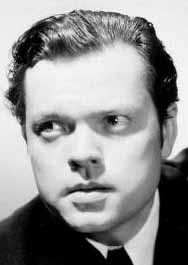 The great filmmaker
  Three words: it won’t matter.