Film POV

POV stands for point-of-view. For an article in which the author utterly misunderstands how POV applies to film, check out this page (in his defense, film is not his thing). POV in film is a little complex. Originally, POV was developed for a story told or read. To extend this idea directly to a movie would make the POV the camera lens. Thus we would be turning a concept used to describe the persepctive of a story into one used to describe a purely technical aspect of the story telling. Thus film POV tells us what book POV tells us, but it does it differently. If we follow a cop as he tries to solve a crime, he is always there; the film is from his POV; it is not necessary for the camera lens to literally be his eyes. However, I do want to point out that there are many more options regarding POV in film than there are in books. And in general, this is a bad thing. Most of the time, the only reasons POV changes or some odd kind of POV is used is that the filmmaker can’t make it work otherwise.

Paradox Lost

I recently rediscovered James R. Newman‘s four-volume The World of Mathematics in a thrift store. For 25 cents a piece, I got volumes i=1,4 where i <> 3; that is: I got volumes 1, 2, and 4. This was a disappointment, given that Volume 3 included Nagel and Newman’s article on Goedel’s Incompleteness Proof. So I got that volume from the library, with the thought of revisiting this article. However, by the time the book arrived, I had thought quite a lot about the proof (well, there are actually two of them, but let’s not go there), and I came to the conclusion that I’m just not that interested in it any more. As important an intellectual accomplishment as it is, the fact remains that it doesn’t really matter very much, even in mathematics—and given my postmodernist frame of mind, it just seems kind of obvious.

In going through the volume, however, I came upon a nice (and easy) article by Edward Kasner (the guy who coined the term “googol”, which the guys at Google misspelled, but maybe for the best) and Newman: Paradox Lost and Paradox Regained. In it, they present the following apparent paradox involving two quarters:

<%image(20100725-quarters.gif|400|181|20100725-quarters.gif)%>
If the quarter on the left is rolled halfway around the quarter on the right, it has traveled half of its circumference. A quarter rolled half of its circumference should be brought to a position that is inverted (upside-down). But this is not the case here. Instead, the quarter is where it started (right-side-up in a rotational sense).

The interesting thing about this paradox is that the authors apparently felt it so trivial as to not even explain it. They do go on to explain the mathematics behind it, but how it is applied is not explained and it is all rather more complex than it need be. This is not to say that I went right along with them. After finishing the article, I spent about an hour thinking about this problem without finding a solution. It was only after waking up at 3:00 am that the solution hit me. Sleep is usually helpful in such matters.

This is exactly the kind of math problem that most people hate:

  1. It takes a bit of thinking just to see the problem
  2. It is infuriating once you’ve seen the problem
  3. It is a totally irrelevant problem

And then there are people like me who are nerds. We are just like everyone else in thinking that such problems are hard to understand and answer and pointless to boot. But like Vladimir and Estragon, we know you have to fill your day with something, and this will do as well as anything else. (Better in fact; reality TV is really beginning to bug me; and I only see snippets of it, like the court shows. I suppose what really bugs me is the fact that other people find such debased entertainment, well, entertaining.)

And Now Back to Our Quarters

Why does this seem paradoxical? I will try to explain (actually, I now find the problem harder than the solution). If you were to roll a quarter along a straight line segment equal to the length of the quarter’s circumference, it would be oriented the same way at the end as it was at the beginning. If you did the same thing along a line segment of half this length, the quarter would be oriented upside-down. This should all be obvious. If not, try it out yourself. Or just think about it; don’t expect me to do everything…

The quarter rolling around the other quarter is equivalent to the second line: half the circumference. Thus, the quarter should finish upside-down. But it doesn’t; this is because the two cases are only equivalent in terms of the distance rolled; the displacements (directional distance) are quite different. This, in itself, does not answer the question, however.

When you start rolling the quarter, say from 0 to 10 degrees (obviously, this works with infinitesimal elements; I will leave the Calculus to you) you are also rolling it from 0 to 10 degrees on the stationary quarter. Thus, while the rotating quarter does indeed revolve only 180 degrees from start to finish, the axis on which it is rotating is similarly rotated by 180 degrees. Put another way, the rotated quarter is upside-down—in the original coordinate system! The positive y-axis was up at the beginning and down at the end.

I’m Just Weird

This is not the standard way of looking at this problem. Generally one would look at the path that a given point takes when a circular object is rolled. When rolled along a straight line, such a point traces the path of a cycloid. With cycloids, one can have lots of fun like proving that the top of a moving car’s tire moves faster in the horizontal direction than the bottom. Does this sound paradoxical? If so, just remember that the top of the tire is moving forward and the bottom is moving backwards; that has little to do with the problem but does make clear that rotating objects tend to mess with our sense of intuition about the natural world.

John Stewart and Jules Shear

Many years ago, while I was in the process of flunking out of college, John Stewart gave a lecture about nothing in particular and everything in general: his life, songwriting, cars, women, performing. This was only a few years after his hit song Gold, so it was surprising that not many more than a hundred people were in attendance. I had something else that I had to get to, so I knew that I was going to have to slip out of the lecture half-way through. Stewart did not allow me to do this unnoticed, however. He was very friendly throughout; cheerfully chiding me for missing his pearls of wisdom.

After I was done with my thing and he was done with his thing, we happened to run into each other. He remembered me: it had only been two hours and I was, after all, the guy who walked out on him. We walked to his car, which, if I remember correctly was some piece of junk. I don’t remember what we talked about, but I do remember two things he told me. First, he said, never listen to what your friends and family tell you about your work. He said, everyone told him that he sucked—until he sold his first hit and made $50,000 on it (in the early 1960s, I think); people who don’t know you are the only ones who can really see your talent. The second thing he told me was that art was whatever the hell you make it. He had an example: Happiness is a Warm Gun. Now here is a song that is just four song fragments pasted together. By traditional standards, it’s a piece of shit; but as we all know, it is great.

Not long after that, I was playing in band whose name I would prefer to forget because it was pathetic. It consisted of me (who could kind of play and wrote all the songs), Will (who could scream really well), and Roger (who was a very good keyboard player). Roger was about ten years older than Will and me, and he thought he knew music much better than we did (and in a way he did). One day I brought in a song called “Do You Like Life?” I was very pleased with how we did the song, but Roger had a real problem with it. You see, the song had no chorus; it had a bridge kind of thing, but it was really just a chant. Roger said, as he often did, “You can’t do that!”

A couple of weeks later, Will and I meet up with Roger and he is very excited: he wants to play a song for us. It was Lovers By Rote off the first Jules and the Polar Bears album Got No Breeding. In the song, Jules Shear does something similar to what I was doing (admittedly, what I was doing was more extreme). His “bridge” went:

All you really gotta do is tug a little leash to find yourself constricted
All you really gotta do is think about the crime to find yourself convicted

And Roger relented, “I guess you can do that!” I know that people said the same thing about Beethoven’s First Symphony. “You can’t start a symphony with a dominant seventh chord!” Who do these people think they are? How do they think any field of art progresses?

Or maybe it is all about me. Beethoven was established. John Lennon was established. I was not. But in general, innovation comes from those who are not established. I think that John Stewart was keenly aware of that. And as for Jules Shear and me: I don’t think either of us care.

Hand Sanitizers

These days, it seems that hand sanitizers are getting a bad rap: kids eat the stuff and get sick. This is not surprising, given that they are about 60% ethyl alcohol. Just the same, as far as I know, none of these children were badly harmed—much less killed—and I’m sure they learned valuable lessons, like don’t eat cleaning products. The fact is that the benefits of hand sanitizers far out-weigh the potential risks—just like flu shots.

Recently a research paper was published by Van Camp and Ortega in Aviat Space Environment Med, 2007; 78:140-142. It is called Hand sanitizer and rates of acute illness in military aviation personnel. They found that when hand sanitizers are readily available, the level of acute illness goes down by almost 300%, with a similar decrease in the number of sick days experienced by the pilots. Many other papers find similar results.

So don’t believe any of the fears about the dangers of hand sanitizers. Aproximately 5000 children die each year in the United States in car accidents. No child has died from hand sanitizers, and I assume that some children have died because of diseases that they would not have got if they had used hand sanitizer. Hand sanitizer is a good thing.

But please: watch your kids after you give it to them. Maybe even let them have a tiny taste so they know that it tastes really bad. The main thing is to take care your your kinds and keep your hands off my sanitizer.

As if I Have Nothing Better

Andrea sent me a second link, as if I have nothing better to do than sit around watching TV. This one is to the pilot episode of the long-dead BBC sitcom Black Books. As usual, Andrea has rather good taste; the show is very interesting and funny. It tells the story of a group of people who live and work around a small used bookstore in London. Think “Hot l Baltimore” and you get the basic idea. It has some distinctly surreal elements, however; it reminds me of Stella only far more accessible. It is worth looking at. (Plus it is a chance to see Rupert Vansittart in a small role playing a part that is slightly less awful than usual.)

On Watching SNL

I haven’t watched Saturday Night Live for at least a decade. But when Andrea told me that last week’s episode with Carls Barkley (Season 35, Episode 11) was very funny, I figured that I would waste an hour watching it.

  1. I thought the opening about Yemen was a bit racist, but still very funny.
  2. The insurance company commercial was fun.
  3. Reel Quotes was very funny, but I thought it could have been smarter (which would have made it less funny).
  4. MacGruber I was delicious—a simple idea well executed.
  5. The bimbo skit? What was with that? I get it, and I assume that the character is recurring; but it just doesn’t work very well. But then, the joke with such characters is that they are people we laugh at—people we are better than. It rarely works; the only exception I can think of is Julia Sweeney’s Pat, which transcended this limitation because the more we saw her, the smarter he got.
  6. MacGruber II was pushing it, but pulled it out in the end.
  7. The NBA game broadcast with the kid? I don’t know: sort of funny, I guess.
  8. MacGruber III was good. They took a clever idea and pushed it much too far. The fact that they ended up with silly instead of annoying is an indication of their talent.
  9. Weekend Update was weak, I thought. The James Carvell bit was good; the Nicholas Cage bit seemed more like Keanu Reeves and was pretty stupid; the David Paterson bit was kind of funny and the guy does him well, but it struck me as kind of cruel.
  10. The Haney Project was fun, mostly just because Barkley was so good natured about his reputation.
  11. The Alicia Keys bit really didn’t work for me. It is a funny idea, but I’m not sure how it could be made to work. It did one thing that few SNL skits ever do: it had a good ending. I tend to think that the problem is not with the writing; it is either the acting or me.
  12. The Scared Straight skit was amusing. I guess the actors were a bit punchy by that time, because most of them lost it at one time or another. It bugs me a little bit that both the guys were black; if Will Ferrell were in the cast, I’m sure he would have been part of it–it’s his style; and that would have made it a little less offensive.
  13. Barkley’s Bank was very weak. Again, it is nice that Barkley is okay with his rep, but the skit didn’t do much; and given the potential, that’s a shame. They will usually throw weak stuff to the end on the assumption that fewer people will be watching and that they may not have time for it anyway. I had hoped for a MacGruber IV, but I was disappointed.

Overall, the show was much better than I would have thought. But I will probably go another decade before I tune in again.

Justice as Commerce

One could say that the justice system in the USA where prosecutors have most of the power and a career/financial interest in convicting the guilty and innocent is nothing but commerce. I will need to think another couple of decades on this issue.

Non-Reversible Errors

I have long felt that Scott Turow taught me how to write a novel. In particular, I experienced an epiphany while reading his third novel Pleading Guity. It was probably just that it was the third novel of his that I had read, and that I had figured out his tricks. Although I have previously thought that Turow is a character-oriented writer, he is in fact a plot-oriented writer—clever and capable in his way. Regardless, he did not teach me everything I needed to know about writing a novel—it took me seven years and many aborted attempts to complete my first, deeply flawed and largely lost novel Camping on Asphalt. But I can say this for sure: Turow showed me how to trick the reader. And I am strip-mining that territory in my current work on Treading Asphalt. [Note]

I just read Turow’s sixth novel Reversible Errors. Here’s my review: it’s a Scott Turow novel. Other than that, I don’t want to go into all the reasons that this is an entirely workman-like effort, fiction by the numbers—the same numbers we have seen in his previous five novels. If you like his books, you will probably like this one. It annoyed me for a couple of reasons, but the main reason was its treatment of the romantic subplot. (Don’t worry, there are no real spoilers here, even though I talk about events at the beginning and end of the novel.)

The main character, Arthur, becomes involved with a woman who used to be a judge, but is no longer because she was convicted of taking bribes. This is pretty bad, because judges are supposed to come to just decisions and when justice becomes a bidding war, it becomes simple commerce. [Note] Arthur does not seem to have a problem with this, perhaps just because he has the hots for her. Fine. One nice thing about Turow is that he has always been willing to show that people over thirty have sex drives (often more explicitly than I would prefer in such a novel).

We know from the beginning, however, that the judge was really being bribed because some people in power knew that she was a heroin addict. When Arthur finds this out he does what pretty much all Americans do when they hear the word heroin: freak out. Thomas Metzger has written wonderfully on the history of perceptions of heroin from its invention to the present in The Birth of Heroin. As Metzger points out, the modern perception of heroin is as a dirty, evil “other”. And this is precisely why people like Turow approach it as though it were the worst thing in the world.

Arthur can deal with the judge committing felonies that have a direct effect on her job. But he can’t deal with her drug choices. A corrupt, drunk judge: yes. A junkie judge: no. The novel ends with the judge begging for Arthur’s forgiveness. Arthur gives it. But what Arthur really needs is a clue. As does Turow.

And I Won’t Even Complain About Not Much Liking Shakespeare

Are you lucky you tuned in today! Probably not, but as usual: you should be. I have found a great short lecture (Okay! It’s 58 minutes, but the time flies.) by David Timson:


David Timson Speak the Speech

If you know who Timson is you are doing better than I am. He is certainly a guy who reads books on tape (or CD now). He has done a lot of Shakespeare and Sherlock Holms. He also seems to have done some film acting; and lots of radio broadcasts. As you will see—if you take the time to listen to the lecture, and you should—he has a great voice.

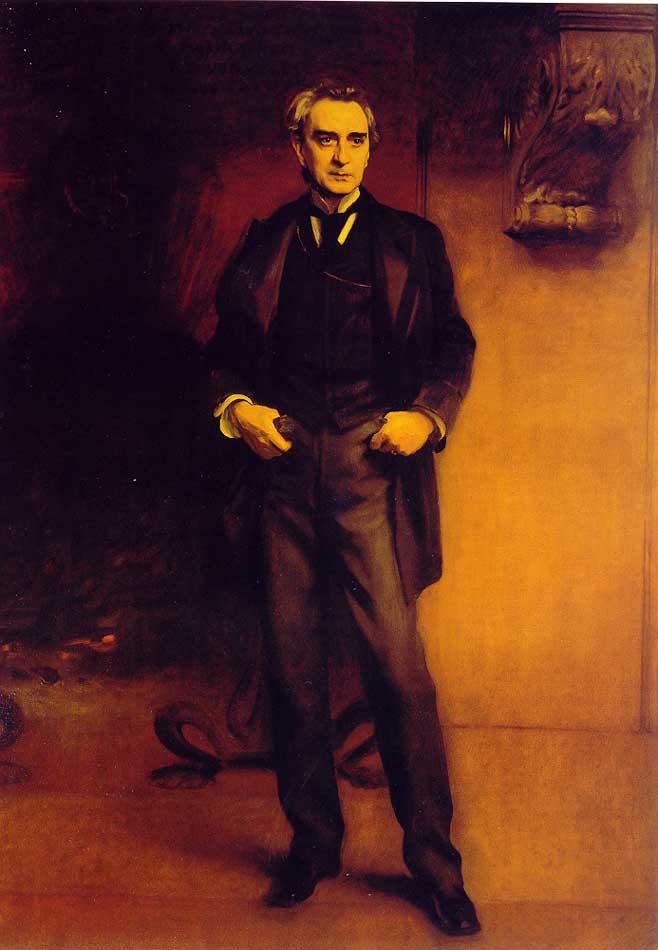
In this lecture, Timson discusses the changing style of Shakespearean performance since the invention of audio recording. Unfortunately, he is not terribly insightful, but this may be because he feels his wonderful examples speak for themselves. And largely they do. He plays very early recordings of Edwin “Am I My Brother’s Keeper” Booth (the unfortunate brother of John “Et tu, Brute?” Wilkes)—check out this great John Singer Sargent painting on him, Sir Henry “Big Hank” Irving (just kidding about the “Big Hank” moniker), and Lewis “Sugar Ray” Waller (not kidding about the “Sugar Ray”; no, just kidding; I was).

I have been fascinated with Edwin Booth for a long time, because I wonder what it would be like to be the brother of a famous murderer (I used to live with Melvin Simpson). But I have never heard his voice. In fact, since he died in 1893, I didn’t even think there was a recording. Not surprising, he has an excellent voice (so does Melvin). He actually sounds a bit like Orson Welles (so does Melvin; no, just kidding). If that doesn’t get you to listen, little will.

The lecture moves up to the present from Sir John Gielgud to Laurence Olivier to Kenneth Branagh (who really is amazing).

The point of the lecture is that Shakespearean acting has moved from a highly musical or operatic style to a more conversational and (to our ears) natural one. We could extrapolate backwards and conclude that acting during the Elizabethan period would be unintelligible to us. This is not unreasonable (but I don’t know how reasonable it is, and that’s why I put it that way). According to the iconoclastic Shakespearean scholar Gary Taylor, the sounds of the words themselves have changed so much that we would likely get little meaning from them. In effect, Shakespeare—written in (more or less) modern English—has to be translated for modern readers every bit as much as Aristophanes—written in (more or less) ancient Greek.

She Said “No”

What is with these “You’re a loser but I love ya, babe” songs? The classic is Midnight Train to Georgia, but I’ll let that one slide because it is totally kick-ass. What I have in mind is Please Come to Boston. Here is the last verse:

Please come to L.A. to live forever
The California life alone is just too hard to live
We’ll live in a house that looks out over the ocean
There’s some stars that fall from the sky, livin’ up on the hill

That’s beautiful. First, he asks her to come and live forever. Then he tells her that he needs her—life is too difficult without her. Finally, he has a house on the ocean and stars fall from the sky!

And what is her answer? “No. I love you, but not enough to leave beautiful Tennessee. I’ll be waiting here for you to fail and come back with your tail between your knees.”

On second thought, why don’t you just stay in Tennessee and marry a tobacco farmer.