Some Totally Pointless Criticisms of The Mask

The MaskI just watched The Mask for the first time in a decade. It is a charming film. And in a sense, I am more the target audience for the film than just about anything else I can think of. It appeals to all the prejudices of the kind of guy who thinks that he’s “nice” and walked around with a puppet on a stick for many of his teen years. And I still spend a fair amount of time watching Bugs Bunny. He is one of my heroes. And yes, he is a hare.

But as one gets older (if he is paying attention at all), one notices one’s prejudices. And the “nice guys finish last” trope has come to annoy me. It’s also, I’m afraid, really sexist. The truth is that men and women make terrible mistakes in their love lives. In my experience, nothing is as attractive as self-confidence. And it is often true that people who are self-confident are jerks. I suspect it works differently from the way many people think. Being highly desirable makes people self-confident, but it also makes them more selfish. It’s human nature.

Of course, in The Mask, Stanley Ipkiss is a truly nice guy. I say that because he likes cartoon and has a great dog that likes him. And what is sweet about the film is that Stanley wins the girl the way men have always won the girl: by allowing her to see past all the discomfort and pretense to who he really is. This is why the ending is so sweet with Tina Carlyle (played surprisingly well by Cameron Diaz) throwing away the mask. The truth is, Stanley’s unchecked id was a bit too much for her, but surely she likes knowing that it lives within him.

On a technical level, there are some problems with the film. But I doubt anyone watching the film for the first time notices. As soon as Dorian Tyrell (the bad guy, played by Peter Greene) gets the mask, the film stalls. I understand the problem. You can’t make Tyrell the wacky character that Ipkiss turned into. But the mask doesn’t bring out his naughty child; it just seems to turn him into a more angry version of himself. So those scenes are tiresome. What’s more, I’m afraid that Greene is miscast in the part, because he is too convincing a heavy.

But things do pick up, as Ipkiss breaks out of jail and eventually takes us to the climax of film that is as zany and wonderful as anything that came before. It just would have been a whole lot better to move faster from the point of reporter Peggy Brandt’s double-cross to Ipkiss’ escape. They could have trimmed five or even ten minutes from the film and sped into the third act without driving through a pothole that upsets a very consistent momentum throughout the rest of the film.

Really though: what’s not to love? Jim Carrey has never been so adorable. The script is the silliest of fun. And it has the cutest dog ever. I don’t know why I waited this long to watch it again.
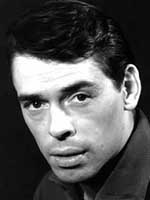
“Les Bourgeois” and the Wisdom of Age

Jacques BrelIt’s always a good time to talk about Jacques Brel. The years have not diminished my admiration for him. What is so great is that he doesn’t just sing. He acts the songs. He is, above all, a storyteller. And the stories that he tells are so filled with keen observations of the way the world is.

I understand that there are other artists who do this. Bruce Springsteen’s best work is like this, but usually he falls into cliche. Bobbie Gentry certainly managed this on a few songs. But American songwriters tend to disappoint. As much as I love the work of Warren Zevon and Randy Newman, they rarely succeeded in any given song. I think the problem is that American popular music, regardless of the form, is too dependent upon “slice of life” stories, with little payoff. It is extremely rare that a songwriter even tries to convey what we get from the best American short story writers like Irwin Shaw.

But Brel doesn’t just try—he succeeds. And he does it consistently. It doesn’t matter if he’s being serious or silly, he always has something to say. A good example of this comes from a song I really like, “Les Bourgeois”—a song that is both serious and silly. It tells the story of three friends: Jojo, Pierre, and the narrator. The first two verses tell of how they are drinking away their youth at the Three Pheasants Hotel bar. And when the older bourgeois pass by, the young men ridicule them in the chorus, “The bourgeois are like pigs!” And so on.

In the third verse, things are different. The three friends are now the bourgeois. They still have the same interests. They are still the same people. But they are old. And now there is a new generation of young people who ridicule them just as they ridiculed the generation before them. This is not exactly a startling denouement, although I think any reasonable person would admit that it has far more to say that most American pop songs. And that’s especially true coming from a man only 32 years old. (Brel wrote the lyrics; the music was written by Jean Corti.)

What’s more notable about the song is the way that Brel performs it. The entire tone of the third verse is different. It is a bit more stiff—the performance of man who knows he has to be dignified but still feels the same inside. And then, he doesn’t even sing the final chorus. This is the same chorus that was sung with such gusto the first two times, “The bourgeois are like pigs!” It is spoken with sense of disbelief, “Can you believe what these kids say to us?” It’s poignant and beautiful.

Here is the song. There are no subtitles, but I hardly think they are necessary:

“Your God” by Cheryl Wheeler

Cheryl WheelerOne of my regular readers (JMF, I think Rick Fane, it turns out) turned me on to singer-songwriter Cheryl Wheeler. She is an amazing talent. But that’s pretty much a given when someone can stand up with a guitar and entertain an audience. She has a powerful, but interesting voice, and writes well-crafted, often deeply moving songs. She’s also very funny, which is not exactly unusual for folk singers. It may be just a matter of being more grounded than most musicians. And if you were as angry as a lot of folk singers are without a sense of humor, you’d probably go into political organizing.

I’m no kind of expert on her. I’ve heard perhaps a dozen or so of her songs. I’ll probably create a Pandora channel for her, because I am sometimes in the mood to listen to this kind of music. In general, she reminds me of Cris Williamson and Holly Near, although at this point I like her quite a bit more. Anyway, I came upon one of her songs, “Your God.” It is a very simple song, but the lyrics are funny and insightful. I’m thinking of learning it so I can play it for the Jehovah’s Witnesses the next time they come to my door. (Not that it would matter to them.)

Here are the lyrics:

Is your God the same God who’s working with the Pope?
Is it the same God suspicious of Tinky Winky[1]?
Is it the God corralling virgins into herds of 72,
Deciding where to send them when the glorious martyrs are through?Is your God the same God who’s burning the science books
And trampling lives to hoist the “right to life” signs?
Or is he running the breeding program from the temple by the lake
Till one big in-bred family will be an entire state?

Are they his priests who can’t keep from buggering little boys?
Is your cash retaining their attorneys?
I guess he had to overlook the nastiness with the tykes,
To keep the grace of marriage from the clutches of fags and dykes.

Is your God the same God who won the Super Bowl?
I hope it’s not that loser God the Colts had.
Or is your’s the God decreeing all the women wear a sack,
Presiding over stonings and beheadings in Iraq?

Is your God commanding you
To tell everybody what to do?
To kill your brain, praise his name
Bury the bastard who’s not the same?
Spew your heinous and hateful shit
Like something holy was driving it?
To take over all the earth and skies above?
Oh mercy whatever happened to the God of love?

Afterword

On a spiritual level, I’m with Terry Eagleton. If you look at the world or the Bible (or other Abrahamic religious books), there is no “God of love.” So at best, I can only see Jesus as calling for a spiritual revolution that would end with heaven on earth. The “God of love” would have to be ourselves, because nothing in the world points to a loving god. And indeed, apologists have given up on the question and simply define everything God does as good. So the 2004 Indian Ocean earthquake and tsunami that killed roughly 300,000 people was yet another example of “God’s love.” What makes Cheryl Wheeler’s song so great is that most of the people who believe in the “God of love” actually make the the world less “heaven on earth” and more just like hell.


[1] Tinky Winky was the character on Teletubbies who Jerry Falwell accused of being a gay role model for children.

Sad About Johnny Winter

Johnny WinterI just heard the news that Johnny Winter died last night. That wasn’t supposed to happen. He was supposed to beat the odds and live to be at least as old as William Burroughs. But he was 70, which is probably longer than I’ll last, so that isn’t too bad.

I learned so much about playing the blues guitar from him. Not the solos—he was too good, too creative, and too fast for me. But his great blues rhythm guitar work was just so clear, and beautiful, and profound. Listening to him as like taking a master class.

We celebrated his last birthday here, Johnny Winter’s Mississippi Blues. Here he is doing “Sound the Bell” and making it all look so easy and sound so impossible:

I’ll miss knowing he is still out there doing what he was clearly born to do.

Sweet Dorothy Fields

Dorothy FieldsToday is unusual, because I’m kind of going to write two birthday posts. But this is the real one. Or the regular one.

On this day in 1905, the great American lyricist Dorothy Fields was born. In her one way, she was as great as my favorite lyricist Lorenz Hart. And she wrote the lyrics to one of my all time favorite songs, “The Way You Look Tonight.” The music to that song is very simple: I-vi-ii-V. That’s even true of the bridge. (Those are the essentials, most people throw in other stuff.) But what makes it work are the “tenderness” of the lyrics. And it’s the ultimate “man” song. In my experience, women you love never age: you always remember them as they were when you first met them.

She was also a playwright, working with her brother Herbert Fields, on a number of successful plays, most notably the book for the Irving Berlin musical, Annie Get Your Gun. They also wrote the book for Redhead, which Dorothy also wrote the lyrics for. She seems to have had no problem working with any composer. She worked with such notables as Jimmy McHugh, Jerome Kern, and Cy Coleman.

With the last composer, she probably had her greatest success with the musical Sweet Charity. The big hit from that show was “If My Friends Could See Me Now.” But I can never really resist listening to “Big Spender”:

Happy birthday Dorothy Fields!

What Matters in “Ode to Billie Joe”

Ode to Billie JoeI find myself haunted by “Ode to Billie Joe.” The weird thing about Bobbie Gentry is that she was a very good songwriter. Well, to be honest, her melodies often fell into the same patterns, but they always worked and could be quite original at times. And her lyrics were always quite strong. But nothing compares to “Ode to Billie Joe.” How do you top that? I don’t think people really wanted to hear anything but that song from her and she was right to retire from the business so soon. The irony is she might have had a better career if she hadn’t come out of the gate as she did.

Put simply, “Ode to Billie Joe” is a great work of art. It is a short story in song in the sense that it provides no more information than it has to. It has an introduction and a conclusion, but the meat of the song are the three middle verses that describe the reactions of papa, brother, and mama to the death of Billie Joe. The event affects papa as much as the news that the French were at war in Angola. Brother was acquainted with Billie Joe and is sad to hear the news, but it isn’t going to affect his life in any great way. The mama verse is the crux of the matter because it’s the one that makes clear that the death of Billie Joe is the most important event in the narrator’s entire life.

There are two ways to interpret mama’s verse. Either mama knows or she doesn’t. The way the song is written, the implication is that she doesn’t. But I find it hard to read it that way. She mentions the young preacher, who mama clearly hopes her daughter will marry. And clearly, mama and the preacher spoke about the them “dropping something off the Tallahatchie Bridge.” I imagine a conversation about how the daughter seems to be around Billie Joe a lot and maybe supper isn’t such a great idea. Regardless whether mama knows or not, she’s not saying anything.

The last verse is a year later and both of the men are gone. Brother has married and moved on with his life. Papa has died. So the two women are left distraught over the deaths of the men that they loved. Of course, mama doesn’t want to do anything. She’s probably spent over half her life with papa. There’s no romance in that. It’s just the story of every life. There is no future that she can see—no autumn romance—just marking time until she too dies. The narrator’s story is the more romantic, but she isn’t over her loss any more than her mother is. (A more positive take is to note that papa died in the spring, which means he’s only been dead for a couple of months. So you could see the final verse as showing mama in the early state of shock and grief that the narrator was in at the dinner table that sleepy, dusty Delta day. Ultimately, it doesn’t matter because it is the narrator’s story.)

Where the song ends could make a great beginning for a novel about a mother and a daughter and how they deal with their grief. I’m sentimental, so I imagine them growing closer, learning deep truths, and moving on with life. But what is great about the song is that it doesn’t resolve anything. For all we know, even after this year, mama still doesn’t know about the importance of Billie Joe to her daughter and has no idea that she spends a lot of time up on Choctaw Ridge paying tribute to his memory.

I understand why people wanted to make the song concrete. The song provides the emotional core and some tantalizing details. But the reason the song works so well and the film does not is because it doesn’t matter why Billie Joe killed himself; it doesn’t matter what they dropped off the bridge; it doesn’t matter what their relationship was. It matters that the narrator suffers in silence; it matters that her family is unintentionally cruel; it matters that someone—the only one who doesn’t speak—cared about Billie Joe and that he’s dead. To know more is to poison the song’s emotional purity.

Truckin’ Away With Blind Boy Fuller

Blind Boy FullerOn this day in 1907, the great blues singer and guitarist Blind Boy Fuller was born. Among blues lovers, there is such a tendency to focus on the Mississippi Delta as to think that nothing else was going on. But as I wrote about last month, Elvie Thomas and Geeshie Wiley, who were both thought to be from Mississippi were actually from Texas. And Fuller was from North Carolina.

He learned to play the guitar while still a kid, but had no intention of making a living at it. But in his teens he began to go blind and by the age of 20, he was completely blind. Much later in life, he learned that he had neonatal conjunctivitis. This left him no real choice. He started performing on street corners and the occasional party. His talent was such that he didn’t remain unknown for long. It was especially other professional musicians who picked up on him.

He has a pleasant enough voice, but it is his guitar playing that really stands out. He is considered a major figure in Piedmont blues, but it is probably easiest to think of his work as ragtime on the guitar. It’s the kind of playing that makes me weep with jealousy. Here is a song that doesn’t show off his great guitar playing, but it is just so much fun, I can’t help it. It is the traditional “Rag, Mama, Rag”:

“Rag, Mama, Rag” was one of the first songs that he recorded. But unlike a lot of great musicians from that time, he was well recording, eventually producing over 120 songs. Here is one that better shows off his guitar playing, “Truckin’ My Blues Away”:

Fuller had a very good career for five years, performing and recording up and down the east coast. But in 1940, he began having problems with his bladder, even having surgery for it. This forced him to stop performing and he died the following year from blood poisoning due to an infected bladder. He was only 33 years old. But he did leave a great legacy of music that enrich us to this day.

Happy birthday Blind Boy Fuller!

Best Britney Spears Ever—and More

Britney SpearsIt’s your fault America. Your the ones who like hyper-produced “cute” boys and girls performing your music. You’re the ones who want all real emotion and authentic humanity taken out of your music. You are the ones who have elevated just the right reverb on the digital snare drum above songwriting craft and inspiration. And above all, you’re the ones who have allowed auto-tune distortion to soil every mainstream hit for the last decade to the point where you think its a singing style and not an algorithm for fixing inaccurate singing. So it’s your fault and I want you to shut up about it.

The issue at hand is Britney Spears’ new single, “Alien,” which someone got released with the lead vocal track un-processed. Many are saying that the problem is that it hasn’t been auto-tuned. The producer claims it was just a test track, and so shouldn’t be judged as the kind of work that Ms Spears is capable of. I’m sure both of these claims are true. And there’s one more thing: Spears, like all the other purveyors of children’s music, does not have loads of other effects put on her voice here. But before listening to this track, bear in mind that her pitch problems are not primarily on those high notes that most people are freaking out about. I suspect that if it weren’t for those high notes, few would even have noticed. So again, America: it’s your fault because you have no taste, no maturity, and very little musical sense.

My take on the song is different. I think it’s the best thing she’s ever done. I just wish all the background music were taken away. With that vocal and an acoustic guitar, it would be terrible. But that would be a major step up from what most of my fellow Americans think passes for good music.

Now I’m going to present to you some good simple music. No, I’m not going to go back to Robert Johnson. Here is Camper Van Beethoven doing Take the Skinheads Bowling. It’s simple; it’s fun; and it’s pretty well in tune (not that it is critical):

Here is Devotchka with “The Clockwise Witness”:

Here is Jules Shear doing “The Trap Door”:

And here is the greatest punk band ever, Minutemen with “Two Beads at the End”:

I don’t care if you like any of that, America. But when you demand music that is created like television commercials, don’t be surprised when all the pieces aren’t perfect on their own. What you hear on “Alien” is an actual human voice. If you don’t like it, admit that it’s the technology you care about. Embrace your dehumanization.

GOP Picks Perfect RNC Location!

Cuyahoga River FireI don’t want to hit this too hard, but it is funny as hell. The Los Angeles Times reported, Cleveland Picked to Host 2016 Republican National Convention. I’ve never been to Ohio, much less Cleveland. And I’m sure it’s a perfectly nice city with wonderful people. And I understand: Ohio is a swing state. Good choice Republicans! I guess.

There’s just this one little thing that bothers me. It’s the Cuyahoga River. You know: the river that caught fire. And not once. According to Wikipedia, “At least 13 fires have been reported on the Cuyahoga River.” This is because it has often been one of the most polluted rivers in the United States. It’s not on fire right now, but that’s only because the Republican Party is not able to dictate environmental policy. Otherwise, I’m sure the free market would have it all ablaze.

The big city on the Cuyahoga River is, of course, Cleveland. Randy Newman was being sarcastic when he wrote:

Cleveland, city of light, city of magic!
Cleveland, city of light, you’re calling me!
Cleveland, even now I can remember,
‘Cause the Cuyahoga River
Goes smoking through my dreams!

But what could be a better symbol of the Republican Party: a river so polluted that it self-immolates. The modern Republican Party has become toxic with its mixture of insanity, stupidity, deliberate ignorance, shortsightedness, hatefulness, and greed. And through the smoke and flames it can’t see that America is drifting ever further away from it. In fact, the party hallucinates due to smoke inhalation—thinking that it is just what the country is waiting for.

“There’s a red moon rising on the Cuyahoga River”!

Burn on big party—burn on!

Christoph Willibald Gluck

Christoph Willibald GluckOn this day in 1714, Christoph Willibald Gluck was born. We know him simply as Gluck and he was a great composer. But we remember him because he was an enormously important opera composer. Although he had many patrons who required various things of him as a composer, his output is overwhelmingly opera. And he is really the reason that opera became such a big deal to Classical and then Romantic period composers. Because Gluck fixed opera. He abandoned opera buffa and opera seria, and was critical in creating the more serious art form that we think of today.

Gluck is also interesting in that he was something of an itinerant composer. He moved all over Europe, In 1745, he became the house composer at the King’s Theatre in London. That’s notable because artistically speaking, England was an artistic backwater at that time. But Gluck came into his all in 1770s in Paris. During his time in Vienna, he was the young Marie Antoinette’s music teacher, so he was well connected when he moved to France. And he had the good sense to not only leave Paris before the revolution, but also to die before it—just to be certain. It was in Paris that Gluck created his greatest work.

There was great controversy during his time in Paris. Many people loved his new work, but many others preferred the old style. In fact, there was a public rivalry between those who loved Gluck and those who loved the Italian composer Niccolo Piccinni. Piccinni was actually quite a bit younger than Gluck, but he still composed mostly opera buffa. There was no rivalry between the two composers themselves. However, when Gluck learned that Piccinni was working on an opera of the same libretto, Gluck abandoned the project and destroyed what work he had done. I have no idea why, but in general, I think revolutionaries are often insecure and that he didn’t want to go head to head with Piccinni, even though I have little doubt that history would have favored Gluck.

It was in Paris that Gluck suffered his first stroke. After that, he pretty much retired from music, handing off to his student Antonio Salieri. In fact, there is a very sweet story about this. Gluck gave Salieri the libretto Les Danaides and when it was performed in 1784, it was announced as a collaboration between Gluck and Salieri. But when it became a huge hit, Gluck announced publicly that the music was, in fact, entirely Salieri’s. That’s what I call a mentor: protective and gracious! (For the record, despite the movie Amadeus and even letters from Mozart himself, Salieri was Italian by birth, but he was absolutely a German composer.)

The one thing I really don’t like in opera is the recitative. These are kind of talk-singing between the real musical numbers. And the more powerful the main numbers are, the more the recitatives stand out as simply bizarre. Gluck really tried to cut back on their use and I think wanted to get rid of them altogether. In addition to not being very interesting musically, they distract the listener. I hate them in Don Giovanni, for example—an opera I love. But interestingly, Gluck’s primary goal was make the music work with the libretto. Like all the great opera composers to follow him, he wanted the music to serve the drama. At that time, most opera was just an excuse for singers to go off. In Amadeus, Salieri says (unfairly) of Mozart’s opera The Abduction from the Seraglio, “Ten minutes of ghastly scales; arpeggios! Whizzing up and down like fireworks at a fairground.” Gluck is kind of the father of modern opera. There is a direct line from him to Wagner.

Here is a commercial for the Washington National Opera’s production of what is generally considered Gluck’s masterpiece, Iphigenie en Tauride:

Happy birthday Gluck!

How I Discovered Jules Shear

Got No Breading - Jules and the Polar BearsI was shocked recently when frequent commenter JMF did not know who Jules Shear was. He’s a really well informed guy on most things that matter. So I followed up his comment with a few of Shear’s songs. And I started with the first song of his that I had ever heard, “Lovers By Rote” off the first Jules and Polar Bears album, Got No Breeding. It is a great album. In fact, it is one of the greatest. It still thrills me. For the decade that followed that, Shear tended to be produced as a New Wave artist and it never worked. Then his work went more in an acoustic direction that was much better. But still, the Polar Bears were the perfect band for him: unhinged rockers with Richard Bredice with wonderful gritty guitar solos. You should buy the album. Really.

But I was thinking, “Why was ‘Lovers By Rote’ the first Jules Shear song I had ever heard?” After all, it is the third song on the album. Well, it was because I was in this band when I was 18 with this “old” guy, Roger, who was 30 who played keyboards. Pretty much I wrote everything, because that is and was what I did. I mean, I’m an okay guitarist now, but I was horrible then. I was slightly better on the piano, but nothing compared to Roger who was actually kind of good.

Will was also in the band, where he destroyed his voice in really beautiful ways. He has always had a strong voice, but at that time he was a wild man. John Lydon had nothing on him. Anyway, Will and I were really very “interesting” and “edgy” and all that. And Roger didn’t know quite what to make of us, but what he did make of us was not good. I think he saw us as students or something. The only thing worse than our learning abilities were his teaching abilities.

Anyway, one day I brought in this song called, “Do You Like Life?” It was basically just logorrhea, “People don’t care left standing in the rain you left a puppy dog…” And so on. It was word collage with three verses and then a kind of chorus in the middle of it that was written in something bizarre like 4.5/5 time and it was basically chanted. At this point in my life I second guess everything but I didn’t then. I knew the song worked. Roger hated it.

But he didn’t hate it because he didn’t like the sound of it. He didn’t like it because you just didn’t do that sort of thing. Note, this is 1982. We are well into the post-punk movement. I listed to Gang of Four a lot in those days. As far as I was concerned, there was nothing to stop you from doing anything at all as long as it worked. And “Do You Like Life?” worked as well as anything else we did. In fact, I think some of the other songs we did were more challenging to listeners. (And compared to some of what I write today, it was downright charming; everyone hates what I do now.)

So a couple of days had gone by and Roger was really excited. He had found a song he had to share with me: “Lovers By Rote”:

Do you see?! You could just start chanting in the middle of a song because this guy on this album did it. I was 18, so I said, more or less, “Yeah, I knew I could do that because, you know, I did it.” But I loved the song, especially the refrain, “Stupid questions about love are the stupidest questions of them all.” Which now seems kind of appropriate because Roger asked a lot of stupid questions about music.

The band didn’t last much longer than that. For one thing, I know I was horrible to work with—I’m just too caught up in my own thing. There’s a reason why I’ve generally worked alone or with one other very understanding person. But the bigger problem was that Roger was far more interested in drinking than realizing my bizarre vision. Will and I went on to create our own duo. We tried to add other people, but anyone who could actually play had more or less the same reaction to our work that Roger did. They could tell we were onto something new, but that wasn’t necessarily good.

Maybe this is why I so treasure idiosyncratic art that isn’t necessarily technically good: pure protection of my own self-esteem.

Afterword

Here is the song “Too Soon Gone” from one of my favorite of Jules Shear’s solo albums, Allow Me:

K-Tel Classics: Bush Years!

K-Tel Classics: Bush Years!This week over at The Nation Reed Richardson wrote, The Beltway Media Gets the Iraq War Band Back Together. It’s a good article and well worth reading. But I was struck with something specific he wrote. He noted that it was like deja vu from 2002. “The experience is almost reminiscent of those old, late-night K-Tel commercials selling compilation albums of songs by bands long since forgotten, and for good reason.” That does bring back memories, “Original hits! Original stars!”

So I started writing an email to Reed, and it got totally out of hand. Hence, this article:

K-Tel Classics: Bush Years!

Unforgettable politicians saying unforgettable things. Including…

  • George W Bush with, “My answer is bring ’em on!”
  • Dick Cheney with, “We will, in fact, be greeted as liberators.”
  • After more than a trillion dollars, who doesn’t love Paul Wolfowitz with, “There’s a lot of money to pay for this. It doesn’t have to be US taxpayer money. We are dealing with a country that can really finance its own reconstruction, and relatively soon.”
  • Douglas Feith’s great, “There have been linkages between the Iraqi government and al-Qaeda going back more or less a decade.”
  • Condoleezza Rice with, “But we don’t want the smoking gun to be a mushroom cloud.”
  • Colin Powell’s brilliant UN innuendo, “First, it strikes me as quite odd that these tubes are manufactured to a tolerance that far exceeds US requirements for comparable rockets.”
  • Donald Rumsfeld’s classic, “You go to war with the army you have—not the army you might want or wish to have at a later time.”

But if you act now, we’ll throw in other hits like:

  • George W Bush with, “Brownie, you’re doing a heck of a job.”
  • Dick Cheney’s all time classic ballad, “You shouldn’t be my friend if you don’t want to be shot in the face.”
  • Karl Rove’s entire 2004 campaign song, “Vote against the fags so we can destroy your Social Security!”

Just $4.99 on LP, $6.99 on 8-Track!

But if you are like me, you don’t have to be reminded. But for most of the people in the mainstream media, maybe they ought to buy a couple of copies.