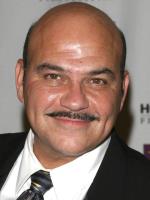
Roger Miller

Roger MillerOn this day in 1936, the great songwriter and performer Roger Miller was born. It is best to consider him a songwriter. He was amazingly prolific and although I like his casual singing style, there is nothing especially notable about it. It did, however, go well with his songs. But it is his writing that really shines. He did a whole lot with very little. His songs are rarely more than I-IV-V numbers, but as has been shown for centuries, much can be done for that. Miller created very smooth and memorable melodies.

If it weren’t for one song, I probably wouldn’t be writing about him. That wouldn’t take anything away from him as a talent. He was a superb songwriter. He not only wrote a number of hit songs for himself, he did so for a number of other artists as well. That’s partly because he got his start as a songwriter, but that was also true of him later. And today, he’s come back into favor. What’s not to like?

The one song that really sets him apart, however, is also his biggest hit, “King of the Road.” It’s like On the Road in two minutes with far more to say. It’s interesting that that a song from 1964 that hearkens back to the Great Depression is probably as relevant today as ever. Except, of course, it is hard to have such a good attitude these days. Things are getting worse now and pretty much no one pays union dues. Instead, they’re on food stamps.

Happy birthday Roger Miller!

E M Forster

E M ForsterOn this day in 1879, the great writer E M Forster was born. Admit it: you wouldn’t even know who he was if it weren’t for Merchant-Ivory or maybe that David Lean character. Oh, okay: you would know because you are a Frankly Curious reader — a better class of person. But it is definitely the case that Forster has been done pretty well by filmmakers in the 1980s and early 1990s. It might be because Forster wrote so much about hypocrisy and these were especially great times for hypocrisy in the the US and UK.

He is best known for writing A Room with a View and A Passage to India. But Forster was so much more than that. He wrote in lots of styles and forms — both fiction and nonfiction. He wrote plays. He even wrote an opera libretto. He was truly an amazing man.

What I find most interesting about him is his short story “The Machine Stops.” One doesn’t much think of Forster was a science fiction writer, but there you go. The whole story is online, and I highly recommend reading it. It’s about 10,000 words long — so something even I could read in bed before going to sleep. And what is perhaps more interesting about it is that it really isn’t that different from A Room With a View in terms of its theme. Fundamentally, he was always writing about people trying to connect with each other. He may have been pessimistic about that much of the time, but he always held out the hope.

I had embedded a BBC production of the story here, but Lawrence alerted me to the fact that it has been taken down. I can’t find a replacement. But if you would prefer to hear it read to you while you clean up the house, here is Jerome Lawsen reading it for a LibriVox recording:

Happy birthday E M Forster!

Ben Kingsley

Ben KingsleyThe great actor Ben Kingsley is 71 today. He is probably best known for his Academy Award winning role in Gandhi. But that just shows what a crock the Academy awards are. They just love giving out awards to films that are about “important” subject. Leave it to Hollywood to make an important movie not just decades after Gandhi’s death, but also after Martin Luther King’s death. Kingsley was great in the film, but then he always is.

Most recently, he was absolutely great in Iron Man 3 — a film that literally had nothing else to recommend it. In it, he plays the Mandarin — a supposed terrorist who is, in fact, just a down on his luck actor with a weakness for drugs and women. You know: my hero! But don’t watch the film. It’s tiring. But Kingsley is great.

There are so many films where Kingsley shines that it is hard to list them all. I will just mention a few that you really must see. Obviously, Schindler’s List should be seen for a number of reasons, but his role as Itzhak Stern is the heart of the film. Another is Sexy Beast. And for a sweet one, there is Hugo.

One film that I love but bombed (probably because it is great) is War, Inc. Here is a scene, but John Cusack gets the best line, “I signed up to kill the bad ones! Health clinics, trade unionists, journalists, agricultural co-ops, Catholic liberation theologians, impoverished Colombian coffee farmers, these are the barbarians that are brave opponents of civilization. We turned Central America into a f**king graveyard. Whoever momentarily interrupts the accumulation of our wealth, we pulverize. I’m just not feeling good about that anymore, sir.”

But for a limited time only, two of my favorite Ben Kingsley films are complete and on YouTube. The first is Turtle Diary with Glenda Jackson. It’s one of those little gems that the studio can’t even be bothered to release on DVD. (It is available on VHS.) So you can be sure that that before too long, the studio will notice that it’s online and say, “We don’t care enough to sell this title, but we’ll be damned if we’ll let anyone watch it for free!” While it lasts my friends:

The second film is available on DVD (sadly not letterboxed), Without a Clue — I own it and watch it quite a lot. It is a reversal where it is really Watson who is brilliant and he’s hired an actor to play the part of Holmes. It isn’t great, but it’s sweet and very funny. Sadly, I can’t embed it, but you can watch it over on YouTube (but at least it is letterboxed).

Happy birthday Ben Kingsley!

Bo Diddley

Bo DiddleyOn this day in 1928, the rock legend Bo Diddley was born. It’s a little strange though. He is literally a household word. But people don’t so much know his music. This is partly due to the fact that he never had a song that charted high on regular pop radio. His biggest hit was the confusingly titled “Bo Diddley” — which made it to number one on the R&B charts but didn’t make it on the pop charts at all.

I know that when I was younger, I was confused as to whether Bo Diddley was an actual person or not. Of course, he isn’t really. That’s just the stage name of Ellas Otha Bates. But even at that time he was an important artist. And he was hugely influential with musicians I would go on to love like The Velvet Underground.

What most defines his work is his use of really compelling, driving rhythms. You hear this on his first and biggest hit, “Bo Diddley” where there isn’t really much more than the rhythm. Additionally, the vocal to it has the sound of a field song. It’s all very simple but fascinating:

Happy birthday Bo Diddley!

Jon Polito

Jon PolitoToday, the great character actor Jon Polito is 64 years old. I featured him last year for the birthday post, but there really is no one else I feel that I ought to talk about. It isn’t just that I admire his work. It is also that I’m extremely jealous of him. He has the kind of career that every actor ever wanted to have when they started out. Even though he’s still pretty young, he has over 200 entries on IMDb — and that doesn’t include multiple appearances on a single television show. He also has the sweet spot of fame: famous enough for it to be flattering, but not so famous that he can’t have a regular life.

Primarily, I think his is a great actor. There is depth in his performance that you just don’t find in a lot of established actors. I think it is interesting that in his scene with Jeff Bridges in The Big Lebowski, he dominates. And I say that even as I think Bridges is an okay actor. Anyway, someone put together this nice comedy reel of Polito’s work. Check it out:

My favorite role of his is Johnny Caspar in Miller’s Crossing. He’s the heart of the film, because as much of a psychopath as he is, he’s the only one who has a sense of justice and right and wrong. Sadly, his opening speech about ethics is not online. But here is a little bit from the very end of it:

Happy birthday Jon Polito!

F W Murnau

F W MurnauOn this day in 1888, the great German filmmaker F W Murnau was born. He started in film right around the time when it had come into its all as an artistic medium. And his films are always quite beautiful to look at. He had a great eye. But he is best known for the mood of his work — he is one of major figures in German Expressionistic cinema. And like others in that movement, he was very interested in horror. This first film was based upon The Picture of Dorian Gray. He later did adaptations of Dr Jekyll and Mr Hyde and Faust.

He is best know, however, for his horror classic, Nosferatu, a Symphony of Horror — one of the first true horror films. Of course, like all of his films, he never got the rights to make the film. And in this case, it brought legal action from Bram Stoker’s widow. As a result, the film never had the chance to be commercially successful. But it is considered a classic today. All prints of the film were supposed to be destroyed. Luckily, one was saved.

Sadly, the same cannot be said of many of Murnau’s films. His first six films have been lost except for some minor fragments. And three of his later films are lost. This includes one he made in Hollywood, 4 Devils — which is thought by film historians to have been one of his best works. In all, he directed 21 films and nine of them are lost — almost half! That’s shocking for a major filmmaker of such a late date. And these are all feature films — 50 minutes and longer.

Still, you can find many of his films on the internet: Nosferatu, Faust, Tabu. And that’s a lot more than you can say for a lot of people. There are many whose films exist but no one cares enough to release them or put them online. I especially recommend checking out Tabu, because it shows a different side of Murnau than we normally see and you get a good feel for his keen visual sense.

Happy birthday F W Murnau!

Charles Olson

Charles OlsonOn this day in 1910, the great poet Charles Olson was born. He is one of my very favorite poets. He has a style that if very much like the beats but without all the all the nonsense that goes along with them. Even Allen Ginsberg tends to annoy me within the span of even a short poem. So Olson expanded on the works of the earliest of the modernist poets — writers I admire like William Carlos Williams and most especially Ezra Pound.

I most know Olson because of the poem “The Kingfishers” — you can read it at Poetry Foundation. But Olson’s greatest work is probably The Maximus Poems. It is his attempt to channel Pound — a man he owed much to artistically and nothing to politically. It was explicitly following The Cantos. But if you prefer, it is also something like Williams’ Paterson.

Shockingly, there is actually some video of Olson reading. Here is “Maximus To Gloucester, Letter 27 (withheld)”:

Happy birthday Charles Olson!

Elisha Cook

Elisha Cook JrOn this day in 1903, the great character actor Elisha Cook was born. Actually, he’s a junior, but given that his father wasn’t in the entertainment business, I see no reason why we need to make note of that. I don’t think anyone would ever say, “Elisha Cook? You mean the San Francisco pharmacist?!” Still, it is a nice act of honor for the son to have performed.

Cook is best known for his knowledge of drug side effects. His son was best known for the part of the young thug Wilmer in The Maltese Falcon. But I liked him in roles where he played nice guys. There was always something fundamentally decent in what he displayed on screen. That’s even true of Wilmer, who ultimately comes off as a lost soul — more a victim than a victimizer.

Cook was also known for his courteous service and quick prescription fulfillment. His son was known for his roles in The Big Sleep, Shane, The Killing, House on Haunted Hill, and Rosemary’s Baby. This is a typical part in the film Born to Kill. Here he tries to kill an old woman and has a very bad time of it. “You can depend on me, glamour girl!”

Happy birthday Elisha Cook, whenever his birthday was. And happy birthday to his son, who was born on this day!

Rod Serling

Rod SerlingOn this day in 1924, the great writer and television producer Rod Serling was born. He served in the Pacific during World War II and after returning home, he went to Antioch College where he received his bachelor’s degree in literature. During his time there, he became involved in radio and so he began working in it. Soon, he moved to into television. Probably most notable during this career was the production of his teleplay, Requiem for a Heavyweight.

In 1959, Serling got to produce the series that he was best known for, The Twilight Zone. As great as Serling was as a writer, just important to the success of the show was his decision to work with Charles Beaumont and Richard Matheson. All three of them are among the best television writers ever — regardless of genre. And the shows hold up remarkably well even today.

Since it is Christmas, I have to mention what is by far the best Christmas show ever made, “Night of the Meek.” It was the ninth episode of the second season of The Twilight Zone. And it does a better job than anything else in summing up what I think Christmas is all about. Of course, I feel an extremely strong kinship with Henry Corwin (played by Art Carney). It’s beautiful.

I used to embed it, but the embed got taken down. Search Google for “Night of the Meek” and you will almost certainly find it.

After The Twilight Zone, Serling created Night Gallery. I still think it was a fine show — in many ways as good as The Twilight Zone. But Serling didn’t stay in charge of the series for very long and it rather quickly got terrible. But at first, it was great. And it was quite good for a while.

Before, I embedded the pilot, but of course, it always gets taken down. You can usually find it somewhere online. Also, I recommend checking out my page about the show on Psychotronic Review: Night Gallery.

Serling had heart trouble when he was only 50 years old. It quickly led to his death. I’m sure if he had lived at a later time, things would have gone better for him — and for us. Still, it is amazing how much great work he produced in his short lifetime. He really was a kind of Christmas present for our culture 90 years ago.

Happy birthday Rod Serling!

Nicholas Meyer

Nicholas MeyerThe great film writer and director Nicholas Meyer is 69 years old today. You probably know him because he wrote and directed the two best Star Trek movies: The Wrath of Khan and The Undiscovered Country. They are probably the best ones because Meyer was not a Star Trek fan. Of the former film, he got to the heart of what’s wrong with the series (and even more so the later versions), “I didn’t insist that Captain Kirk go to the bathroom, but did Star Trek have to be so sanctified?” Clearly not.

Meyer hasn’t worked as a director in a long time. I think he’s always seen himself as a writer. He did recently write that four-hour History Channel series Houdini. I didn’t see it, but my father really enjoyed it. It’s interesting that he should have come to prominence because of the Sherlock Holmes novel, The Seven-Per-Cent Solution. Houdini and Arthur Conan Doyle were friends — at least until all the mystical stuff ripped them apart.

What I’m most interested in is Meyer’s made-for-television film, The Day After. That was the one that was about nuclear war and how horrible it would be. I never saw it. I didn’t feel the need. Didn’t we already know? Plus, Threads provided more than enough information. (My understanding is that The Day After is rosy compared to Threads.) After the film, I guess they had a discussion with Carl Sagan on the anti-nuke side, and William F Buckley, always on the wrong side of history, pushing for the importance of nukes.

Normally, these kinds of issue films are totally worthless — preaching to the choir. But in this case, the film had a very special viewer: President of the United States Ronald Reagan. Apparently, it is not true that Reagan sent a message regarding the Intermediate-Range Nuclear Forces Treaty to Meyer saying, “Don’t think your movie didn’t have any part of this, because it did.” But Reagan (along with much of his staff) was apparently greatly affected by the film. He wrote in his journal that it was “very effective and left me greatly depressed.”

Let’s revisit Khan’s great Melville death:

Happy birthday Nicholas Meyer!

Adrian Belew

Adrian BelewThe great guitarist Adrian Belew is 65 today — so he won’t be performing anymore. He’s had a fairly successful solo career, but most people know him from his work with other acts — most notably King Crimson. I don’t think that much of him in terms of the music he plays, but he is a master of guitar in terms of sounds. He’s kind of like The Edge: more a synth player than a guitarist. But that is to take nothing away from his wizardry. He’s an amazing guy.

I first noticed Belew because of his work on one of the greatest rock albums ever: Talking Heads’ Remain in Light. So here is “Crosseyed and Painless” from the tour he did with the band in 1980:

Happy birthday (And retirement!) Adrian Belew!

James Burke

James BurkeToday, the great journalist and sort of historian of science James Burke is 78. When I was young, I was mad for his two series Connections and The Day the Universe Changed. The latter series was on when I was a physics undergraduate and it really fed my excitement for science and all that jazz. The Connection series does get to the heart of what he does. He combines disparate elements and connects them — often in ways that would make a real historian cringe. Add to this a lot of humor and you end up with an enjoyable and educational bit of television.

Since that time, he’s continued to do much the same thing. In between those two series, he did The Real Thing. In six half-hour episodes, he discussed the nature of perception. You can currently see the whole thing on YouTube, although the copy is just terrible. And in the 1990s, he produces the 20-part Connections 2 and the 10-part Connections 3. He seems to be largely retired at this point.

I can’t find any of the two series he’s known for online. This is probably because they are still big moneymakers for the BBC. But it looks like all of Connections 3 is online. So here is episode 5: “Life Is No Picnic.” I haven’t watched the whole thing, but it is classic Burke. It’s an interesting journey, but it isn’t clear that it means anything. However, it is interesting to know that American soldiers using instant coffee in World War II was the start of it taking off in general use.

Happy birthday James Burke!