About Frank Moraes

Frank Moraes is a freelance writer and editor online and in print. He is educated as a scientist with a PhD in Atmospheric Physics. He has worked in climate science, remote sensing, throughout the computer industry, and as a college physics instructor. Find out more at About Frank Moraes.

Terry and Arthur

Terry EagletonOn this day in 1732, the first US president George Washington was born. The less said about him, the better.

Arthur Schopenhauer was born in 1788. He is probably my favorite philosopher. Not surprisingly, he was a proponent of philosophical pessimism, which is “a worldview or ethic that seeks to face up to the distasteful realities of the world and eliminate irrational hopes and expectations.” I think that puts rather too rosy a gloss on what Schopenhauer wrote. I don’t actually accept his idea in The World as Will and Representation, but I nonetheless think he is onto something profound. The will is what keeps us living even though life is nothing so much as a sequence of painful events. As Wikipedia describes the will as it applies to ontology, “Schopenhauer presents a pessimistic picture on which unfulfilled desires are painful, and pleasure is merely the sensation experienced at the instant one such pain is removed. However, most desires are never fulfilled, and those that are fulfilled are instantly replaced by more unfulfilled ones.” On the other hand, if you look at those photos of him as an old man, I think you can tell that he saw humor in the absurdities of life. Ultimately, I think that is our only hope. Because life does not make sense and continuing through all of this pain makes no sense. If it gets better, it will only be temporary.

The tallest man in human history, Robert Wadlow was born in 1918. He was 8 feet 11 inches tall—three feet taller than his father. When I was a kid, I thought he was amazing. Now I look at him and I am filled with sadness. How can people look at him and think that there is a loving god. The man lived in pain most of his life and if he had lived longer, he certainly would have reached the point where he couldn’t walk. What a mess.

Other birthdays: the great Romantic period composer Frederic Chopin (1810); poet James Russell Lowell (1819); astronomer Pierre Janssen (1824); physicists Heinrich Hertz (1857); the great chess writer Savielly Tartakower (1887); the great film director Luis Bunuel (1900); actor John Mills (1908); announcer Don Pardo (96); film director David Greene (1921); actor Paul Dooley (86); statesman Ted Kennedy (1932); film director Jonathan Demme (70); actor Julie Walters (64); actor Kyle MacLachlan (55); and actor Drew Barrymore (39).

The day, however, belongs to the great Shakespearean scholar Terry Eagleton who is 71 today. But the truth is that I don’t know much about his work. I have one of his books, William Shakespeare. It was my first exposure to him where he wrote, “To any unprejudiced reader—which would seem to exclude Shakespeare himself, his contemporary audiences and almost all literary critics—it is surely clear that positive vlue in Macbeth lies with the three witches.” He goes on to discuss how the witches are democratic whereas the Scots are hierarchical and so on. How can you not love a man who would write such a thing?

Since then, I have read a number of Eagleton’s book. He writes these very insightful short books on philosophy such as Reason, Faith, and Revolution and On Evil. I especially like him because intellectually he is an outsider. Just as I am an atheist who offends all other atheists, he is a Christian who offends all other Christians. This is pretty much because my form of atheism is the same as his form of Christianity. Regardless, he is always worth reading because he always has something interesting to say, unlike most intellectuals.

Happy birthday Terry Eagleton!

Absurdity of Neoliberal Policy

Bad SamaritansI have a six-year-old son. His name is Jin-Gyu. He lives off me, yet he is quite capable of making a living. I pay for his lodging, food, education and health care. But millions of children of his age already have jobs. Daniel Defoe, in the 18th century, thought that children could earn a living from the age of four.

Moreover, working might do Jin-Gyu’s character a world of good. Right now he lives in an economic bubble with no sense of the value of money. He has zero appreciation of the efforts his mother and I make on his behalf, subsidizing his idle existence and cocooning him from harsh reality. He is over-protected and needs to be exposed to competition, so that he can become a more productive person. Thinking about it, the more competition he is exposed to and the sooner this is done, the better it will be for his future development. It will whip him into a mentality that is ready for hard work. I should make him quit school and get a job. Perhaps I could move to a country where child labor is still tolerated, if not legal, to give him more choice in employment.

I can hear you say I must be mad. Myopic. Cruel. You tell me that I need to protect and nurture the child. If I drive Jin-Gyu into the labor market at the age of six, he may become a savvy shoeshine boy or even a prosperous street hawker, but he will never become a brain surgeon or a nuclear physicist—that would require at least another dozen years of my protection and investment. You argue that, even from a purely materialistic viewpoint, I would be wise to invest in my son’s education than gloat over the money I save by not sending him to school. After all, if I were right, Oliver Twist would have been better off pick-pocketing for Fagin, rather than being rescued by the misguided Good Samaritan Mr Brownlow, who deprived the boy of his chance to remain competitive in the labor market.

Yet this absurd line of argument is in essence how free-trade economists justify rapid, large-scale trade liberalization in developing countries. They claim that developing country producers need to be exposed to as much competition as possible right now, so that they have the incentive to raise their productivity in order to survive. Protection, by contrast, only creates complacency and sloth. The earlier the exposure, the argument goes, the better it is for economic development.

Incentives, however, are only half the story. The other is capability. Even if Jin-Gyu were to be offered a £20m reward or, alternatively, threateded with a bullet in his head, he would not be able to rise to the challenge of brain surgery had he quit school at the age of six. Likewise, industries in developing countries will not survive if they are exposed to international competition too early. They need time to improve their capabilities by mastering advanced technologies and building effective organizations. This is the essence of the infant industry argument…

—Ha-Joon Chang
Bad Samaritans

Ne Me Quitte Pas

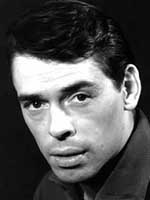
Jacques BrelGood morning. I thought we would start with this nice video by French Rescue of Jacques Brel’s “Ne Me Quitte Pas.” As they note, the English translation is meant to be accurate and not poetic. For example, they translate the refrain “Don’t leave me.” They do, however, mention (on the YouTube page) that Dieter Kaiser wrote a more poetic translation with “Don’t forsake me now.” Personally, given the music, I think it works better to translate it, “Do not leave me now.”

I don’t think the lyrics really matter. The listener gets the meaning clearly. Brel’s performance is what really does it. He’s more an actor than a singer. That’s always been the problem when his songs are performed here by pop singers. All the depth and subtlety are ripped out of them. As in this song, I can’t really imagine an American male showing this level of vulnerability. Sure, there’s a lot of faux vulnerability—always with a wink to the audience. But then, Brel was a real man, not one of these pretend American men who are too worried that someone might think they are gay to ever be genuine.

Regardless, Brel is the real deal:

Plagiarism and Competence

New York State Senator Greg BallThere seems to be a problem with Republicans and plagiarism. They have this tendency to just stick other people’s work in their speeches and bills without a thought. We saw a whole bunch of this with Rand Paul recently. And in the end, he didn’t even seem to understand what was wrong with what he had done. He made it out like other people were academic with their insistence of “footnotes.” He didn’t get the fact that saying something that was a direct quote without noting it is the definition of plagiarism.

Of course, some might bring up Joe Biden in 1988 when he plagiarizing part of a speech by British Labour Party leader Neil Kinnock. Actually, there are mitigating circumstances in this. Primarily, he normally did directly quote Kinnock, but simply forgot that time. He claimed to be exhausted and I believe him. The fact is that love him or hate him, Joe Biden is the most authentic politician around. But the main point is that Biden was embarrassed about the incident and withdrew from the race.

Recently, we got another Republican plagiarizer: New York State Senator Greg Ball. Like me, Ball was deeply affected by the documentary Blackfish. So he put together a bill to make it illegal for aquatic parks to keep killer whales in captivity. The problem is that the bill lifts a paragraph wholesale from a blog post by high school student Donald Rapier.

This is unfortunate, because while Ball is a Republican, I agree with the bill he is trying to get passed. It is also unfortunate because he decided to rip off this high school student rather than me. Of course, the biggest problem is the plagiarism. And to his credit, Ball seems to understand that plagiarism is actually wrong and something to be embarrassed about. So he fired one of his staff members, who supposedly did the plagiarism.

But the whole thing shows how writing has been devalued. I would think that everyone who works in a state (Or federal!) level office would at least be a competent writer. But instead, it looks like Republicans are forced to hire people who scraped out of English Composition with a C-. Or if they aren’t forced, they think that ideology trumps competence. As much as I admire what Senator Ball is trying to do, I think he must ultimately be held responsible. It isn’t enough to say that your staff did it when you are the one hiring people who can’t write and don’t value those who do.

John Rawls and David Foster Wallace

John RawlsOn this day in 1836, the French composer Leo Delibes was born. He composed primarily for the stage, so: opera and ballet. As you know, I’m not a great lover of later Romantic period music. But as it goes, Delibes really is one of the best. He crafted very strong contrapuntal melodies. For example, although you are probably unaware, you know “The Flower Duet” from his last opera Lakme, which is some of the most beautiful music you will ever hear. Since most of the people in my life hate opera for reasons that do not speak well for a single one of them, I offer up the following Pizzicato from his ballet Sylvia. You all probably know this from the same place we all got our original education in classical music: Looney Tunes:

The great classical guitarist Andres Segovia was born in 1893. Here he is toward the end of his life play Enrique Granados’ Danza in G:

One of the greatest writers of the 20th century David Foster Wallace was born in 1962. He is best known for the novel Infinite Jest, and interestingly, I just requested it from the library. David Foster WallaceI’ve decided to yet again make a pointless effort to write my own expansive postmodern novel with a hundred characters. The problem is not the characters. As a writer, character development is the only thing that I think I’m good at. The problem is the broader structure—making everything work together. And also the absolute overload of creative genius that comes from Wallace on the micro and macro scale. And what my limited mind can only call his breezy style. So my effort is doomed to failure, but at least I’ll get another pass at Infinite Jest. Where I think I might have more success is in mimicking Wallace’s nonfiction. This too is destined to fail. What bothers me about Wallace is that he was so great at describing life and at creating things that made life worth living, but that ultimately he was unable to deal with life. Here he is talking about how funny Kafka is:

And it is this, I think, that makes Kafka’s wit inaccessible to children whom our culture has trained to see jokes as entertainment and entertainment as reassurance. It’s not that students don’t “get” Kafka’s humor but that we’ve taught them to see humor as something you get—the same way we’ve taught them that a self is something you just have. No wonder they cannot appreciate the really central Kafka joke: that the horrific struggle to establish a human self results in a self whose humanity is inseparable from that horrific struggle. That our endless and impossible journey toward home is in fact our home. It’s hard to put into words, up at the blackboard, believe me. You can tell them that maybe it’s good they don’t “get” Kafka. You can ask them to imagine his stories as all about a kind of door. To envision us approaching and pounding on this door, increasingly hard, pounding and pounding, not just wanting admission but needing it; we don’t know what it is but we can feel it, this total desperation to enter, pounding and ramming and kicking. That, finally, the door opens… and it opens outward—we’ve been inside what we wanted all along. Das ist komisch.

Actually, it is not funny.

Other birthdays: religious reformer Shah Waliullah (1703); sculptor Goscombe John (1860); Russian painter Pyotr Konchalovsky (1876); French-language playwright Sacha Guitry (1885); English playwright Clemence Dane (1888); writer Anais Nin (1903); actor Ann Sheridan (1915); great director Sam Peckinpah (1925); humorist Erma Bombeck (1927); singer-songwriter Nina Simone (1933); destroyer of music David Geffen (71); actor Alan Rickman (68); and musician Jerry Harrison (65).

The day, however, belongs to the great political philosopher John Rawls who was born on this day in 1921. A few months ago I wrote, John Rawls and Disingenuousness. It was about his concept of universality in political legitimacy. The problem is that Rawls was a serious thinker. Now, all stripes of conservative cloak their faith-based and power-based beliefs in a patina of universality. So instead of arguing that abortion is wrong because God said so, for example, they argue that abortion is wrong because a woman is pregnant with a full citizen, even when it is just a fertilized egg without a brain. Nonetheless, it is thrilling to read Rawls, and spend time thinking about weighty moral issues instead of dealing with all the disingenuous political rhetoric that burbles from the right constantly.

Rawls is best know for his concept of the veil of ignorance. He argued that a just society would be the one you would pick if you didn’t know where you would be born into it. So, for example, no reasonable person would choose a slave society, because they might well end up a slave. Most people would choose a reasonably equitable society. To me, I think that beyond the issue of where you are born in society, you would need to consider how you were born. That would address questions such as, “How are we to treat the physically disabled.” It’s a very useful way of looking at moral questions.

Happy birthday John Rawls!

Free Will and Fun in The Incredibles

The IncrediblesLast night, I watched The Incredibles. It is a feature length animated film about a family of super heroes. Think: Fantastic Four meets Roseanne. It was written and directed by Brad Bird, and like most of his work, it is a hell of a lot of fun. The first half of the film is a parody of the super hero genre. And as such it is brilliant. The second half of the film is straight super hero genre, but still works pretty well. I think it is a mistake to think of The Incredibles as anything other than a romp. But there is a thematic schizophrenia in the film that I can’t help but discuss.

In the first half of the film, the guiding idea is that people ought to be allowed to be who they are. What happens is that Mr Incredible (voiced by Craig T Nelson) hurts a man who he saves from suicide. The man sues him and this opens the floodgates for lawsuits against the “supers” who do have a tendency to cause a lot of damage in their crime fighting activities. The government passes a law granting them all immunity, but they have to stop being super heroes. So 15 years later, we find Mr Incredible working in an insurance company under a very annoying boss (voiced by Wallace Shawn) who is also offensively short.

But as the film progresses, it stops being about the oppression of those who are different. It becomes instead about the limitations placed on the great. At one point, Edna, the fashion designer who once made the fabulous costumes for the supers, laments, “I used to design for gods!” And indeed, as I’ve written about before, the modern action genre is nothing so much as demigod mythologizing. Bruce Willis and Sylvester Stallone don’t play humans, they play gods. And this has been a problem for our society where true heroism is devalued at the expense cinematic action that would kill any real man. At least the super heroes are demigods, unlike the Johns McClane and Rambo.

So, much of the second half of the film involves Mr Incredible grousing about the fact that greatness isn’t valued. For example, in an argument about their son Dash (!) whose super power is that he runs really fast, Mr Incredible says, “People keep coming up with new ways to celebrate mediocrity, but if someone is genuinely exceptional…” And then he proposes to his wife (the humorously sexist Elastigirl, voiced by Holly Hunter), “You want to do something for Dash? Well, let him actually compete! Let him go out for sports!” By the end of the film, he gets to do just that.

This brings up a fundamental problem, however. Dash may look like a little human boy, but he isn’t. He is a super or a demigod. Having other boys run a race against him is like having them run a race against a cheetah. (Note: I believe a human would beat a cheetah in a marathon.) After the race, father says to son, “I’m proud of you.” For what?! When Dash was born, he could run a hundred times faster than the fastest man on the planet. Is Mr Incredible proud that he just happened to be born with that ability?

That gets to the issue of free will. We are, all of us, the products of our genes and our environments. We are exactly whatever we were programmed to be. Now I understand that a society needs to pretend that this is not the case in order to provide an environment in which people will make the best of their lives. But we also shouldn’t lose perspective. The fact that I’m smart and knowledgeable is not something that I should give myself credit for. It is something that I should be grateful for. And so should Dash be grateful for his ability to run really fast.

The Incredibles gets confused about this. But it doesn’t matter. It is a fun and silly movie with a lot of laughs and action. And if you take it seriously, you are doing it wrong. Because it leaves a lot of unanswered plot questions. For example: when the super heroes retired, why did the super villains retire? But no one should care—not when we get to hear Wallace Shawn and Holly Hunter yell at Craig “No one helped me when I was on food stamps and welfare” Nelson. I suspect you will be having too much fun to notice any of these things. Regardless, you have no choice; you have no free will.

Obama Stops Grand Bargain Talk

Obama CopeYesterday, the White House announced that Obama would remove Chained-CPI from his next budget. Chained-CPI is the way of raising the cost of living more slowly so that Social Security benefits would be cut over the course of a worker’s retirement. Although it is not reported as much, it would also increase the taxes of lower and middle class people. So it is a good thing that the administration is officially giving up on it.

White House spokesman Josh Earnest said, “There was a point in time when there was a little bit more optimism about the willingness of Republicans to budge on closing some tax loopholes, but over the course of the last year, they’ve refused to do that.” This was always the idea: Chained-CPI would entice the Republicans into a Grand Bargain of entitlement cuts and tax increases. Economically, this is a stupid idea. Cutting spending in a depressed economy is bad. Raising taxes in a depressed economy is bad. So other than the thoroughly repudiated idea of “expansionary austerity,” there was never a good economic reason for a Grand Bargain.

But I understand that politicians aren’t economists and often do things that make no sense in that regard. However, they ought to be smart from a political standpoint. Unfortunately, the Grand Bargain never made any political sense. A standard political compromise is where each side gives up something to get something else they want. But that doesn’t describe the Grand Bargain. It was making compromises to get something each side could deal with losing. Republican voters don’t want entitlement cuts and they really don’t want tax increases. Democratic voters don’t want tax increases and they really don’t want tax cuts.

Of course, there is a group that wants to raise taxes and cut entitlements: Washington centrists. These are the Very Serious People of legend. What makes them Serious? Being in favor of policies that no one likes! And if the policies are objectively bad for the economy, so much the better! What’s especially sad about this is that the Republican elite never really fell for this. But among the New Democrats who now control the Democratic Party, such Serious Thinking is all the vogue. This is the biggest problem with the party going forward.

Sadly, I don’t think this decision by the White House shows any growth either in terms of their political or economic thinking. Obama still pines for a Republican Party that will make deals the people hate. And he still thinks that the deficit is an important economic issue. (It is, of course, but in the opposite way he thinks.) Instead, I suspect his advisers are telling him that he’s already cut the deficit in half and it continues to go down. What’s more, it is getting hard to deny that all the cuts (especially the Sequester) are the cause of our weak recovery. But it is good that after four years of debt obsession, the White House is giving up. For now.

Richard Matheson and Andrew Bergman

Richard MathesonSorry to be gone all day. This working for money thing is very time consuming. I’m sure I would be doing a lot better if I had an actual job. But keeping clients happy is exhausting.

On this day in 1902, the great photographer Ansel Adams was born. He is best known for his nature photography. But of course, he did far more than that. In fact, his work spanned seven decades and just about any subject you can think of. Mostly, he was interested in nature, however. People especially know his work of Yosemite. I especially associate him with the Timber Cove Inn, which is one of my favorite places on earth. Like most places in California, Adams spent time there and photographed it. Unfortunately, I can’t find any of those photos online. So here’s just one of many beautiful photographs of his, “Workers Against Mt Williamson”:

Farm Workers Mt Williamson- Ansel Adams

The great film director Robert Altman was born in 1925. I don’t know quite what to make of him stylistically. To some extent, I think his brilliance was just in his willingness to do different things. So much of his work was simply playing with genres. That’s particularly true in things like The Long Goodbye and Gosford Park. But he also made films that are just unique like MASH and Nashville and 3 Women. But above all, he made one of my very favorite films, McCabe & Mrs Miller. This following scene from it provides a good idea of the moral universe of the film. The cowboy is probably the most likable character in the whole thing. But don’t get the wrong idea: it isn’t a world where evil triumphs. It just isn’t a world where anything especially triumphs. Everyone just muddles long.

The film writer-director Andrew Bergman is 69 today. I really admire his work. He is one of the greatest comedy writers ever. His script for The In-Laws is the funniest thing I’ve ever seen. Andrew BergmanHe is also the true genius behind Blazing Saddles, although as usual, Mel Brooks has done everything he can to minimize the work of his betters. What has always amazed me about Bergman’s films (The Freshman, Soapdish, Striptease) is that they are funny all the way through. A big problem with most comedies is that they stop being funny in the third act. That is never the case with Bergman’s scripts and when he is also directing the comedy continues to the end like a freight train. It’s very possible I should have given the day to him. Unfortunately, like a lot of filmmakers I admire, he doesn’t make films anymore. Here is one of many funny scenes from The In-Laws:

Other birthday: Dutch Golden Age painter Jan de Baen (1633); Classical composer Adalbert Gyrowetz (1763); physicist Ludwig Boltzmann (1844); playwright Russel Crouse (1893); psychologist Elizabeth Holloway Marston (1893); architect Louis Kahn (1901); choreographer Gillian Lynne (88); actor Sidney Poitier (87); singer Nancy Wilson (77); director Mike Leigh (71); Patty Hearst (60); MST3K creator Joel Hodgson (54); basketball player Charles Barkley (51); actor French Stewart (50); model Cindy Crawford (48); musician Kurt Cobain (1967); and actor Lili Taylor (47).

The day, however, belongs to the great writer Richard Matheson who was born on this day in 1926. He is best known for having written I Am Legend, which was the basis for four feature films, including the film that terrified me as a child, The Last Man on Earth. But what is remarkable is just how much Matheson wrote. So much of the great stuff from The Twilight Zone was written by him, including the classic “Nightmare at 20,000 Feet.” He wrote the Star Trek episode “The Enemy Within” where Kirk is turned into his good and evil parts. He wrote a number of Roger Corman’s Edgar Allan Poe films, as well as the similar (and wonderful) The Comedy of Terrors. And he wrote the short story and screenplay for Steven Spielberg’s television movie Duel. He also wrote roughly 30 novels and countless short stories. He was truly an amazing writer.

Happy birthday Richard Matheson!

The Rich Are the True Class Warriors

Your VoteI’ve written a lot around here about the fact that we do have more or less a class war. But it isn’t like conservatives would have you believe. It isn’t that the poor are jealous of the rich. It is that the rich just hate the poor. As I show in It’s the Poor, Stupid, in general, the poor vote liberal and rich vote conservative. That’s just everyone voting their own self-interest. How can I say that the rich hate the poor?

Yesterday, Paul Waldman wrote a very interesting article at The American Prospect, Why Can’t You Miserable Commoners Be Happier With Your Lot? In it, he quotes a study by Page, Bartels, and Seawright, Democracy and the Policy Preferences of Wealthy Americans (pdf). Unlike pretty much all polls that at most look at people in the broad category of making “over $100,000 per year,” this study looks at the truly rich. And it finds that the rich are downright mean (my word, not theirs).

The best example is how people responded the statement, “The government in Washington ought to see to it that everyone who wants to work can find a job.” The general public was in favor of this with 68%. But the rich? Only 19% of them were in favor of this. We’re not talking about giving a handout here. We are talking about government policy to allow people to earn a living.

The only justification I can think of for this is that the rich believe that if the government helps in this way, it will raise wages. The poor won’t be as dependent upon the rich and thus the rich will lose money and power. That’s a vile attitude, but it is also stupid. The economics are not that simple. It’s funny that the rich believe that “a rising tide lifts all boats” when it comes to enriching the rich. But when it comes to enriching the poor (where it’s more true), they don’t believe it.

Another interesting aspect of the report is spending priorities. These range from -100 (meaning they really want to cut them) to +100 (meaning they really want to fund them). The general public gave education funding +50. The rich still support it, but not as strongly: +31. Never believe a conservative who tells you they support equality of opportunity. Similarly, they are against Social Security with a score of -33 compared to a general public score of +46.

This is sad but not surprising, because it’s human nature. And given this, there are obvious policy implications. In the United States, we have a democracy only in a theoretical sense. Our elected officials listen almost exclusively to the rich. It’s even worse than that. There is a widely held belief that the rich are disinterested truth-tellers while the poor are self-interested. This is, of course, self-serving. It provides our leaders with the justification for ignoring the thoughts and needs of the vast majority of the country.

There is at least one thing we can all do: vote. Even the problems with the Democratic Party’s move to the right over the last four decades can be reversed if the poor start voting as much as the rich. Voting is the one aspect of democracy that we still have control over.

Afterword

I do wonder, though. If the poor really did start voting and the country started being a real democracy, would the rich find a way to stop this? I’m not just talking voter ID laws. Look at Michigan with their anti-democratic state-imposed city “managers.” In general, you can count on the elites not believing in democracy and we see them more and more willing to admit it publicly.

Circling the Sun With Copernicus

Nicolaus CopernicusOn this day in 1924, the chess Grandmaster David Bronstein was born. In 1951, he made it to the World Chess Championship to challenge Mikhail Botvinnik. And over the course of 24 games, they ended tied with 12 points each—five wins each, and 14 draws. So Botvinnik retained the championship. Garry Kasparov claims that based upon the quality of the play, Bornstein should have won. He was an extremely innovative player and one of the greatest chess writers. And shockingly, he won a major tournament at the age of 70.

John Frankenheimer was born in 1930. He was a great director whose films included a string of three in the early 1960s: Birdman of Alcatraz, The Manchurian Candidate, and Seven Days in May. He is best known for thrillers, such as Black Sunday. And then there is Ronin. I’m very fond of it: a very intelligent action film. It had some of the best car chases I had ever seen. This included a chase going the wrong way down a freeway. And then, I started seeing that in just about every movie. I’m pretty sure Ronin was the one that started it. Now, I hate to see it. But I still think this is pretty cool. Those other directors are amateurs.

The singer and songwriter Smokey Robinson is 74 today. I don’t have a lot to say other than he really is one of the greatest songwriters ever. Here he is doing “Tears of a Clown”:

Other birthdays: playwright David Garrick (1717); physical chemist Svante Arrhenius (1859); sculptor Constantin Brancusi (1876); expressionist painter Gabriele Munter (1877); actor Merle Oberon (1911); actor Lee Marvin (1924); game designer Danielle Bunten Berry (1949); novelist Amy Tan (62); fine actor Jeff Daniels (59); novelist Helen Fielding (56); actor Justine Bateman (48); and another really good actor Benicio del Toro (47).

The day, however, belongs to Nicolaus Copernicus who was born on this day in 1473. He’s the guy who put together the first model of the solar system with the sun in the middle. That was a brilliant insight. I remember a story about student talking to his teacher, “Those primitive people were so stupid to think the sun goes around the earth.” And the teacher replied, “Yes, just imagine how it would have looked if that were true!” The point is that it would look the same. There is nothing obvious about thinking the earth goes around the sun. Indeed, did you see this article, Poll: 26 Percent in US Do Not Know Earth Goes Around Sun. And the funny thing? “[Americans] did better than EU residents on the question about whether Earth moves around the sun.” Go figure.

There’s an interesting thing about Copernicus’ model, though. It wasn’t very successful. He had a brilliant insight, but it still wasn’t right. He had planets moving around the sun in circles. Well, they don’t move in circles. The world had to wait almost a hundred years for Johannes Kepler’s insight that the planets moved in ellipses. (Yes, I know that circles are ellipses!) So all those old models with the earth at the center of the universe might have been complicated, but they were still better at predicting where things would be in the sky. So old Copernicus made a necessary (And difficult!) contribution to knowledge, but all alone, it wasn’t sufficient to improve the practical science.

Also: Copernicus was old. And wise. He waited until he was dying to publish his book. No torture for him! That’s my kind of guy.

Happy birthday Nicolaus Copernicus!

Liberalism in American and at FC

Obama NopeA couple of months ago, Milt Shook wrote a good blog post, Of Course Obama’s Progressive! Give Him More Democrats, See What Happens. I have many problems with Obama, but he is basically right. Any politician has to be seen in the context of the political environment that he is part of. There is an unfortunate tendency among liberals to look back fondly on Reagan and Nixon. And indeed, on domestic issues, Nixon was pretty good. What I think people forget is that these men existed in a political environment. Nixon could not act like Ted Cruz does now. What’s more, if Nixon were alive and in politics today, he would be as extreme as any of them. Ditto (even more so) for Reagan.

However, Obama is the result of a 50 year assault on the political Overton Window. Republicans do not need to win elections; they have already pushed the political battle ground so far to the right that what now passes as liberal, is at best what passed as center or even center right a few decades ago.

Recently, I asked some of my readers to take the Political Compass test. The results were highly skewed, because my writing doesn’t exactly appeal to conservatives. You can see them all as black dots in the lower left hand corner of the graph:

Political Compass Results

My results were -7.75 on the left-right scale and -7.23 on the authoritarian-libertarian scale: (-7.75,-7.23). The average of all of us was (-7.10,-7.56) with 90% confidence limits of (2.73,0.95). As you can see in the graph, the website owners have tried to assess the scores of famous people. Some of these are about right. In particular, I think Francois Hollande is correct: very slightly liberal, very slightly libertarian. The Dalai Lama, however, is way off—he ought to be down with all the Frankly Curious black dots.

Mitt Romney - No We Can'tI was quite interested in where they put the last presidential race. Obama got a score of (+7,+6). Romney got a score of (+8.5,+7.5). Overall, I think these scores are a little extreme. I don’t actually think that Romney is that bad, although that isn’t far off from where he campaigned. I also think I’d give Obama something more along the lines of (+3,+2).

I like Obama and in general, he is leading the country better than any president during my lifetime. But he is constrained by the neoliberal ideology of the New Democratic movement that he is very much a part of. The Republican Party may have been taken over by the Tea Party base. But the Democratic Party has been taken over by the New Democrats. They aren’t all bad, but they believe in a lot of economic policy that is just wrong. Still, I support them because they continue to believe in facts and they are at base practical.

The bottom line is that we need to destroy the Republican Party. Then we can fight about liberalism. I believe that the modern Democratic Party would make an excellent set of parties. One liberal (the New Deal/Great Society part that I am proud to include myself in) and one conservative (the New Democrats with their “free” trade agreements and ending welfare as we know it).

And here at the People Republic of Frankly Curious, well, you all know what you are!