About Frank Moraes

Frank Moraes is a freelance writer and editor online and in print. He is educated as a scientist with a PhD in Atmospheric Physics. He has worked in climate science, remote sensing, throughout the computer industry, and as a college physics instructor. Find out more at About Frank Moraes.

Liberals ♥ Democracy!

I Love Democracy

Jonathan Bernstein has written a really interesting article, Democrats’ Electoral College Edge. Who’d a thunk it? I’ve generally thought of the Electoral College as being something that benefited Republicans because of the tiny red states that get more than their fair share of electoral oomph. But that is no longer true. Political scientist Ben Highton looked at it and indeed, the Electoral College is good for the Democrats. Very good.

Now what does this mean? If the popular vote comes out evenly divided, the Democrats would win the presidency 80% of the time. And the reason is very interesting. Blue states are getting bluer, so that pushes against Democrats getting an advantage from the Electoral College. But this is more than compensated for by the fact that Red states are getting redder at an even faster pace. To give you an example, the most heavily Obama-voting states were Hawaii and Vermont with 70.55% and 66.57% of the vote. Compare this to the most heavily Romney-voting states of Utah and Wyoming with 72.79% and 68.64%. Admittedly, Utah was hotter for Romney because he was a Mormon, but if you look at 2008, Utah’s still number three for the Republican.

What I find fascinating about this is how what is happening to the Republicans on the federal level has long been happening to Democrats on the state level. While it’s true that gerrymandering greatly harmed the Democratic Party after 2010, at least as big a problem is that Democrats are clustered in urban areas. So even when congressional districts are reasonably drawn, there is a tendency for the Democratic districts to be very Democratic. Now that same thing is happening on the federal level because increasingly, the hatred of the conservative movement is relegated to little states no one especially wants to visit: Oklahoma, Idaho, West Virginia, Arkansas, Alabama, Kentucky, Nebraska, Kansas. (For the record: I know there are a lot of fine people in those states.)

But Jonathan Bernstein said something else that I take issue with, “If these results hold up through 2016, expect the parties to begin flipping their positions on the Electoral College, perhaps very rapidly.” Despite what readers may think, I don’t consider myself a partisan. Yes, I am mostly against everything that the Republicans have to offer. But I’m more than willing to admit when someone like Rick Santorum has some reasonable things to say about economic policy. And although I am a registered Democrat, I largely disagree with the economic policy of that party. Even more than most so called independents, I go my own way. And on this issue, I value democracy far more than I value an advantage to the Democratic Party.

Where I really disagree with Bernstein is in his false equivalence. Yes, I’m sure that the Republicans will rush to the realization that the Electoral College is a Very Bad Thing™(pending). But I suspect that Democrats—other than the hyper-partisans—will keep thinking that the Electoral College is a very bad thing. Because liberals actually do believe in democracy. But I will go this far in Bernstein’s direction: it won’t be high on Democrats’ list of priorities.

I find the whole thing fascinating and I am glad that political scientists can look at it. But as much as I think democracy is an incredibly flawed system, I also think it is the best system yet devised for creating governments. I’m pleased that right now it greatly favors the less terrible party. But I am as much against it as ever. I can’t put it any more clearly than the bumper sticker above: I ♥ Democracy!

Afterword

If you haven’t seen it, you should watch the great CGP Grey’s video, “How the Electoral College Works”:

And then watch “The Trouble with the Electoral College”:

Thomas Friedman Is Wrong on Ukraine

Thomas Friedman - Artist's ConceptionYesterday, Thomas Friedman wrote another of his grand columns, Go Big, Get Crazy. It’s one where you can imagine him delivering it from a podium with big hand gestures that proclaim, “We will expand this great system of ours and let freedom ring…” On Mars or something. Actually, Friedman’s idea this week is for America to become energy independent to spite Putin. Instead of his old “Suck on this!” it is more “Suck on the ground to get them hydrocarbons!”

But Friedman wants to do it in an environmentally friendly way. But he’s no fool. He realizes that compromises must be made! And just like the “third way” moderate he is, all he thinks it will take is a little leadership™ on the part of Obama:

Obama should summon the congressional leadership to Camp David and put his own plan on the table: Offer the Republicans the Keystone XL pipeline, expanded oil drilling and fracking (but only at the highest environmental standards) and, in return, demand a revenue-neutral carbon tax, a national renewable portfolio standard that would require every utility in America to gradually introduce more renewable power, and a national California-level home building code for energy efficiency. I would also toss in incentives for expanding the share of nuclear power in our energy mix.

I think I have a new name for the man: Rip Van Friedman. Because he sounds like he’s been asleep for six years. Obama is not a Republican so there will be no compromise by the opposition. Remember the budget deal where John Boehner got 98% of what he wanted? That was the deal he turned down. This deal would be one that was overwhelmingly on the Democratic side. I don’t think there is a major environmentalist around who wouldn’t exchange Keystone for a carbon tax. The kind of deal that the Republicans would take would be Keystone in exchange for maybe some day considering a debate about the possibility that maybe we might want to think about global warming after Manhattan is under water.

Dean Baker was quick to hit back on the ridiculous economics in Friedman’s article, Thomas Friedman’s Big Deal on Fracking and Global Warming:

The same applies to his proposal for a carbon tax coupled with approving the XL pipeline. The tar sands oil that would go through the pipeline would be especially hard hit by a carbon tax. That would likely make it unprofitable, a point that Friedman himself notes. For this reason the industry is unlikely to see the XL pipeline as much of quid pro quo for a carbon tax. In short, it doesn’t seem like he has much of the basis for a deal here.

But the whole article is predicated on the idea that we must do something about Ukraine. Now, I don’t like what’s happening in Ukraine either. But it is a whole lot more justified than the United States’ invasion of Iraq. And Thomas Friedman was not only a big supporter of starting that war, he was a big supporter of it long after things had gone terribly wrong. I just don’t see how he is in any position to complain about Russia at this point.

After the Ukrainian revolution, Thomas Friedman was on the Sunday talk shows to gush about how great it all was. He said, “The West didn’t do this. The United States didn’t do this. The EU didn’t do this. The Ukrainian people did this.” Not really. Patrick Smith explained in Slate at the time:

Every one of the above sentences reflects what we are supposed to think we have just witnessed in Ukraine. And every one is false. The “revolution” in Ukraine was orchestrated, not bottom up; the West by way of the Europeans and Americans did the orchestrating, and the Ukrainian people—that portion who favor a Westward tilt—were the instruments, not the composers.

It’s interesting that Mr Globalization is also Mr Nationalism. But it isn’t surprising. That’s the thesis of Ha-Joon Chang’s Bad Samaritans (my last discussion of it: Bad Samaritans). The whole free trade business is really about enriching the advanced countries and keeping down the developing countries. But even apart from that, Friedman should shut up. He has no credibility to complain about Russia doing something that is more justified than policies he’s recent led cheers for.

Republicans Just Don’t Want Reform

Stacey CampfieldJonathan Chait wrote an excellent article this morning, Springtime for Obamacare. In it, he goes through a number of arguments that conservatives have made about Obamacare and discusses how recent events have refuted them. I recommend reading the whole article, especially because I’m only going to talk about one small aspect of it.

He used a quote by Tennessee Republican State Senator Stacey Campfield to make a general point. Campfield recently argued that Obamacare is like the Holocaust, because it was the government deciding who lives and who dies. It’s actually a hoot if you brush aside the fact that it was said by a man with a lot of political power. I mean, you need extremely twisted logic to come to that conclusion. You have to assume, for example, that providing more healthcare will actually kill people because it will make the care so much worse. But I suspect that Campfield also thinks that huge numbers of the “right” kind of people don’t have health insurance because they’ve been priced out of the market by the government’s paying for the “wrong” kind of people.

Jonathan ChaitChait’s point is that wackos like Campfield are actually in an easier position because they make no factual claims to be refuted. After all, they aren’t saying that Obamacare will lead to death. They are simply claiming that the very idea of Obamacare is deciding who lives and dies. No proof needed. But here’s the thing: those who present actual claims and those who do not are against Obamacare for the same reason. They just don’t want the old system changed.

This fact is clear enough in one of the standard arguments against Obamacare: “Health insurance doesn’t make you healthy.” This was a big deal last year when a small study out of Oregon didn’t find health improvements in a couple of categories for people who had health insurance. Of course, since then, a much larger study out of Massachusetts has found that increased health insurance coverage actually saves lives. So that argument ought to be gone, but of course it will continue on because facts don’t seem to matter in these cases.

What’s interesting about this argument is the subtext. It argues that health insurance is not useful. And if its not useful, it isn’t worth helping people get it. That’s what I’ve always said about the conservative position on healthcare reform: they don’t want to do anything. Obamacare is based upon a private market system developed by the Heritage Foundation. But it was never meant to be law; it was mean simply as protection against something like a single-payer system. This is actually a concept that Chait himself pioneered, The Heritage Uncertainty Principle (HUP): as soon as a Republican healthcare idea becomes politically viable, it disappears. He noted this early example of it:

In 1993, Republican minority leader Bob Dole supported a version of it to demonstrate that Republicans did not endorse the status quo, until Democrats, facing the demise of their own plan, tried to bring up Dole’s plan, at which point Dole renounced his own plan.

The principle that lies beneath the HUP is that the Republicans absolutely are for the healthcare status quo. Yes, they are for certain changes to the healthcare system, but they are for them for other reasons. The best example of this is tort “reform,” which is just a way of giving more power to powerful at the expense of the powerless.

But in this way, regardless of the argument—”Premiums will go sky high!” or “Welcome to the Holocaust!”—the conservatives are disingenuous. What they want is to do nothing at all that will upset the power elites. But they can’t say that. So they come up with ridiculous rationalizations. But at least the Nazi comparisons have the advantage of being transparently bogus.

Johannes Brahms

Johannes BrahmsOn this day in 1833, the great German composer Johannes Brahms was born. As you may know, I’m not a big fan of Romantic music. But that’s mostly because the period brought out the worst in mediocre composers. Pretty much any Classical composer could grind out an acceptable piece of music. But that just isn’t so in the Romantic period. I blame Beethoven who inspired many people who shouldn’t have been inspired. Although in a fundamental sense Beethoven was the greatest composer of the period (although I generally think of him as transitional), I prefer to listen to Brahms.

Brahms was a protege of Robert Schumann, who was probably the biggest influence on the young composer. They became friends when Brahms was only 20 years old. This may be why Brahms was considered a conservative composer, at least compared to the other dominant composers of the time. But this gets to my general problem with Romantic music. The excesses of the period are well on display in Wagner and Liszt. What’s more, I find Brahms constantly innovative, just not in such a flashy way. His Symphony No 1 is a great example of restrained brilliance. Not that he couldn’t be more ostentatious as he is in the Violin Concerto in D.

But of the most interest to modern listeners is probably Brahms’ work with folk tunes. That’s especially true of the Hungarian Dances. And since I know from experience that people will not listen to hour long symphonies or concertos, here is the most famous of those dances, No 5 in F♯ Minor:

Happy birthday Johannes Brahms!

Gun (and Much Else) Extremist Larry Pratt

Larry PrattRemember last night when I wrote, Repealing Smart Gun Law Won’t Change Attitudes? It was about this New Jersey law that says if any Smart Gun is sold in the United States, all gun sales in that state must be Smart Guns within three years. So Democrats in New Jersey are offering to repeal the law. I said that it wouldn’t matter, because the same people will just come up with other reasons for being against them. Plus I said they would claim that New Jersey could just enact another such law.

Well, All In had Larry Pratt of Gun Owners of America on his show tonight. Hayes asked Pratt if his organization would back down if the law was repealed. Pratt spent most of his time talking around the issue but in the end, his answer was no. And he ended the segment by saying that the legislators were saying, “Do what I say or else.” Along with that, he made a gun with his hand and pretended to shoot the camera. It was both creepy and infantile. Pratt is an excellent example of why we can’t have a sane or honest discussion about guns in his country.

The main part of what Larry Pratt talked about was how Smart Guns only work 80% of the time. For some reason, he thinks that this justifies stopping anyone from selling them. Or at least that’s what he implied. It’s outrageous to think that a gun rights group is really protecting consumers, like a gun-only Consumer Reports. But what about that 80% claim. The All In Twitter feed sent out a link to the study that Pratt is pushing. It is eleven years old (pdf) and it is not about the Smart Gun technology at all; it’s about fingerprint technology. The Smart Guns are not based on fingerprint technology.

Of course, this all makes Larry Pratt a perfect conservative! Once you get a talking point, regardless of how old it is and regardless of the fact that it doesn’t relate to the issue at hand: repeat it! Over and over. I went back and watched the segment. Pratt was on for almost exactly two and a half minutes. He mentioned the “20% failure” point three times, using the vast majority of his time to talk about it.

This isn’t surprising though. Larry Pratt is not only involved with Gun Owners of America. He’s also founded English First and is at least involved with US Border Control and Committee to Protect the Family. So basically, he just hates everyone. Take a spoiled and bullying kindergartener and you pretty much have Larry Pratt. He is emblematic of a certain kind of conservative who think that the government has no right to interfere with gun ownership but thinks that the government should have cameras in every bedroom in America to make sure that people only have the right kind of sex.

Oh, and did I mention that Pratt at least pals around with racists? Here’s what the Southern Poverty Law Center had to say about him 13 years ago:

Larry Pratt, a gun rights absolutist whose Gun Owners of America (GOA) has been described as “eight lanes to the right” of the National Rifle Association, may well be the person who brought the concept of citizen militias to the radical right.

In 1990, Pratt wrote a book, Armed People Victorious, based on his study of “citizen defense patrols” used in Guatemala and the Philippines against Communist rebels—patrols that came to be known as death squads for their murderous brutality.

Picturing these groups in rosy terms, Pratt advocated similar militias in the United States—an idea that finally caught on when he was invited for a meeting of 160 extremists, including many famous white supremacists, in 1992.

It was at that meeting, hosted in Colorado by white supremacist minister Pete Peters, that the contours of the militia movement were laid out.

Pratt, whose GOA has grown since its 1975 founding to some 150,000 members today, hit the headlines in a big way when his associations with Peters and other professional racists were revealed, convincing arch-conservative Pat Buchanan to eject him as a national co-chair of Buchanan’s 1996 presidential campaign.

The same year, it emerged that Pratt was a contributing editor to a periodical of the anti-Semitic United Sovereigns of America, and that his GOA had donated money to a white supremacist attorney’s group.

Pratt is today close to the extremist Constitution Party and its radical theology.

What a sweetheart! And he is one of the people driving our conversation about guns in this country.

Art Laffer’s Toxic Prescription

Art LefferJon Perr wrote a great article at his website Perrspectives, The Laffer Curve Brings Red Ink to Red States. It seems that over the past few years, Art Laffer has been going around the red states and selling the usual supply side economic nonsense. If you were around in the 1980s, you are very familiar with it, “You will get more tax revenue if you cut taxes!” The idea is that cutting taxes will cause the economy to grow and so more taxes will come in. It sounds too good to be true because it is.

Let’s talk a bit about the Laffer curve. It isn’t actually a concept of Laffer’s, it’s just that he’s the guy who made it popular among Republicans in the 1970s. The idea is that if taxes are too high, people will not work as much or will find ways to avoid paying taxes. For example, a 100% tax rate would produce no tax revenue because there would be no incentive to work. More or less. But a photo in Perr’s article that looks like it is from the 1970s really struct me. You can go over and look at it, but here is my standard Laffer Curve graph and it shows the same thing:

Laffer Curve

There is no reason to think the Laffer Curve would be symmetrical. Indeed, when real economists (and I have a hard time putting Laffer in that category) deal with it, they don’t make it symmetrical. In fact, an article in The New Palgrave Dictionary of Economics shows that estimates of the rate are around 70%. So why did Laffer present his curve as being symmetrical?

I think it’s the timing. In the 1970s, when he was first using the Laffer Curve to argue for lowering taxes, the top marginal tax rate was 70%. And this default Laffer Curve says that the optimal rate should be 50%. And what was the first top marginal tax rate that Reagan got? Fifty percent! The Laffer Curve was and always will be a propaganda device. As Laffer admits, the idea was not new to him. But the reason his name was put on it was because he proposed the idea that you could lower tax rates (the top one especially) and increase tax revenues. But that just wasn’t true at the tax rates we had then (which are much higher than they are now).

The result: tax revenues went down. But somehow this fact is not known by conservatives. That, or they just don’t care:

What Perr noted was that after Laffer did his tour, many red states followed his lead and enacted the same failed policies the Republicans have been pushing for four decades. And the results have been predictable. He discussed New Jersey and especially Kansas. But the truth is that this has been going on in a lot of red states, although generally with less catastrophic consequences. But this is why, for example, Scott Walker and his Republican legislature cut school funding while giving businesses tax breaks.[1] That sounds loony to liberals but it makes perfect sense in the world of Laffer propaganda.

Perr ended the article with a 2012 survey of economists that didn’t find anyone who thought that a cut in the federal tax rates would increase economic growth over a five year period. There’s a reason for that. In a depressed economy, forcing the federal government to borrow less will not make more money available to the private sector to borrow and invest. As I point out all the time, companies are sitting on piles of money not knowing what to do with it. But Laffer wasn’t going around telling red states to cut their top taxes because it would be good for the economy. I’m not even sure how that would happen at the state level. Laffer was doing it because he’s looking out for the interests of the rich. Check out this graph from Kansas on their tax cut:

Kansas Tax Cut

This is modern conservatism. I don’t think Art Laffer especially wants to make the lives of the poor worse—he’s just looking out for the rich. But the Kansas legislature was certainly trying to send a message with this distribution.


[1] Politifact, in their typical fashion rated this claim false. But if you read the text, you will see that it is actually true. On the issue of school funding cuts, they say the original claim was twice what Jennifer Shilling said. So the schools were not cut by $1.6 billion but by $800 million. In other words: Scott Walker cut school funding by a whole bunch. Politifact gave that a “mostly false” rating. On the issue of tax breaks, Politifact gets into a semantic debate about whether tax breaks actually cost tax payers any money. They give that claim a rating of “half true.” This is why everyone thinks Politifact is a joke.

Good Obamacare News Is No News to Conservatives

Jonathan CohnI may have to subscribe to New Republic just because of Jonathan Cohn. His coverage of Obamacare has been great from the very beginning. If you are going to get your news about the law from one place, he’s the source to go with. He’s insightful of course, but more important, he’s accurate. And that’s something we don’t get much when it comes to coverage of Obamacare.

Yesterday, he wrote, Gallup: Uninsured Rate Is Lowest We’ve Ever Recorded. Of course, Gallup has only been polling about this since early 2008. But that was when the economy was doing pretty well. That was when the unemployment rate was right around 5.0 percent. So that’s when we were somewhere close to full employment. Yet at that time, our supposedly great employer-based health insurance system still left almost 15% of our citizens without coverage.

This number climbed over the following five and half years. I assume this is largely because even as new jobs were created in place of old jobs, they were mostly worse jobs without health benefits. Cohn cautioned us that the numbers are noisy. But the trend is unmistakable. The uninsured rate rose steadily until Obamacare was fully in effect and then the numbers plummeted to a full percentage point below the lowest point they’ve ever been:

Gallup Poll: Uninsured Adults

It is a mark of Cohn’s seriousness that he noted that being insured is not the purpose of the new healthcare law. The purpose is to allow people to more easily get healthcare and to avoid medical bankruptcy. So the uninsured rate coming down is a good sign but it doesn’t mean anything on its own. But here’s the thing: Republicans have long been fans of coverage alone. That’s why they’ve always pushed high deductible “catastrophic” plans. And that’s not even to mention some of their other favorite policies, like purchasing insurance across state lines that would set up a system where most people got insurance in name only. So they ought to thrilled that the uninsured rate is going down. Right? Right?

Today, Cohn wrote, See How Right-Wing Media “Covered” Obamacare’s Big News Day. Not only is the uninsured rate down, but a study based upon the Massachusetts’ plan that Obamacare is based on shows that the increased access to healthcare is, in fact, saving lives. Great news! The reaction:

The news got lots of attention from the mainstream media and from health-care policy analysts. But on the right? Crickets…

The only Obamacare news that readers of [the Weekly Standard and the National Review] have gotten in the last 24 hours is about public opinion polls, which suggest that the health care law remains unpopular as ever, and reports that Oregon officials are facing a federal investigation into whether the state’s botched website was a result of corruption rather than incompetence. These are perfectly newsworthy stories and, yes, they reflect poorly on the health-care law. But are stories about familiar public perceptions and one state’s foibles really more important than signs that many more people are getting health insurance—and that, as a result, thousands of lives are probably being saved?

This is the very core of why conservatives are generally so ill-informed about what’s going on in the world. Major stories are simply ignored. And no, this is not the same as it is on the left:

This is not how it’s supposed to be done, even for opinion journalists. Those of us who support the law are not perfect, but I’d like to think we grappled with the bad news when it happened—whether it was website problems or plan cancellations. Last year, when a similar study about the effects of health-care reform weakened the case for making insurance more available, liberals spent lots of time writing about it.

And that’s why Cohn, and liberal writers in a general sense, are worth reading. They aren’t going to hide information from you. It’s good news for Obamacare and thus good news for the nation. But because the Republicans are not in power, they see good news for America as bad news. And they don’t report bad news to the true believers who read them.

Afterword

I wonder about this behavior on the part of conservatives. With Obamacare, they can kind of get away with it because Obamacare will triumph slowly. But the same thing happened during the 2012 presidential election where much of the conservative movement was truly shocked that Obama won re-election. The news sources must have known that a fall was coming. And after the conservative base was so badly informed, it amazes me that they didn’t turn on those news sources. But I guess if Dean Chambers is still “unskewing” reality, there must be something deeply delusional about conservatives.

On Being Better Than Others

Carol GaitherIn a very real sense, the ONION is “America’s Finest News Source.” There is more truth to be found in it than in most newspapers. I felt that especially strongly yesterday when I read, Woman a Leading Authority On What Shouldn’t Be in Poor People’s Grocery Carts. The article is about Carol Gaither, a woman who is very critical of how the poor are living their lives. If they would just live as she does, their lives would be as great as her’s. (Yes, I know she isn’t an actual person!)
Broadly speaking, Gaither is all of us. We tend to think we have the answers to the correct way for everyone to live. Of course, that would mean the whole world would be like us and that would be (1) very boring and (2) a total catastrophe, regardless of how wonderful anyone may be. Personally, I try to understand that the focus of my life is not the focus of others’ lives. This is perhaps a bit easier for me than most people because I’m pretty idiocycratic so society has a habit of rapping me on the head about how out of it I actually am.

It reminds me of a segment on The Colbert Report last week, “Watters’ World.” It made fun of the videos that Jesse Watters does for The Factor, where he goes around and interviews people and finds that they are ignorant of this or that political matter. It’s very much like Jay Leno’s thing, but it isn’t done for humor; it’s done for outrage. It is also highly deceptive. Obviously, the vast majority of the people, who are reasonably knowledgeable, don’t get put on the segment.

But I think it’s wrong to feel above the people who are ignorant about politics. I’m ignorant of things that they think everyone should know. The girls in the segment were Miley Cyrus fans. I know the name, but I wouldn’t recognize a picture of her. (When I went to check the spelling of her name, I saw a picture and I was surprised she was a blond.) Now, I think the things I know about are more important—who doesn’t? But that doesn’t mean that in an absolute sense it is more important to know who John Kerry is than who Katy Perry is. As it is, I suspect my impact on what Kerry does is less than the girls’ impact on what Perry does.

It seems that there are two ways that people develop as they get older. They become more certain about their world views or less certain. Carol Gaither in the Onion article is one who has become more certain. But I think such constant prattling about how people ought to live does not come from a conviction that one knows how the world ought to be run. I suspect it is all about trying to grab onto a little power in a society in which very few people have power even over basic aspects of their lives.

None of this is going to stop me from ranting about all the wrongs I see in the world. Along with my constantly lowered belief that I know what’s really going on in the world comes a greater acceptance of who I am. Regardless, this is about communication. My opinions can and do change over time. If only everyone were more like me, the world would be fine!

Touch of Welles

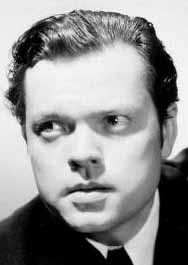
Orson WellesThe great filmmaker Orson Welles was born on this day back in 1915. Yes, I gave him the day last year but my only other choice was Sigmund Freud who I am deeply divided about. Of course, in some ways I’m divided about Welles too. This is why I think of him more and more as a filmmaking innovator. He was always—to the very end—looking for new and better ways to tell stories. So it is probably better to think of all his films as experiments.

A constant complaint about Welles is that he left a lot of films unfinished. That strikes me as a very unfair criticism. He left unfinished films because of the way his films were made. Since they were mostly self-financed and made over time, he left unfinished work in the same way that most writers leave unfinished work. I think that’s a testament to him. We should applaud it. What’s more surprising is that Welles managed to finish as many films as he did.

And look at the films where he had major Hollywood support. They include three of the finest films ever made: Citizen Kane, The Magnificent Ambersons, and Touch of Evil. And you could probably add The Lady from Shanghai to that, and that is with the mangling of the film by Harry Cohn.

But it’s really his independent films that I most love. It’s interesting how critics of the time had mostly just written off Welles. When his filmed version of Macbeth came out, everyone said it was all wrong and proclaimed that Laurence Olivier’s Hamlet was the way they ought to do Shakespeare on film. Well, Macbeth isn’t a great film. But I still find it more compelling than Hamlet, which I’ve always found too reverential. And Macbeth led to another great film five years later: Othello. Regardless of what the critics said at the time, Othello showed how Shakespeare would be done on screen. The film is still amazingly powerful.

This really was the high point of Welles’ career. After Othello came: Mr. Arkadin, Touch of Evil, The Trial, and Chimes at Midnight. The first and third of these are especially unrated. I kind of understand that with regard to Mr. Arkadin, because it isn’t all that polished and most people would rather have polished crap than rough brilliance. But I don’t understand why people are somewhat cool to The Trial. It’s a perfect film. But maybe the problem isn’t Welles but rather Kafka.

In the last years when Welles was not able to get much released, he created what is a whole new kind of film, F for Fake. I think of it as a cinematic essay. It’s just great. I watch it at least once per year.

Here is a nice montage of his major films (strangely with the theme from The Third Man in the background):

Happy birthday Orson Welles!

Repealing Smart Gun Law Won’t Change Attitudes

Smart GunThree words: it won’t matter.

Chris Hayes did a great sequence on All In about Smart Guns. These are the guns that only allow authorized people to use them. This is done with a little wristwatch that is worn on the same arm as you shoot with. This is necessary because the “watch” much be within ten inches of the gun. This is a big deal because hundreds of kids are accidentally shot and killed each year. It would also make stolen guns much less useful. So it’s a win-win.

But of course, there are those who don’t like it. Some claim that the system is not perfect and it might not shoot when you need it. This is a totally ridiculous complaint. The same can be said for any gun. Things go wrong with guns. They jam, for example. So this complaint is just from people who are against any advancement.

But as Hayes points out, there is actually a substantive reason that the gun rights crowd is against these guns. New Jersey has a law that says that if Smart Guns go on sale anywhere in the United States, the gun dealers in New Jersey must convert their inventories to Smart Guns within three years. Outside of gun rights, that strikes me as an onerous regulation. In three years, it is unlikely that many manufactures will be making Smart Guns—so it would greatly limit consumer choice. Also: the Smart Guns are very expensive and I doubt that will be much changed in three years.

Hayes says that he would be in favor of repealing the law to get Smart Guns on the market. And he had a New Jersey legislator on his show who said the same thing. But there’s a problem and that’s where we get to my three words: it won’t matter.

Even after the law is repealed, the gun rights crowd will do at least two things. First, they will grab onto the “we can’t be sure these guns will always work” argument. Second, they will claim that even though New Jersey repealed its law, it could always pass another. And any number of other states could do the same. So the Smart Guns will be seen as a Trojan horse. And they doubtless will come up with other reasons why the Smart Guns are the Son of Satan.

The truth is that gun owners are not especially crazy. But they see themselves as an oppressed minority. So it takes very little for them to get worked up. One or two opinion leaders decide that Smart Guns are the biggest threat to gun rights since serial numbers and suddenly they all believe it. (Can you imagine the reaction if the government proposed serial numbers as a new thing today?) But this is how bad it’s gotten. Now we don’t even argue over gun laws. Now new gun technologies have to be pre-approved by the gun rights brigade. It’s shameful. They’ve pathetic. And I weep for the steep downward trend of this country.

Afterword

I know I said I stopped watching MSNBC. And mostly I have. But I do check back in occasionally, especially if I hear they are going to do something interesting. And I was really interested in this.

Is it too Late for Democracy?

Chris HedgesChris Hedges wrote an update about his case Hedges v Obama, which challenged the National Defense Authorization Act for Fiscal Year 2012 (NDAA). The law allows the government to detain anyone (including US citizens) for indefinite periods of time as long as the government believes that they are terrorists. Of course, “terrorist” is meant in the Patriot Act sense where the government knows a terrorist when it sees one because a terrorist is someone the government wants to detain indefinitely.

If this sounds like circular reasoning, it shouldn’t be surprising. After a lower court found this part of the law unconstitutional, the Court of Appeals for the 2nd Circuit overturned it. Of course, they didn’t do it on its merits. That would be too much like an actual legal system. It said that Hedges had no standing because he did not know that the government was targeting him. Of course, he can’t know because that information is classified. And so we get into the usual catch-22 where the government can’t be forced to reveal its unconstitutional surveillance because the people can’t prove the the government is in engaged in unconstitutional surveillance.

Last September, Hedges asked the Supreme Court to force the lower court to reevaluate the case, given that the Snowden revelations showed that Hedges did in fact have standing. And a week ago the Supreme Court came back and said no. And interestingly, all it said was no. According to SCOTUSblog, “The Court made no comment as it denied review of Hedges v Obama.” I find it interesting that people like Scalia and Alito who were so concerned about government overreach in the matter of Obamacare leading to forced broccoli consumption don’t seem to be the least bit concerned about the government effectively making US citizens disappear.

For his part, Hedges sounds more desperate than I’ve ever heard him—and that’s saying a lot. He seems to think that nothing short of a popular uprising will save the country and the constitution that supposedly supports it. He explains what the ruling (such as it is) means:

It means the nation has entered a post-constitutional era. It means that extraordinary rendition of US citizens on US soil by our government is legal. It means that the courts, like the legislative and executive branches of government, exclusively serve corporate power—one of the core definitions of fascism. It means that the internal mechanisms of state are so corrupted and subservient to corporate power that there is no hope of reform or protection for citizens under our most basic constitutional rights. It means that the consent of the governed—a poll by OpenCongress.com showed that this provision had a 98 percent disapproval rating—is a cruel joke. And it means that if we do not rapidly build militant mass movements to overthrow corporate tyranny, including breaking the back of the two-party duopoly that is the mask of corporate power, we will lose our liberty.

He’s threading a needle here. His point is that the problem is not the government. That’s an important distinction because people like Hedges are not like the supposed “constitutional conservatives” who seem only to want to overthrow the government so they can stop paying taxes and set up a theocracy. The problem is that we really don’t live in a democracy anymore. The government does the bidding of the oligarchs and not much more.

Cecily McMillanBut when I look out on this country of ours, I don’t see people ready to demand their power back. In fact, I don’t even see many people who will bother to vote to keep things from getting much worse.[1] And at this point, voting is of limited power even if we could get politicians who would support the people. The judicial system has been thoroughly corrupted. Just today, Cecily McMillan was found guilty of assaulting a police officer while she was being arrested during an Occupy protest. She faces up to seven years in jail for allegedly elbowing the officer. (I find it amusing how cops claim to be so tough and whine about how hard their jobs are, but when a young woman elbows one, they run to the authorities.) And the judge wouldn’t even let her free for the two weeks until her sentencing.

The power elites own everything and everyone who matters. The rest of us are too busy scraping by to do anything about it. I don’t see much hope.


[1] Let me be clear. The candidates we get are bad. But if all the people showed up at the polls, all the time, we would get much better candidates. But instead, we get a government that is far more conservative on economic issues than the people. And one of the long-term results of this is that we have a ridiculously conservative judicial system where what was once considered conservative is now labeled “liberal.”

I Was Forced to Watch Joel McHale

Joel McHaleAs a general rule, I don’t watch the White House Correspondents’ Dinner. The truth is that I think it’s dangerous. What the event says is that the media and the political world are just one happy family that puts on a hell of a show for the American people. Well I think that’s bunk. The politicians are supposed to be doing the work of the people. And the media are supposed to be reporting on and probing that work. You want to know why Benghazi is so big in the right wing world? Because it’s entertainment. It is no different than Finding Bigfoot or similar shows based upon nothing but the delusions of kooks.

But I heard all weekend just what a terrible job Joel McHale did at the dinner so I had to check it out. I’ll admit, I went into it as an iconoclast: I wanted to disagree. I wanted to say everyone just didn’t get him. And I think that is largely true. The material was quite strong. But there is no doubt that his performance was weak. He blew a number of otherwise good jokes. But above all, he spent 70% of his time looking down at his cards. I went back and watched Stephen Colbert’s 2006 performance, just to make sure this was not how it was done. And it was not. I’m not sure what was wrong with him.

The best joke of the night was not about politics at all. McHale noted that Robert De Niro was in the audience. He said that he couldn’t do a De Niro impression, but that he did De Niro’s agent. So he reached out and grabbed a pretend telephone and put it to his ear. Then he said very excitedly, “He’ll do it!” That goes along with what seems to have happened to his career. At one time he took great roles. Now he’s just making money.

But the show was filled with some sharp attacks. For example, he said, “Julia Pierson, the new director of the Secret Service, is here tonight. Under her leadership Secret Service agents can no longer consort with prostitutes thanks to their new ‘too drunk to make it to the brothel’ program.” And then there was this, “CNN is desperately searching for something they’ve been missing for months: their dignity.” This elicited boos, to which McHale responded, “Totally!” He continued, “At this point, CNN is like the Radio Shack in a small strip mall: you don’t know how it stayed in business this long, you don’t know anyone that shops there, and they just fired Piers Morgan.”

He made a number of what I thought were cruel jokes about Chris Christie, and that’s saying something because I despise the man. But he did pay it off with what was the high point of his performance, satirizing Christie’s 9 January press conference:

He’s actually here today. Sir, you are a glutton… for punishment. Chris Christie—his administration canceled the train tunnel to Manhattan, they’re closing the Pulaski Skyway, and they’ve blocked the George Washington Bridge. Finally, a politician willing to stand up to America’s commuters! Governor, do you want bridge jokes or size jokes because I got a bunch of both—I could go half and half; I know you like a combo platter… [Audience moans.] I get that. I’m sorry for that joke Governor Christie. I didn’t know I was gonna tell it, but I take full responsibility for it. Whoever wrote it will be fired. But the buck stops here. So I will be a man and own up to it—just as soon as I get to the bottom of how it happened, because I was unaware it happened until just now. I’m appointing a blue ribbon commission of me to investigate the joke I just told. And if I find any wrongdoing on my part, I assure you I will be dealt with. [Pause.] I just looked into it, it turns out I’m not responsible for it, justice has been served!

The best part of the evening was not McHale, however. Nor was it Obama, who I thought was rather stilted. It was this fun Veep sort of parody with Joe Biden and Julia Louis-Dreyfus. I’ve actually never seen the show, but I loved to see Joe Biden playing a cleaned up version of his super-cool character in The Onion:

But for the record, this is the real Joe Biden:

So it’s all kind of silly and bad for the country. But it has its moments.

Afterword

Here is the whole thing, if you dare: