Jimmy Carter Is Not Dead

Jimmy Carter

Normally, I start the day with a birthday post. But last night, I had a dream. I was in Walmart and Fox News was in the background. And they were talking about Jimmy Carter and his career. It was the kind of garbage that you would expect from that “fair and balanced” network. It sounded something right out of one of Ronald Reagan’s attacks from the 1980 campaign. The hostages. The failure of SALT II. High unemployment. High inflation. Not one of those things were Carter’s fault just like not a single thing Reagan is held up as a hero for were his doing, but what do you expect: Fox News.

And then I thought: why are they talking about Carter? And it hit me: he’d finally died. It was a surprise because he seems to be doing great. Bob Dole and Bush the Elder are both confined to wheelchairs and pretty much out of the public square even though they are both only a smidgen older (Dole is the oldest, by one year and two months). But Carter is still making public appearances, still writing books, still shaking up the world. How could he be the first to go?

Of course, the tone of the coverage didn’t surprise me. When a man as evil as Augusto Pinochet or a woman as evil as Margaret Thatcher dies, the obituaries are respectful. The idea is that we shouldn’t speak ill of the dead, even if they themselves were responsible for lots of death and suffering. But when it comes to liberals, the America media seem to think it is best to present a “balanced” picture. We saw this when Reuters accidentally released its mock-up of George Soros’ obituary. So why not lay everything that went wrong in the 1970s on Jimmy Carter in death, especially given that he’s spent most of his time since he was president speaking truth to power.

The dream was so vivid and upsetting, that the first thing I did when I woke up was checked the news. I am pleased to report that Jimmy Carter is not dead—and hopefully will not be for a good long time. That’s not to say that I want Bush the Elder or Bob Dole to die. They seem as honorable as men of their classes usually are. But I don’t see them adding a great deal in the public sphere. So their deaths will be sad for their families. But they will mean nothing to me.

Posted in Uncategorized | 1 Reply

The Bonus Round

Football RunnerEven when I was a little kid, I hated the idea of coming in first place. Not that it was actually a problem I had to deal with as a practical matter. But it always seemed to be that second place was better than first place. It probably owes a lot to my love of stories. In general, I hate it when a good story ends. A second place finish implies more chapters. Although as I learned from Irwin Shaw in “The Eighty-Yard Run” (pdf), often the best stories end with the hero bringing up the rear. Sometimes, second place is the best that you’ll ever do. Sometimes, not even that.

The story starts with Darling on the football team in high school. He catches a pass in practice and runs for an eighty-yard touchdown. He feels great that day. He is in love with his girlfriend who will eventually become his wife. His whole life is ahead of him. And it’s going to be great! Except that it isn’t. That eighty-yard run is the high point of his life. Of course, the story is more complex than that. Fundamentally, it is about a man coming to grips with the fact that his life has been going down while his wife’s has been going up. He doesn’t begrudge her success, although he fears he will lose her because of it. He just wonders why even as he fell and she climbed he couldn’t have taken her hand and joined her.

It’s hard to read more than one or two Irwin Shaw stories in a row. In me, anyway, they bring out an intense feeling of loneliness. It’s the feeling that you’ve lost something, but you can’t quite locate what it was. There is a sad, even terrifying feeling, that you are alone and always have been. It seems like such a modern idea. After all, didn’t people have actual friendships in the past? Aren’t there vast collections of long letters that William Hazlitt wrote to his many friends. Now all we have is mindless time wasting: the Facebook picture of your dinner, the snarky tweet about someone I’ve never heard of, the sentimental blog post about loneliness or whatever it is I’m writing about.

But what’s most interesting in “The Eighty-Yard Run” is that Darling isn’t pathetic. His life certainly has not turned out as he wanted. But whose has? After a couple of years of graduate school, I realized something: by the time people got their PhDs, they didn’t care. There was a certain time when each of of us realized that we could do it; mentally we were already there and the rest was just bureaucracy. What mattered was the struggle not the resolution. But most of us got the damned thing because we were already so close. These kinds of rites of social status are never worth having once you can have them. They don’t signify accomplishment; they signify disillusionment.

Shaw’s entire story is told 15 years in the future, when Darling sells sports equipment to high schools. He is at his old high school and he relives the eighty-yard run, doing it himself on the same field. A young high school couple see him and doubtless think he’s a freak. He walks up to them and says, “I—once… I played here.” He’s embarrassed, but wise enough to laugh at himself. The kids just stare and he goes back to his hotel. Alone. But if Darling had gone on to play pro ball, at some point he would have the same experience. In the end, we all die. And we are all forgotten. Even this entire culture will be completely forgotten.

What ultimately matters is how we treat each other. And in general, that’s pretty bad. It’s not surprising. Everyone has to divide up their time with trying to make eighty-yard runs and listening to others tell us their stories of eight-yard runs. But we have a society—a culture—that reinforces this. I saw an episode of Wheel of Fortune recently. At the end of the main game, some woman had won $30,000 in cash and prizes, a guy came in second place with about $8,000 in cash, and another woman didn’t win anything at all—she went home with “parting gifts,” which I always imagine as being a year’s supply of dishwasher detergent. Then they went to the “bonus round” where the woman who won the most got the opportunity to win even more. That seems odd to me, but entirely typical of who we are.

Humans are almost indistinguishable. Albert Einstein or your average bus driver: throw them into the wilderness and they’ll do about as well. But we’ve set up a social order that makes a very big deal out of very little differences. The Darling of the story who is just a traveling salesman is no different than my hypothetical ex-pro football player. But our myths requires us to lie. “Oh yes! The ex-pro could run the 40 a tenth of a second faster!” Is that who we are? Because that strikes me as a very strange kind of myth to believe in. What’s more, it is exactly the opposite of the religion that 80% of us claim to follow. And also the opposite of the very idea of democracy that we claim to cherish. The problem is not you. And it is not me. It is us. We are killing us.

Darling put up his hands, felt all over again the flat slap of the ball. He shook his hips to throw off the halfback, cut back inside the center, picked his knees high as he ran racefully over two men jumbled on the ground at the line of scrimmage, ran easily, gaining speed, for ten yards, holding the ball lightly in his two hands, swung away from the halfback diving at him, ran, swinging his hips in the almost girlish manner of a back in a broken field, tore into the safety man, his shoes drumming heavily on the turf, stiff-armed, elbow locked, pivoted, raced lightly and exultantly for the goal line.

Capital in the 21st Century Not Refuted

Capital in the Twenty-First CenturyChris Giles at the Financial Times posted, Data problems with Capital in the 21st Century. It is a long and numbers-oriented article. And among economics wonks, it has created a flurry of activity, “You mean Thomas Piketty is wrong?!” Needless to say, there are a lot of people who want to think just that. For a good overview of what you need to know about Giles’ work and the problems in Piketty’s book, read Justin Wolfers, A New Critique of Piketty Has Its Own Shortcomings. Or just keep reading here.

I’ve seen this film before. It turns out that most of the data are correct, there are some minor data errors here are there, and some large but not ridiculous errors in the recent wealth inequality numbers in the United Kingdom. These large errors are on the order of 10%. Giles work is important. It should be done. But the bottom line is clear: nothing he’s found changes the argument that Piketty is making. What’s more, some or more of the errors may be on Giles part. Or they might be differences of opinion in how the data should be analyzed. And most of all, this is work on wealth inequality; it isn’t about the more important issue of income inequality.

But what will happen now is that conservatives and others who simply don’t want to think about it will take Giles’ article as proof that there is nothing to Capital in the 21st Century. And this will be true even if it turns out that Giles is completely wrong. Remember the Climatic Research Unit email controversy, commonly known as “Climategate”? As Wikipedia notes, “Eight committees investigated the allegations and published reports, finding no evidence of fraud or scientific misconduct.” Yet to this day I hear conservatives say global warming is a hoax because of that supposed scandal. (If anyone wants me to explain why it was always clear this was no scandal, just ask; but I admit: it is exhausting discussing global warming in these contexts.)

Reinhart and RogoffI’m sure that The Wall Street Journal and Washington Times (it’s a bit highbrow for Fox News) will pick up on this. It will be the liberal equivalent of Reinhart-Rogoff. You may remember that they put out a paper that said that once countries reached debt loads of more than 90% of their GDP, their growth slowed way down. Then, last year, a graduate student found a spreadsheet error in their work that demolished their claim. But I didn’t report it that way; I reported, Reinhart and Rogoff Shown to Be Wrong—Again. Because it was always clear that there was no mechanism by which high debt hurt the economy; there was, however, a mechanism that went the other way: governments with bad economies go into debt because they are getting less in tax revenue and spending more on welfare.

But watch, because the conservatives (who have mostly just ignored Piketty’s book until now) will pounce on this as the ultimately refutation. They will say that nothing needs to be done, except more of what got us to this terrible state. Data and accuracy only matter to conservatives as talking points. I imagine watching This Week in two years. Paul Krugman will be on it and say, “Thomas Piketty showed that income inequality is getting worse.” And Peggy Noonan will scoff, “Oh, the Financial Times proved that was rubbish years ago!” And George Stephanopoulos will just shrug. “Who can say?”

Lord Michael Kinsley

Michael KinsleyI’m not going to go over what’s happening because there’s been a lot of good coverage of it (see links below). But Michael Kinsley wrote what was supposedly a review of Glenn Greenwald’s new book, No Place to Hide. But it wasn’t a review. You get no idea what’s in the book. Kinsley’s article is little more than an apologia for the mainstream press and its general adherence to keeping the government’s secrets.

The part of the article that isn’t an apologia is nothing more than a childish personal attack on Greenwald. It reminded me of nothing so much as Robert Greene’s deathbed bitch session about the young Shakespeare in Groats-Worth of Wit, “[T]here is an upstart Crow, beautified with our feathers, that with his Tiger’s heart wrapped in a Player’s hide, supposes he is as well able to bombast out a blank verse as the best of you: and being an absolute Johannes factotum, is in his own conceit the only Shake-scene in a country.” Kinsley really seems annoyed that there are actual journalists out there and not just power apologists who might occasionally disagree about exactly the right amount of power for the government to abuse.

Glenn GreenwaldGreenwald, of course, does a fine job of defending himself, A Response to Michael Kinsley. Kevin Gosztola takes Kinsley apart, In NYT Review of Greenwald’s Book, Vanity Fair Editor Endorses Criminalizing Journalists Who Publish Leaks. Erik Wemple provides a more evenhanded demolition, Michael Kinsley on Glenn Greenwald: He “cannot” Decide What Secrets Get Published. And Digby does an admirable job providing a bit of history of Kinsley’s career, Michael Kinsley Once Again Takes the Plebes to Task for Failing to Understand That They Don’t Matter. It is on this broader issue that I want to talk. But there is one thing in Kinsley’s “review” that is worth noting as a preface, “In a democracy… that decision [of what information is made available to the public] must ultimately be made by the government.”

That’s a fascinating claim. By that way of thinking, any government is a democracy. After all, every government claims to be doing what is best for the people. If the government won’t let the people know what it is doing, how can the people make an informed decision? It’s a Catch-22. If the people are voting without knowledge, they are voting randomly. And if they are voting randomly, they might as well not be voting.

Kinsley wants to have it both ways. He wants to say that the government should be allowed to keep some things that are important secret. And other things should be released to the public. And who gets to decide what information is fit for dissemination and what is not? Why Michael Kinsley, of course! Well, not exactly: Michael Kinsley’s class. The Serious People. That’s how Kinsley can say that America is a democracy: people in his class are actually listened to by our elected officials. People in my class are not. And that is not what we call a democracy today; that is what we call an oligarchy.

This is what Kinsley is. This is why he writes for The New York Times and Vanity Fair and The New Republic. Last year, almost to the day, I quoted him as saying, “I don’t think suffering is good, but I do believe that we have to pay a price for past sins, and the longer we put it off, the higher the price will be.” I responded, Morality, Economics, and Car Repair:

What I think is so vile about such pronouncements is how they are proffered with a sagacious air. They always claim that we must share the pain, but if you look closely, you will see that it is never them or their friends who will be feeling the pain.

And that’s where we are. We don’t have a House of Lords in name. But we have a House of Lords in practice—an invisible House of Lords. And it is far more powerful than the House over there in England. Kinsley is a big part of its power. His toolbox consists of one thing: the ability to define debate so thinly that there is no debate at all. He is far more dangerous than a thousand Koch brothers.

Posted in Uncategorized | 1 Reply

Kenneth Branagh as Macbeth

Kenneth BranaghI have long believed that Kenneth Branagh is the greatest Shakespearean actor ever. Of course, he has all the actors that came before him to build upon. But he is so much better than the generation that came before, that it is hard to escape the conclusion that he really does bring something special—something more than just refinement.

Last night, while writing Benghazi! Preview, I came upon a filmed performance of Branagh doing the “Tomorrow and Tomorrow and Tomorrow” speech from Macbeth. This is one of the speeches of Shakespeare that I’ve memorized. And I’ve always found it difficult. Unlike the opening to Richard III that I completely understand and feel that I have the emotional flow, I feel this speech is all over the place. The way it is normally performed is emotionally dead. Macbeth understands that the end has come and he is ruefully reflecting on the nature of existence.

There are two difficult lines. The first is, “Out, out, brief candle!” He’s talking about the death of his wife. Ian McKellen says the line with a kind of mocking bitterness. Patrick Stewart does it sadly, which is what seems the most obvious way to do it. Alan Cumming does it with much more emotion than either of those actors, and that line seems to be spoken directly to lady Macbeth. Sean Connery manages much the same thing, but the emotional content bounces around like a pinball.

The second difficult line is, “Signifying nothing.” Both McKellen and Stewart provide very long pauses between these words. I understand this. It is tempting to wait as though Macbeth is thinking about what life can possibly mean only to conclude, “Nothing.” But it always sounds fake to me. Macbeth knows where his sentence is leading to. Maybe it is something about Scottish actors, but both Cumming and Connery come right out with it.

With all due respect to all of those actors (and I’m very fond of Stewart’s and Cumming’s performances), Branagh’s performance is on a different level. He starts stoically. And he runs through the lines very rapidly. I’ve always thought these lines should be read without pause and this is exactly what he does:

… and tomorrow, and tomorrow,
Creeps in this petty pace from day to day,
To the last syllable of recorded time;

But then he starts to lose it on “lighted” in “And all our yesterdays have lighted fools / The way to dusty death.” So by the end of the line he is crying. Thus, the first troublesome line—”Out, out, brief candle!”—is wailed.

He then regains his composure, but just barely. He’s trying to be philosophical. But he again starts to cry on the line, “It is a tale told by an idiot.” And then, he is a complete mess. I’m not sure the text is intelligible if you don’t know it. But by the time he gets to our second troublesome line—”Signifying nothing.”—there is a very good reason for a long pause. He isn’t looking for the word; he just can’t get it out.

Here is the video. It is a thing to behold. But before you start it, turn your volume all the way up because the sound is recorded really low.

[Update: as usual, the original was forced to be taken down; so here is a video of a video hopefully will stay up. -FM]

It is rare that I see Kenneth Branagh do some Shakespeare without thinking, “Oh! That’s how it should be done!” This is how the “Tomorrow” speech should be done.

Afterword

I’m not that fond of his Hamlet. But I think it is exactly right. Hamlet is a very unlikable character. And speaking of unlikable characters, I still haven’t been able to see him as Iago in Othello.

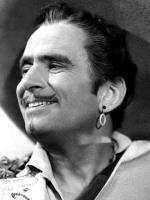
Douglas Fairbanks

Douglas FairbanksOn this day in 1883, the great Douglas Fairbanks was born. His career is quite interesting in what it shows about the American film industry. America had an extremely vibrant industry during the silent era. But when sound came in, we fell in love with it. Films became much less cinematic. Calling them “talkies” is accurate. That’s when Europe and Russia really took off and it took us some time to catch up.

Fairbanks was famous for being an action hero, when that meant something. Let’s just look at one of his masterpieces, Robin Hood, which he also wrote and produced. Note all the wonderful crosscutting, fast editing, great stunts. It is state of the art filmmaking and as thrilling today as ever:

But then sound came in and it really gummed things up. There were suddenly a lot of movies with people standing around talking because the microphone technology demanded it. But Fairbanks’ first sound film was different. It was the first sound version of The Taming of the Shrew, with his wife Mary Pickford playing Kate. But it was made the way that the Italians long made their sound films: silent with dialog and sound added in post-production. As a result, I think the film is great, and Fairbanks as Petruchio is particularly good. It is pretty much the role he was born to play. But it wasn’t received well, despite or perhaps because, it wasn’t like other sound films.

It’s generally thought that the audience turned against him. I guess that’s true. But I think it is more accurate to say that his age forced him to make films that people didn’t want to see him in. I think he was as good as ever, all the way up to The Private Life of Don Juan, his last film. More than anything, I think he was tired. He was apparently a heavy smoker and he died only five years after his last film. His last words were supposedly, “I’ve never felt better.” These strike me as the words of a man who has been hiding physical pain for a long time.

I haven’t been able to find a collection of scenes from his films, but here is a get section of the documentary, The Great Swashbuckler, which has a lot of great material:

Happy birthday Douglas Fairbanks!

Benghazi! Preview

Scandal?!You can’t have missed all the news about the upcoming House Select committee on Benghazi—or as it is more property referred to, Benghazi! As it is, the hearing is a political stunt. There have already been four committees that have looked into it and they have found nothing. But why not another committee? After all, it isn’t like the Republicans are going to do any actual work. And it isn’t like they are even trying to make this look like anything but a show trial.

Pelosi asked that Boehner make the committee half and half in terms of Democrats and Republicans. After all, that’s pretty close to the make up of the House: 53.8% Republican. But Boehner wouldn’t hear of it. So he made the committee have 7 Republicans and 5 Democrats. Given that the Republican head of the committee is the only one with real power in terms of subpoenaing people, why not let it go at 6-6. As it is, the 7-5 make up of the committee makes it 58.3% Republican. But by adding just one more Democrat and making it 7-6, the percentage would be exactly what the House is: 53.8%. Whatever.

The Benghazi HoaxIn the lead up to this hearing, something interesting happened. Normally, I avoid signing petitions. For one thing, it is usually just an excuse to get my email address to send me spam. But recently, I actually signed a petition. It was to make Alan Grayson at least part of if not the entire Democratic Party contingent on the upcoming committee. So I was very disappointed when the list of Democrats on the committee came out and it did not include Grayson.

Look, the people on the committee are fine. Elijah Cummings (MD) is very good on policy and a great fighter. Adam Smith (WA) is good on policy, but I’ve never seen him in action. Adam Schiff (CA) is very good on policy, but again I don’t know how he’s going to be against the Republican pit bulls. Linda Sanchez (CA) is fairly good on policy, and represents her district’s interests quite capably, but not really the kind of person I want representing the truth in this political cause. And then there’s Tammy Duckworth, whose policies are good but who is very new. Still, I think we all know why she was put on the committee: she’s charismatic and she’s an Iraq War veteran. In fact, she is the only person on the whole committee to have actual war experience. Only one other member, Republican Mike Pompeo was in the military. He had a comfy five years in Germany at the end of the Cold War.

It’s a fine group, but I would really have liked to have seen Grayson on the committee. For one thing, he would have added a little style. It might have been worth watching. But according to John Amato at Crooks & Liars, “Steny Hoyer was afraid that Grayson would be too rambunctious for his taste.” Personally, if anyone as boring as Hoyer thought that Grayson was too rambunctious, that should have sealed the deal in Grayson’s favor. So we got Schiff instead, who didn’t think the Democrats should send anyone to the committee. Is this really all about individual Democrats fighting and making the Democratic cause weaker? Maybe.

It doesn’t really matter, though. This morning at The Plum Line, Paul Waldman explained how it is going to go, The Big Benghazi Dance. He even quotes Macbeth:

He wrote:

OK, so maybe the “idiot” part is too harsh—no one thinks that Rep Trey Gowdy, who will be leading the committee, isn’t a smart guy. But it’s easy to see exactly how the big Benghazi dance will unfold, and how everyone will play their appointed parts.

That’s partly because of the nature of this matter, partly because of everything that has happened up until this point, and partly because of who’ll be on the committee…

Just by looking at the committee’s membership, you can see what the two parties are trying to achieve. John Boehner picked a combination of prosecutors, intense partisans, and hard-right blowhards, people who are there to pound the table, shake their fists, and raise their voices. Pelosi could have picked similar Democrats (there was a move to get Rep Alan Grayson on to the committee), but instead she selected a group of serious members who come with some knowledge on the matters to be explored. Despite the fact that Democrats (even those on this committee) think this is all a waste of time, they’re taking a high road approach, hoping that they’ll look reasonable and sober while Republicans look wild-eyed and angry.

I think that’s a total mischaracterization of Grayson, who while pointed, fiery, and quotable, is also professional and known for being good at working with Republican idiots. But doubtless, Waldman is right about what Pelosi is trying to do. And he’s right about how the circus is going to go. On the first day, the Republicans will get a lot of coverage with their outrage and fist pounding. Then there won’t be much coverage until Hillary Clinton testifies and counters the Republicans as well as she has in the past, which you may remember is really well:

And then the media will lose interest and the Republicans, led by Fox News will start screaming about a liberal media cover-up.

But what if this committee, unlike all the other committees and the FBI and the press turn up something?! Frankly, I don’t know what they would turn up. I’ve been confused the whole time. I get the IRS scandal: the Democratic president going after his conservative enemies. It wasn’t true, but I see that if someone proved that happened, that would be terrible for the president—he would rightly be impeached and thrown out of office. But in the Benghazi case, I still don’t get it. The administration said that one thing caused the attack when it was another thing? Neither would have made the administration look any better or worse. In the video above, Ron Johnson seems to think that the scandal is that the American people were misled out of incompetence for a couple of days. That’s the scandal? Really?!

Benghazi! is the worst example of a scandal I have ever seen. I really think that the House should hold a hearing on the death of Vince Foster. At least he died and it is technically possible that Hillary Clinton killed him. But this Benghazi! scandal is madness! And that’s especially true when you consider that the scandal could be that four Americans died as a result of poor embassy security. But apparently, that scandal won’t work because the Republicans pushed to reduce funding for embassy security. If the Democrats are really smart, they might be able to make this show trial about that. And maybe the whole 2014 election!

But Waldman sums it up well:

Republicans will be able to show their base that they’re holding Barack Obama’s feet to the fire and giving Hillary Clinton the business. Democrats will be able to show their base that Republicans are crazy. Everybody wins.

I just hope that this backfires on the Republicans. This isn’t even about the election. I just want politics to get back to the old days when it was terrible but not useless.

Reps Hate Minimum Wage and EITC

Jonathan ChaitSometimes, Jonathan Chait annoys the hell out of me. But other times I just want to kiss him. When I disagree with him, it is usually about fairly minor issues of policy and ideology. But when it comes to the state of the Republican Party, no one is more clear. Just about an hour ago, he wrote an article, Why Republicans Love Taxing the Poor. And it is great.

Most of the short article is about an article by one of my favorite conservatives, Ramesh Ponnuru. Ponnuru himself has a clear view of the Republican Party, like when he suggested that Republicans stop talking about how Latinos are natural Republicans because of their “family values.” As he said, “I suspect most people throughout human history have been hard-working, family-oriented, and religious, without sharing conservative views about limited constitutional government.”

Ramesh PonnuruBut as clear-eyed as Ponnuru is, he is still a professional apologist for the interests of the rich. So he still pumps out the propaganda and Chait called him on it today. Ponnuru was saying that the Republican Party ought to show that it really does care about the poor even while staying against raising the minimum wage, by raising the Earned Income Tax Credit (EITC). This way, the Republicans could signal that they are against the government interfering in the free market as exemplified by the minimum wage, but still help out the poor with the tax credit for low wage workers. Chait called him on this by noting that the the Republican Party—far from wanting to raise the EITC—wants to lower or even eliminate it. Chait noted that Ponnuru made no mention of this. I will only add that Ponnuru knew what he was doing because he’s a propagandist.

One thing that Chait did not talk about is the contradiction of Ponnuru’s choice. Raising the minimum wage would take money away from everyone in higher costs and lower profits. As such, however, it would be highly progressive: the rich would pay a lot more for a rise in the minimum wage than the poor would. But raising the EITC would be much less progressive because it would be paid for by our taxes, which are modestly progressive but at the super rich level are actually regressive. So there is no narrative here about government intervention. All that Ponnuru is concerned about is how best to protect the money of the rich. This is something he can’t come out and talk about explicitly because the rich are just not a very large constituency. Politicians do the work of the oligarchs, but they’ve still get to get the votes of the working man.

Chait ended the article with what I think is about the clearest description of the modern Republican Party and the tough choices it faces (or rather doesn’t face):

I can see why Ponnuru needs to present his idea, which is a 180-degree reversal of the Republican agenda, as “a way to show that they want to help the poor.” The trouble is they don’t want to help the poor, if you define “help” as “letting them have more money,” as opposed to “giving them the kick in the ass they need to stop being lazy moochers.”

That’s right my fellow Americans: the Republican Party hates the poor. But it’s worse than that. It hates anyone who is not rich. I am still amazed that this country could get one political party to go so far on tilt. A large part of the problem is the New Democrats and their move to the right. But another part of the problem is the very intelligent propaganda of pundits like Ramesh Ponnuru, who go around lobbying the people to believe that the Republicans stand for the exact opposite of what they actually stand for.

But it’s okay, America; just keep voting to end abortion and sex education, so that the babies of your thirteen-year-old daughters can grow up to be serfs of the grandchildren of the Koch and Walton families.

On Tall Tales and Bootstraps

Bootstraps: Just Pull!Fifty years ago today, Lyndon Johnson announced his Great Society goals. They were massively successful. But of late, we hear conservatives complain about the Great Society programs. And here is the logic, “If you exclude all the gains of the Great Society programs, the poor are no better off than they were before!” This is like saying that your car doesn’t go any further after filling it up with gas if you exclude the gas you just put in. I know what they’re trying to say: that the poverty programs should have lifted people out of poverty. They should be successful now. You know: teach a man to fish… But these very same conservatives are against programs to help the poor help themselves. They are against raising the minimum wage. And Fox News has spent the last two years complaining about the Earned Income Tax Credit.

Since I’m on the subject of the poor, can I make a request: let’s stop using the phrase “pull yourself up by your bootstraps.” Bootstraps a little cloth or leather loops at the top of boots (actually, even my tennis shoes have them) to allow the wearer to pull them on. The original meaning of the phrase was something that is impossible to do, not something that is difficult to do but which can be accomplished with good old fashioned American pluck. So no more encouraging people to pull themselves up by their bootstraps and no more claims to have done it.

The phrase has a vague beginning in an episode of that 18th century classic, The Surprising Adventures of Baron Munchausen. In it, he falls into a swamp but is able to pull himself out by his pigtail. The first known use of the bootstrap maneuver was in 1834. And it remained the tall tale that it is for about a century—like Paul Bunyan batting down cannonballs during the Revolutionary War. In the early 20th century, people began to use it as something that is hard to do, but possible. It is not surprising that a phrase that for so long was considered ludicrous and therefore funny, became “encouraging” advice following Horatio Alger and the robber barons.

What’s especially sad about the metaphor, however, is that today the phrase is pretty much true—but not in the way that most people think. Our country does provide about as much help to the poor as a couple of bootstraps. If you are born poor, you will almost certainly die poor. If you are born rich, you will almost certainly die rich. And those who manage to upset this overwhelmingly consistent fact of American life are either extremely lucky or extremely unlucky. But of course, no one ever means that the poor are screwed when they admonish them to get pulling on those bootstraps. They mean to say that it isn’t all that bad and that the poor have options.

The idea of pulling oneself up by one’s bootstraps, is distinctly American. It sucks to to be poor in Europe, just as it does here. But there, poverty is generally seen as something bad that happened to you. In America, in addition to the many and varied ways it sucks to be poor, we add the social disapproval that the only reason one would be poor is that he wasn’t trying hard enough. He isn’t pulling hard enough on those bootstraps. But America is now pretty much the world you see in Gosford Park. There are those who have their boots pulled on for them and there are those who have no boots at all.

Gay Rights Pioneer Harvey Milk

Harvey MilkIn late November of 1978, I was at a conference in San Francisco for kids who were interested in politics. I don’t remember much about the conference, although it was probably a very good introduction to local politics and the issues that must be faced. Local politics is really interesting because it is so practical. There is very little ideology. In my father’s neighborhood, there was a zoning ordinance that restricted it to single story houses. Well, my father wanted to build onto his house, so he went door to door in the neighborhood and got everyone to sign a petition asking that the zoning ordinance be changed. He then went to a supervisors’ meeting and it was changed. The government exists to help people. This is a fact that is often lost at the national level—especially on the right. This kind of simple problem solving is what I got from the conference, and it may be why I’m a Democrat today.

But all that was dwarfed by the day that Dan White assassinated San Francisco Mayor George Moscone and Supervisor Harvey Milk, who was born on this day in 1930. I knew Moscone, because he was a legend in the Bay Area. Milk was on his way to being a legend, and of course, in San Francisco, he already was. He was the first openly gay elected official in California. It was a big deal. People don’t understand just how terrible life was for gays in the state at that time. In the 1960s, oral sex was still illegal. In 1970 alone, 90 people were arrested for this “crime.” What’s more, Mayor Alioto really went after the gay community, pressuring the police for raids on gay bars, which eventually pushed the gay community to meet in parks. Here’s an amazing statistic: in 1971, 63 people were arrested in New York City for public sex; 2,800 were arrested in San Francisco.

There’s no doubt that Milk was kind of an interloper. He had not really been involved in the politics of the gay community and so a lot of the old timers resented him. But he had a lot of energy, was an excellent speaker, had a great ability to build coalitions. Wikipedia describes a good example of how he worked, “The Teamsters wanted to strike against beer distributors—Coors in particular—who refused to sign the union contract. An organizer asked Milk for assistance with gay bars; in return, Milk asked the union to hire more gay drivers. A few days later, Milk canvassed the gay bars in and surrounding the Castro District, urging them to refuse to sell the beer. With the help of a coalition of Arab and Chinese grocers the Teamsters had also recruited, the boycott was successful.”

But Milk was only able to become a supervisor because of a change in the way that they were elected. They had been city wide, meaning whoever had the most money tended to win. And it certainly limited the appeal of those representing minority groups. But when elections were changed to city districts, Milk won election, representing the Castro. He served for just over ten months. There were various reasons that White murdered Milk and Moscone. In particular, Milk and White did not like each other. White was a Catholic, but he wasn’t virulently anti-gay. The truth was that Milk was a much better politician than White. And let’s not forget: White was unstable. After serving five years of his ridiculously lax seven year sentence for two murders, White killed himself. He was a deeply troubled man and really ought to stand as a symbol for mental health problems and our very poor tools for dealing with it.

Meanwhile, Harvey Milk is a great symbol of gay empowerment. Part of his legacy is what has brought us to our much more liberal climate for gay rights today: he urged all gay people to go public. And that is, in the end, the greatest weapon that the gay rights movement has had. It is hard to hate gays when you sons and daughters and friends and coworkers and church members are gay. Hatred is just a special kind of ignorance.

The Obamacare Denial Industry

Get Covered AmericaImagine that you were trying to get me to do more exercise for my health. Maybe you argued that walking a mile a day would extend and improve my life. I countered, “There is no evidence that walking a mile a day is going to improve my health!” But one day, a paper appears in The Lancet, “Study shows Frank Moraes will have a longer and healthier life if he walks one mile per day.” My friend shows me the article. I read it and can find no fault with it. It absolutely is the case that walking a mile a day will make me healthier and happier; it’ll even make me a chick magnet. So do I start to walk a mile a day? No! Sure, walking a mile a day would be good for me, but the cost is too great: 20 minutes out of every day when I could be watching television and eating bonbons.

At that point, unless you were a complete idiot, you would know that this issue is not about the health benefits of exercise nor the time required to do that exercise. You would know that I just don’t want to exercise. But of course I wouldn’t want to say that because it makes me look like a lazy guy and all that. Somehow, though, when it comes to the exact same behavior in politics, everyone is expected to assume that anyone, like me in this example who constantly changes his reason for being against a policy, is a good faith actor.

Jonathan CohnThis leads us to yet another great Jonathan Cohn article, Obamacare Critics Now Admit the Law Is Saving Lives, But Say the Price Still Isn’t Worth it. Earlier this month, I reported, Good Obamacare News Is No News to Conservatives. It was about how conservatives were ignoring data that indicated that the uninsured population was going way down and that having insurance was actually saving lives. Well, last week, Cohn found that a number of conservative wonks (and I use the term advisedly) have accepted these findings but have come up with a new reason to be against Obamacare.

You should read Cohn’s whole article (actually, you should read everything Cohn writes because he’s brilliant). Basically, it talks about how some Cato Institute drone figured out that for every life that was saved, we were spending $4 to $5 million. And that, is apparently too much. Cohn doesn’t accept that number, but more important, he goes on to show that this is the wrong way to think about the new law. Healthcare reform is not primarily about saving lives. It is about reducing medical bankruptcies. It is about providing people with peace of mind and allowing them to switch jobs and start business. And it is about trying to reduce healthcare costs which are almost twice as high as they are in other advanced countries that provide better care.

That’s all very important stuff. But do we really need to have this conversation? I mean, let’s suppose that someone does a very thorough analysis of Obamacare and comes to the conclusion that because of increased productivity and fewer emergency room visits that Obamacare actually saves money. Does anyone think that conservative healthcare “wonk” Avik Roy is going to become an Obamacare booster? Of course not! He would come up with yet another reason why Obamacare was terrible. There will always be another reason why Obamacare is unacceptable because the conservative argument against Obamacare is based on two things: it raised taxes on the rich by a tiny amount and it is a Democratic law.

So I go back to my original article, Good Obamacare News Is No News to Conservatives. Because there is no such thing as good Obamacare news for them. It is just an opportunity to nitpick the news and when necessary, to come up with another justification for why they hate the law. But Jonathan Cohn does yeoman’s work to keep these charlatans honest. Because eventually, their arguments are going to sound ridiculously thin. Like, “Obamacare is bad, because it gives an unfair advantage to poor people in the states that didn’t expand Medicaid!” Thanks Obama!

Answering Krugman’s Three Questions

Paul KrugmanThis morning, Paul Krugman posted, Questions About Student Writing. These are questions that I feel confident that I can school the Nobel laureate on. This last term, he has been doing something that I suspect he does not often get a chance to do: teach a great big class. And now he is grading papers at the end of the term. I feel for him (a little): I used to teach classes of a couple hundred physics students and my tests were quite involved and never multiple choice. (Actually, when I first started, I gave multiple choice tests—an act of educational malpractice that I greatly regret.)

Krugman’s first question is, “How can we incentivize students to stop using ‘impact’ as a verb?” Krugman is setting up a joke, but I’ll leave that until he gets to his punchline. It is very easy to get students to stop using “impact” as a verb: don’t allow them to read economic and business books. That’s where this usage comes from. Elizabeth Bennet never tried to impact Mr Darcy’s behavior, even though she had a profound impact on it. But interestingly, “impact” as a verb is actually older than “impact” as a noun. But in the 1960s, its became something of a vogue word in the business world, and stopped meaning “to make contact” and began meaning “to have an effect.” May I humbly submit to Professor Krugman that he is part of the problem. I do, however, have an answer for him: teach them about the word “affect,” which can almost always be used instead without annoying readers.

Krugman’s second question pays off his first in good George Orwell style, “How can we impact their writing in a way that stops them from using the word ‘incentivize’?” Get it? He broke both his rules. But okay, the word is overused. Again though, what does Krugman expect? He’s teaching a bunch of business and economics students. But I don’t have a huge problem with the word “incentivize.” It is a very useful word. There are two reasons people have a problem with it. First, grammar pedants don’t like to change nouns into verbs by adding “ize” to them. Check out this amusing passage from the Grammar Cops blog:

Some words ending in -ize have been widely disapproved in recent years, particularly finalize (first attested in the early 1920s) and prioritize (around 1970). Such words are most often criticized when they become, as did these two, vogue terms, suddenly heard and seen everywhere, especially in the context of advertising, commerce, education, or government—forces claimed by some to have a corrupting influence upon the language. The criticism has fairly effectively suppressed the use of finalize and prioritize in belletristic writing, but the words are fully standard[ized] and occur regularly in all varieties of speech and writing, especially the more formal types.

The second reason is that “incentivize” is a young word—first sliding into our vocabulary in 1970, and from the business community that grammar snobs, like all normal people, hate.

My answer to Krugman is to give it up. There is nothing especially wrong with incentivize. But if we must, we could incentivize the use of the words “encourage” and “motivate.”

Finally, we get to the crux of the matter for Krugman, and his third question, “Can we make it a principal principle of writing that ‘principle’ and ‘principal’ mean different things, and you have to know which is which?” Well, it had to come out sometime: Paul Krugman the pedant. Homophones are just the worst thing about the English language. And in defense of the professor’s students, misspelling one does not necessarily mean that the writer is unclear about about the distinction. Speaking is fairly natural for our brains, but writing is not. My first drafts are not only filled with homophone mistakes, they are filled with assonance and rhyme errors. Words that simply sound similar cause my fingers to type them. It doesn’t mean I don’t know the difference between “fat” and “that.”

As to the issue at hand, it’s very easy. “Principle” is a rule or similar. “Principal” is the main or dominant whatever. And thus, you have a high school principal, because he is the dominant administrator. Apart from Krugman’s cute “principal principle,” I don’t see a situation where anyone is confused by misspelling either of these words. And in fact, if you heard Krugman’s sentence, you wouldn’t be at all confused.

Here I have a very good answer to Krugman: stop the world. Everything happens so fast. Not only are blog posts filled with errors because we are all so determined to get things done fast, the level of copy editing in printed books is abysmal. It takes time to copy edit. And no one feels like they have it to spare. But of course, we are not going to stop the world or even slow it down. So the proper response is to assume that people (Especially students at Princeton!) know the basics of grammar, and stop bitching.

The principal means to incentivize a principle that impacts the error rate in student papers is to relax.