Kiss of the Spider Woman 30 Years On

Kiss of the Spider WomanI just watched Kiss of the Spider Woman. I first saw it right after it came out in 1985. It was a great film and particularly appropriate because the authoritarian regime in the film could easily have been the El Salvadorian government of that time, which was a very big issue in the United States. As a result, I probably saw the movie as much more serious than it is. In fact, although the film involves politics and torture, it is highly lyrical.

The thread that holds the entire film together is Luis’ (William Hurt) telling the story of a romantic film he once saw, Her Real Glory. It turns out that it was actually a Nazi propaganda film, but Luis is too naive to have noticed the politics. Valentin (Raul Julia) straightens him out but lets him continue to tell the story, given that Luis is only focused on the romance of it. The film uses this storytelling to recreate it as a film within a film, Her Real Glory. And it is very funny. For example, when the evil men from the French Resistance ran over a young French woman, I burst out laughing. It is not intended to be funny in Her Real Glory but it is in Kiss of the Spider Woman. There other such scenes like one near the end where the French Underground leader tries to rape the woman who is in love with the Nazi Chief of Counter-Intelligence. The villainy of the “bad guys” is just a tad less believable than Snidely Whiplash.

The whole film plays with this kind of postmodern take on perception and it is brilliantly successful. In the end, all of us at any time are stuck in a jail cell with one other person. And regardless of everything else and all of differences, we need to learn to connect with that other person. But ultimately, this is more about respecting ourselves than anything about the other person. So broadly speaking, Luis and Valentin both have the same character arc of self discovery and acceptance.

Practically speaking, Kiss of the Spider Woman is very serious. It brings to mind much more uncomfortable associations than the brutality of the El Salvadorian government which we supported so strongly. As political prisoners are periodically brought into the prison, they are hooded, just like at Abu Ghraib. Of course, the film is not about that or any political question at all. It is about the political nature of human relationships and love. This is why I think it is important to focus on the practical in politics. Ideological rigidity is what leads to Nazism as well as lesser political crimes against our fellow humans. As long as we can extend dignity to each other, all will be okay. Sadly, extending dignity is rarer than it ought to be.

Where the film falls down is in the third act. That is when Luis and Valentin are separated. Luis is paroled and the film spends a lot of time finalizing his personal transformation. It works well enough, but it breaks the spell. Hurt and Julia are so great together that just about anything else would be a let down. However, after the Luis plot is completed, the film ends rather well. Because of his machinations, Luis managed to keep Valentin from being tortured as long as he was around. As soon as he is gone, Valentin is again tortured. We see him in the prison hospital having just been badly tortured. A doctor gives him an injection of morphine and immediately, his lover Marta (Sonia Braga who also plays Leni, the heroine in the Nazi film) grabs his arm and they run out of the prison, to the sea, and sail away in a boat.

It is a beautiful and lyrical ending to the film. But it is also profound. Such personal connections are not only how we manage to continue on against adversary, they are why. Kiss of the Spider Woman is a rare film that looks clear-eyed at the brutality of life and still gives us reasons to say, “Yes!”

George Will’s Disingenuous Arguments

George WillTo me, the essence of liberalism is open-mindedness. In modern America, that is what differentiates a liberal from a conservative. I’ve written about this a lot around here. Conservatives start discussing any problem with a long list of things they just can’t do. Liberals on the other hand are more than willing to use free market solutions to problems, if they work. But as we saw with Obamacare, when liberals accept free market solutions, two things happen. First, liberals get weaker solutions. Second, conservatives turn against the free market solutions that they once pushed.

It is hard to avoid the conclusion that conservatives don’t actually want to solve any problems and just bring up the “free market” approaches as a delaying tactic. But I think among the punditry and think tank workers, there are a number who are actually interested in solving problems. These are the Reformish Republicans. And that is sad. The most open-minded conservatives are still 90% closed-minded. And then there is George Will whose mind is 100% closed.

The purpose of Will’s newest column should be clear enough based upon its title, Democrats Are Making Income Inequality Worse. It ends with, “And [this is] why the loudest complaints about inequality are coming from those whose policies worsen it.” Dean Baker took on Will’s column, George Will Is Badly Confused on Economic Issues, Again. He tore it to pieces, in fact—showing that Will was doing what he usually does: making up numbers and distorting others. Go take a look for all the bloody details.

I want to focus on one thing that Will talked about: food stamps. It is particularly disingenuous. He wrote, “Between 2000, when 17 million received food stamps, and 2006, food stamp spending doubled, even though unemployment averaged just 5.1 percent.” Note the framing here: he starts in 2000, when the economy was overheated and the unemployment rate was below 4%. Baker noted that in 2006, there were 3.4 million fewer people with jobs. That probably explains half the increase given that most people support children.

In addition to this, food prices rose by 16% during that period. What’s more, according to Will’s own source, the number of people on food stamps in 2006 was still lower than it had been in 1995. This is despite a major push to get qualifying people to get welfare. So we aren’t seeing a huge explosion of “takers.” But note how Will is eager to distort the data to make his point. He starts with a conclusion: aid to the poor is bad. And then he shoehorns the data in a spectacularly distorted way to justify his predefined conclusion.

On a deeper level, Will is making the same old conservative argument, “Giving poor people food hasn’t eliminated poverty, so we shouldn’t give them food!” We got this from Paul Ryan who was arguing that aid to the poor hadn’t worked because if you didn’t count aid to the poor, there were as many poor as ever. That’s a damned strange argument to make against aid to the poor. The real argument is the Ayn Rand argument, which at least she was honest about: the poor shouldn’t be helped because they’re losers. But George Will can’t make that argument. He’s got to maintain his reputation as the modern William F Buckley.

The bottom line of all of this is that conservatives claim to be for a small government as a good in itself. In fact, this isn’t really true. Conservatives are for small government when it comes to the poorer classes. When it comes to welfare for the rich, they want to spend ever more. This is the same as their approach to taxes where they really don’t matter when applied to the poor and middle classes. Remember when Fox News went through a period of pushing for the poor to at least pay some taxes? Tax increases are always wrong, unless they are on the poor! But conservatives like the idea of a smaller government.

Liberals, on the other hand, don’t want a larger government. Social goods they want may require a larger government. But there is nothing about a larger government as such that they are looking for. This sums up how liberals are focused on practical matters and conservatives on ideological matters. And that is why problems come second (if at all), only after ideological purity. George Will wants to spend less on the poor, he doesn’t want to fix the problem of poverty—except in the one ideologically pure way: by spending less on the poor.

60% of Men’s Wages Down Over 40 Years

Poor RetireeMatt Yglesias is fond of saying that the best way to help people out of poverty is to give them money—direct cash assistance. His point is very simple: the problem with poverty is not having enough money. Things like drug addiction are primarily a result of poverty, not a cause of it. If you give the poor money they will use it to get healthier and more educated. Generally unstated is the fact that most programs proscribe the benefits to the poor because the power elite think the poor don’t make good decisions.

That’s where we get the whole conservative song and dance about poverty. Poverty isn’t about money and economic opportunity, its about culture. The people in the “inner city” just aren’t going to church enough! Of course that’s just conservative wish fulfillment. They think everyone should go to church (except of course their heroes like Ronald Reagan). And they think that they should never have to spend any money on the poor. Therefore, as always, the solution to poverty just happens to be what they already want to do. This goes along with the conservative response to the Ukraine situation: a war in the Middle East!

This morning, Paul Krugman published a great graph from the Economic Policy Institute. It shows the changes in the wages of males in real dollars from 1973 to 2012. Looking at just men is important because their work patterns have not really changed over this 40 year period the way women’s have. So the result is relatively pure. And what the result shows is that we have a very screwed up society:

Men's Real Wages

Just to be clear here: this shows that the wages of the bottom 60% have gone down over the last 40 years. This is a remarkable result because men are actually more skilled than they were then. They are more educated. And productivity is much higher. It is just that the extra money in the economy is being shared less equitably.

Notice how this goes against the claims of conservatives everywhere. The last resort of people like Milton Friedman was always something like, “The rich may be much richer, but the poor are at least somewhat richer.” Well, they aren’t! Of course, I don’t expect this to change any minds. In general, they will continue to make that argument despite the data. And if pushed, they will just move on to some argument such as looking at households rather than men where instead of a decline there is only stagnation. Or they will go all libertarian and say it doesn’t matter because: “Freedom!”

First David Brenner Tonight Show

David BrennerI just heard that David Brenner died. He was 78 and had been suffering from cancer. I loved him when I was a kid but he’s fallen off my radar since then, although I would occasionally see him pop up. His act hadn’t really changed at all. And he was hugely influential. He was a critical part of the move from the old story-focused stand-up comedy of people like Shelley Berman to the observational humor that to a large extent is still with us.

Brenner didn’t start in comedy until late in life. He had been a documentary filmmaker into his 30s. In 1971, at the age of 35, his stand-up career took off after performing on The Tonight Show. And, in fact, he appeared on the show more than any other person—almost 160 times. Here is his first appearance on the show. It is a bit dated, but still quite funny. It made me laugh out loud a few times:

The Fatal Flaw in And Justice for All

All Judtice for AllI was just washing dishes and it hit me: I know what is wrong with the film And Justice for All. Now understand, it isn’t a bad film. Not at all. But really, it ought to be a great film—or at least close. And it isn’t. It is about an important subject and it provides a surprisingly accurate representation of the legal system. It has interesting characters. And it is totally geared to Al Pacino’s strange form of acting. So what is the problem?

If you haven’t seen the film, the central conflict is between Arthur Kirkland (Al Pacino), who just wants to see justice done, and Henry Fleming (John Forsythe), a heartless judge who hides behind technicalities to punish defendants without a care for the fact that they might be innocent. So far so standard: Fleming is totally typical of judges and Kirkland is a typical movie hero lawyer. About halfway through the film, Fleming is accused of brutally raping a young woman and Kirkland is blackmailed into representing him. Right before they are to go to trial, Kirkland learns some information that indicates that the judge may in fact be guilty.

So Kirkland confronts Fleming who emotionlessly admits that he did it. The core of the scene and the character is that Fleming simply thinks that there are those little people on whom he passes judgement. And then there is himself who of course is moral regardless of what he does. People don’t judge me; I judge people! And therein lies the problem with the movie: that one two minute scene.

Fleming’s character is not real. At that point, he becomes nothing more than a movie villain. But this isn’t a James Bond film. It’s all right for Kirkland to be a bit too pure. He’s the audience surrogate. But the film is supposed to be realistic and have something to say about our society. So Fleming has to be believable. And it would take so little. Unless we are to believe that Fleming is insane, he would know that one doesn’t brutally rape young women. He would have to find a way to justify what he had done in his own mind.

I’m sure there are many ways that one could do that. What I think is most obvious is that Fleming would say, sure, he got a little out of control. But one doesn’t let one little “mistake” ruin a great career. Right? He’s one of the good guys! And that would be particularly poignant, given that Fleming was directly responsible for the death of an innocent young man. And he did not care in the least.

As the film stands, we just have to assume that Fleming is a psychopath. And actually, I’m more than willing to believe that a lot of well respected judges are psychopaths. But that isn’t very interesting. What’s more, I don’t believe a psychopath would admit his guilt. There just isn’t an advantage to it. Regardless, it is a fun film with this memorable courtroom scene, that I still find affecting:

Afterword

A much more interesting (but less commercially successful) film could have been made if the filmmakers had avoided genre. Then they could have left the audience to decide on Fleming’s guilt while pushing the balance of evidence against him. Of course, that would ruin the great courtroom scene. But then, it would be a totally different film. And there’s nothing wrong with genre.

Sly Stone and Family

Sly StoneThere are a number of good and interesting people born on this day. Last year I talked about Ruth Bader Ginsburg. She’s notable for being the only liberal on the Supreme Court. I know, you probably think there are four liberal members of the Court. But there aren’t. It runs like this: one liberal, three moderates, two conservatives, and three (for lack of a better term) fascists. Just saying. And truly, I had to stop myself from talking about David Cronenberg today. He’s one of my favorite film directors. Videodrome and eXistenZ are two unquestionably great films. That’s two more than almost all film directors have made.

The great musician Sly Stone is 71 today. Back in 2011, there was a whole bunch of news that Stone was homeless and living in a van (Down by the river?) in Los Angeles. That does not appear to be true. But there is no doubt that the business side of the music business has been bad to him. He is such a great talent, and it speaks to what a terrible society we are that he’s gone so neglected all these years. We should treat him like a king.

I still listen to Sly and the Family Stone’s album Stand! all the time. There really isn’t anything better. Here is “Everyday People” performed live on The Ed Sullivan Show:

Happy birthday Sly Stone!

Poor Entrepreneurs and Bad Incentives

Martin LongmanMartin Longman wrote a very insightful article over at Political Animal, What’s Really Offensive About Paul Ryan’s Remarks. It is mostly about his actual experience working for ACORN in the “inner city” North Philadelphia. His job was to hire and train young people in the area to work in a voter registration drive. And not surprisingly, he found people eager to work.

The people in impoverished inner city neighborhoods probably work harder than people in nice upper middle class neighborhoods. What is certainly true is that they are more entrepreneurial. We see the same thing in poor countries. When a group of people have access to a lot of jobs, they don’t have to work as hard nor do they need to be as creative. Longman described what he saw:

I discovered over time that nearly everyone had a way of making money, despite the fact that they were officially unemployed. I learned about a shadow economy that encompassed more than a mere black market. There were the legitimate under-the-table jobs that aren’t accounted for in government statistics and are taken on day-to-day: unloading trucks, working as a construction laborer. There were the semi-legitimate jobs: using your car as an unlicensed taxi. There were the hustles: making DVD’s of movies with a camcorder, selling fake auto-tags for inspection and registration. There were other non-violent criminal enterprises, like selling stolen t-shirts and the like. Ironically, I found that the people who were the best at getting people to register to vote were the people who set their alarm clocks for early in the morning so that they could go out and work their hustle and make some money. They worked extremely hard, and when given something legitimate to do, they excelled.

Longman thinks that the reason they wanted these low paying jobs was that they were starved for “socially-approved work.” That may be part of it. But I think there is a bigger issue. The truth is that the kind of freelance or pickup work that is the mainstay of economically depressed areas doesn’t pay that much. What’s more, it is uncertain. And it is hard. Just having a minimum wage job at McDonald’s brings in more money and is a hell of a lot easier than getting up early and hoping you might make some money today.

What’s interesting about this is how incentives play into all of this. Incentives work the same for poor people as they do for rich people. But public policy (especially from conservatives) is almost always focused on positive incentives for the rich and negative incentives for the poor. So we are told that if we raise the top tax rate, people won’t work as hard, even though the top tax bracket only applies to a very small number of people (about two percent). On the flip side, we are told that providing food stamps for the poor provides an incentive that stops them from working.

Note how absurd this is. Affluent people have all kinds of extremely generous safety nets—both public and private—that protect them from failure. These do not seem to suck the life out of their ambitions. But according to the public policy prescriptions of people like Paul Ryan, the extremely meager safety nets we provide for the poor do just that. This is very much like a parent with a “good” child and a “bad” child. The “good” child is constantly encouraged with positive reinforcement. The “bad” child is only given negative reinforcement. The problem is with the parent and not the children.

Taking this analogy a bit further, it is certainly the case that in some circumstances the “bad” child will grow up to be successful. The parent can then pat himself on the bad for the great job he did. See! All that belittling and beating worked! This is the way policy makers behave. Some people claw their way out of extreme poverty, therefore the politicians claim it doesn’t matter. The rest must just be lazy!

The truth is that people are mostly just dedicated to a certain outlook. I admit: I believe in a guaranteed minimum income. I think it is immoral that a wealthy country doesn’t provide for the bare necessities of life. I would be for this even if I thought it took a little incentive out of the system. On the other side, Paul Ryan believes in a kind of social Darwinian ideal of society. The problem is that he won’t admit to that. He wants to take support away from the poor but claims it is some kind of tough love. It is anything but. And we can’t have a real debate when one side hides its real intentions.

The Paradox of Liberal Magnanimity

Ross DouthatMy colleague at The Reaction, Infidel753 wrote an excellent article over on his blog, Magnanimity in Victory? It is a response to Ross Douthat’s recent column, The Terms of Our Surrender. In that article, Douthat admits that social conservatives like himself have lost the same-sex marriage battle. But he asks for the victors to “recognize its power.” His argument is that we should be nice and allow conservative Christian florists to refuse to do business with LGBT customers.

Infidel753 asks a logical question, “What the hell makes you think you deserve any magnanimity in your defeat?” When I first read that, I thought that maybe he was being a little harsh. After all, we are liberals and being kind to the powerless is our thing. But then I read Douthat’s article. He predicted Infidel763’s reaction, noting, “Christians had plenty of opportunities—thousands of years’ worth—to treat gay people with real charity, and far too often chose intolerance.” That bit of minimization really bothers me. Douthat is a Catholic, as am I by birth. Certainly he must be aware of the church’s history with homosexuals. What he calls “intolerance” I call “murder.”

But Douthat’s main argument is that we ought to let people refuse to do business with LGBT people out of a sense of religious freedom. This I don’t see at all. No one is suggesting that we outlaw florists hating gays or being against same sex marriage. We are talking about outlawing the practice of florists putting signs in their window that read, “We don’t serve fags.” We are not talking about forcing Christians to bring lesbians into their homes. We are talking about outlawing public businesses from refusing service to “those people” whoever “those people” are.

I do think there is a limit here, though. Religious liberty does, it seems to me, apply to churches. Marriages are something that they supposedly consecrate. So I think it would be wrong to force a Baptist church to perform weddings that it did not want to. I think this falls under the same rights that allow preachers to spew out their anti-gay hatred from the pulpit.

But who exactly do these Christians think they are fooling? In forty years, almost all of them will be performing same sex marriages. At one time, churches supported slavery with Genesis 9:27, “May God enlarge Japheth, And let him dwell in the tents of Shem; And let Canaan be his servant.” They don’t do that anymore. All Christians pick and choose which parts of the Bible they are going to follow. So eventually, they will get over their problems with the idea of homosexuality.

Infidel753 makes another excellent point about this. Even if we wanted to forgive all the bigotry of the past, what about that of the present? The truth is that same sex marriage is not yet legal throughout the nation. And even after it is, a large number of conservative Christians will work to turn back the law. We’ll just have to wait for them to die off. So by the time it makes sense for us to show magnanimity, there will be no one to show it to.

Quincy Jones and Another 81-Year-Old

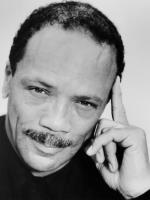
Quincy JonesTwo interesting people turn 81 today. I’ll get to that man of the day shortly, but I wanted to take a moment to talk about the man not of the day. That man is Michael Caine. There are two things that I really don’t like about him. First, he is an extremely overrated actor. I think he’s barely passable. He at best doesn’t harm a film by his presence. Yet he got an Academy Aware for Hannah and Her Sisters for a wholly forgettable performance. And then he got another for The Cider House Rules. This second film is particularly telling. Clearly he got it because it was the first film he had ever been in that he took enough effort to learn an accent. For a British actor, that’s amazing.

The second thing I don’t like about him is his politics. For decades, he’s been bitching and moaning about his income taxes. This is a man who owes everything he’s ever gotten to Stanley Baker giving him a part in Zulu. Otherwise, Caine would be working in a pub somewhere in a borough on London. He is entirely typical of entertainers who believe their own PR. I just wish he would get on with dying, because he isn’t doing anyone any good. I just hope the UK has a very high inheritance tax.

The man of the day, however, is Quincy Jones. Now, his politics are really great. But I wouldn’t care because Jones is a great artist. It’s kind of hard to talk about him, however, because he’s done so much. I think of him very much as I think of Henry Mancini. Basically, there is no greater compliment. He’s probably best known for producing Thriller, but we will say no more of it. He’s produced a lot of other great albums. And he’s a great film composer. And he’s a great jazz musician and composer. So let’s just go back to his first album, This Is How I Feel About Jazz. Here is “Evening in Paris,” which I think is particularly beautiful. That’s Herbie Mann on flute and Charlie Mingus on bass.

Happy 81st birthday Quincy Jones!

Skippy and the Tick

Skippy and the Tick

Just to close out this section of the day, on last night’s The Daily Show, Jon Stewart introduced a show that never made it to Nickelodeon, Skippy and the Tick. This came from a comment made by Bill O’Reilly who said of Jason Greenslate, “This guy is a parasite… He’s a rat.” To which Stewart responded:

Well, technically, you’re either a parasite or a rat. You can’t be both. A rat is a scavenger who could carry parasites. In fact, if you’ve ever watched the show Skippy and the Tick—it’s about a very fastidious mouse who lives with a very sloppy tick. He gets into some adventures. Nickelodeon never picked it up. The point is, it was a kid’s show for the plague carrying set. I thought it was gold! I still have the story boards.

It’s very funny, but the truth is that I would totally watch that show! It’s got that whole The Odd Couple meets Archy and Mehitabel meets the Black Death. What’s not to like? I even have an idea for a pilot episode called, “Skippy Gets a Blood Transfusion.” And I have a catchy theme song for it. The chords are:

G / / / | C / / / | G / D / | C / / / |

Here are the lyrics:

Skippy is a mouse
Floyd is his one tick!
You may call him a parasite
But Skippy stays thin as a stick!

Now if I can just pry the rights away from Jon Stewart, it will be smooth sailing!


Thanks to Andrea for altering the image for use on this page.

Should People Pursuing Risky Careers Be Forced to Starve?

Jason GreenslateLast September, the Huffington Post published an article, Jason Greenslate, Food Stamp Surfer, Responds To The Haters. Greenslate is the young man that Fox News used for weeks to vilify the food stamp program (SNAP). It’s an interesting article because the young man is clearly intelligent—more so than most people on Fox News, much less those who watch the propaganda mill. And he made two points. First, he noted that it is wrong to make him the poster child of food stamps. In reference to the House Republicans using him as an excuse for cutting the SNAP program, he said, “I don’t think that one person should be the decision for 47 million people.” Second, he noted that it isn’t true that he doesn’t work—in fact, he works more than 40 hours per week. “I’m just not making any money. I’m setting up a career for myself.”

That’s the crux of it. Conservatives have a problem with his choice of careers. Now I don’t think this is true, but they would say it is because it has a low probability of success. But isn’t this one of the constant refrains from the Republican Party, “People need to be rewarded for taking chances”? Greenslate will probably fail. And he will pay a stiff economic cost for it later in life. What’s wrong with that? I would think nothing is wrong with it from a conservative perspective.

But the Fox News crowd seems to think that if Greenslate is going to make this choice, he should be forced into extreme poverty. He should be forced to starve. The social costs of his choice should be borne only by him. But that’s madness. First, there is an extreme social cost that we all play by how our society over-rewards professional entertainers from musicians to sports figures to the ranters on Fox News. (See Frank and Cook’s Winner-Take-All Society for more on this.) Why is there no concern about this, but excessive concern that we are making sure that a young man who is determined to following his unlikely dream is at least given enough food?

What’s more important is that the Fox News crew have a big problem with Greenslate for an unmentioned reason: they think that social value is perfectly determined by your salary. This is the old Ayn Rand game that claims that markets are not only efficient, they are perfect. As Ha-Joon Chang pointed out in Bad Samaritans, by this theory, no one would ever plan for the future. It would make no sense to get an education, because that costs money when one could be working right now and making money.

What the Fox News argument comes down to is that they don’t like how Greenslate is investing in himself. But they aren’t willing to come out and say that. So they claim that he is just wasting time and money. But the exact same thing could be said about college students taking out loans to study engineering. It is just that the career path for someone with an engineering degree is a lot safer than that of someone with a totally rad band. But the funny thing is that Greenslate’s food stamps cost us far less than paying the interest on those student loans for four years.

I’ve been planning to write about Greenslate for months. I only got around to it because he came up last night on The Daily Show. The A segment of the show was probably the best thing I’ve ever seen Jon Stewart do. I don’t recall seeing him quite so obviously angry before. Recently, he got into a bit of an argument with Eric Bolling at Fox News over their deceptive campaign against food stamps. Bolling said, “Food stamps aren’t just used for food. A lot of clowns are withdrawing cash from the EBT cards then spending in on things like booze, weed, and lap dancers.” Stewart responded, “”What we were ridiculing was the way you exaggerate the scope of public assistance abuse through random, often unprovable anecdotes, hour-long specials…” I suspect Bolling will come back with something akin to, “So’s your old man!”

David Frum Summarizes Charles Murray

David FrumYou are a white man aged 30 without a college degree. Your grandfather returned from World War II, got a cheap mortgage courtesy of the GI bill, married his sweetheart and went to work in a factory job that paid him something like $50,000 in today’s money plus health benefits and pension. Your father started at that same factory in 1972. He was laid off in 1981, and has never had anything like as good a job ever since. He’s working now at a big-box store, making $40,000 a year, and waiting for his Medicare to kick in.

Now look at you. Yes, unemployment is high right now. But if you keep pounding the pavements, you’ll eventually find a job that pays $28,000 a year. That’s not poverty! Yet you seem to waste a lot of time playing video games, watching porn, and sleeping in. You aren’t married, and you don’t go to church. I blame Frances Fox Piven.

—David Frum
Is the White Working Class Coming Apart?