Don Quixote and the Death of Culture

In Chapter VI of Don Quixote, the protagonist’s friends decide to burn the chivalric books that they believe were responsible for his insanity. In this chapter, roughly 32 books are specifically mentioned—books such as Adadis de Gaula and The Knight Platir. In Putnam’s translation, he provides a general note regarding this chapter:

In this chapter Cervantes gives us a critical survey of the literature of sixteenth-century Spain as represented by the romances of chivalry and the pastoral novels. See the informative and charmingly written article on “Don Quixote’s Library,” by Esther B. Sylvia, in More Books, The Bulletin of the Boston Public Library, April 1940, pp. 135-52. The works mentioned here were all more or less well known.

This description made me very excited and so I found a copy on ABE Books and purchased it for $19—postage paid. When it arrived, I was shocked by its quality. This free publication of the Boston Public Library is a substantial scholastic publication that is well printed and perfect bound.

More Books: April 1940

Don Quixote Exhibit at BPL

What’s more, the majority of this issue is taken up with an article, “Don Quijote’s Library,” by Esther B. Sylvia. It describes an exhibition of rare books related to Don Quixote that the library was displaying at that time. This was produced in April of 1940. This is a year and a half before the start of World War II.[1] What a wonderful statement this is: despite the horrible economy, we continued to care about books, history, and art—and we share our love for free to all those who are like minded.

This Depression-era exhibit contained roughly half of the books that are listed in Chapter VI of Don Quixote. The article discusses each one—often providing far more information than I have been able to find elsewhere. For example, Sylvia goes into great depth about the Adadis de Gaula and the Palmerin series of books. In addition, she deals with the pastoral novels.

The exhibition also included a number of old and rare editions of Don Quixote itself. In particular, it had the second printing of Part 1 and the first printing of Part 2. It also had the 1608 edition that was revised by the author. This is important because in Chapter 25, Sancho’s donkey, Dapple, has been stolen, but there is no mention of it. Cervantes made some changes in the second printing of Part 1 and then extensive changes in the third printing. I believe the modern translations are based upon this third printing. The exhibition also had some of the earliest illustrated editions of Don Quixote, such as the 1657 Dutch, the 1662 Spanish, and the 1824 English editions. In total, the exhibition contained roughly 100 books.

Cultural Decline

I was so taken by this issue of More Books and the fact that these people were pushing their culture forward in a time of great economic strife, I sent a check for a modest sum (for me) to the Sonoma Country Library. The very next day, the library announced that because of budget cuts, they were no longer going to be open on Mondays and they would close at 4:00 on Saturdays.[2] On hearing this, I was glad that I had sent them the money I did, but I was saddened by the state of our culture. In the Great Depression of the 1930s, the Boston Public Library continued receiving the funding it needed to operate and even present spectacular exhibits. In the Great Recession of 2008, we are allowing our culture to die from neglect.

My Pleasure

More Books is not copyrighted. Thus, it is my great pleasure to provide to Don Quixote lovers everywhere, a PDF of the entire April 1940 issue of More Books. Perhaps I will provide “Don Quijote’s Library” in text format at some later time, but that will be a lot of work. For now, this copy is text searchable and so should work fine for study and, of course, enjoyment.


More About Don Quixote

Want to know more about Don Quixote and matters related? Check out our ongoing project:


[1] In June of 1940, the United State government began spending money to rebuild its military infrastructure, so this was near the beginning of the end of the Depression, but it was clearly still in the Depression.

[2] I spoke to the reference librarian at BPL, and they too have had to cut back. About six months ago, their main library went from operating 9-9 on weekdays to 10-6. The Fine Arts and Music libraries have had similar cutbacks.

A Tale of Two Michelles

I’ve never been that fond of Melissa Harris-Perry, because I’ve never found her very exciting—she has never really been willing to get dirty, in an intellectual sense. It’s the sort of thing that would make her a great college professor (which she is), but not a political commentator. However, she’s really improved. She hosted The Last Word tonight and presented a great essay about race and the whole myth that, “Republicans are patriotic, Democrats are not, and it doesn’t matter what they do, that’s just the way it is.” This is simply excellent.

Melissa Harris-Perry is one to watch. I may even begin seeking her out the way I now do Chris Hayes.

Don Quixote Abridged: Putnam’s Omissions

I have been reading Samuel Putnam’s The Portable Cervantes, which contains an abridged version of Don Quixote. I hadn’t thought about this until I came to the Chapters XI – XIV — “A Pastoral Interlude” — because the novel had been complete up to that point. It turns out that it is only slightly abridged, and it begs the question as to why it was cut at all: less than 100 pages were saved with over 650 pages left.

Don Quixote Translations

When last I discussed Don Quixote, I had come to dislike the character Don Quixote. There is much to dislike about him: he has a quick temper — especially when people do not pretend to accept his delusions; he has a romantic vision of knights-errant that is too real and unpleasant; he leaves a trail of innocents’ pain in his wake. It seems as though Cervantes understood that he had pushed his character to the edge of reader acceptance, because he follows it with “A Pastoral Interlude” — Chapter XI through XIV — in which Don Quixote redeems himself to some extent.

The first time through this section, I read Putnam’s abridged version with his editorial summaries and I was well pleased. If I weren’t also writing about the book, I would have left it there. In fact, I did. I became so involved with the story that I read the next 200 pages before I caught myself, went back to “A Pastoral Interlude,” and started work on this article.

I decided to use Edith Grossman’s translation to supplement my reading. To some extent, this is an arbitrary decision. Although it is only one of six translations that I own, it is the most recent. Given how popular this translation is, and how highly it is regarded, it provided an excellent opportunity to see how Putnam’s work — first published in 1949 — compared to the current state of the art.

Chapter XI

At the end of Chapter X, Don Quixote and Sancho Panza were looking for lodging but ended the day without find it. They were lucky, however, to come upon a small group of goatherds. In Chapter XI, the goatherds provide our protagonists with a meal of dried goat meat and acorns. At the end of supper, the sight of the acorns in his hand throws Don Quixote into a reverie. This causes him to give a grandiose speech about the Golden Age. In the speech, he manages to cram just about every cliche regarding this mythical time. After the speech, a shepherd friend arrives and performs a ballad.

All the time that Don Quixote was pontificating and the shepherd was singing, Sancho was drinking. After the song, Don Quixote wants to hear another, but Sancho, being tired from the effects of the wine, wants to sleep. The knight is uncharacteristically astute, seeing right through his squire. Don Quixote gives him leave to go to bed, but asks that Sancho first care for his ear — the ear that was sliced half off by the Biscayan in Chapter IX. On hearing this, one of the goatherds treats his ear with rosemary, salt, and saliva, and then bandages it.

Fierabras’ Balm: Rosemary and Salt

It is hard to know how important Cervantes means for this folk medical treatment to be taken. He certainly does not spend much time on it. However, it relates to the magical Fierabras’ balm we heard about back in Chapter X, when Don Quixote told Sancho, “It is a balm the receipt[0] for which I know by heart; with it one need have no fear of death nor think of dying from any wound.”

Later, in Chapter XVII, when Don Quixote finally makes Fierabras’ balm, it seems anything but magical. In particular, its ingredients are very familiar: oil, wine, salt, and rosemary. Whether Cervantes meant to lampoon Don Quixote in this way is unclear. Regardless, after making it, he does not put it on his wounds but rather drinks it and instantly vomits it back up.[1]

The Putnam abridged version of Chapter XI includes only Don Quixote’s speech and the shepherd’s song. The main fault I find here is that he excludes the treatment that Don Quixote’s ear receives — even in the editorial summary. This is only a problem because of its relationship to Chapter XVII mentioned above, and as I implied, this may just be a case of a critic being more clever than the writer.

Chapter XII

In Chapter XII, a young man from the village arrives and tells the group that the shepherd Grisóstomo has died from his unrequited love for the shepherdess Marcela. The rest of the chapter involves the one named goatherd—Pedro—telling Don Quixote about this rich young woman who became a shepherdess, largely to avoid unwanted romantic attention. Despite the fact that she has been clear that she wants to marry no one, her beauty is so great that many young men became shepherds in an effort to win her. One such was Grisóstomo. During the telling of this story, Don Quixote shows himself to be annoying in a whole new way by constantly interrupting and correcting Pedro. Finally, Pedro explodes at him and Don Quixote stops. After the story, the knight is compelled to sleep in Pedro’s hut owing to his wound, while his squire sleeps outside, between Rocinante and Dapple, Sancho’s donkey.

Putnam skips the whole of Chapter XII, and this is a shame. Nothing in it is critical to the story, but it gives us a new aspect of Don Quixote’s character: the pedant. It is true that we could have well guessed this of our protagonist, but it is great fun to have the experience. Everyone can share with Pedro the exasperation of trying to tell a story only to have a listener constantly interrupting with trivialities. While I well understand why Putnam cut this material, it is missed.

Chapter XIII

Chapter XIII starts with the goatherds waking Don Quixote to go to the funeral, which is a quarter of a league away—about a mile. On their way, they meet up with a group of shepherds who are also heading for the funeral. With this group are two gentlemen. One of them — Vivaldo — noticing that Don Quixote is oddly dressed for battle in a peaceful land, questions him about his chosen profession of knight-errantry. Our knight, of course, is ignorant of the fact that Vivaldo is having fun with him. By the end of their conversation, even the goatherds — who had only considered him odd before — know he is crazy.

The burial is being managed by Grisóstomo’s best friend, Ambrosio. In accordance with the deceased’s wishes, Ambrosio is having all of Grisóstomo’s writing burned. Vivaldo argues that this is not a valid request by citing the disregarding of Virgil’s wish that the Aeneid be burned. He grabs some of Grisóstomo’s papers. Ambrosio allows him to keep the pages he has grabbed, but is determined to burn the rest. As the chapter ends, Vivaldo is about to read the pages, which contain the last song that Grisóstomo wrote.

Putnam includes only the conversation between Don Quixote and Vivaldo. Thus, he skips the small amount of material leading up to it, and all of the business at the funeral. This later material is missed, but it is clear why Putnam sees fit to exclude it: it has little if anything to do with Don Quixote. In addition, Sancho is not mentioned from the start of Chapter XIII through most of Chapter XIV.[2] But these cuts do not hurt the understanding or enjoyment of later adventures.

Chapter XIV

The beginning of Chapter XIV consists of the bitter, despairing song that Vivaldo reads. Shortly after this, Marcela shows up at the funeral to defend herself against the charges that she is responsible for the shepherd’s death. Although her argument is compelling, it also shows that those claiming that she has an icy heart are not far from the target. This scene is what this whole pastoral section has been leading to. Finally, we come back to Don Quixote. After Marcela leaves, he attempts to defend her:

A few—those who had felt the powerful dart of her glances and bore the wounds inflicted by her lovely eyes—were of a mind to follow her, taking no heed of the plainly worded warning they had just had from her lips; whereupon Don Quixote, seeing this and thinking to himself that here was an opportunity to display his chivalry by succoring a damsel in distress, laid his hand upon the hilt of his sword and cried out, loudly and distinctly, “Let no person of whatever state of condition he may be dare to follow the beauteous Marcela under pain of incurring my furious wrath. She has shown with clear and sufficient reasons that little or no blame for Grisóstomo’s death is to be attached to her; she has likewise shown how far she is from acceding to the desires of any of her suitors, and it is accordingly only just that in place of being hounded and persecuted she should be honored and esteemed by all good people in this world as the only woman in it who lives with such modesty and good intentions.”

As far as Don Quixote is concerned, this is yet another victory: no shepherd follows the young woman. But Cervantes cannot leave us thinking this is necessarily due to the knight’s warning. “Whether it was because of Don Quixote’s warning, or because Ambrosio said they should conclude what they owed to their good friend, none of the shepherds left…” Even if the shepherds had stayed because of Don Quixote, by this time, they all knew he was crazy and surely feared him for that reason and not because of any respect or fear of his talents as a knight.

The last quoted line was taken from the Grossman translation because it is not in Putnam’s. He excluded Grisóstomo’s song, which is understandable because it is not very entertaining and it is wholly irrelevant to the story except perhaps to highlight the distinction between the romantic delusions of Grisóstomo and Don Quixote. But after Don Quixote’s speech, Putnam ends the chapter with an editorial summary that misses two important details: Don Quixote’s probable impotence in protecting Marcela and his heading into the woods to offer his services to the woman (he’s unable to find her). These cuts are the first clear errors in Putnam’s abridgment.

Translation Comparison

The least that can be said about the translations is that Putnam is comparable to Grossman. In fact, much of the two translations are shockingly similar. Grossman says that she consulted no other translations while she worked on Part 1 of the book, and I don’t doubt her. But it is clear that Putnam and Grossman are far more similar to each other than either are to Charles Jervas’ 1742 translation.

In general, Grossman is a little more modern and natural than Putnam. But the difference is mostly pretty subtle. What’s more, there are almost as many occasions when Putnam is superior in this regard. One very obvious place where this happens is in support of dialog. For example, in Chapter XIII, Cervantes wrote:

A lo cual respondió don Quijote:

—La profesión de mi ejercicio no consiente ni permite que yo ande de otra manera.[3]

Grossman translated:

To which Don Quixote replied:

“The exercise of my profession does not allow or permit me to go about in any other manner.”

And Putnam translated:

“The calling that I profess,” replied Don Quixote, “does not permit me to do otherwise.”

This is a common occurrence. Clearly, Putnam is taking a lot of license with the text. Grossman’s translation (in this way) is closer to the original, but at the cost of offending a modern reader’s expectations.

Poetry

One area where Putnam is clearly superior to Grossman is in the translation of the poetry in Don Quixote. At first, I had a hard time believing that Grossman was a bad as she seemed. But there is no doubting it: her poetry sucks. To some extent, this is intentional. Her focus seems to be on translating as accurately as possible, without regard to meter, rhythm, rhyme, or any other poetic aspects of the language. Putnam takes much more care in this regard, even if he is not able to include Cervantes’ use of assonance and repetition.

Just to give you some idea, here are the first two stanzas of the poem “Antonio” from Chapter XI:

 Yo sé, Olalla, que me adoras,
Puesto que no me lo has dicho
Ni aun con los ojos siquiera,
Mudas lenguas de amorios.
 Porque sé que eres sabida,
En que me quieres me afirmo;
Que nunca fue dedichado
Amor que fue conocido.[4]

The Grossman translation is ugly, and hard to read:

I know, Olalla, that you adore me
though you haven’t told me so,
not even with your eyes,
in the silent language of love.
 Since I know that you are clever,
that you love me I do claim;
for love was ne’er unrequited
if it has been proclaimed.

Although the Putnam translation takes many liberties with Cervantes, it communicates the same thing in a similar manner. And most important of all, it is poetry; it is easy to read.

 I know well that thou dost love me,
My Olalla, even though
Eyes of thine have never spoken—
Love’s mute tongues — to tell me so.
 Since I know thou knowest my passion,
Of thy love I am more sure:
No love ever was unhappy
When it was both frank and pure.

This is the most thorough comparison of translations that I have made. In addition to Putnam and Grossman, I have included Jervas[5] in my studies. I stand by my original assessment that this early translation — the fourth in English, published in 1742 — is quite readable. But whether the art of translation has improved or the language has changed, the recent translations are better. However, if Grossman is today the state of the art regarding Don Quixote translations, not much has changed since 1949 when Putnam published his. It certainly makes me wonder why a new translation comes out every couple of years.


[0] An uncommon definition of “receipt” is “recipe.”

[1] This idea is not original to me. I got it from The Chivalric World of Don Quijote: Style, Structure, and Narrative Technique by the Curators of the University of Missouri. It can be found in Miguel de Cervantes (Bloom’s Modern Critical Views), edited by Harold Bloom.

[2] It is striking how this section de-emphasizes Sancho Panza. In so doing, it makes plain the function that he plays in the novel. As we saw during the first sally, Don Quixote is not very interesting by himself. He only shines when seen through the eyes of others—others who are sane. So the goatherds and shepherds serve this function here, and Sancho slips into the background.

[3] Google does a surprisingly good job of translating this, “To which Don Quixote: the exercise of my profession does not condone or allow me to walk otherwise.” However, ande (andar) means: walk, go, go around, go about, carry, hang around, live, get long, tramp, trip, and so on. So a better translation would be, “To which Don Quixote: the exercise of my profession does not condone or allow me to go about my life otherwise.”

[4] Google translates this as, “I know, Olalla, which I adore, / As I have said / Not even with his eyes even, / Silent tongues of love affairs. / Because I know you are known, / In me you love me I say; / That was never dedichado / Love was known.”

[5] Here is a video that some guy took of an 1809 printing of the Jervas translation. It is produced in two volumes, rather than the modern tradition of binding both parts into a single volume. The book only cost $90, and I am oh so jealous; but it is nice to have the video.


More About Don Quixote

Want to know more about Don Quixote and matters related? Check out our ongoing project:

Apple and Firefox are Conspiratorial Cyberbullies

I am currently in an Apple-induced catch-22. I can’t update Firefox because my OS is too old. (Apparently OS X 10.4.11 just can’t handle the awesome power that is Firefox 4.) But I can’t upgrade from 10.4.11 to 10.whatever-the-fuck-it-is-now without first upgrading to 10.5, which I haven’t been able to find for under $180. Five minutes after I’ve installed Leopard (the English translation for 10.5), then I’ll be allowed to purchase yet another upgrade for only $30. Anyway, my computer is now feeling very inadequate and, as a result, is performing poorly.

Cool, Cool Intolerant Men

In 1972, after the film version of 1776 was finished—even the negative had been cut—Jack L. Warner, the producer, brought a print to the Whitehouse to screen for President Nixon. who was a close friend. The President thought the movie was wonderful, but that the number “Cool, Cool Conservative Men” was too critical of conservatives. He asked Warner to remove it from the movie.

The number shows clearly that conservatives hadn’t changed much in the previous 196 years. These men were against breaking with the British Crown because it would upset their comfortable capitalist lives. This is well illustrated in an exchange between John Dickinson and John Hancock:

Dickinson: Mr. Hancock! You’re a man of property: one of us. Why don’t you join us in our minuet? Why do you persist in dancing with John Adams? Good Lord, sir: you don’t even like him!

Hancock: That is true. He annoys me quite a lot. But still, I’d rather trot to Mr. Adams’ new gavotte.

Dickinson: Why? For personal glory? For a place in history? Be careful sir, history will brand him and his followers as traitors.

Hancock: Traitors, Mr. Dickinson? To what? The British Crown or the British half crown?

Jack Warner then returned to Hollywood and not only ordered that the number be removed from the film, but that the negative be destroyed.[1] This is an amazing act. Because Nixon didn’t like the fact that conservatives were shown to be wrong in the founding of our country, Warner decided to remove all traces of it.

Luckily, since Warner was not in charge of the studio, his order wasn’t followed completely. The film was released without the number, but the negative remained. This allowed Peter Hunt to put it back into the film when the Director’s Cut was released in 2002. In addition to having this excellent musical number to enjoy, we have another example of the slippery relationship conservatives have with the truth.

Sadly, this clip is not available anymore. Buy the new release of the DVD. It really is excellent.

[1] According to Peter Hunt, Jack Warner later regretted his actions. This shows even more what a horrible act it was to try to destroy the negative.

Poor Ned…

<%image(ChickenOfDepression.jpg|459|315|Chicken of Depression)%>

Image copyright of Gary Larson, Genius. Cartoon used without permission and is the sole property of Gary Larson. There is no way I will every make any money from posting this, so please don’t sue me.

Republican BS

I was at the Sonoma County Fair today. In the main pavilion, was a booth for the Sonoma County Republican Party. They had a prominent sign that consisted for the acronym RINO inside a circle with a line through it: No “Republicans In Name Only.” This was shocking. One expects the teabaggers to promote such ideas, but not the Republican Party itself. The party has always maintained that it was a “big tent.” There was, the argument goes, great diversity in the Republican Party. But no more. That isn’t a surprise but the fact that the party would explicitly endorse it is.

The same party has a bumper sticker design contest going on. And the winner gets an American flag: a fitting nationalistic prize from a nationalistic political party. On seeing the announcement, my mind instantly came up with the perfect slogan for the modern Republican Party:

Republican Bumper Sticker - Designed by A. L. English
Bumper sticker designed and rendered by Andrea L. English.

I had hoped that the last year and the one coming up would have been enough fucking for the American voting population. But alas, I fear I am wrong and we will be in for two to four more years, until our collective anus has been so brutalized and we have lost so much blood that we are barely alive. Then, perhaps, tens of millions of Americans will stop voting against their best interests. And maybe by then, the Democratic Party will offer more than the wringing of hands and the assurance that they aren’t as bad as the Republicans.

Until then, if you hate America and what it has stood for as long as I’ve been alive—if you really want to fuck America with all the violence that the word implies—then your path is clear. Fuck America: Vote Republican.

Books to Frighten and Delight

The other night, I was lying in bed unable to sleep because my odd little mind was running amok. “Will you be able to pay your son’s tuition? Jeez, I hope so. He’d never forgive you if he had to quit and go to community college. Say goodbye to grandchildren. Speaking of grandkids, it’s too bad you aren’t 30 anymore. Right? I mean, not even taking into account the loss of skin elasticity, the middle-aged hairstyle (‘style’–that’s funny), or the loss of muscle tone, that extra 15 pounds–yikes! What? I’m just sayin’. Aging sucks. Sadly, in this country, only youth matters. OMG. I just thought; what if Tom loses his job? Holy shit that would be bad. Maybe you should get a part-time job at WalMart. You are so qualified for that! Really. Although, now that I think about it, why bother? You wouldn’t make enough to pay the electric bill, much less the mortgage. Oh well. The house won’t be paid off in your lifetime anyway so why worry? Someone will take it off your hands if you can’t afford to keep it and then you can move into a teeny-tiny low-maintenance apartment in a relatively safe neighborhood somewhere. Can you please make your heart stop palpitating like that? It’s really distracting.”

At that point… no, first my mind noticed the interesting similarity between “feat” and “feet”. Then it very cleverly (I thought) came up with, “Having great big feet is no great feat.” Actually, that wasn’t the first draft, we had to collaborate on just the right wording and then discuss the best way to illustrate such a clever play on words. That led to thinking about books. I wondered, of all the books I’ve read, which three did my mind and I find most disturbing. What about the most delightful? Here’s what we came up with:

The Three Most Unsettling Books I’ve Ever Read

lotf.jpg

Cover art by a talented artist (unkown) for a horrifying story.

Lord of the Flies by William Golding

The son-of-a-bitch English teacher who made me read that bit of horror at the age of 11 should have had his head stuck on a pike while savage little children dance around it.

1984
Edition designed by Shepard Fairey.

1984 by George Orwell

It’s scary because it’s happening and no one seems to notice.

The Bible
Cover intelligently designed by an anonymous
typesetter (probably an agnostic).

The Bible by Committee

It’s scary because it isn’t true and yet continues to be one of the most powerful weapons of mass propaganda ever created.


The Three Most Delightful Books I’ve Ever Read

Phantom Tollbooth
Artwork by Jules Pfifer

The Phantom Tollbooth by Norton Juster

I wished I had a little electric car that could drive me out of this boring, tedious, senseless existence into a world of adventurous wordplay. I felt sorry for Milo when he had to come home, but his hopefulness in the face of impending indifference was truly inspiring.

The Hobbit
Beautiful cover, designer unkown

The Hobbit by J.R.R. Tolkein

One of the most enjoyable and unique respites from reality I’ve ever read. Short people can be heroes, not just comedy relief.

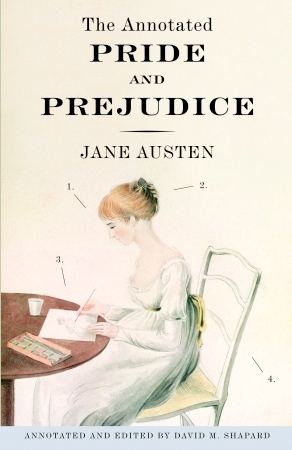
Pride and Prejudice
Cover art by Cassandra Austen

Pride and Prejudice by Jane Austen

Anyone unable to appreciate this book is vapid, insufferable, and probably too plain to dance with.

Obama Loses His Soul

Obama has announced that a debt limit deal is in the works that “is a victory for bipartisan compromise, for the economy and for the American people.” This is rubbish, of course; but even if it were true, Mark 8:36 comes to mind: for what does it profit a politician to gain the whole center, and forfeit his base? And I very much doubt he has gained the center.

Bloody Burger

HamburgerWhen it comes to a steak, cooking directions are clear. Rare, a steak is warm but uncooked in the center. Medium, it is pink in the middle. And well-done, a steak has no pink whatsoever. The reason it is safe to eat a rare steak is that disease is primarily limited to the surface, so as long as the outside is cooked, all is well.

The same does not apply to hamburger. Since hamburger is ground up steak, it is essentially all surface. As a result, hamburger should never be served or eaten rare (or medium—whatever that means for hamburger). Because hamburger is all surface, it has no middle.

When I first saw the movie Pulp Fiction, I was struck by the scene when Vincent takes Mia out to dinner at Jack Rabbit Slim’s. Mia orders a hamburger and their waiter, Buddy Holly (Steve Buscemi), asks, “How would you like that? Burnt to a crisp or bloody as hell?”[1] This was the first time I had ever heard someone ask how a patron wanted a hamburger cooked. Since then, it has been a common occurrence.

It happened to me today. I had lunch with my father and we got hamburgers. I ordered mine well-done, after bristling over the question; my father ordered his medium. When they arrived, they were identical: burnt to a crisp, which is probably for the best. Many times, I have seen companions who ordered medium or rare burgers get just what they asked for: a bad tasting, potentially deadly uncooked sandwich.

I like my steaks cooked very rare. As I tear into my partly cooked meat, I am reminded of the feeding of the big cats at the San Francisco Zoo. There is something primal about it—in addition to delicious. Hamburgers are another thing altogether. There is really only one way to cook them: enough to be safe and tasty, not enough to be dry and tasteless.

Unfortunately, I think the reason there has been this rise in the popularity of the bloody burger is that people think it is cool to eat meat rare. Certainly I think of people who order well-done (or even medium) steaks as clueless dolts who don’t properly appreciate beef. But there are plenty of people who eat their steaks rare not because they like it but because they think they should. Perhaps this is even most people. It is not surprising then that they would ignorantly take cooking directions designed for steaks and apply them to hamburger. It is, however, surprising that restaurants would go along.

Death to the bloody burger!


[1] This is not exactly right. Buddy Holly asks this of Vincent. When it comes to Mia, I believe she orders her hamburger and then adds, “Bloody.” But had she not said that, I feel sure that Buddy would have asked her.

Kiss Me

Sixpence None the Richer had a huge hit in the late 90s called Kiss Me. And why not? It is a sweet song, well executed. But I have a hard time believing that the success of the song was not, at least in part, due to the wonderfully romantic video (no doubt indicative of the whole marketing campaign once the song got a little traction) that went along with it. Take a look at this horrible (sorry) copy:

What is most remarkable about this video to me is how much they managed to change the look of Leigh Nash. When the song was released, she did not look like this. Here is what she looked like:

<%image(20110730-KissMe.jpg|300|299|Kiss Me Cover)%>

I doubt it is just me who thinks this is a modern “in your face” gal! This is the kind of woman with the intelligence and drive to get to the top of the music business. That girl (and I do mean “girl”) in the video is a marketing department creation intended to make men feel warm and protective. This works perfectly with the fragility of the song’s production. I’m not saying there’s anything wrong with that. But there is little doubt that if she and the rest of the band got past their anemic Christian “good boys and girls” mentality, they might be able to produce engaging adult music, and not just the occasional well-produced cover.

The Truth About the Economy in 2 Minutes and 15 Seconds

It has been hard for me over the past couple of weeks to write much of anything because of my anxiety regarding the debt limit. More and more, I think it is all just hopeless. As it is, even the supposedly good guys are offering only bad solutions. It all means that soon I should be back to doing what I was born to do: write about obscure things few people are interested in. But I’m not there yet. Until I am, here is an exceptional short video by the great Robert Reich.