2013 Review: Part 1

2013 ReviewAs it is the first day of 2014, and I have already discussed the last year in a general sense, it seems natural to go back and look at what I spent the last year talking about. This is the first of a six-part series of articles about what we were talking about this last year.

January 2013

The first thing you notice about this month is that it is when my love affair with the movie Romantics Anonymous started. In the end, no political scandal, no amount of bad behavior by our supposed leaders is going to trump a movie that will continue to delight me for the rest of my life. The first time I wrote about it was on the first day of last year. Apparently, I spent new year’s eve watching it, which is about as good a way to spend the night as anything else I can think of.

I also first wrote about something that has become a bit of an obsession with me, Live Long and Eat. It’s about how it is most healthy to be a little bit on the fat side. All those skinny people we see in ads and movies are actually bad examples for us. Let me put it in terms that Curb Your Enthusiasm fans can understand: it is better to be Jeff Garlin than Larry David. And remember, Jeff Garlin’s feature film debut as writer and director was I Want Someone to Eat Cheese With. Keep right on eating that cheese, Jeff!

The beginning of the month dealt with the Fiscal Cliff negotiations and my anger that the Democrats (Obama specifically) were doing a terrible job with those negotiations. After all, if they had not negotiated at all, taxes would have gone way up. The Republicans were not in a position to allow that. So why even negotiate with them. Give them the offer and say, “It’s that or income taxes go up on everyone and it will be your fault.” But in the end, a deal was made that was much better for the Republicans than they could reasonably have hoped for. One thing that wasn’t part of the deal was an increase in the debt ceiling. And as a result, we are still dealing with that situation today. Otherwise, on the political front, I was talking a lot about income inequality and I really started pushing filibuster reform.

Aaron SwartzOn 11 January Aaron Swartz killed himself. That resulted in a few articles about our social injustice but also about how depression works. There was too much of people trying to turn the whole tragedy to their own benefit: mostly by exonerating the government’s attacks on him and by just trying to pass it off as the act of a depressed young man. It makes me think of that part of the Bible where it says you aren’t allowed to beat your slave so badly that he dies within three days. Sure, depression is a terrible thing and maybe Swartz would have killed himself at some point anyway. But being hounded by the government made it so much worse. It’s like our entire culture is determined to destroy the best of what we are.

One thing our culture has lost is any sense of irony. Last January John Kiriakou was given two and a half years in jail for leaking information about the CIA’s torture program. And how many people in the CIA have been punished for actually torturing people. Let me think, there was that one guy that… No. Not him. How about that woman who… Oh, that’s right! Not only has no one been punished, no one has even been indicted. That’s because in America, torturing people is just fine. But revealing government secrets, well, that’s the worst thing a person can do. As a truly patriotic American, I am disgusted with my country.

Enjoy the entire: January 2013 Archive.

February 2013

This month saw the release of some of George Bush the Younger’s paintings. Some art “experts” even went to far to say that they were good. So much for the experts. Look, I’m not an artist, but I really like art and I learn as much about it as I can. And as a result, I can tell the difference between good art and really weak art. Bush isn’t terrible. But if he hadn’t been president, no one would take his work seriously. It is very much like the work done by men of his age and social class who take up painting late in life. This led me later to mistake some parodies of his work as the real thing. Such is the value I place in his work and his thinking. Speaking of which, I also wrote about Celebrity Painters. In general, I don’t like that kind of thing. But the fact is that Hitler really wasn’t a bad painter.

Most of the month, however, had me talking about income inequality in a lot of different ways. I wrote a lot about the minimum wage. The big thing about the minimum wage is that conservatives are always saying that it will cause companies to cut employment. The evidence just doesn’t support that contention. What’s more, as Dean Baker teaches us, prices are not set by the costs that companies pay to bring products to market. Just the same, employers don’t hire people to be nice. They hire employees because they need them. We get the same thing about the corporate tax rate. If you raise corporate taxes, they will just pass the costs on to the customers. No! That’s not the way the economy works and February was when I really started talking about the fact that conservatives really don’t understand economics or business.

Kathleen O'Brien WilhelmFebruary was also the month we first learned about Kathleen O’Brien Wilhelm. She is the Tea Party idiot who writes a blog for the Avon-AvonLake Patch. But you probably remember her as the woman who thought that deer crossing signs were a waste of money because, “Deer cannot read, do not obey the law and probably will cross where they wish.” I know, it sounds like an article from The Onion, but the woman is dead serious. I check up on her every couple of months and usually write something. But it gets harder because her articles rarely say anything. They are just the random “thoughts” of a committed Fox News viewer. Here most recent article for Christmas summed up, “Remember, this government has worked to take our guns, stifle our speech, and tear at our religious beliefs. It is time we stop them!” Yeah, those 80% Americans who are Christians are really being kept down. Oh, she also says, “As a Christian, do not turn the other cheek.” Because, you know, what Jesus said was important and all, but the NRA is really a high power.

The whole month shows a move on my part toward sarcasm. All of the talk about the fiscal cliff and the debt ceiling and the Sequester seem to have finally gotten to me. The Republicans were just talking gibberish. But the Democrats weren’t doing much better. I think this was the beginning of the end of my mostly positive relationships with relatively liberal writers like Greg Sargent and Ezra Klein and to a lesser extent Ed Kilgore. Someone like Matt Yglesias may annoy me a lot, but he never bores me; he never feeds me the Democratic Party line. Although I am a Democrat, that doesn’t mean I’m happy with it. Half of the party is useless. As I’m always saying, we have one good conservative and one good liberal party in the United States, and they are both in the Democratic Party. But to be a Democrat, you’ve got to maintain a sense of humor.

Enjoy the entire: February 2013 Archive.

Frankly Curious in 2013

Happy new year to all of you. It seems like a good idea to go back over the last year and look at what has happened to Frankly Curious. It would have been impossible for 2013 to have been as good a year for the website as 2012 was. During that year we went from almost nothing to a fairly widely read site. This was thanks to two other websites in particular: Crooks & Liars and then The Reaction with the other bloggers who write there. Readership went up by a factor of about five. It’s hard to beat that. But this last year, our readership has doubled. We now consistently get over 2,000 non-spam visitors per day.

What really impresses me is that the site has a loyal following. The average visitor drops by three times per month. And a shocking number come by every day. This really makes writing for the site a lot easier. I know when people first start writing a blog, the hardest thing is knowing that you don’t have an audience. But even when you do have an audience, the casual reader doesn’t mean nearly so much as the reader who is actively engaged with your work. So I’m really grateful that I have people who come back again and again. I know it doesn’t mean that these people are crazy in love with the site. But there is a lot of competition on the web and I’m touched that many of you think from time to time, “I wonder what Frank is ranting about today.” And I try not to disappoint. I try to constantly provide new ranting.

There have been a couple of changes on the site this last year too. One is that William Brown has started a blog, Will Fully. He’s still in that pre-addiction phase of blogging where he goes for long periods of time without writing anything. But I think he’s a natural. He understands the format and is always interesting. What I’d really like to see him do is write about consumer affairs. If I want to find out the best place to go to buy plastic wrap or a computer motherboard, Will is the guy I turn to. He is truly amazing. He’s also quite funny when he wants to be.

Sadly, Andrea English has gone onto better things. I helped her start her own new blog Nice Atheist Girl. We haven’t shut down Curiously Clever, but she’s reposted much of the material there and is not writing for it anymore. I do have some thoughts on how to keep her going with Curiously Clever, but I think for the time we have to assume that it is dead. On the positive side, her website is doing pretty well, and on Twitter, she’s got about ten times the number of followers I do. (In my defense, I’m not much of a 140 character kind of guy, as I think is clear.)

More experienced bloggers have cautioned me that I may burn out. I know what they mean. But I just can’t bring myself to become one of those bloggers who primarily quotes other writers. If I don’t have anything important to add to what someone has written, I’ll just tweet out the article and leave it at that. What’s more, I think people come here to hear my voice. So I think it is better to provide my own two paragraph overview of what someone else has written than to just quote them. I think it is more interesting for the reader, but I know it is more interesting for me. What’s more, in describing someone else’s thinking, I get to understand it better myself.

There is still the question of what will become of the birthday posts. I’m more and more inclined to change them into brief essays about a single person. As it is, the birthday posts are very personal. I skip people for my own reasons and even worse, I skip people because I don’t realize that it is their birthday. Two big examples of this are the theatrical director Joseph Hardy and and revolutionary Che Guevara. Both men weren’t even mentioned in last year’s birthday posts and I could easily get whole articles out of each.

Otherwise, what the future holds for Frankly Curious, I cannot say. Running the blog has been a great experience for me. It is often an ego boost. Recently, I was quoted in the San Francisco Chronicle, Walk on the Water Slide: Lou Reed played Marriott’s Great America in 1986. And it’s made me a better writer—at least of the kind of stuff I write here. But if it just fades away, that’s okay too. As I noted just two days ago, everything is ephemeral. The main thing is that it is fun while it lasts. And at least for me, Frankly Curious is still fun.

Austerity Is Not Working

Give to the WealthyI’m trying, as much as possible, to make my political writing more understandable. It’s very easy to throw around words that don’t mean much to most people. One of those words is “austerity.” In a general sense, there is nothing special in the word. I live a life of great austerity because I don’t have much money. And in a political context, it means much the same thing. Unfortunately, it implies a lot that is just nonsense.

In America and especially in Europe, people who call for austerity are really calling for deficit reduction. But as we’ve seen, it is not just any deficit reduction. When France reduced its budget deficit by raising taxes instead of cutting spending, European Commissioner for Economic and Monetary Affairs, Olli Rehn was furious. Rehn and others claim that raising taxes is bad because it will slow economic growth while making poor people go hungry will not. You don’t have to know much about economics to know what nonsense this is. What’s really behind this is that Rehn wants budgets to be balanced on the backs of the poor because they aren’t his friends; he doesn’t want them balanced on the backs of the rich because they are his friends.

Austerity in 1937The idea is all the same, though: balanced budgets will lead to business confidence and the economy will improve. I’ve shown many times before that this just isn’t true. Let me repeat it here very briefly. When the economy is booming, government borrowing depresses the economy because private businesses have to spend more money to borrow so they can invest in and grow their businesses. But that isn’t the case right now! In fact, private businesses are sitting on trillions of dollars of cash and doing nothing with it. So all that a balanced government budget would do is take even more money out of the economy and make the economic downturn worse.

This morning, Paul Krugman put together a great graph that shows how this is working in Europe. There are five countries in Europe that have been struggling the most: Greece, Italy, Portugal, Spain, and Iceland. These countries are usually referred to as GIPSI (gypsy) or, by people who are jerks, PIIGS (pigs). For the last 5 years, these countries have been cutting their budgets like good little boys and girls, because the heads of the European Union have told them that this is the medicine that will fix their ailing economies. Well, how is that going? Not well:

State of the Euro

On the y-axis, we see that the countries can now borrow money at a lower rate. This is because the European Central Bank (ECB) decided, after a long delay that they would be the lender of last resort; in other words, the ECB is guaranteeing that the countries won’t go bankrupt. But look at the x-axis. Despite all the austerity: the budget cuts and “belt tightening,” the governments of all these countries now owe more than they did before!

How can that be? After all, aren’t they spending less than they were before? Well, yes they are. The problem is that by spending less money, they put less money into their economies. This meant that more people lost their jobs—both government workers and private sector workers. Consider an example. There’s some government worker who was planning to buy a new car. But now that he’s lost his job, he can’t buy a new car. That means the guy who was going to sell him that car didn’t make his commission, so he isn’t going to buy that flat screen television he was looking forward to. And on and on. By cutting government spending, the economy gets even more depressed.

But how is it that the government that is spending less actually owes more money now? Well, spending is only one side of the budget. If you cut your spending by 3% while reducing your revenue by 5%, you are going to owe more. All those spending cuts meant that people in the economy didn’t have as much money. As a result, they didn’t owe the government as much taxes. Thus, all the austerity—all the hardship placed on the working classes—actually made the problem worse.

What’s especially bad about this is that all of this was predictable and was predicted by a large number of economists. It isn’t hard economics. In fact, the economics used to justify such austerity programs was hard. Economists and politicians had to twist themselves into knots to justify how cutting spending in a depressed economy would help. They used an idea called “expansionary austerity” promoted by a guy named Alberto Alesina, who by all accounts is a very smart economist. Instead of the obvious idea that if people have money they will spend it, Alesina flipped this on its head. He claimed that if businesses see governments getting their budgets in order (But only through spending cuts, not tax increases!) then they will have “confidence” that will make up for the massive decrease in demand that budget cuts cause.

That’s fancy foot work. And I have to admit, as a non-economist but someone who is very good with math and all that, I’m impressed with the theory. It does take a smart guy to come up with a theory like that. But it fails the Ockham’s razor test. We already had a very simple model of how the economy works. And as is usually the case, the simple model was the one that was right, not the complex one with its loopy loops.

Yet here we are. Throughout Europe and the United States, conservatives are calling for more budget cuts. It doesn’t matter how much evidence piles up that this is exactly the wrong thing to do. But they aren’t pushing these policies because they work. They are pushing these policies because these are the policies that they always favor. And now they have an excuse for pushing the policies. The fact that the work of Alesina & Ardagna and Reinhart & Rogoff has been shown to be wrong doesn’t matter. They still use this work to justify their policies. They want to enrich the rich and impoverish the poor.

We declare our right on this earth to be rich, to be ever richer, to be respected as the rich, to be given the supreme rights of the rich in this unjust society, on this earth, in this day, which we intend to bring into existence by any means necessary.

Afterword

It was easier to parody Malcolm X’s quote than Sartre’s. Actually, Sartre’s quote is closer to what I believe. Malcolm X’s quote is almost plaintive, “We demand to be respected.” In our society he was thought to be so radical and scary. But what was he asking for? Just the simplest of things: human dignity and respect. Our society seems to have gotten worse since that time. Now Sartre better speaks to our larger problems, while Malcolm X’s demand still largely goes denied:

I was not the one to invent lies: they were created in a society divided by class and each of us inherited lies when we were born. It is not by refusing to lie that we will abolish lies: it is by eradicating class by any means necessary.

By the way: those means do no include armed rebellion. Modern war is the most unjust thing imaginable. If a group of people want to go to war, that’s their business. But they always end up harming those who just want to live their lives. These are the other 99%—Jesus’ meek. War makes things worse. War exists to perpetuate itself. It is not a form of politics.


Images are from a great cartoon by Brian McFadden in the New York Times. Check it out!

Charm, Magic, and Kevin King

Kevin KingI wasn’t going to write any more today. I’m tired. Really tired. The holidays wear me out. What’s more, it is new year’s eve and I hate new years eve. I feel like I, as a radical pedestrian, am not allowed to leave the house tonight. I left earlier to pick up some food for dinner. And in that brief time out, someone tried to run me over. It’s no big deal. People are always trying to run me over. I don’t take it personally. I don’t think they know the kind of books I write. I don’t think they know that I am a radical pedestrian who would not only take away their cars, if they complained I would deprive them of life, libertry, and the pursuit of happiness. In that order.

Anyway, stuck at home, I went over to YouTube to check out how many people have viewed my video Tea Party Idiot Rant – Up with Chris Hayes, which is pushing 10,000 views which is a whole lot for a guy who is normally happy with a single thousand. But it offered me some close-up magic to watch, so I clicked. It was a guy doing a close-up linking ring kind of trick and I found it really annoying. But there was a link to The Close Up Magic of Kevin King. Now, I had never even heard of Kevin King but it looked like he did card work, and that’s pretty much the only thing I’m really interested in, so I clicked over.

And glad I was! In addition to everything else, he’s really funny. What’s more, and this cannot be over-stated, he’s charming. I’ve always had this problem with Michael Close. Close is brilliant. He understands all the problems with magic and he does a great job of getting around those and performing magic that is truly entertaining. But here’s the problem: I don’t like Michael Close. I have this feeling that if I ever met him, he would be a total dick. Oh! That’s right: I once corresponded with him. And although it was very pleasant, the man exuded “People don’t appreciate me as much I appreciate me.” And on stage, he isn’t charming. Almost anyone else would be more successful performing his beautifully crafted magic. So that’s what I got from Kevin King.

But before I introduce you to him, we need to talk about another magician: Derek Dingle. Whereas Michael Close is great at taking other people’s ideas and turning them into entertaining routines, Dingle was a true innovator. But he was also, most clearly, a miserable bastard, and I don’t say that just because he was British. Dingle performed with the same level of excitement as the cashier at the gas station: he was putting in his time. That doesn’t mean he wasn’t great and funny as hell. Unlike Michael Close, I would love to have had the opportunity to get drunk with Derek Dingle. (BTW: that appears to be his real name. It sounds like a porn actors name. I’m just saying.) Anyway, watch as he does, one of his simpler tricks, the Fabulous Jumping Card Trick. Watch it, not just because it’s a lot of fun, but because it’s important to what I’m going to say later:

I actually do a couple of Dingle’s card tricks. And by that, I mean that I can do them, I never do them for anyone. The reason is that his personality is so woven into the tricks that it never quite works to do them as myself. And that brings me to Kevin King. In the following video, I think that I see him do at least three Derek Dingle routines: the coin routine, the triumph, and something along the lines of the Fabulous Jumping Card Trick (although the method is different). What I find remarkable is that he makes it all his own. And as I said, he’s charming as hell. You want to spend time with him.

It turns out that Kevin King also does lectures at business conferences about Verbal Perception Manipulation. Basically, he talks to a group and says nothing that makes any sense. There is supposed to be a point to it, “The secret to business success is to communicate clearly.” I, however, have found that this is exactly the opposite of the truth. American business is mostly a bunch of nonsense. So many times, I have seen people get important jobs because they can talk gibberish and convince management that they know what they are talking about when they don’t know a thing. So King’s routine clearly amuses the management types who go to these conferences. But I doubt they learn anything more than they do from his magic shows. And that’s just fine. King is able to make a living. And American business does what all businesses do when they are riding the wave of an empire in decline: through graft and connections and sometimes by buying companies that make money the old fashioned way of producing products that people want to buy. You know, products like Kevin King’s performances.

Henri Matisse

Henri MatisseThis is the last birthday post of the year. But it is not the last birthday post. For one thing, I’m not sure what I would do without my birthday posts. Yes, I complain about them all the time. Yet they give my life a certainty that I just don’t get anywhere else. It’s like the old stories of Winchester Mystery House, that the owner, Sarah Winchester, thought she would die if she stopped building it. Except in my case, if I knew I would die if I stopped writing these things, I wouldn’t even be writing this one. That’s not because I especially want to die. It’s just that I don’t much care. And since not writing this series will not go along with losing the responsibility of continued existence, I might as well keep writing. A man has to work, you know.

The second reason this isn’t my last birthday post is that it hasn’t been a year. This series started just by chance on 26 February 2013, with Fats Domino at 85. It wasn’t much of a post: just the mention of his birthday and a video of him doing “Blueberry Hill.” The next day, I did Irwin Shaw, because it was his 100th birthday. That was a hard one, because John Steinbeck was born that same day 11 years earlier. Both authors have been enormously important to me. Over the year, based in part on reader comments, I’ve changed the format of the series. At one time I just listed people, going into depth when I felt like it. Now I pick a few people to talk about in a bit of depth and then dump the rest of them into my “other birthdays” paragraph.

I do think that on the 26th of February, I will change things. But I suspect that I will give it about as much thought as I gave the series when I started it. Anyway, onward. Today’s a big day, which is unfortunate, because I’m exhausted.

On this day in 1714, the mathematician Arima Yoriyuki was born. I don’t know much about him except that at the age of 51, he was able to find a rational number that approximated π to 29 digits. I have no idea how he did it. But it reminds of what I used to force my physics students to do. I gave them strings and rulers and and made them measure (as best they could) the ratio of the circumference of a circle to its diameter. Now that’s very simple. Everyone knows that c = 2πr. But until they did it, they really didn’t understand what π was. It was just some number.

John Denver was born in 1943. What most people don’t know about him is that he was a big proponent of civilians in space. In fact, he was supposed to go up on the space shuttle. But he was prevented, because the government wanted a school teacher to go up instead. So Christa McAuliffe went and she died. But after that Denver still seemed to be kind of angry that he had been bumped. So I wasn’t surprised when 12 years later, he crashed into the Pacific Ocean and died. He was living on borrowed time. Not a great musician, but he had his moments and he was a great live performer. His extreme vibrato offends me to this day. But he did an excellent job of picking other people’s music to do. That included especially John Prine, but it extended to his own people like John Martin Sommers who wrote “Thank God I’m a Country Boy” and Mike Taylor who co-wrote “Rocky Mountain High” with him. And like many artists, he really did get better as his popularity waned. Anyway, here he is doing “Rocky Mountain High” live:

Ben Kingsley is 70 today. He is absolutely one of my favorite actors. He was the only thing that made Iron Man 3 even slightly watchable. And I’d love to provide you with a nice video clip of Kingsley doing his thing. But with an actor like him, how can you pick a single thing? So I’ll provide you with the trailer of a really good movie that you probably haven’t seen, Turtle Diary (typically not available on DVD):

Other birthdays: German expressionist painter Max Pechstein (1881); songwriter Jule Styne (1905); actor Anthony Hopkins (76); guitarist Andy Summers (71); and gymnast Gabby Douglas (18).

The day, however, belongs to the great painter Henri Matisse who was born in 1869. Unlike many painters, Matisse was truly creative. That isn’t to put other painters down. Think of Vincent van Gogh: he had a vision—a single vision. And he repeated it again and again in different contexts. And we need that. But Matisse was constantly changing. I know that a lot of people think this isn’t so. They think of Red Room and that is what Matisse is for them. Well, if that is all Matisse were to me, he’d hardly make the “other birthdays” list. He’s hard to pin down stylistically. Some of his stuff seems downright neoclassical to me. Other seems to verge on the primitivism. Regardless, it is more expansive and compelling than anything by Picasso.

The following is one of his last paintings, Annelies, White Tulips and Anemones. He painted it while in poor health and that perhaps explains its simplicity. But I think it works, especially the way the colors work together:

Annelies - Henri Matisse

Happy birthday Henri Matisse!

Hopeless GOP Campaign to Stop “Fools”

Sarah PalinMatt Taibbi has written an interesting article over at his post at Rolling Stone, On Christmas, Republicans Quietly Declare War on Themselves. As usual with Taibbi, it’s a fun read so I highly recommend that you take a gander. But I think he is basically wrong.

His thesis is that the Republican Party spent the Bush years treating the electorate as though they were a bunch of fools, so it should be no surprise that their party is now nominating a bunch of fools. In a comparison that perhaps only Taibbi could come up with, he says that the Bush years were the political equivalent of Married With Children, “an ongoing self-parody routine where couch-potato America tuned in week after week to cheer on the nitwit hero as he and his brood took on a world of self-serious snobs and their silly ‘civilized’ conventions (like, say, international law).” You know: political junk food that you know will make you fat and impotent, but oh don’t it taste good!

George W. BushI agree with him on one point: John McCain’s pick of Sarah Palin—”one of the few potential candidates in the Republican Party rolls even dumber than George Bush”—was entirely Steve Schmidt running the Karl Rove playbook. And since I’m on the subject: liberals like Schmidt a lot more than they should. He came off looking pretty good in Game Change. But that’s like saying that Othello came off looking good in his play. Yeah, Iago is the true villain in that play, but Othello is still the one who strangled Desdemona. Schmidt is the one who thought so little of the American people and of the country generally that got Sarah Palin nominated to be vice-president of this country. Schmidt should be living in a cave somewhere if not in a grave after his quite rational decision to kill himself. That is, after all, what Othello did.

But here’s the thing. There is nothing new about conservative politicians saying wacky things. The Todd Akins and Richard Mourdocks have been around in the conservative movement forever. These are the people who President Eisenhower was discussing when he wrote:

Should any political party attempt to abolish social security, unemployment insurance and eliminate labor laws and farm programs, you would not hear of that party again in our political history. There is a tiny splinter group, of course, that believes that you can do these things. Among them are a few Texas oil millionaires, and an occasional politician or businessman from other areas. Their number is negligible and they are stupid.

Of course, Ike was wrong when he said their number was negligible. Then, as now, they represent 20% of the nation and 40% of the Grand Old Party. And they were out there in the 1950s talking about how God wanted black people to be poor. They were talking about how Jews controlled the world. They were talking about how water fluoridation was a communist plot. This was all done when Karl Rove was a little boy.

Karl RoveNow, there is little doubt that young Rove looked at all this nonsense and thought, “A large segment of the American public is made up of complete idiots!” He didn’t create it. He just used it. The problem is that using it gets harder and harder. Not even half of the Republican Party is made up of these “nuts” (Karl Rove’s term). So the rest of the Republicans and pretty much all of the Democrats have to be deceived into thinking that Republican candidates aren’t part of the Crazy 40. But that’s really hard in a world that is so interconnected. Within second of Richard Mourdock saying that pregnancies resulting from rape are “something that God intended to happen” people know about it on Mount Everest.

So now, the Republicans and the national Chamber of Commerce are hooking up to spend $50 million this year to stop “fools” from running for office. This will not work. For one thing, since 40% of Republicans (the Crazy 40) are these very fools, that means that roughly 40% of the people who run for the Republican nomination will also be fools. Most of it just comes down to abortion absolutism. If you don’t think that rape gives a woman the right to abort a pregnancy, you are going to run into rhetoric about how God intended it and how you ought to turn lemons into lemonade.

This is why the smart Republicans are doing the only thing that just might work: voter suppression. If only the Crazy 40 vote, it doesn’t matter what fools the Republicans nominate. And just like the non-crazy 60% of the GOP, the Crazy 40 will also do the bidding of the super rich. And that’s all that matters.

Why Conservatives Think Government Doesn’t Create Jobs

John Maynard KeynesI think that it is important to understand what conservatives mean when they say certain things that make absolutely no sense. The big example of this is, “The government can’t create jobs.” This sounds like nonsense on the face of it. For one thing, it is usually said by some politician and you can’t help but respond, “The government created your job!” But that’s not what conservatives mean when they say that the government can’t create jobs. But don’t misunderstand: they are still wrong. It is just that there is a certain amount of sense in what they are saying.

When Senator Idiot says that the government can’t create jobs, he means that the money that is used for his job comes from taxing people. If that money didn’t go to the government, the tax payers would spend the money and thus create one or more jobs in the private sector. Thus, the government creates a job only by removing a private sector job. This is not a totally stupid idea. There is something to it and under certain circumstances it is even true.

The problem is that, like most conservative economic thinking, it is simplistic. Consider our current economic system where we are very far from full employment. Money is just sitting around not being used. Companies are sitting on piles of cash rather than investing and hiring because demand is so low. In this situation, we could fire Senator Idiot and put the money we pay him back into the private sector by reducing taxes.

In a booming economy, the result would be another job in the private sector for Senator Idiot or someone like him. But in a weak economy like the one we now have, the result would be even more money in the private sector, where it would just sit around doing nothing. So currently, and really, for about the last 13 years, government spending really does create jobs. When government spending does not create jobs is almost never. But there are times. Remember at the end of the Clinton presidency? Remember how Clinton was reducing spending? That was the correct thing to do, because the private economy was buzzing. Personally, I think that if a Republican had been president, he would have continued to spend. But that’s a story for another time.

Even at full employment, when the private sector is booming and businesses are desperate to borrow money to invest and hire, it is fine for the government to take some of that money and hire. There is nothing necessarily better about a private sector job than a public sector job. It is just in this case, you can’t say that the government is creating a job, because the money being used to create that job would be used by the private sector to create a job. But that is very rarely the case.

Now most conservatives don’t even know this much. They are just repeating a talking point. So when you talk to them, you will probably need to educate them as to why conservatives claim that the government doesn’t create jobs. And that’s actually helpful because it gives you some common ground on which to start your discussion, “Yes, the government doesn’t create jobs when the economy is at full employment.” From there, you can talk about all the money that is just sitting around doing nothing in a depressed economy. You can talk about how business owners don’t hire when they don’t have many customers. And before you know it, that conservative will be talking like a Keynesian.

The Beauty of Abandonment and Decay

Speaking of The Third Man… There’s that one most famous scene where Joseph Cotten and Orson Welles go up in the Wiener Riesenrad and Welles, as Harry Lime, talks about how insignificant humans are. “Look down there. Tell me. Would you really feel any pity if one of those dots stopped moving forever? If I offered you twenty thousand pounds for every dot that stopped, would you really, old man, tell me to keep my money, or would you calculate how many dots you could afford to spare?” The film takes place in Vienna, after World War II. Few people have any money and so the amusement part is abandoned. There’s something very special about that. And when Lime not so subtly tells Joseph Cotten, as Holly Martins, that he might just throw him out of the car, it’s believable.

Most people find abandoned places creepy. That’s especially true if the location is one where people usually are—in abundance. Like an amusement park. When it’s empty, it seems almost post-apocalyptic. But I like it. To me, it is the way things ought to be. It reminds me of 10,000 year old settlements like Catalhoyuk. The things we humans make outlast us by a long time. In a sense, it shows that we are better craftsmen than God. But even still, what we do and who we are only matters right now.

Shakespeare wrote only 400 years ago, yet the language has changed so much that we probably wouldn’t even understand the words if we heard them spoken the way they were while the poet was alive at the Curtain theater. And Shakespeare is lucky. Many thousands of people over the years have worked very hard to keep his work alive. And for what? The plays of Shakespeare like the work of all humans is destined to disappear, just as humans themselves. And I see nothing sad about that. In fact, it is a testament to the greatness of humans that we take pleasure in the creation of the ephemeral. Many of us even create art without any intention of sharing it with anyone—just for the joy of doing it.

It is with these thoughts in mind, that I came upon an article this morning, The 38 Most Haunting Abandoned Places on Earth. For Some Reason, I Can’t Look Away… Do click over, because the photos are beautiful. But are they haunting? I don’t think so. They are, instead, completely alive. Consider, for example, this picture of the Great Wall of China:

The Great Wall of China Overgrown
Source: reddit.com

The article explains, “The Great Wall is 13,170 miles long and vast sections receive little maintenance because of the enormous cost of caring for such a monumental structure.” I’ve never especially wanted to see the Great Wall. But if I could go here, where this picture was taken, well, that’s another matter entirely. That’s a beautiful thing: the forest is literally eating the wall. Imagine if you had built the wall and lived for thousands of years. Would you do something to stop the destruction of your wall? If you did, you would be a fool. You would be so much better to make something else that is ephemeral like yourself. Everything is ephemeral. Even the universe is ephemeral.

God, being a creation of man, is ephemeral. Just look at this abandoned church with its beautiful stained glass windows. As with so much in life, they overshadow man. Or am I wrong? When you looked at the picture, did your eyes avoid all the beautiful art that this church still is? Did your eyes instead, lock onto the child’s coffin in the middle of the picture? I wonder if it’s empty. And if it isn’t, does it matter?

I am not afraid, because I know the answer to that question.

The Third Carol Reed

Carol ReedWe have a big day for music today. But ultimately, the day belongs to a filmmaker.

On this day in 1853, the great French composer Andre Messager was born. He wrote very lively and lyrical compositions like Solo de concours, which we hear here:

Rock music innovator Bo Diddley was born in 1928. He was one of the most important people responsible from changing the blues into rock music. Here he is doing his signature song “Bo Diddley”:

The singer-songwriter Patti Smith is 67 today. Here she is back in 1976 doing “Horses” and Billy Roberts’ “Hey Joe”:

Other birthdays: painter Louis-Jean-Francois Lagrenee (1724); Miss America host Bert Parks (1914); singer-songwriter Del Shannon (1934); bluegrass musician John Hartford (1937); singer Davy Jones (1945); comedian Tracey Ullman (54); and golfer Tiger Woods (38).

The day, however, belongs to the great film director Carol Reed who was born in 1906. He is known for films such as Odd Man Out, The Fallen Idol, and the musical Oliver! But I mostly know him for having directed one of my very favorite films, The Third Man.

Here is the trailer for The Third Man. It is absolutely terrible. “He’ll have you in a dither with his zither”? Oh my God! But the film really is great. Like The Fallen Idol, it was written by Graham Greene. If you have never seen it, you really must. And if you have, it is worth watching again. It is always even better than you remember:

Happy birthday Carol Reed!

What Will Conservatives Blame Our Bad and Expensive Healthcare System for Now?

Aaron CarrollAaron Carroll has another one of his Healthcare Triage videos out. I have to say, it’s a mixed blessing. In general, I agree with everything Carroll has to say about just about everything. So the information that he presents is really good. But does he have to try so hard to act and sound like his producer John Green? Green is a good example of how you can be really successful at something that people think of as creative, while not being the least bit creative. It’s been about a year since I’ve watched any of Green’s highly polished videos because (1) they are all the same and (2) he generally manages to waste ten minutes of my time without informing me of anything at all. Compare him to CGP Grey, and there is no contest. Of course, Grey doesn’t put out videos every week like his livelihood depended on it. (Oops!)

Carroll’s newest video is “The Sky Isn’t Falling.” That’s great, because that’s what I try to explain to people in my life. If you’ve heard some outrageous story, chances are it isn’t true. And if it is true, it is most likely not indicative of a trend. And if it is indicative of a trend, it’s a new Republican plan to stop people from voting. Carroll is a doctor, so he’s talking about doctor stuff. And it is really interesting. It turns out that our kids drink less than kids in other comparable countries. And they smoke less. They have less sex. Pregnancy rates are down. Stealing is down. Assault is down. It isn’t all good, but it mostly is. The main thing is that our kids are fatter than kids in other countries, but even there, the trend is good: our kids are getting less fat.

But Carroll is such a white bread kind of guy, he won’t make the important connection that I will. We here in America spend about twice what comparable countries do on healthcare and don’t even provide healthcare for roughly 20% of our citizens. Conservatives like to blame this on the unhealthy lifestyles of Americans: we’re fat; we smoke; we’re violent. But the data that Aaron Carroll presents indicates that this is not the case. So what exactly are the conservatives going to blame our poor healthcare system that nonetheless costs us a fortune?

I’m not being naive here. That was just a rhetorical device. They will blame it on whatever is handy. Remember when the deregulated collateralized debt obligation (CDOs) caused a financial crisis? Or when deregulated Savings & Loans caused a financial crisis? Or basically when any kind of deregulated thing caused catastrophe? Remember what the conservatives always said was the real problem? It was the fact that there was still some regulation. In a truly, completely, “more mythical than A Midsummer Night’s Dream” world, there would be no problem.

So if we aren’t being over-charged for bad and incomplete healthcare, it must be the government’s fault. It must be that Medicare exists. Or Medicaid. Or food stamps! Whatever. It doesn’t matter. The main thing is that it can’t be that we have a totally screwed up pseudo-free market healthcare system that doesn’t work. Remember how the conservative mind approaches problems. First, it eliminates all possible solutions that contradict ideology. Currently, that eliminates pretty much all solutions. Then, from the couple of possible solutions left over, it picks one. It doesn’t matter how the solution is picked, because they are all useless. The conservative hope is that the problem fixes itself, so that their useless “solution” is eventually forgotten.

It is important to remember, however, that things are in generally not so bad. And this is despite the conservatives doing everything they can to make the world the worst place possible.

Happy new year!

Don’t Cry for the Democrats

Don't Cry for the DemocratsI’m not big on predictions, especially political predictions. But back in July, I did offer up, The Next Three Election Cycles. That was not so much a prediction as it was an explanation of what I thought it would take for the Republican Party to make substantial changes in order to start winning national elections again. The predictions in the article, however, still look pretty good.
I said that the Republicans will likely pick up a few seats in both the House and the Senate. What’s more, I said there was a 50% chance that the Republicans will retake control of the Senate. The reason for this is that 2008 was such a great year for Democrats. They have to protect a large number of seats compared to the Republicans. The fact that the Democrats still have a 50% chance of holding onto the Senate in an off-year election should give you some idea of just how badly the Republican Party is doing.

And it is important for the Democrats to maintain control of the Senate. There are lots of federal executive and judicial nominations that Obama will need to make the last two years of his presidency. So it would be really good if the Senate stays in the hands of the Democratic Party. But it wouldn’t be catastrophic if it didn’t happen. And the reason it wouldn’t be catastrophic is that if the Republicans gain control of the Senate, it will be for two years, and two years only.

This morning, Ed Kilgore helpfully reminds us that the political landscape will be infinitely better for Democratic Senators in 2016. Instead of trying to hold onto the gains they made in 2008, it will be the Republicans who are trying to hang on to the enormous gains they made in 2010—you remember: Obama’s “shellacking.” Kilgore provides the numbers:

Check out what happens two years from now: 24 of 34 seats will be Republican-held. All ten Democratic seats at risk will be in states Barack Obama carried twice. And seven of the GOP seats will also be in Obamaland.

Remember, if the Republicans take control of the Senate after next year’s elections, they will only take control by the smallest of margins. In fact, people are talking about there being a 50-50 split in the Senate, requiring Joe Biden to spend most of his last two years as vice-president hanging out at the Senate. So just with those numbers, the Senate will go back to the Democrats in 2016. (I predicted this as well in my article.)

But it is even worse for the Republicans. The 2016 election will be “on year”: a presidential election. So the entire electorate will be more liberal. So there will be a Democratic Senate after the 2016 election. That isn’t a debatable point. What’s more interesting at that point is what will happen to the House. Every day that goes by, the great Republican gerrymandering coup of 2010 gets less powerful. So by 2016, the Democrats could take back the House. And that has to cause thoughtful Republicans a great deal of worry. After all, they will be but four years away from another gerrymandering opportunity, but this time it will be during a presidential election. The Democrats might gerrymander the Republicans right out of existence.

Regardless of all the predictions you are going to hear over the next couple of days, remember this: the 2014 elections are not going to be a big deal for either party. About the only good news that the Republicans might get is that they control the Senate. And that will last exactly two years. The Republicans are a dying party. And having a slim majority in the Senate may be the last thing they have to celebrate for a very long time.

Friendship, Character, and Jon Polito

Jon PolitoOn this day in 1800, Charles Goodyear was born. He was an inventor of processes for the manufacture of rubber—especially vulcanize rubber. What I think is most interesting about him is the fact that the Goodyear Tire & Rubber Company was named after him. But the company was founded by another inventor Frank Seiberling. And he did it almost 40 years after Goodyear died.

The great Mexican muralist David Alfaro Siqueiros was born in 1896. I love his work. But he was a Stalinist who was actually part of a plot of assassinate Leon Trotsky. That does kind of spoil things a bit for me. I’m not a great admire of Trotsky, but he at least maintained many of the ideals of the Russian Revolution. Mary Tyler MooreStalin was nothing but a ruthless dictator. Nothing but the Russian Hitler. And a man responsible for many millions of deaths of his own countrymen. I understand that people on the outside didn’t have all the facts, but I think it is was clear by the early 1920s that Stalin was a bad guy. Siqueiros’ support of him in 1940 does not speak well of him.

The actor Mary Tyler Moore is 77 today. She is best known for the television shows The Dick Van Dyke Show, which ran for five seasons, and then The Mary Tyler Moore Show, which ran for seven. I loved both of those shows, but it was mostly just because they were both so well written. I rather prefer Moore in serious roles. She was amazing in Ordinary People, and even more in The Gin Game. She added a level of fear to the part that was totally absent from Jessica Tandy’s performance of it. I can’t find a clip of that, so here she is in Ordinary People:

The actor Jude Law is 41. By the standards of British actors, I would have to say that Law is not very good. Passable, but that’s about it. The reason I bring him up is that Wikipedia lists him as, “actor, film producer and director.” This is standard practice for Wikipedia and I think it is wrong. Law’s directing credits consist of the “Bird in the Hand, A” segment of Tube Tales. So he directed one-ninth of an 84 minute film. As for producing, he was one of seven who produced the horrible remake of Sleuth and one of ten who produced Sky Captain and the World of Tomorrow. Note that he starred in both the films he “produced,” so the extent of his producing was probably just that his acting contract required that he be given producing credit. Look, I understand. There are actors who really are writers of enough merit to be listed in Wikipedia. For example, Kirk Douglas. But Jude Law is an actor, and a very successful one at that. But he is not a director and he is not a producer. At least, he isn’t either of those things to the level that Wikipedia would list him for them if he weren’t a famous actor. So can we stop pretending? It turns out that Jude Law is also a rock climber. Why not mention that? “Jude Law is an actor, producer, director, and rock climber.” It would make as much sense. And it would be as insulting to professional rock climbers as it is to professional film producers and directors.

Other birthdays: mathematician Thomas Joannes Stieltjes (1856); father of libertarian environmentalism, which is interesting but wrong, Ronald Coase (1910); very interesting physicist and traitor Klaus Fuchs (1911); Bengali painter Zainul Abedin (1914); the great Australian painter Albert Tucker (1914); chicken “nugget” inventor Robert C Baker (1921); actor Ed Flanders (1934); actor Jon Voight (75); musician Rick Danko (1942); actor Ted Danson (66); screenwriter Paul Rudnick (56); actor Jennifer Ehle (44); and actor Danny McBride (37).

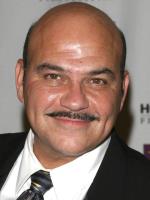
The day, however, belongs to Jon Polito who is 63 today. He is one of my all time favorite character actors. He is probably best known for being in various Coen Brothers films. He absolutely steals Miller’s Crossing in the part of Johnny Caspar, the psychopathic gangster with a strong sense of ethics. He is so perfect in that part, because he really doesn’t want to be a crime boss. He just wants the level of respect that is owed to him. And even though he’s the “bad guy” in the film, he’s right. If Leo acted properly, there never would have been a problem with Caspar. And it is sad when he meets his end.

I first saw him in the role of Willy’s boss Howard in the Dustin Hoffman Death of a Salesman. And he’s great. But I would so love to see Polito play the part of Willy Loman. It’s almost like he was born to play it. He would kill the role. The thing is that the role is all subtext—what isn’t said. And Polito is the king of that. Unfortunately, great actors like Jon Polito are generally relegated to supporting cast. And so he’ll likely never get the chance to play the really great roles like Willy Loman or Juror #3 in 12 Angry Men. But as a result, he probably has a better life. He is famous enough for it to be flattering but not so much it is annoying. And he works all the time doing a lot of different stuff. But as a viewer, I miss out. Still, it is a great pleasure to watch him work, regardless of what he does.

Happy birthday Jon Polito!