
 I’m not going to go over what’s happening because there’s been a lot of good coverage of it (see links below). But Michael Kinsley wrote what was supposedly a review of Glenn Greenwald’s new book, No Place to Hide. But it wasn’t a review. You get no idea what’s in the book. Kinsley’s article is little more than an apologia for the mainstream press and its general adherence to keeping the government’s secrets.
The part of the article that isn’t an apologia is nothing more than a childish personal attack on Greenwald. It reminded me of nothing so much as Robert Greene’s deathbed bitch session about the young Shakespeare in Groats-Worth of Wit, “[T]here is an upstart Crow, beautified with our feathers, that with his Tiger’s heart wrapped in a Player’s hide, supposes he is as well able to bombast out a blank verse as the best of you: and being an absolute Johannes factotum, is in his own conceit the only Shake-scene in a country.” Kinsley really seems annoyed that there are actual journalists out there and not just power apologists who might occasionally disagree about exactly the right amount of power for the government to abuse.
 Greenwald, of course, does a fine job of defending himself, A Response to Michael Kinsley. Kevin Gosztola takes Kinsley apart, In NYT Review of Greenwald’s Book, Vanity Fair Editor Endorses Criminalizing Journalists Who Publish Leaks. Erik Wemple provides a more evenhanded demolition, Michael Kinsley on Glenn Greenwald: He “cannot” Decide What Secrets Get Published. And Digby does an admirable job providing a bit of history of Kinsley’s career, Michael Kinsley Once Again Takes the Plebes to Task for Failing to Understand That They Don’t Matter. It is on this broader issue that I want to talk. But there is one thing in Kinsley’s “review” that is worth noting as a preface, “In a democracy… that decision [of what information is made available to the public] must ultimately be made by the government.”
That’s a fascinating claim. By that way of thinking, any government is a democracy. After all, every government claims to be doing what is best for the people. If the government won’t let the people know what it is doing, how can the people make an informed decision? It’s a Catch-22. If the people are voting without knowledge, they are voting randomly. And if they are voting randomly, they might as well not be voting.
Kinsley wants to have it both ways. He wants to say that the government should be allowed to keep some things that are important secret. And other things should be released to the public. And who gets to decide what information is fit for dissemination and what is not? Why Michael Kinsley, of course! Well, not exactly: Michael Kinsley’s class. The Serious People. That’s how Kinsley can say that America is a democracy: people in his class are actually listened to by our elected officials. People in my class are not. And that is not what we call a democracy today; that is what we call an oligarchy.
This is what Kinsley is. This is why he writes for The New York Times and Vanity Fair and The New Republic. Last year, almost to the day, I quoted him as saying, “I don’t think suffering is good, but I do believe that we have to pay a price for past sins, and the longer we put it off, the higher the price will be.” I responded, Morality, Economics, and Car Repair:
And that’s where we are. We don’t have a House of Lords in name. But we have a House of Lords in practice—an invisible House of Lords. And it is far more powerful than the House over there in England. Kinsley is a big part of its power. His toolbox consists of one thing: the ability to define debate so thinly that there is no debate at all. He is far more dangerous than a thousand Koch brothers.
 I have long believed that Kenneth Branagh is the greatest Shakespearean actor ever. Of course, he has all the actors that came before him to build upon. But he is so much better than the generation that came before, that it is hard to escape the conclusion that he really does bring something special—something more than just refinement.
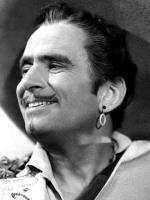 On this day in 1883, the great
  You can’t have missed all the news about the upcoming House Select committee on Benghazi—or as it is more property referred to, Benghazi! As it is, the hearing is a political stunt. There have already been four committees that have looked into it and they have found nothing. But why not another committee? After all, it isn’t like the Republicans are going to do any actual work. And it isn’t like they are even trying to make this look like anything but a show trial.
 Sometimes, Jonathan Chait annoys the hell out of me. But other times I just want to kiss him. When I disagree with him, it is usually about fairly minor issues of policy and ideology. But when it comes to the state of the Republican Party, no one is more clear. Just about an hour ago, he wrote an article,
  But as clear-eyed as Ponnuru is, he is still a professional apologist for the interests of the rich. So he still pumps out the propaganda and Chait called him on it today. Ponnuru was saying that the Republican Party ought to show that it really does care about the poor even while staying against raising the minimum wage, by raising the Earned Income Tax Credit (EITC). This way, the Republicans could signal that they are against the government interfering in the free market as exemplified by the minimum wage, but still help out the poor with the tax credit for low wage workers. Chait called him on this by noting that the the Republican Party—far from wanting to raise the EITC—wants to lower or even eliminate it. Chait noted that Ponnuru made no mention of this. I will only add that Ponnuru knew what he was doing because he’s a propagandist.
 Fifty years ago today, Lyndon Johnson announced his Great Society goals. They were massively successful. But of late, we hear conservatives complain about the Great Society programs. And here is the logic, “If you exclude all the gains of the Great Society programs, the poor are no better off than they were before!” This is like saying that your car doesn’t go any further after filling it up with gas if you exclude the gas you just put in. I know what they’re trying to say: that the poverty programs should have lifted people out of poverty. They should be successful now. You know: teach a man to fish… But these very same conservatives are against programs to help the poor help themselves. They are against raising the minimum wage. And Fox News has spent the last two years complaining about the Earned Income Tax Credit.
 In late November of 1978, I was at a conference in San Francisco for kids who were interested in politics. I don’t remember much about the conference, although it was probably a very good introduction to local politics and the issues that must be faced. Local politics is really interesting because it is so practical. There is very little ideology. In my father’s neighborhood, there was a zoning ordinance that restricted it to single story houses. Well, my father wanted to build onto his house, so he went door to door in the neighborhood and got everyone to sign a petition asking that the zoning ordinance be changed. He then went to a supervisors’ meeting and it was changed. The government exists to help people. This is a fact that is often lost at the national level—especially on the right. This kind of simple problem solving is what I got from the conference, and it may be why I’m a Democrat today.
 Imagine that you were trying to get me to do more exercise for my health. Maybe you argued that walking a mile a day would extend and improve my life. I countered, “There is no evidence that walking a mile a day is going to improve my health!” But one day, a paper appears in The Lancet, “Study shows Frank Moraes will have a longer and healthier life if he walks one mile per day.” My friend shows me the article. I read it and can find no fault with it. It absolutely is the case that walking a mile a day will make me healthier and happier; it’ll even make me a chick magnet. So do I start to walk a mile a day? No! Sure, walking a mile a day would be good for me, but the cost is too great: 20 minutes out of every day when I could be watching television and eating bonbons.
 This leads us to yet another great Jonathan Cohn article,
  This morning, Paul Krugman posted,
  Last night, I got involved in a long comment thread on
  It’s quite a day for birthdays. There are people like Alexander Pope (best known for not being Pope Alexander), stride pianist Fats Waller, and aviation pioneer Glenn Curtiss. Google is celebrating fossil collector Mary Anning. But I’m taking a different path today—a very different path.


.jpg)