Will and Michael Moore in TrumpLand

Michael Moore in TrumpLand

I have been really depressed about the election. So when Will came by with Michael Moore in TrumpLand, I really didn’t want to watch it. Even talking about politics is depressing. It isn’t that I think Trump is going to become the next president. It is that Trump has a decent chance of becoming president. And I’m embarrassed — for the whole country. And so even reading about politics fills me with dread. So I didn’t want to watch the film — even highlights. But Will was a very persistent. And after half a beer, I found his laptop set up and we’re watching the film.

But what they always say is true: misery does love company. Of course, Will isn’t miserable. He’s just waiting for the election. I’m the idiot who is addicted to following politics. I’m the idiot who knows that the Real Clear Politics polling average has Clinton up by 1.9 percentage points. And that FiveThirtyEight now gives Trump over a 30 percent chance of becoming president and that Clinton is now losing in Florida and North Carolina.

It’s madness! Why do I know these things? The truth is that most likely Hillary Clinton will be the 45th president of the United States and that she will have a Democratic Senate. All this stress is for nothing. But it is there nonetheless. I’d like to not care. I’d like to not check FiveThirtyEight a dozen times per day, but I can’t stop myself. So I didn’t want to watch the movie.

A Surprising Pleasant Time

But it turned out to be pleasant. Michael Moore in TrumpLand is really just a filmed performance. And it is usually nice to listen to what Moore has to say. But more than that, it was nice to watch it will Will. It reminded me of 1988, when I was incredibly depressed about Michael Dukakis’ impending defeat to George HW Bush. Will and I went to the Plaza theater in Petaluma to watch a documentary about Bush’s evil past. After all, by that time, we knew who he was. And watching the film with Will and other like-minded liberals really did make the coming doom easier to handle.

Michael Moore in TrumpLand has a lot of great moments. And they aren’t usually the funny ones. Much of it is very tender. There’s a point at which he sits down and reads from his notebook. He talks about all the working class people who have suffered and have a right to be angry. Of course, they aren’t Trump’s base. Trump’s base is made up of people who will vote out of racial resentment. Check out this graph from Jonathan Chait:

Perceived Racial Disadvantage - Clinton and Trump Voters

Trump’s Base Is Not Open to Argument

So Moore is going out of his way to court these voters — giving them every benefit of the doubt. And you could tell that his act wasn’t really working for the Trump supporters. But that’s hardly surprising. I know there are a lot of people who support Trump because he is the Republican nominee. But true Trump supporters — the ones who voted for him in the primary — are beyond thinking. Really: it’s scary. It is something akin to pure rage. I’ve always been proud that I could find common ground with conservatives. But with Trump supporters, there is no ground to find.

But it was nice to sit there with Will and watch it. We were both Bernie Sanders supporters in the primary. But it wasn’t an emotional decision. Bernie was just a better fit to our hard left economic beliefs. It was never about us sending a message that we were mad as hell. Bernie would have led the country in a positive direction and so will Hillary. Will and I could have a conversation about whether Trump would lead the nation in a positive direction. The trump supporters I know can’t. They are voting out of fear and hatred.

Sharing Michael Moore in TrumpLand

So it was nice to watch Michael Moore in TrumpLand with someone who is like-minded. I firmly believe that if PJ O’Rourke (who is actually a Clinton supporter because he isn’t a vile idiot) had done a similar film making the case for Trump, Will and I would have been open to it. That’s not to say we would have been convinced. And maybe that’s why this kind of social approach to politics helps to calm me down. It’s just nice to know that there are sane people in the world. Not that Will is all that sane…

Halloween Is the Best Holiday but I’ve Kinda Given Up

Halloween: Trick or Treat?It’s Halloween, and that means that by the Frankly Curious Terms of Service, I am required to say: Halloween is my favorite holiday. But the truth is that I am being let down by our society. Halloween could be so much better!

When I was a kid, it was so much better. I remember being on the street with my parents and there being kids everywhere. And then, starting in the late 1960s, every year the local news reported on how dangerous the holiday supposedly was. People gave out candy with poison and razor blades! Most of this was folklore.

What’s more, in as much as it was true, it was based on the folklore. For example, most of the razor blade stories seem to be children putting razor blades in apples and then showing what they “found” in their apples to their parents. And the cases of poisonings have been people murdering children and trying to make it look like some random act. Sick, but hardly the fault of Halloween or, more to the point, society.

Social Decay and the End of Halloween

And that’s the problem with the holiday: we’ve lost the necessary social cohesion to make the holiday great.

For the last several years, the only trick-or-treat child I get is the little boy who lives across the street. And I have been giving out regular-sized bars for a couple of decades. Kids really should want to come to my house!

I understand the fear of parents. Just the same, so much is lost. What’s more, those parents could protect their children by getting to know their neighbors. That’s part of the same thing. It’s all about fear of these unknown people.

Now, I understand that this is hard to do. And our economic situation is a big part of it. We now live in a nation that requires both parents to work. A large fraction of the nation is far too busy just getting by to spend time getting to know the neighbors. And income inequality puts barriers between people. So my disappointment is not focused on how individuals act but on how our society forces them to act.

Still, it sucks. Some of my best memories of my second marriage are our Halloween events. We loved decorating the place. I was always big on creating ghosts — probably because they are the most friendly of scary things. And now, I find I can’t even bother. It was easier with a partner. Even if no kids showed up, at least we had fun with it.

There’s a price to pay for our lack of trust in each other. It’s about more than a holiday — even one as gloriously silly as Halloween.

The Pleasures of Growing Old

Old People in NaplesI thought that I should check in, what with my last post being all about death. Not that one should mistake me thinking of death as a bad thing. Death is our victory over the evil will. But many people do think of it in negative terms. That post wasn’t really about death anyway. It was about pain, which I do think the ultimate evil. That’s why the will is so awful: it makes us continue to accept pain. But I don’t want to talk about that. I want to talk about growing old.

I just spent three wonderful hours watching A Passage to India. It wasn’t my first viewing. I saw it roughly three decades ago and I recall liking it — but not like this. I’m going to write about the film tomorrow (most likely). Now I just want to mention how one needs to grow into a lot of works of art. That’s definitely the case here. What I suspect I appreciated then was the nice story where things turn out well for all the characters we care about.

This time, I more appreciated the film’s visual style and its formal elements. I’ll discuss that later — or at least some of it. But it’s interesting how I have to learn to appreciate things. It was the same way with writing. I was probably 30 years old before I even started to hear the language. I think for a mind like mine, math is easier because it is deductive. The beauty is pure. But the beauty of English requires far greater knowledge.

Last night, I was reading an article by Alex Nichols. He wrote something that quite amused me that would have left me cold 30 years ago:

JRR Tolkien said that “cellar door” was the most beautiful phonetic phrase the English language could produce. “BuzzFeed Hamilton Slack,” by contrast, may be the most repellent arrangement of words in any tongue.

It’s nice to grow older. Your body may fail you. You aren’t the quick wit you used to be. But you’ve marinated for so long that you can appreciate more things in life. It’s a very good thing. It makes the will seem not quite so evil.

Death and the Last 48 Hours

DeathThe last 48 hours have been very difficult and it’s got me thinking about death. We had a serious medical issue in the family. (I don’t want to go into detail because this is one of those rare cases where I have some sense of decorum.) Everything is fine now. But I still feel like I’m shell-shocked. I can’t seem to grab hold of my usual view of the world. Everything seems distant, and I just want to go to bed even though I’m not tired.

There is a difference between the intellectual and the emotional. One can, for example, look to one’s eventual death with calm detachment. That’s certainly what I do. But if someone where to pull out a gun and put it to my head, I suspect that I would freak out. I always hope that when death comes, I’ll be like Jeff Goldblum at the end of The Fly. But I suspect not.

That’s such a great moment when he grabs the barrel of the gun and places it to his head. But generally, we all want to fight to the very end. That’s because we aren’t driven by rationality. Schopenhauer was right: there is this will to live and it exists only for its own sake, regardless of what we — as relatively rational beings — want.

All of this comes to mind because of the pain and suffering of others. It’s made me change my thinking on how I want to die. Before, I’ve always wanted to slip away easily and most definitely nonviolently. But now I think a sudden and unexpected death would absolutely be the way to go. After all, it isn’t really death that we dread; it’s the idea of death. If I just disappeared right now, that would be great! Here and gone — nothing to worry about.

Anyway, that’s what I’ve been thinking about. But I don’t think I’m going to post anything for the rest of the day. I do hope that by the time you read this, I’ll be feeling more connected to life. But all this thinking about death has not made me morose. Continuing to live requires an act of faith — the belief that somehow it is all worth it. And right now, I’m not really feeling it. I’m pretty sure intellectually that it isn’t — as usual. But I’ve always had a strong (And evil!) will that makes me get out of bed each morning.

Here’s hoping that it returns tomorrow!

Aboriginal Sex Worker Playing Cards

Aboriginal Sex Workers Playing Card: People with HIV are still our mobWhen I was in Mexico, I was forced to take a long walk in heavy humidity in order to have lunch with a group of humans I didn’t know. Not exactly my idea of a good time. On the way back, we stopped at a hotel gift shop. It was air conditioned. (Fun fact: I know only three phrases in Chinese and one of them is for “air conditioning.”) But to my delight, I found a pack of playing cards. This being Mexico, it was not a new pack of cards. And it wasn’t from Mexico. It was the Play Your Cards Right! deck created for aboriginal sex workers in Australia.

According to the package, “This project was developed by South Western Sydney, Western Sydney and Wentworth Area Health Services, Daruk Aboriginal Medical Service and Tharawal Aboriginal Corporation and funded by NSW Health Department.” The link above states that they were developed by “Aboriginal and Torres Strait Islander youths aged 16-25 years.” The face cards feature nice images of the “Aboriginal and Torres Strait Islander people.” And most cards have helpful advice like, “Injecting methadone wrecks your veins.” Some might mock this. I think it is a wonderful tool to help improve public health.

Why Aboriginal Sex Workers?

Aboriginal Sex Workers Playing Card: People with HIV are still our mobAt first I wondered why it was focused on Aboriginal sex workers. Then it hit me: because they are poor. That’s not to say that there aren’t other reasons for it. But most people end up in the sex trade because they don’t have better options. And it makes me despair for humanity. Those peoples who were invaded centuries ago still suffer from those acts of war. Socially, we might have grown so that we see that such plundering was wrong. But we refuse to do anything that would set things right. Our focus on property and the myth of meritocracy make us think that it would somehow be wrong to make restitution for our bloody history.

But the world is the way it is. And good people do what they can. I think these playing cards are fantastic. People use playing cards. And so information can be transmitted in a very friendly, unthreatening way. It’s certainly the case that drug addicts and sex workers often depend upon folk wisdom from other drug addicts and sex workers. And often it isn’t the best information. So I think this is just great.

Playing Cards

The cards were originally released in 2005. But as recently as last year, Illawarra Interagency reported, “The popular resource Play Your Cards Right! has had another print run and HARP have plenty to give away.” So people want the cards. I haven’t found any studies or anything about how successful they have been at educating Aboriginal sex workers. But it seems like a good (And cheap!) project.

In 2003, a similar set of cards were put out that focused on drug users. You can see an image of them at My Playing Card Collection. The owner of that site, Virginia Russell, says, “They look to me as though they are an adaption of an originally African design. The face cards don’t look Aboriginal at all.” I trust her. For one thing: I looked at them. For another: she knows a lot about playing cards! It’s nice that Play Your Cards Right! was produced by the Aboriginal community itself.

Clarinet Practice, Mental Health, and Life’s Meaning

Clarinet Practice and Life's MeaningI hope they let me practice the clarinet.

As I write this, it is Tuesday night. And I can’t bear to write anything coherent — certainly not an Odd Words post. I’m just not up to that kind of thinking. So: rant.

I’ve been thinking a lot about Melville’s short story “Bartleby, the Scrivener.” As you may recall, Bartleby is really good at his job. The narrator describes how even with Bartleby’s refusal to do the copy checking that is critical to their profession, his work is pretty much perfect. This is part of why the narrator doesn’t get rid of Bartleby earlier.

I feel a lot like Bartleby: useful but fundamentally out of sync with the world. And I imagine that the only end for me is starving to death in some loony bin.

Or let’s take a more modern reference: Rantés in Man Facing Southeast. In that case, I effectively get murdered. I like that idea more.

Meaning Beyond Clarinet Practice

What have you got for me universe?! Will I be destroyed by my own dysfunction or by forcing someone to murder me because of my own dysfunction?

I realize: to most people these seem pretty much the same. But Rantés strikes me as heroic whereas Bartleby is just tragic.

It seems to be that I deserve the tragic but I wish for the heroic.

And it is doubtless a good sign that I still wish. But it has gotten to the point where the wish is vague. What is the point of all this?

I’ve discussed Sudoku Meaning before. That’s the kind of meaning one gets from being pleasantly occupied. I’ve put it down in the past. But I have the terrible feeling that there is nothing else.

So I imagine my end in the only way that makes sense. The only fundamental meaning in life is death. That’s the only real meaning life has to offer.

But as I work my way to death in the mental hospital, I hope they will let me practice the clarinet.

Ethics, Nightmares, and Killing a Fly

FlyI had a nightmare last week — perhaps the worst that I have ever had. Like all my dreams, exactly why things were happening was muddled. But I was doing target shooting — at live human beings. There were others there watching me. They might have been coercing me, but regardless, they were fine with what I was doing. I shot a man in the right thigh and a woman in the abdomen. It was not the shooting that made the dream so horrible. It was watching the pain the two people suffered.

Everyone around me was completely disconnected from the outcome of what I had just done. Finally, I said, “Are you going to help these people?!” And they all acted as though they had been woken from a dream and started seeing to my victims. I then woke, glad to know that this bit of human cruelty was just in my mind. It was only a couple of days later that the genesis of the dream became clear to me. It all had to do with a moth that I had killed.

Killing a Fly

Usually, it isn’t moths. The truth is that I commonly kill flies. I don’t go after them, but if they get caught in my room, they drive me a little crazy. I find it almost impossible to work when a fly is buzzing around me. So I kill the fly. I’m not proud of this. I’m placing my very temporary productivity above the life of another creature. And it’s a creature that I find fascinating. In my hunting of them, I marvel at the beauty of their flight paths.

But here’s the thing: the majority of the time, I cannot kill the fly on a first blow. I have blinds, and it is generally the case that the fly will only land on the window and I will have to swat through the blind. I will then, as quickly as possible, find the fly and finish the job. As anyone who has read me for any length of time knows: I do not find death so horrible. But pain is. So I move furniture or anything else to limit the fly’s pain. (And yes: it’s life.)

Wounding a Moth

But when I was down at my sister’s a few weeks ago, I badly wounded a moth. But it crawled away below a heavy piece of furniture. I couldn’t finish the job. Had it been my house, things would have been different. But my sister dragged me away. She was, I suppose like normal people, indifferent to the plight of this poor moth. But it has haunted me.

I’ll admit: I likely empathize too much with these creatures. But I know that my life really is no more important than theirs. My concern about pain may be laudable (or laughable). But I wish I were better. I wish I were a Jain monk, not willing to knowingly hurt a fly. But I’m too selfish. And moths and flies are hardly the limit to my selfishness. I love chickens but have no problem eating them.

It’s hard to live an ethical life. I deserved that nightmare.

The Subterranean Stadium: Toy Football for Everyone

The Subterranean StadiumA few years back, the godfather of modern documentary filmmaking, Errol Morris, did some short features for ESPN. They’re all available on Grantland’s Errol Morris Week page — at least for now. The website hosting the page no longer exists; ESPN canned it because of personality conflicts with its founder, Bill Simmons. Based on his television appearances, Simmons does come across as an arrogant jerk. But he did bring skilled writers onto his website and goaded ESPN into hiring great filmmakers for its sports documentary series.
So who knows how long ESPN will keep the archived website up. For now, you can watch the Morris films on it. They’re all worthwhile.

The Subterranean Stadium

One of those films, The Subterranean Stadium, had me bawling halfway through, and I didn’t stop. It’s about grown-up high school friends who gather every Sunday to play toy electric football. They’ve been doing this in what they call their Subterranean Stadium since 1981.

Little plastic players rest on a toy football field that vibrates when you turn it on. Each player stands on a rectangle with plastic rudders underneath; you can adjust the rudders to make the player move left or right when the vibration starts. When a defender’s rectangle touches the ball carrier’s, that guy is tackled. You switch off the vibrating motor, and the humans set up their rudders for the next play.

I had my own Subterranean Stadium, so to speak. I got one of these toy football games as a Christmas present one year. And I loved it. The gameplay was fun (I had no friends, so I would play both sides and see who won). But what I really loved was the painting. The players came in default shapes (blocker, runner, tackler, and so on) and two default colors. I saved up my allowance to buy model airplane paint and painted Seattle Seahawks jerseys on one team, Green Bay Packers on the other. (I picked the Packers because one of the default plastic colors was a Packer color, so I saved money on the pants paint. The Seahawks were my favorite team.)

From Football to Model Making

This began a half-decade obsession with model making. From about eight to 13, I loved models. My father was horribly mentally ill, and our home was a stressful one. Making models was kind of a Zen thing. I blocked out the madness around me. Or I did until I hit puberty hard, and realized models made me look nerdy (along with every other aspect of my personality). I kinda want to go back and try a new model again, someday. Painting all the little pieces before you glue them together was pretty fun.

But it started with me painting those plastic football players. I saw the games on TV, I knew uniforms weren’t unicolor. So I painted all the players. Right down, if I recall, to the colored stripe down the side of each pants leg.

There were even little stickers featuring team numbers you could put on the players! And guess what — there still are. Yes, the same company still makes the same game. You can order sets with two team jerseys pre-painted (Yuck! Painting’s the whole fun!) and it’s dent-resistant.

(Slow) Disaster Strikes

The game I used was prone to denting because it was made of thin metal. Getting excited over setting up the next play meant I sometimes dented the field with an elbow. Eventually this meant the entire field was inside an event horizon; no matter how you set the plastic rudders, all the players would converge on the biggest dent.

I begged and begged my father to buy me a new one. I promised to paint his favorite football teams instead of mine. As he was mentally ill, he was cruel, and mocked me for ruining that Christmas present.

A Memory Returned

I’d totally forgotten about this before seeing The Subterranean Stadium. I only stumbled upon it recently. Strangely, I was looking for some information on the inner life of mascots.

The men in this film gather in a basement to play toy electric football, tourney-style. The basement, Subterranean Stadium, is an homage to the obsession they have with this game. There are shelves upon shelves of plastic players in different uniforms. Need I say, all-hand-painted.

As the film continued, I saw my abused childhood self in these middle-aged men. They’d suffered disease. Heartbreak. War. Prison. Their Sunday basement gaming wasn’t mocked as pathetic, the way a lesser filmmaker would have presented it. It was shown as almost triumphant. Despite it all, these old friends still manage to lose their stress once a week, playing and laughing together over a toy football game.

A Great Insight Into Everyone

Errol Morris, who used to be an insurance investigator, is the best interviewer that documentary films have ever seen. Like a sneaky cop, he puts people at ease, gets them to open up by not being judgmental. But unlike a sneaky cop, he’s not interested in damning anyone. What fascinates him is the subjectivity of existence and perception. It’s the Rashomon thing; different people witnessing the same event will have different accounts.

As I said, The Subterranean Stadium is short; about 20 minutes long. It’s about oddballs, and it’s extremely compassionate. See it before ESPN deep-sixes the host website. And it’s on this page. You just have to click once.

Sudoku Meaning on Labor Day 2016

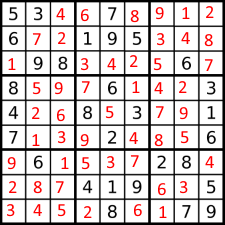
Sudoku MeaningIt’s Labor Day and I do hope that you aren’t working. I am of course working. There are a lot of reasons that are specific to me. One is that I work with people all over the world. International Workers’ Day is on 1 May. We have Labor Day because of the federal government’s disastrous response to the Pullman Strike. Those were the days when politicians actually worried about revolution (although not enough to do what was right in the first place). So most of the people I work with will not have today off.

The other reason is because I work all the time. The closest I’ve had to a day off since I returned from Mexico was on Friday when I worked about two and a half hours. The truth is that this work is kind of addictive. I’ve come to think of it as providing me with Sudoku Meaning. It’s the kind of meaning that I get from doing Sudoku puzzles. I’m very good at them. They engage my mind. They require a fair bit of creativity. But they aren’t deep. What television is to most people, Sudoku is to me.

Sudoku Meaning and My Job

I get Sudoku Meaning from my job. What’s more: I get paid to get Sudoku Meaning. I consider myself quite lucky in this regard. Just the same, this feeds itself. I shouldn’t work this much. But to stay with the television analogy, it’s like people who always watch The History Channel or whatever. They know there are other things on. But it’s just convenient. In this regard, my job is way easier than running Frankly Curious. I never know what I’m going to write around here. There’s no structure. There’s just a vague notion that I should write something interesting for the people who make a special trip here each day — and there are quite a number of them.

Frankly Curious Too!

But the truth is that Frankly Curious mostly provides Sudoku Meaning to me. There isn’t anything fundamental about it. There are times when what I write about transcends the format. Some of my work on Don Quixote works that way — providing me with sense of self-actualization. But way too much of it is facile craft. Give me any subject and two hours and I’ll give you an 800 word article, typeset with images. Hell: give me a first sentence! After writing over 7,000 articles for this blog, I’m good at that kind of stuff.

Rather than find meaning that has substance, we settle for a simulacrum…

It’s all Sudoku Meaning. So I’m looking for some deeper meaning. What that requires, I think, is slowing down. And that brings us back to Labor Day. We should have lots of them. But the truth is that most people don’t get one of them. Even if they get the day off, they don’t get paid for it. It’s hard to have friends and family over for a barbecue if you don’t have any money. But I think we lack leisure because we’ve embraced Sudoku Meaning.

Sudoku Meaning Is the Modern Sisyphus

Think about Sisyphus — the guy who rolls a huge boulder up a hill, only for it to roll back down, requiring him to repeat the process — for eternity. I see this — Quelle surprise! — in Schopenhauerian terms. It is the struggle of life that we live through each day just so we can repeat the same struggle tomorrow.

But we don’t need to struggle anymore. There is more than enough food for all. We can shelter everyone. In the west, we are doing quite well. So I think we developed Sudoku Meaning to help us carry on the Sisyphusian struggle. As Neil Postman put it in Amusing Ourselves to Death, “Big Brother does not watch us, by his choice. We watch him, by ours.” Rather than find meaning that has substance, we settle for a simulacrum of it.

I see the problem very clearly in my own life. And I am fighting it. And losing. Badly.

Happy Labor Day.

Jim Holt and the Nexus of Silly and Profound

Jim HoltBecause of what I think is a lot of simplistic thinking from atheists, I found myself again reading Jim Holt’s book, Why Does the World Exist? It’s almost like comfort food, because like me, Holt is an atheist who still thinks that these spiritual or religious questions are interesting and worth discussing. Reading him makes me feel less alone, even though I think there are a lot of people like us around. But then I thought something else — something very personal.

As far as I know, Jim Holt has only written two books. Why Does the World Exist? is about ontology — the most serious issue that I can imagine. And one very close to my heart. This other book is, Stop Me If You’ve Heard This — basically a history of jokes. This is about the most silly issue that I can imagine. But I see myself in Jim Holt. In particular, my plays are the combination of these two things: very serious, profound stuff combined with total silliness: Arthur Schopenhauer meets Kermit the Frog. Maybe there is something to this. Maybe it makes perfect sense that Jim Holt would write about ontology and jokes, and I would write about Thích Quảng Đức and the effects of MP3 files on dogs.

I’ve discussed before how in half of Schopenhauer’s photos, you can see that he is smirking. I feel certain that he was in on the joke of existence.

Jim Holt’s Puppets

Now I don’t mean to compare myself to Jim Holt, much less one of the greatest philosopher in all of human history. But I think we are all in the same category, just as the people who perform puppet plays at the local library are in the same category as Lope de Vega. There is something about the analytic mind that causes it to bifurcate. You think about the nature of existence until you can take it no more and out comes the silly.

In the following video, it should surprise no one that at the the 12:40 mark, Jim Holt pulls out puppets to make a point about Thomas Aquinas’ criticisms of the ontological argument:

Of course, Jim Holt doesn’t pull out puppets. But I suspect that most of you were willing to believe me. The truth is that his discussion of ontology is largely a stand-up comedy routine. Towards the end of the talk he says:

My professor at Columbia, Sidney Morgenbesser, a great philosophical wag — when I said to him, “Professor Morgenbesser, why is there something rather than nothing?” he said, “Oh, even if there was nothing, you still wouldn’t be satisfied.”

Privilege and Play

Maybe it’s also privilege. Maybe it’s only if you have a pretty good life that such issues occur to you. So we’re all happy and sometimes we get thinking about the profound stuff while eating fine dinners. The truth is, none of my closest friends of interested in this subject. It’s not that their lives are horrible. But they all suffer from depression. They have issues close to home that need thinking about.

I actually think it is just that the nature of our lives is play. We are all very lucky that through a combination of genes and luck, we see the world of ideas as our play things. And though we may sometimes think about deep and important issues, we only do it because it’s fun. For me personally, I’m only interested in ontology for so long. Then it’s back to the puppets.

Afterword

I don’t want to give the impression that I’m not a total nutcase; I am. Although I do suffer from depression, it isn’t my primary dysfunction. Primarily, I’m a nervous wreck. But over the years, I’ve come to see this as something of a gift. If I suffered from depression to the extent that I suffer from anxiety, I would not be here to play with puppets and marvel at the fact that the universe exists and that against all probability, I’m part of.

Mocha Dick: the Real Life Basis for Moby Dick

Mocha Dick: Or The White Whale of the PacificAs I’ve probably mentioned, I got an unabridged book-on-CD of Moby-Dick, which I’ve been listening to on my nightly walks. Listened to, it is hard to believe that it isn’t meant as comedy. Of particular note is Chapter 32, Cetology. In it, Ishmael writes down a little book-within-a-book about whales. But what would one expect of Herman Melville? This is the kind of thing that made him so great. But in checking out some of the facts he claimed, I came upon the story of Mocha Dick. He was an actual albino sperm whale that the novel was based upon.

Apparently, Mocha Dick was a very large male. He survived many attacks through a combination of size, strength, and ferocity. According to Jeremiah Reynolds’ 1839 book Mocha Dick: Or The White Whale of the Pacific, he may have survived over a hundred attacks. That’s amazing! But there is something even more amazing: the whale seemed to have been extremely easy going. He was like a dolphin — very comfortable around humans. It’s just that, like the intelligent creature that he was, he didn’t take well to others trying to kill him.

A Sight to Behold

He must have been a sight to behold as well. When he was finally killed after what was apparently two decades of different attacks, he turned out to be 70 feet long. His white skin breaching the surface of the blue ocean must have been magnificent. And the human reaction was, of course: let’s kill him!

“Oh, lonely death on lonely life!” —Captain Ahab

Hearing the story of Mocha Dick made me ashamed to be a human. I understand: the chain of life. I eat meat. People in the early 19th century needed whale oil. But still, it seems so horrible. Is there no beauty that we will not destroy for a buck?

Regardless, knowing this takes some fun out of the novel. The ending of the book is unclear as to exactly what happens to Moby Dick, but it does seem that he survives. In fact, it’s nice to think of him swimming around the sea, dragging Captain Ahab until he is eventually consumed by wandering sharks. No on in the novel is terribly likable. Ishmael has to survive to tell and tale. (And even he survives only because of Queequeg’s coffin!) So it’s easy enough to think of Moby Dick as the “good guy” — even if he is not presented so in the novel. And it is nice to think of him now and forever alive.

Mocha Dick Does Not Live On

Unfortunately, we know that Mocha Dick is now and forever dead. Of course, death comes to us all. And it is doubtless truth that the whale was very old — much older than anyone reading this can reasonably expect to live. And he probably died because of a decline in his health. Of course, that may not have been natural. According to Reynolds, when Mocha Dick was killed in 1838, he had 19 harpoons stuck in him. And he was killed when trying to help out a female sperm whale that had just been killed by whalers.

Male sperm whales live alone except for breeding. And I wonder if Mocha Dick’s being albino caused him to be shunned in that regard too. We all know Ahab’s famous line, “Towards thee I roll, thou all-destroying but unconquering whale; to the last I grapple with thee; from hell’s heart I stab at thee; for hate’s sake I spit my last breath at thee.” But right before that, he says something more thoughtful and true, of himself and of Mocha Dick, “Oh, lonely death on lonely life!”

Work and the Edification of the Soul

Work: Boy Studying - Lewis Hine

A while back, I wrote about finding a play called MP3 that I had no memory of writing, Creation as a Spiritual Act. You can click over there if you want to get some idea of what it is about. But the main thing is that it is a kind of play that I’ve developed that I call “theatrical essays.” They are kitchen sink affairs, largely because I’m a kitchen sink kind of guy. They are vaudeville with a narrative. But most of all, they are the kinds of things that I want to see. They are a joy to work on.

So every night in bed, instead of reading, I’ve been working on the play. There are many problems with it. In particular, the structure is wrong. But as I’ve worked with it, I’ve realized that I would make it into a full-length play. It has been edifying. I feel like the process is making me a better a person. This is in distinct contrast with paying work that is, well, work. Like all workers, I am paid to make money for the company. In my case, it isn’t direct. If it were, the company would soon go out of business! But ultimately, what I’m involved in making is money.

I Like My Job

And I’m quite reasonably paid for my efforts in this regard. But I’ve been working just under 8 hours per day. Now I understand that doesn’t sound like a lot. But this is freelance work. I bill in 5 minute increments. I don’t bill for breaks. And I am constantly busy because there is always more work than I can get to. Finally, I do work that isn’t on the clock. In between those last two sentences, I noticed a writer was having a problem and I fixed it for them. That kind of stuff adds up, I’m sure.

I’m not complaining about work. I enjoy doing it and I’m good at it. It’s nice to be paid for something that you’re good at. And I work with interesting people. And all of that. But today it hit me, “I don’t have to work this much!” I don’t need much money. I have no children — no wife to speak of. What am I working so much for? Is it that I fear I won’t get any work if I cut back to 20 or 30 hours? I don’t think so. It is just habit. And it’s gotten out of hand.

The Bizarre Work I Find Edifying

To many people, I must seem strange. There’s Frankly Curious, a blog that I’m not really interested in monetizing. There are bizarre plays that wouldn’t appeal to traditional theatrical companies. (I do hope, though.) But these are the things that I like to do. I like to write. And I like to do it on my own terms. That’s why something like MP3 is so much more important to me than even Frankly Curious, because the blog format itself constrains me. But I’ve gotten away from it because my need for money evolved into something that really isn’t me.

I imagine myself as an engineer of a train. I go to work each day and I do my job. Trains are important. People need to drive trains. But I wouldn’t wake up in the middle of night and call the train yard to see if there were any trains that needed to be driven. And I wouldn’t work any more than I needed to in order to support my lifestyle. And I think I have to treat my real job like I would treat the train job.

Backing Away

It is a bit more difficult, of course. My great passion is similar to what I do at work. And there are joys at work — no question! I love it when I manage to edit something competent into something good. And the little straight writing I do is fun, because I only assign myself the stuff I think I alone can do. (I never claimed to be humble!) So, I feel the pull. But I think I’ve got to resist it.

There are plays to write and articles to publish and Don Quixote texts to compare and puppets to abuse and on and on. The business world will get on just fine with less of me. And my soul will get on much better with more of me.