It’s Hard to Die in French

Jacques BrelThere are few songs in the world as insipid as Terry Jacks’ Seasons in the Sun. If you doubt me, consider this statistics: it is one of the top 30 best selling singles in the history of the world. Apart from this, however, there is something about this romantic notion of death that ruffles me—it is sentimentalism at its worst. But there is something good about the song: Le Moribond by the Belgian artist Jacques Brel.

Le Moribond, or “The Moribund” (Never would have figured that, huh?) is what Seasons in the Sun was based upon. It is in French. It tells much the same story: goodbye my friends, I’m going to die. But whereas that seven word summary completely explains Seasons in the Sun, it fall well short of the complexity of the original.

In Seasons in the Sun, there are three verses. The first is directed to a friend, the second to the singer’s father, and the last to the singer’s girlfriend. Especially repugnant is that last verse: “Goodbye, Michelle, my little one / You gave me love and helped me find the sun.” And so on, but worse.

In Le Moribond, there are four verses. The first is also directed to a friend. But whereas Seasons would have us believe the friends are very young (“Skinned our hearts and skinned our knees”?), it is clear that these are adult friends. What’s most important is that this verse introduces the singer’s wife:

Goodbye Emile, I loved you
Goodbye Emile, I loved you well, you know
We sang of the same wines
We sang of the same girls
We sang of the same sorrows
Goodbye Emile, I’m going to die
It’s hard to die in the springtime, you know
But I’m leaving for the flowers with peace in my soul
For, given that you are good as white bread
I know you’ll take care of my wife.

He’s just laying the groundwork. After this, he goes into the chorus which is kind of a proclamation of life: “I want to laugh / I want to dance / I want us all to raise hell … Until they put me in the ground.”

The second verse is pretty much a replay of the first, except that it is sung to a priest. It provides the first insight that the singer might just be a tad bitter. He knows that the priest will take care of his wife because the priest has been her confessor. What?! Moving on…

Everything comes to a head in the third verse that varies substantially from the first two:

Goodbye Antoine, I didn’t like you well
Goodbye Antoine, I didn’t like you well, you know
It’s killing me to die today
While you are so alive
And even more complete [?] than boredom
Goodbye Antoine, I’m going to die
It’s hard to die in the springtime, you know
But I’m leaving for the flowers with peace in the soul
For given that you were her lover
I know you’ll take care of my wife.

Ouch! This is level ten bitterness. Not only have you been fucking my wife, but soon I’ll be dead and you’ll still be fucking my wife.

The fourth verse is sung to his wife. I think it is telling that this song is fundamentally about the wife whereas Seasons has only a girlfriend and she is not central to the song. This is because Seasons is a children’s song. And this makes the song of no real value. Certainly it is true that children die, but mostly they die in car crashes.[1] The whole process of preparing for death and having “those” conversations is something for the old, not the young. It was probably because Terry Jacks pulled out all the complexity of the song that it was able to be a hit with a demographic largely unable to understand the material.

This verse has my favorite line:

Goodbye my wife, I loved you well
Goodbye my wife, I loved you well, you know
But I take the train to the Good Lord
I take the train before yours
But we all take the train we must
Goodbye my wife, I’m going to dying
It’s hard to die in the springtime, you know
But I’m going to the flowers with my eyes closed, my wife
Because I’ve closed them so often
I know you’ll take care of my soul.

“Because I’ve closed them so often”?! Ouch! He just turned the bitterness up to eleven! It’s brilliant: Now my eyes will be forever closed, so I won’t have to close them to the fact that you are fucking Antoine.

Jacques Brel died far too young—just a year older than I am now. It is a great shame because all his music is really great, not just this song. He is well worth checking out. Enter him into Pandora and see what happens. Or you could just buy Jacques Brel either on CD or as MP3s. You won’t be disappointed (assuming you have good taste).


[1] The top five causes of death of teens are, in order from most common to least: accidents, cancer, suicide, congenital disorders and anomalies, and murder. This may explain why I’ve always kind of thought that Seasons in the Sun was about someone who was going to kill himself.

Rosalind Russell’s Mysterious Writer

His Girl FridayOne of my very favorite movies is His Girl Friday. I watch it about once a month—any time I need cheering up. It has two of my favorite actors: Cary Grant and Rosalind Russell. I will always be in love with Russell, or perhaps more accurately, I will always be in love with the character she plays in this movie, Hildy Johnson.

In her autobiography, Life is a Banquet, Russell discusses the making of His Girl Friday, in a chapter titled, “Back Door to The Front Page[1], or How I Was Everybody’s Fifteenth Choice.” She says that she thought the screenplay “could stand some improving.” But she doesn’t say why.[2] Her brother-in-law was Chet La Roche, who was the president of Young and Rubicam, a big advertising firm. She writes:

So I was pacing around, and Chet asked me what was the matter and I told him this script had me troubled. “Why don’t you fix it?” he said.

“What?”

“Why don’t you get a comedy writer and fix it?”

I said, “Chet, let me tell you something. On these lots they have a big building, it says Writers’ Building, see, and the people in that building are the ones who fix it.”

Well,” he said, “we have a lot of writers.”

So she hired one of his writers, who came to her house for dinner each night during the production of the film. (Russell goes out of her way to say that the writer never ate; he only drank. So we know he was a real writer!) Apparently, it was obvious what she was doing—at least to Cary Grant. She wrote, “It got so every morning when I went in to work, Cary would meet me, asking, “What have you got today?”

I’ve known this story for years. What I didn’t know was what Russell put in a parenthetical paragraph block:

Years afterward I was arguing about a different script with Harry Cohn, and he said, “You don’t know what you’re talking about. You thought His Girl Friday was in trouble and it turned out to be a smash hit.”

“Harry,” I said, “you aggravate me. Send for the original script of His Girl Friday.”

He did, and it came and I went around his desk and said, “Now we’re going over this, line for line.” I started spouting cracks from the finished picture. “Where does it say that in this script? And where is such-and-such in this script? And where is so-and-so? I hired a writer to put in those laughs.”

Cohn digested the information. Then: “Who was that writer?” he said, and I told him, and he hired him.

This is exciting information, because I think it means that some enterprising young historian could figure out who this writer was. He must have worked for Young and Rubicam in 1940 and then he must have worked for Harry Cohn at Columbia Pictures some time later. The film she was working on when she had this conversation with him had to have been My Sister Eileen (1942), What a Woman! (1943), The Guilt of Janet Ames (1947), Tell It to the Judge (1949), or Picnic (1955).

It doesn’t matter, of course. Whoever this anonymous writer is, didn’t write His Girl Friday. He only punched it up. But he clearly was a very funny guy. And it would be interesting to see if he went on to do any other interesting films.


[1] His Girl Friday is based upon the play (already produced as a film twice by that time) called The Front Page. The big change is that in the original, Hildy is a man who is about to get married and become an insurance salesman. Although The Front Page is an excellent play, His Girl Friday is better.

[2] Wikipedia claims Russell stated that it was because she felt that Cary Grant had the better lines. This (along with much else about their history of the film) is not true. She points out that what she had added to the film included laughs for Cary Grant as well as herself.

Tim Tebow Hypocrisy

Tim TebowWill Leitch writes in New York Magazine about The Jets Have Made Pat Robertson Part of Our Lives Again. The piece is ostensibly about Robertson’s comment that because of the Tim Tebow trade, it would serve the Denver Broncos right if Peyton Manning got injured.

Why would Robertson say such a thing? I don’t really know. According to him, the Broncos treated Tim Tebow “shabbily.” Over the course of two weeks, there was a lot of publicity about the trade negotiations. Apparently Tebow got his feelings hurt. That and his multi-million dollar contracts will buy him, well, any damn thing he wants.

According to the Denver Broncos’ management, Tebow was involved in all the negotiations. In fact, they turned down a better offer from the Jacksonville Jaguars because they thought that the Jets were a better fit for him. Tebow, like a good Christian, took the low road whining to reporters on a conference call that the Broncos held “all the power.”

Tebow is an annoyance. And yes, I am talking about his ostentatious religiosity. I don’t mind people doing their whatever in public. If people want to walk around naked, I really don’t mind. But I do mind hypocrisy. It all comes down to the Sermon on the Mount. Matthew 6:5 reads (New American Standard Bible):

When you pray, you are not to be like the hypocrites; for they love to stand and pray in the synagogues and on the street corners so that they may be seen by men. Truly I say to you, they have their reward in full.

It would have been fine with me if Tebow had done his religious thing as long as it wasn’t a media sensation. But the moment he started getting coverage about it, he should have backed off. In addition to being counter to probably the most important speech of Jesus’ career, Tebow was making his Christianity about himself.

And I say to you, he has had his reward in full.

Art is Not “Good” or “Bad”

I was going to write at length about Wallace Shawn’s Essays, which I recently read. Unfortunately, I’ve now forgotten what I was going to write about. It is an excellent book and well worth a read. You can check out one of his essays (not in the book) over at Huffington Post: “Why I Call Myself a Socialist: Is the World Really a Stage?”

Here is a quote from his essay “Reading Plays”:

More and more, I’ve come to think that to call plays or stories or poems “good” or “bad” is often not very illuminating, whereas it can at times be extremely helpful to notice that “right now, when I read these particular poems, I fee well, I fee happy, I feel that I am getting something that I have needed.” It’s not that those poems are “the best” poems or that they’re “better” than certain others, but that for you, now, they are important and right. Animals in the forest require certain nutrients, and they learn how to find them. They don’t all need the same things, and they don’t need the same things at every stage in their lives. The nuts that a particular badger finds of very little value may turn out to be crucial for a particular squirrel. As writers, we can’t predict who might come along who might find our offerings valuable. But because we’ve all been readers, we know what the experience is like, and we hope that what certain writers have given to us, we will give to someone.

The only thing I disagree with is that it is never illuminating to say that a piece of art is “good” or “bad.”

Credit Where It’s Due

MethaneWhen I was in graduate school, my thesis adviser was rightly proud of some of his scientific accomplishments. He was fierce in countering people who did not give him his due. Academia is like that. The saying goes that academic politics are so intense because the stakes are so low. When you are a college professor, all you have is your reputation.
Over the course of several years, my adviser proved the methane concentrations in the atmosphere were increasing. This was a big deal because the theory in the field of trace gas studies was that methane could not be increasing because it was created by natural sources: termites, cows, wetlands. While it was true that methane was generated by these natural sources, it was also true that humans were greatly increasing the number of cows and the acreage of rice fields.

But it wasn’t just this work that he was protective of. And while I worked for him, he would often rush things to press in order to establish primacy on a new finding. Often, these things were trivial. I never understood why these things were so important to a guy who had published upwards of 200 scientific papers.

I was doing some research recently, and I came upon the following video of Harry Lorayne doing his version of the “Ambitious Card”:

This is a very good trick. Lorayne has made enormous contributions to the magical arts. But seeing him reminded me of a time many years ago when I wrote to him. I asked if he was still publishing Apocalypse, because I had some effects that I was interested in publishing. It was a straight query letter; I did not send him any work. He wrote me back what I considered a very angry letter. Basically, he said I couldn’t even think of publishing anything without buying all of the collected issues of Apocalypse—which he was glad to sell me for something in excess of $500. He implied that I was necessarily ripping him off for the credit he deserved for all his many contributions to the magical arts.

Other magicians are the same way. In particular, Ed Marlo stands out. He was so consumed with establishing his primacy that he would sometimes publish 20 different variations of a single idea, just so that no one could come afterward and steal even the smallest amount of his glory. And here’s the thing: this meant that he often published horrible—useless—stuff. And it made the reader’s job so much harder, because he had to slog through a bunch of junk in order to find what’s good.

Michael Close is also very caught up in this credit establishment venture. But I have to defend him here. Close only publishes very polished work. In most cases, he deserves a great deal of credit. But not always. “The Pothole Trick”? Fantastic.[1] “Pink Floyd”? Not so much.[2]

I know that I’ve independently created a couple of dozen tricks and moves. In fact, the other night I came up with an excellent addition to an “Ambitious Card” routine. But I have little doubt that someone else has already published it. In the routine that Lorayne does above, there are several things that are his own innovations. And yet, I don’t think his routine is that good and none of the individual moves are particularly innovative. When you get right down to it, most magic moves are created to solve some particular problem; the best solution is often the most direct. I don’t see what the big deal is, especially for Lorayne who has received more than his fair share of acclaim and credit.

It is hard not to appriciate Daryl all the more. Daryl is an innovator, but he doesn’t make a big deal about it. His focus is always on entertaining audiences, which is what all of his prodigious talent and erudition is used to facilitate. See if you don’t think his take on the “Ambitious Card” routine is far superior to Lorayne’s:

But don’t get me wrong. I’m willing to give these men all of their due. But all the insistence on credit hurts them. I no longer think fondly of Marlo at all. I have a grudging respect for Lorayne. I think Close is brilliant, but difficult—no one I would want to see at a performance or lecture. And Daryl? He’s a really nice guy who just happens to be brilliant. After I get my advance on this book I’m finishing, I think I’ll buy something from him.[3]


[1] Here is Johannes (I don’t know, either) doing “The Pothole Trick” in Japan. It is a little hard to follow at first, but stay with it:

[2] Here is some guy doing “Pink Floyd” in from of his computer, in Hebrew. He doesn’t allow embedding: Pink Floyd.

[3] Another apparently nice guy was Larry Jennings. Also brilliant. I saw him when I was a kid. I had never seen someone do such beautiful work with cards and I still haven’t seen anyone better. Here he is doing “Oil and Water”:

The Other Side of the Wind

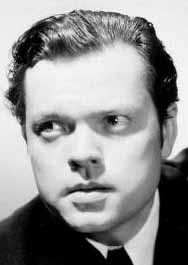
Orson WellesOne of my goals in life is entirely beyond my control: to see Orson Welles’ The Other Side of the Wind. I first learned of it in the documentary Orson Wells: One Man Band (it comes on the extras disc with F for Fake, which you really should own). That film contained two clips from The Other Side of the Wind. Since then three more clips from the film have been released. I had been under the impression that the film was finished and that only legal problems stopped it from being released. This is not the case. Welles only cut 40 minutes of the film, leaving 70 minutes of screen time to be cut together. The current status of the film is that all the legal problems have been eliminated. The only problem now is that Oja Kodar, Welles’ companion in later years and co-writer of the film, will only give the go ahead if someone ponies up the cash to complete the film properly. She is rightly concerned that it would turn out like Welles’ Don Quixote.[1]

The story is complicated. It is primarily about Jake Hannaford (played by director John Huston). Based on Ernest Hemingway, he is a great but out of favor filmmaker who is trying to make an edgy, modern film that will get him back on top—or something. It starts with one of Jake’s friends, Billy Boyle (played by director Norman Foster), at a screening with a studio executive, trying to get money to complete the film. During the screening, we see scenes from the movie Jake is making, “The Other Side of the Wind.” Then the story turns to Jake’s 70th birthday party where there are actors and media. At the party they screen the film until the power goes out. Then they move to a drive-in theater and watch the rest of the film. Jake, drunk and despondent, kills himself (intentionally or not) by driving his sports car into the movie screen.

Below is a playlist I put together of the four scenes I could find from the movie in the order I suspect they occur. The first is the screening. The second is Jake’s arrival at the party with his protege Brooks Otterlake (played by director Peter Bogdanovich). The third is a pretty explicit sexual scene in the movie Jake is making. The fourth is two conversions, one between two of Jake’s friends (directors Henry Jaglom and Paul Mazursky) and one with one friend (director Dennis Hopper); they are often talking to Jake who is always off screen. Every one of these scenes is thrilling. You ought to be able to tell why one thing I want to do before I die is see this whole film.


[1] Regular readers of this site should know two things about me: I’m a nut for Don Quixote and I greatly admire Orson Welles. It should thus be a powerful statement when I say that Welles’ Don Quixote is almost unwatchable. There is, however, this one moment of brilliance which is not in the released film. The clip is silent. The music the poster put on it is not appropriate (it sounds like Nico).

[Video Missing]

In addition to everything else, this clip shows that Welles really understood Don Quixote.

The 500 Plays of Lope We Have Not Read

Lope de VegaWhile reading Melveena McKendrick’s Cervantes, I became really interested in Lope de Vega, the great playwright of the turn of the 17th century. I had already been intrigued by this towering figure of Spanish drama, because of what Gray Taylor had written about how our focus on Shakespeare blinds us to other playwrights, “We assume that Shakespeare’s thirty-odd plays contain more of humanity than the five hundred plays of Lope de Vega we have not read.” Five hundred plays? Wait…

Five hundred plays?!

According to Melveena McKendrick in Theatre in Spain 1490-1700, this is a low estimate; he may have written over a thousand. Of course, a large number of plays doesn’t really matter if they are all poor. But Lope is known as a great writer, so his output is all the more impressive. Like Cervantes, Lope was driven to write. He did not write simply to secure his fortune, like another late 16th century playwright I could name.

I have yet to read any of Lope’s plays, although I just got a translation of Fuente Ovejuna (usually written just Fuenteovejuna). It is likely I will be writing about it soon. Until then, I will present summaries of three related Lope de Vega plays from McKendrick’s book. She calls them Lope’s “three famous socio-political plays about peasant honour.” This in itself makes them exciting. When Shakespeare wasn’t too busy sucking up to authority, he was lampooning the poor.

First, we have Peribáñez y el Comendador de Ocaña (Peribáñez and the Commander of Ocaña):

[S]et in the fifteenth century, [it] portrays the idyllic marriage and life together of the prosperous and ambitious young peasant Peribáñez and his lovely bride Casilda, and the attempts made by their overlord to seduce her. When Casilda remains impervious to his blandishments, the Commander makes Peribáñez a captain and sends him off to fight the king’s war. He enters his house at night intending to take Casilda by force if necessary, but aware by now of his intentions Peribáñez returns in time to prevent the rape of Casilda and the destruction of their lives by killing his lord. His action is subsequently pardoned through not condoned by the King, he is given a full captaincy and sent off to fight in the Granada campaign.[1]

I can see why the power elite would not want the school children of the poor to read such a play. Much better would be a play about a prince who murders his childhood friends with impunity.

Second, we have Fuenteovejuna, which is even better:

Like Peribáñez, Fuenteovejuna also deals with the relationship between honour and noble birth by presenting sexual aggression in the context of class relationships. Here, however, the conflict is not the cat and mouse game played by the Commander in Peribáñez, but open confrontation from the start between a brutally predatory overlord and the entire village of Fuenteovejuna which he tyrannizes in the name of his seigneurial rights; the tension is created not so much by how he will be stopped but by whom. The village’s sense of impotence and fear is encapsulated in its name, Fountain of the sheep: the men are emasculated, almost dehumanized, by their overlord’s grotesque abuse of power and privilege and it is a woman, Laurencia, who eventually shames them into action in the play’s major speech. In the name of their communal self-respect the men and women of Fuenteovejuna kill the Commander and, when tortured for the truth by the King’s men, answer only “Fuenteovejuna did it.”

Wow. That’s a lot more interesting than “Out, damned spot!” (Even if I rather like that play.)

The third play is El Mejor Alcalde, el Rey (No Greater Judge Than the King Himself):

The Galician peasant hero, Sancho, does not take the law into his own hands but invokes the law’s majesty by appealing to the King himself for aid. The noble, for his part, don Tello, not only transgresses against the principles of duty and responsibility on which the social contract is founded but defies the King himself, refusing to accept his monarch as ultimate arbiter of law and justice on earth. The play is set in the twelfth century, when seigneurial rights were only just beginning to yield before monarchical power and this gives credibility to don Tello’s reckless anarchy. The King in the guise of a judge travels to the village and hears for himself don Tello’s defiance. Revealing his identity he marries don Tello to Sancho’s bridge-to-be, whom he has raped, and then executes him so that Elvira, now a rich widow, can marry the man who loves her. Justice is done not by meeting force with force but by recourse to the processes of law. The play, therefore, marks in a sense a more mature and a more serene state in Lope’s exploration of the theme of power and its relationship to justice.

Clearly, this play is similar to Shakespeare’s Measure for Measure. However, I think it is also clear that the plot is not as insipid. What’s more, McKendrick points out an interesting aspect of Lope:

The contemporary aristocratic view that social and economic superiority necessarily implied moral superiority was not one that met with Lope’s consent. In El mejor alcalde we even sense a powerful nostalgia for a more personal ideal of kingship, when kings did wear plain clothes and were involved in the processes of justice.

My point in presenting these plays is not (only) to rag on That Bard. Rather, it is to show that if we really are interested in the plays of the turn of the 17th century, we have many more interesting choices than Shakespeare’s catalog, Doctor Faustus, Volpone, and The Duchess of Malfi. Perhaps it is time to taste of the five hundred plays of Lope de Vega we have not read.


[1] When the Commander made Peribáñez a captain, it was as a joke. He sent him off win a unit that had toy arms. When the King makes him a captain, it is for real, and he is simultaneously making him a gentleman.

The Jewish Question

Jewish StarWhen I was growing up, I didn’t know what it was to be Jewish. It turns out that I wanted to be Jewish, because all the people I looked up to were Jewish: Saul Bellow, Philip Roth, Woody Allen. I know: what I was actually into was urbane intellectualism. But the point is that I had no idea that they were Jewish.

Many people—who I consider smart, but largely ignorant—point out that Judaism is a religion. Indeed this is so. I’m referring to to these people in an ethnic sense. This is the only way it matters. The Nazis didn’t hate the Jews because of their religious beliefs (although they certainly used this in their propaganda). Many non-religious half-Jews died in the Holocaust. Unless we are talking about religion specifically, discussing “the Jews” is the same as discussing “African Americans” or “Latinos.”

I still don’t exactly get what it means to be ethnically Jewish. Jon Stewart just looks like a white guy to me. At this point, I am almost completely dependent upon an excess of Jewish holiday mentions to divine Jewishness. And that means I am often wrong.

I think a lot of people are in the same boat as I am. I remember an episode of Northern Exposure where Joel accuses Maggie of living in an area without any Jews. Maggie responds that there was a woman who lived on her street who was Jewish. How does she know the women was Jewish? “She was smart… And funny.”

I can see why Israel is so important to Jews the world over. If it weren’t for Israel, I doubt an ethnic Jewish identity would still exist. As it is, Judaism is one of the smallest religions in the world.

I don’t see hanging on to ethnic Judaism as an identity as being important. Of course, my thinking about ethnic Judaism may be colored by the fact that, like Stephen Colbert, I don’t see Jewishness. I feel the same way about every other race. From what I know, I am a mixture of many different races, including Hebrew.[1] However, I wonder about the wish to maintain purity of blood; it seems to me to be much the same thinking as that of the antisemites. Obviously, individuals have a right to arrange their lives as they see fit. In the past, the races developed because humans were not in contact with each other. Over time, with our very connected world, the races will become indistinguishable. And I think that’s a good thing.


[1] Apparently, we all evolved from a single mother 150,000 years ago. So all such distinctions are kind of weird anyway.

“They Don’t Understand, Do They?”

Our TownI’m a freak. I got Thornton Wilder’s Our Town, Two Historic Productions on Two DVD. The two productions they are referring to are the 1977 production starring Hal Holbrook and the 1989 production starring Spalding Gray. I’d seen each of them before at the time they were first released. And they didn’t affect me one way or the other. I had never thought much of Our Town. Yesterday, I decided to, in one setting, watch the two productions and compare them.

I was destroyed. I cried buckets during the 1977 production, so I thought I would be well steeled for the 1989 production. Nope. I cried so much in the third act of this production, I had to change my pants; the tears were pouring off my face onto my lap.

Both productions are really good. The acting is amazing. I prefer the way the 1989 production was staged, which was traditional, as a play. The 1977 production was staged as a TV drama and uses some special effects that look dated, but wouldn’t have worked for me at time. But the biggest difference is in the performances of Holbrook and Gray as the stage manager. Frankly, Gray is a little hard to take. It isn’t that he doesn’t do a good job. However, as a performance artist, he hauls around a lot of baggage. So when, as the stage manager, he says, “Nice town, y’know what I mean?” I couldn’t help but think that he meant something entirely different from Hal Holbrook, when he said it. Gray didn’t say the line sarcastically, but I heard it that way. As a result, I spent the first act trying to figure out what his take was on the character. It was only in the second act that I realized he had no modern “take” on the part; he was doing it straight.

Another important difference in the productions is the part of Emily. In the 1977 production, Glynnis O’Connor plays the part; in 1989, it is Penelope Ann Miller. I’m sure it will come as no surprise to you that Emily is dead throughout the third act. (Everyone had to read this play in high school, right?) And the part can be played tight (O’Connor) or broad (Miller). I prefer broad. If I’m going to be sobbing throughout the third act, I would prefer some company. Miller cried almost as much as I did. Check her out:

When I was young, I never really got Our Town. Despite the fact that this play is done all the time by school children[1], it really isn’t one meant for children to see. The play is very clever. It is about the inexorable march of time. It is about the time from 1901 to 1913, but told from the perspective of 1938. Children do not see the world from that perspective—they cannot. It is only old people, like me, who see the world largely in the past tense. Our Town presents us with two acts about small town life, just for the purpose of showing us a third act that tells us we can only ever appreciate the past by understanding that we didn’t appreciate it in the present. Emily asks the stage manager, “Do any human beings ever realize life while they live it?—every, every minute?” It is not an ironic question, although I wonder whether it should be; after all, the dead seem to be committing the same error.

You could do worse than spend three and a half hours watching these productions back to back. In fact, you probably will. And that seems to have been Wilder’s point. Although I think he would have suggested that whatever you do, you should do it with someone you love.[2]


[1] I don’t know if it is still true, but until about 30 years ago, Our Town had been performed somewhere in the United States every day since its premiere in 1938. This is largely because the play doesn’t need much in terms of sets or costumes. Of course, the same can be said for Six Characters in Search of an Author, a more brilliant but less affecting play.

[2] Fifteen years after Our Town, Samuel Beckett wrote Waiting for Godot. Beckett’s work seems so different from Wilder’s, but the third act of Our Town certainly anticipates a lot of what Beckett went on to do. This is not so much true of Godot but of Endgame and Play and, perhaps most of all, Happy Days.